Fantastic use of modern light technology brings this ancient... wall panel vividly back to life with projected colour! 🎨🤩 The relief comes from the North Palace at Nineveh (present day Iraq). The palace walls were decorated with brightly painted wall panels some 2,600 years ago. This relief shows three of the Sebetti gods (protective figures), each carrying a hatchet and dagger, and wearing a three-horned hat. My video is from the 2018 exhibition ‘I am Ashurbanipal, king of the world, king of Assyria at the British Museum #ReliefWednesday #Archaeologyshow more

Alison Fisk
61,212 Aufrufe • vor 1 Jahr
This relief comes from the North Palace of King... Ashurbanipal at Nineveh, carved around 645 to 635 BC. It shows a handler restraining a massive Assyrian mastiff, muscles coiled, straining forward. These dogs weren't pets. They were part of the machinery of the royal lion hunt, an elaborate, staged spectacle where captured lions were released into a guarded arena for the king to kill. The dogs weren't there to hunt lions. They were there to make sure the lions couldn't run.show more

Ancient Content
24,206 Aufrufe • vor 19 Tagen
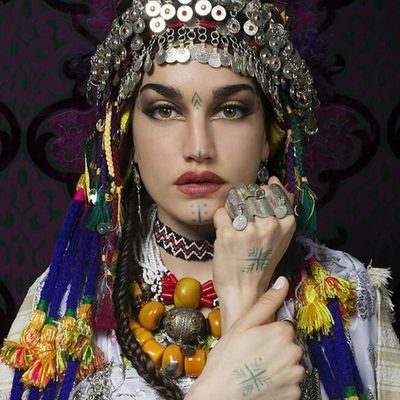
Louvre Museum – Assyrian Collection (Mesopotamia) Located within the... Department of Near Eastern Antiquities, the Assyrian section features artworks from the 9th to 7th centuries BCE, including sculptures, reliefs, and inscriptions from the ancient cities of Nineveh, Khorsabad, and Nimrud. Among its highlights are the colossal winged Lamassu statues from King Sargon II’s palace at Khorsabad, the Gilgamesh and lion-hunting reliefs from Nineveh, and stone panels adorned with sacred trees and divine symbols — all reflecting the Assyrian kings’ power, divine protection, and vision of cosmic order.show more
MENA Visuals
12,781 Aufrufe • vor 8 Monaten
This afternoon, firefighters arrived at a fire at a... three-story home on Tall Oak in City of Irvine in just five minutes. Firefighters quickly stopped the fire that was spreading through the walls, confining it to the wall spaces and preventing it from spreading further.show more

OCFA
35,101 Aufrufe • vor 14 Tagen
This is how South Africa works. The video attached... shows a third-term member of parliament and leader of the EFF singing a song about killing people because of the colour of their skin and culture. He has been singing this song for the last 15 years and remains in parliament. I made a video 14 years ago using hyperbole to illustrate the double standards of racism, I specifically referred to the above politician and the singing of this song and demonstrated how hurtful the song is. Guess which one was removed from parliament...show more

Renaldo “Ngamla” Gouws 🇿🇦
173,908 Aufrufe • vor 1 Jahr
Gemini 3! This is our most intelligent model that... brings any idea to life. 😻 This is the best model in the world, by a crazy wide margin! Aside from a huge increase across the absolutely everything, look at its coding capabilities and quality of aesthetics and fidelity. Just insane! This is a one-shot procedural voxel world from just this prompt: "three js infinitely procedurally generated voxel art scene of walking through the forest with falling autumn leaves" 👇 Enjoy!show more

Yi Tay
220,910 Aufrufe • vor 8 Monaten
A 12th-century gateway, aligned with the sun. This is... the South Gate of Angkor Thom, part of the ancient Khmer capital built by King Jayavarman VII one of the most powerful and visionary rulers in Cambodian history. Angkor Thom wasn’t just a city. It was a spiritual and political statement. Surrounded by massive walls and moats, it housed temples, shrines, and royal buildings at the heart of the Khmer Empire. At each of the five gates stands a towering structure crowned by four giant faces, gazing in all cardinal directions. Historians believe these faces represent either Avalokiteshvara, the bodhisattva of compassion, or a fusion of the bodhisattva and the king himself a divine ruler watching over his realm. And during the equinox, the setting sun aligns perfectly through this gate a moment of cosmic precision and ancient symbolism. Coincidence? Unlikely. This alignment shows how deeply the Khmer architects understood astronomy, cosmology, and sacred geometry. They weren’t just building cities they were shaping the universe in stone. Join me, Billy Carson on 4bidden Tours All Over the World! LINK IN BIOshow more

Billy Carson II
16,452 Aufrufe • vor 1 Jahr
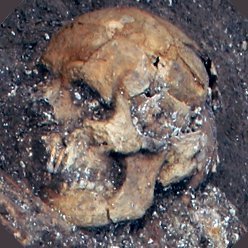
Facial reconstruction of a 2,500-year-old man from Kalalygyr, Turkmenistan... Kalalygyr was an ancient city in northern Turkmenistan that disappeared in antiquity. It served as the second capital of ancient Khwarezm during the 5th-4th centuries BC. According to the Khwarezm Archaeological Expedition, the fortress of Kalalygyr 1, covering nearly 70 hectares, is the largest known settlement site in Khwarezm. One of the city's fortresses, Kalalygyr 1, was a rectangular fortified settlement measuring approximately 1,000 × 700 meters. Its walls were reinforced with towers and contained four gates protected by complex entrance labyrinths and bastions. The inhabitants lived primarily within long vaulted corridor-like chambers built into the thickness of the massive defensive walls. Near the western wall, on the inner side of the fortress, stood a monumental palace complex. Construction of both the fortress walls and the palace was never fully completed, and the site was eventually abandoned. The foundations consisted of large pakhsa (rammed-earth) blocks over one meter high, upon which mud-brick masonry of standard ancient dimensions was erected. The palace was square in plan (80 × 80 meters) and contained two internal courtyards and two external courts. Around these courtyards were approximately thirty rooms of various functions. The palace halls had flat roofs supported by columns, some of whose bases survive. Researchers believe construction of the colossal fortress of Kalalygyr 1 began in the late 5th or very early 4th century BC, during the period when Khwarezm was under the rule of the Achaemenid dynasty. The project may have been part of broader Achaemenid initiatives connected with irrigation and water management, reminiscent of the policies described by Herodotus. The male skull series from Kalaly-Gyr I is mesocranic (cranial index 79.9) with average length (182.0 mm), broad width (144.7 mm), and notably high vault (138.6 mm). The forehead is slightly sloping, with a well-developed glabellar region. Facially, the skulls show medium height (72.9 mm) and medium bizygomatic breadth (132.5 mm), with a moderate facial index (54.9). The face is orthognathic, with moderate profiling at the nasomalar angle and slightly stronger at the zygomaxillary region. Orbits are moderately high, the nose is medium-width (nasal index 48.7), with moderate nasal projection and a relatively high nasal bridge. Overall, the series is mainly Eastern Mediterranean in type but shows clear mixture. The increased cranial index may reflect both admixture and brachycephalization. Some facial flattening and reduced nasal projection suggest slight Mongoloid influence. There is also evidence of Andronovo-related Europoid admixture, possibly mixed Srubnaya–Andronovo/Tazabagyab, and one incidence of an equatorial-influenced specimen. The Iron Age and Early Antiquity inhabitants of Turkmenistan belong to the Tkm_IA/Yaz genetic cluster, which is a mixture of BMAC-related and Indo-Iranic Andronovo-related ancestry. This genetic cluster is pivotal in the spread of the Iranic languages; all modern Iranic languages, with the likely exception of Ossetic, ultimately stem from this genetic cluster. Reconstruction commissioned by 𒁍𒊑 𒋗𒊑𒌍 Buri Šoreš 𓄂❤️☀️💚 at the request of eylokshow more
Ancestral Whispers
37,396 Aufrufe • vor 1 Monat
Today is Trooping the Colour in London. I thought... you might like to see this very rare 12-second snippet of the Trooping filmed in colour 118 years ago. I've always had a fascination for early colour film, and this excerpt from 1906 has been on my hard-drive for some years. Today seems like the right day to share it!show more

BabelColour
470,142 Aufrufe • vor 2 Jahren
Repost from from Johnny Depp's 'A Bunch Of Stuff'... exhibition. At the center of the exhibition lies the Black Box, an immersive space pulsating with visuals and sounds that dive into Johnny Depp’s creative world. Engage with this unique multimedia experience at your own pace, as each Beat provides deeper context to his work. #BlackBox #JohnnyDepp #ImmersiveExperience #ABunchOfStuff #Experience #ArtExhibitionshow more

Never Fear Truth
12,702 Aufrufe • vor 1 Jahr
Take a good hard look at this new view... from the Canton PD’s exterior back wall, showing Karen’s Lexus entering the Sallyport at 5:37 PM. Compare it to the images of her leaving John’s home at 5:08 AM. Both images are identical both with the brakes applied and not applied. WOW! 👀show more

Zona Eagle
27,140 Aufrufe • vor 21 Tagen
Our ad for #JENNIE’s birthday is now live on... the largest screen at Gyeongbokgung Palace, right next to the J2NNI5 Photo Exhibition. The ad will run for five days throughout the pop-up event, playing for a total of 18 hours each day. we made sure to secure the largest LED screen, visible from a distance and to everyone attending the photo exhibition, Happy Birthday to JENNIE, my idol whom i love and respect dearly. 🤍✨show more

Cia.
32,011 Aufrufe • vor 6 Monaten
We’re proud to introduce the theme for 2026: #kineticJOURNEY... 💫 For three decades, EDC has united millions from all walks of life. Each of you brings a unique story, and together we’re connected by music, community, and the energy that comes alive when we gather. This theme is a tribute to the journey we’ve shared and the one we’re still writing. 🫶 Tell us what years you’ve attended and what keeps you coming back in the comments! ⤵️💖show more

EDC Las Vegas
18,645 Aufrufe • vor 5 Monaten
🕊️ The Faravahar: An Ancient Persian Symbol with a... Powerful Meaning High on the stone walls of Persepolis, the ancient capital of Persia, you can see a mysterious winged symbol carved into the rock. This symbol is called the Faravahar (or Farohar), and it is one of the most important signs of Zoroastrianism, one of the world’s oldest religions. At first look, the Faravahar may seem like a royal emblem or a symbol of power. But its meaning goes much deeper than that. The design comes from very old Middle Eastern traditions. Long before Persia, kings used winged sun symbols on seals to show divine protection and authority. Over time, the Persians gave this image a new meaning. In Zoroastrian belief, the Faravahar came to represent the human soul, its choices, and its journey through life. Every part of the symbol has a message: 🪽 The wings stand for growth, progress, and rising toward good thoughts and actions. 🧍 The human figure in the center reminds us that humans have free will and must choose between right and wrong. 🔄 The circular shape shows the ongoing journey of life and the balance between the spiritual and the physical world. In ancient Persia, the Faravahar was not just art on a wall. It showed faith, identity, and legitimacy. It reminded rulers and people alike that power should be guided by wisdom, truth, and moral responsibility. Even today, the Faravahar invites curiosity. Is it a symbol of God? A guide for the soul? Or a sign of royal authority? Perhaps it is all of these at once. What is clear is this: the Faravahar is a timeless symbol that shows how deeply spiritual belief and leadership were connected in ancient Persia—and how those ideas still speak to us today. ✨show more

Unearthed 🏺
12,740 Aufrufe • vor 5 Monaten