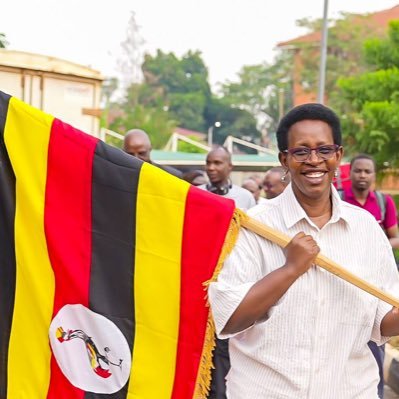
Why is Congresswoman Pramila Jayapal — chair of the... Democratic Party's Progressive Caucus — peddling a false narrative about Cuban healthcare being better than the U.S.? From my research on my book PHARMA, I know what she says is WRONG. But she keeps repeating it and I am sure many progressives believe it. No legacy journalist is calling her out so let me do the job. Most recently, she stood at a Capitol Hill press conference on July 1 — flanked by Reps. Delia Ramírez, Jonathan Jackson, and Ro Khanna, under a banner reading "Demanding an End to the Blockade Against Cuba and International Medical Solidarity" — and told the crowd that Cuba, despite all its difficulties, had done admirable work preventing “maternal mortality, neonatal mortality, and cancer,”in her words, "areas in which we in the United States are still struggling to make progress." It wasn't an ad-lib. It was a return engagement. In an April interview after her own delegation trip to Havana, Jayapal said Cuba has "the lowest infant mortality, maternal mortality — sort of the opposite of what the United States has." When the reporter mentioned Cuba's higher life expectancy, she agreed with that too. The Washington Post's editorial board flagged it then as a flawed diagnosis. She said it again in front of National Nurses United two months later. So it's worth actually running the numbers, one at a time. Maternal mortality. The U.S. rate was 18.6 deaths per 100,000 live births in 2023, and it fell further to 17.9 in 2024. Cuba's own Ministry of Public Health reported its maternal mortality rate at 40.6 per 100,000 in 2024 and rising to 44.1 in 2025 — better than two-and-a-half times the American rate, and climbing. There is no version of the current data where Cuba is "the opposite" of the U.S. on this metric. It's far worse. Neonatal/infant mortality. Cuba's official infant mortality rate did fall to a low of 4.0 per 1,000 live births in 2018 — a genuinely low number, and one Cuba has kept touting. But two things complicate that figure. First, a peer-reviewed study in Health Policy and Planning found evidence that Cuban physicians have been pressured to reclassify early neonatal deaths as late fetal deaths (effectively, miscarriages) to hit government mortality targets — a known method of statistical manipulation, flagged by demographers going back to the 1990s. Corrected for that, researchers put Cuba's real infant mortality rate somewhere between 7.45 and 11.16 per 1,000, not the sub-5 figure the government published. Second, and more damning for Jayapal's live claim: Cuba's own current numbers show infant mortality at 9.9 per 1,000 as of the end of 2025 — up 148% from that 2018 low, and now well above the U.S. rate. Havana's maternity wards are reporting sewage leaks in neonatal units and adolescent pregnancy rates spiking past 20% in some provinces. Whatever Cuba was doing right in 2018, it isn't doing now, and the 2018 number itself was likely inflated by data manipulation to begin with. Cancer. This is the claim with the least data behind it and the most against it. The most recent regional analysis of Latin America and the Caribbean, using 2022 GLOBOCAN figures, found Cuba has the highest age-standardized cancer mortality rate in the entire region — 136.6 per 100,000 for men, 91.6 per 100,000 for women — ahead of Mexico, Argentina, Brazil, Chile, and Colombia. There is no dataset I could find, from PAHO, WHO, or IARC, showing Cuban cancer outcomes outperforming the United States. Cuba's president, Díaz-Canel, touring a Havana maternity hospital the same week Jayapal spoke, said the healthcare system currently can't get lifesaving treatment to more than 100,000 cancer patients, including 1,200 children, due to shortages. That's not a system beating American oncology. That's a system in collapse, by the Cuban government's own telling. The bigger problem with the claim. During my reporting for PHARMA I learned that Cuba's low mortality figures have functioned as propaganda for an authoritarian government for over 30 years — repeated uncritically by public health researchers, NGOs, and now members of Congress, because the story fits a preferred narrative about what a "resource-poor" country can accomplish with universal healthcare. But the country producing those numbers has no free press, no independent statistical audit, and a documented history of reclassifying deaths to hit targets. That's not a minor asterisk. It's the whole ballgame if you're going to hold a press conference built on the premise that Cuba is quietly outperforming America. Does Pramila Jayapal know she is selling a disproven story or does she not care so long as it fits her narrative that a communist universal healthcare system is better than the one in America?show more