Microsoft killed the GPU mafia 🤯 They finally open-sourced... their 1-bit LLM inference framework called bitnet.cpp. It lets you run 100B parameter models on your local CPU without GPUs. - 6.17x faster inference - 82.2% less energy on CPUs 100% Open Source.show more

Oliver Prompts
1,629,003 просмотров • 6 месяцев назад
someone just open-sourced their own neuro-sama. and it might... be better than the original. it's called airi. a fully autonomous ai companion that talks to you in real time, plays minecraft and factorio with you, chats on discord and telegram, and has a live2d/vrm avatar body. runs entirely on your machine. → real-time voice conversations, speech recognition → animated avatar with auto-blink, eye tracking, idle animations → persistent memory across sessions → local inference via webgpu, no api calls needed supports 30+ llm providers, openai, claude, gemini, deepseek, ollama, groq, mistral, xai, local models. swap the brain with a config change. runs on native cuda and apple metal for real gpu acceleration. 17.5k stars. 101 contributors. 46 releases. 100% free. open source.show more
Oliver Prompts
285,147 просмотров • 25 дней назад
world models have their comfyui now. introducing alakazam studio,... the first local, open source UI for world models. • sentence goes in => you edit the state graph => play • on a live model, yours, running in your browser • apache-2.0, fully open source fork it and point it at your model 👇show more

hugo
24,494 просмотров • 8 дней назад
NVIDIA open-sourced a 600M model that transcribes 40 languages... in real-time at 80ms latency and it costs $0. that's faster than you can blink. across mandarin, arabic, hindi, portuguese, tagalog, whatever,from a SINGLE checkpoint. → 17x more concurrent streams than buffered ASR on the same H100. → punctuation + capitalization built-in. no post-processing. → runs on your own GPU. no API bill 100% Open Source.show more

Superman
104,663 просмотров • 1 месяц назад
Holy sh!t ! OpenAI will have their custom inference... chips ready in just a few months and deployed at scale by the end of the year! 🤯 Training chip = The heavy lifters that require massive amounts of data and power to build and teach the AI models from scratch. Inference chip = The specialized, highly efficient chips that actually run the AI and generate the answers in real-time when you use it. This is going to help OpenAI drastically cut down their massive compute costs, speed up model reasoning times, and finally break free from relying entirely on Nvidia to scale their operations.show more

Chris
60,278 просмотров • 5 месяцев назад
let me save you 3 hours of head scratching.... if you're running local models like Qwen3.5-35B-A3B through Claude Code via llama.cpp's Anthropic endpoint, the chain will break every 3 to 5 minutes. tool call fails. flow stops. you reprompt. it recovers. 2 minutes later it stops again. the model is fine. the harness chokes on local inference latency. switch to OpenCode. same localhost endpoint. same model. same GPU. the chain doesn't break. the tradeoff: OpenCode sometimes loops. the model forgets what it already read and repeats the same tool call. but a loop you can interrupt. a broken chain kills your momentum and you start over. watch both side by side. proprietary agent vs open source agent. same 3B model. different failure modes. pick your poison.show more

Sudo su
72,538 просмотров • 5 месяцев назад
You don't need a GPU for fast studio grade... voice cloning anymore. Qwen3 TTS (1.7B Q4_K_M) + mainline llama.cpp is officially the fastest way to generate zero shot voice clones using 100% pure CPU execution. Following up on my last post where we ran the Q8 model on a GPU, we just took local C++ voice synthesis a massive step further. The open source community quantized Alibaba's SOTA Qwen3 TTS model down to Q4_K_M GGUF, completely freeing local audio pipelines from dedicated graphics hardware. Here is the real world benchmark and hardware breakdown of running SOTA voice cloning on CPU: # Architecture & Model Setup Using Qwen3-TTS-12Hz-1.7B-Base-Q4_K_M.gguf paired with the 8 bit multimodal projector (mmproj-Q8_0.gguf), llama.cpp executes the entire pipeline in pure C++. No PyTorch, no CUDA dependencies, and no VRAM bottlenecks. # Real-World Memory Footprint - Baseline RAM: 1.6 GB system idle. - Peak Generation RAM: 8 GB RAM during active voice synthesis. - Requirement: Any basic machine with at least 8 GB of system RAM can run this easily. # Real World CPU Benchmarks - Google Colab Free Tier (Throttled 2 Core CPU): Synthesizes a 5 sec studio quality audio clip (~8 words) in 45 seconds. - Modern Consumer CPU (Intel i5/i7 13th/14th Gen or AMD Ryzen 7000/9000): generation should drop to 5 to 20 seconds (nearly 1:1 real-time generation speed!). # Zero Shot Voice Cloning Quality Pass any 5 to 20 second .wav audio sample to the C++ engine using the --tts-speaker-file flag. It yields clean, natural sounding cloned speech with virtually zero quality loss compared to unquantized FP16 weights. To make testing seamless, I built an updated zero config Google Colab notebook. It pulls the official pre built llama.cpp CPU binaries (zero compilation time!) launches a live Gradio web app right in your browser. Record a 5 second clip from your mic (or drop a .mp3, .wav file), type text, and generate cloned audio on CPU. Native C++ audio models are making edge based, offline AI voice agents a reality. Links to the free Q4 CPU Colab notebook and the Q4_K_M GGUF HuggingFace repository are in the replies below! Which models have you been running on your CPUs? What CPU hardware are you using for local inference?show more

Alok
60,514 просмотров • 12 дней назад
Woow Tencent has released a model 100% open source... which is better than Google Translate... And it runs locally on your phone?! - Only 440MB (!!) - 33 languages - On-device translation So we have now a local Google Translate which is running completely offline. They are using AngelSlim which their compression toolkit. That's why the model is so efficient.show more

Paul Couvert
142,230 просмотров • 3 месяцев назад
🚨 NVIDIA just flipped the entire AI game… and... this is NOT about gaming. DeepSeek-V4-Pro is now live on their build platform. 1.6 TRILLION parameters. Yes… the largest open-source model on the planet right now. And here’s the crazy part: They’re letting you run it FREE On Blackwell GPUs in the cloud. This is the same level of hardware companies like Google, Meta, and Microsoft fight billions to access. Now it’s just… available. No waitlist. No insane setup. Just raw power. We’re watching the shift happen in real time: → From closed AI → open domination → From GPU scarcity → free access → From Big Tech control → builders winning This isn’t an update. It’s a warning shot. Who’s already testing this? Link👇show more

divyansh tiwari
29,941 просмотров • 3 месяцев назад
90% of "AI developers" just download pre packaged GGUF... files from Hugging Face, hit run, and call it a day. The top 10% know how to pull the raw safetensors, run the math, and quantize massive models into Q4_K_M themselves. If you think llama.cpp can only execute models, you’re missing the best part of the open source ecosystem. It’s a high performance optimization suite. Manually stripping 69% of the VRAM footprint off a brand new model architecture is where real infrastructure value is made. If you want to actually master local inference and deploy models like Google’s massive Gemma 4 12B it on consumer NVIDIA hardware using llama.cpp, you need to learn this pipeline. Let's build it. I just took the raw 22.7 GB Gemma 4 baseline and manually compressed it down to a 7.02 GB Q4_K_M GGUF artifact using llama.cpp. That is a 69% reduction in footprint. No quality loss. No VRAM bottlenecks. Just native, hardware accelerated C++ inference running a full 2,50,000 token context window on a dual NVIDIA Tesla T4 setup. Stop melting your VRAM on unoptimized weights and stop relying on other people's pipelines. Own your stack. I mapped this entire architecture from dynamic binary fetching to raw quantization and real time GPU streaming into a single, bulletproof notebook. Notebook link is in the comments below. Bookmark this blueprint for your next deployment and tell me which quantization works best for your workflow and model.show more
Alok
62,631 просмотров • 1 месяц назад
From the e/acc trenches to watching Extropic ship. Congrats... Beff @ NeurIPS can't wait to run this on actual stochastic silicon instead of simulating it digitally. 65k spins finding equilibrium using THRML. Extropic's THRML library built for their thermodynamic hardware. Currently Running on GPU/CPU now, but one day we might all be running quantum on our devices. Traditional computing fights physics (force bits to 0/1). Thermodynamic computing uses physics (p-bits that naturally fluctuate). For sampling problems, that's orders of magnitude more efficient. This is energy-based inference in your hands. I would have never ventured into looking into this, still way over my head but its so fucking cool wish I could have had the capital to put cheques into extropic, nous_research and rysana but lets build to the top.show more

Lantos (e/acc)
41,208 просмотров • 9 месяцев назад
Litter iOS just got a beta (TestFlight) release so... now you can install it and try it out. It's a remote for codex! - Finds all the computers on your local network (or tailscale) that run codex app-server or ssh - Lets you continue any session or start a new one - Experimental local codex with oauth support Free, fully open-source, fully native, with android release coming soon! Thanks to Maky drumroll.dev ☄️ PincentΞ for the contributions! TestFlight ⬇️show more

SIGKITTEN
68,308 просмотров • 5 месяцев назад
Google Translate is cooked after this. A developer built... a local AI translation engine that runs 40 languages entirely on your own laptop. It's called LibreTranslate. No API key. No usage limits. No sending your documents to Google's servers. You install it once. It runs forever. Here's what it handles: → Paste text. Translated instantly. → Drop in a file. Outputs the translated version. → Point it at a URL. Returns the page in your language. → Build it into your own app via its local REST API. The speed is not the story. The privacy is. Google Translate reads every sentence you paste into it. Legal contracts. Medical records. Internal emails. Client documents. Every word goes to their servers and stays there. LibreTranslate runs entirely offline. Nothing leaves your machine. Ever. The numbers: → 40 languages supported → Runs on CPU -- no GPU needed → Self-hosted in under 5 minutes → REST API built in for developers → 10K+ stars on GitHub 100% open source. MIT licensed. Price: $0. Google charges nothing for Translate either but it charges you something else. GitHub:show more

Rimsha Bhardwaj
89,515 просмотров • 2 месяцев назад
THIS GUY BOUGHT A $2,400 NVIDIA BOX AND SAVED... $18,700/YEAR ON CLOUD GPUS WITHOUT RENTING SERVERS AGAIN the entire setup runs on one rule - stop paying every time you want to test something most people run 20 small AI experiments in the cloud and think it’s cheap because each one looks harmless - then the invoice comes in and suddenly their “side project” has the same monthly cost as a car payment he made the same mistake for months and it slowly killed the way he worked one box, one desk, local models - and now he can run tests overnight without thinking about hourly GPU prices $18,700/year saved by a little NVIDIA box he can literally hold in his handsshow more

Gipp 🦅
12,484 просмотров • 2 месяцев назад
🚨 Alibaba just open sourced a GUI agent that... lives inside your webpage and controls it with natural language. It's called Page Agent and it's not a browser extension. It's pure JavaScript no Python, no Puppeteer, no headless browser, no screenshots. Just one script tag and your web app understands natural language. Here's what it actually does: → Embed it with a single tag or npm install → Control any web interface with plain English commands → Text-based DOM manipulation no OCR, no vision models needed → Bring your own LLM (GPT, Claude, Qwen, anything) → Ships a built-in UI with human-in-the-loop support → Turn 20-click ERP/CRM workflows into one sentence → Optional Chrome extension for multi-tab agent tasks → Works on any web app SaaS, admin panels, internal tools Companies are charging $30/month for AI copilots built on this exact idea. This is 3 lines of code. Your users. Your interface. The AI copilot layer for every web app just got open sourced. 1.6K stars. 100% Open Source. (Link in the comments)show more

Ihtesham Ali
135,572 просмотров • 5 месяцев назад
Run Gemma 4 26B MoE on 8GB VRAM with... 250k context at 20+ tokens/sec If you own any 8GB VRAM graphics card, stop what you are doing. Local AI just had its absolute "Holy Shit" moment for budget hardware. Yesterday, I benchmarked Unsloth Gemma 4 12B Q4_K_XL on an 8GB card. The community went wild but immediately demanded more: "Can we run a 25B+ model on budget GPUs?" Today, I’m delivering exactly that. I am running a massive 26B parameter Mixture of Experts (MoE) model locally on a standard 8GB VRAM setup with 250k full native context!. If you own an RTX 3060, 3070, 4060, or any budget GPU with 8GB of VRAM, the local AI paradigm has completely changed. The performance metrics are astonishing: - 20 tokens/sec flat decode throughput. - Stable, flat decode speed even with massive prompts. - I threw a 60k token prompt at it, and it still clocked in at 20 TPS without dropping a single frame. # What about prefill? Yes, Time To First Token (TTFT) is slightly high when swallowing massive contexts. But with a solid 200 tokens/sec prefill speed, the wait is barely noticeable and highly usable. And this is running completely without Multi Token Prediction (MTP) active. How is this possible? It’s the magic of Google's new QAT (Quantization Aware Training) quants for Gemma 4. The model weight file (unsloth gemma-4-26B-A4B-it-qat-UD-Q4_K_XL.gguf) is only 13.2 GB, making it the ultimate local powerhouse. # The Test Setup: CPU: Intel Core i7 RAM: 16GB System RAM GPU: NVIDIA GeForce RTX 4060 Laptop GPU (8GB VRAM) # The Secret Sauce (The -cmoe Flag) To make this work properly on any 8GB card, you must use the -cmoe (CPU MoE) flag in llama.cpp. This flag isolates the heavy MoE expert weights directly to system memory (CPU/RAM) while letting your GPU focus strictly on the Attention layers and the KV Cache. It prevents VRAM spillage and holds the throughput rock solid. # The flags: -m "gemma-4-26B-A4B-it-qat-UD-Q4_K_XL.gguf" -cmoe -c 248000 -v Once running, just open the UI on localhost and toggle the new reasoning lightbulb icon in the text input box to watch the model perform multi step thinking. Are you still running smaller models, or are you ready to scale up your budget local setups? Let's discuss in the repliesshow more
Alok
292,770 просмотров • 2 месяцев назад
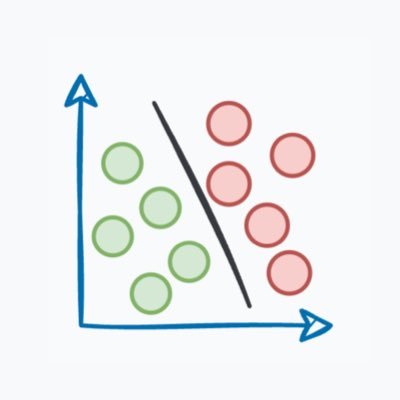
K-Means is simple. Making it fast on GPU isn't.... Flash-KMeans is an IO-aware implementation of exact k-means that rethinks the algorithm around modern GPU bottlenecks. By attacking the memory bottlenecks directly, Flash-KMeans achieves: - 30x speedup over cuML - 200x speedup over FAISS Using the same exact algorithm, just engineered for today’s hardware. At the million-scale, Flash-KMeans can complete a k-means iteration in milliseconds. Here's why this matters today: K-means has always been an offline primitive. Something you run once to preprocess data and move on. These speedups change that. ↳ Vector databases like FAISS use k-means to build search indices. Faster k-means means you can re-index dynamically as data changes, not batch it overnight. ↳ LLM quantization methods need k-means to find optimal weight codebooks, per layer, repeatedly. What takes hours could now take minutes. ↳ MoE models need fast token routing at inference time. Millisecond k-means makes it viable to run this inside the inference loop, not just in preprocessing. The 200x over FAISS is the number to internalize. FAISS is the industry standard. Most production vector search systems sit on top of it. Link to the paper and code in next tweet!show more
Daily Dose of Data Science
23,748 просмотров • 3 месяцев назад
K-Means is simple. Making it fast on GPU isn't.... Flash-KMeans is an IO-aware implementation of exact k-means that rethinks the algorithm around modern GPU bottlenecks. By attacking the memory bottlenecks directly, Flash-KMeans achieves: - 30x speedup over cuML - 200x speedup over FAISS Using the same exact algorithm, just engineered for today’s hardware. At the million-scale, Flash-KMeans can complete a k-means iteration in milliseconds. Here's why this matters today: K-means has always been an offline primitive. Something you run once to preprocess data and move on. These speedups change that. ↳ Vector databases like FAISS use k-means to build search indices. Faster k-means means you can re-index dynamically as data changes, not batch it overnight. ↳ LLM quantization methods need k-means to find optimal weight codebooks, per layer, repeatedly. What takes hours could now take minutes. ↳ MoE models need fast token routing at inference time. Millisecond k-means makes it viable to run this inside the inference loop, not just in preprocessing. The 200x over FAISS is the number to internalize. FAISS is the industry standard. Most production vector search systems sit on top of it. Link to the paper and code in next tweet!show more

Akshay 🚀
36,317 просмотров • 5 месяцев назад
this creator just built a zero-delay auto-aim system on... an $8 microcontroller he deployed a custom local AI algorithm on a cheap ESP-32 to track human movement with absolute 0-pixel accuracy. the system completely eliminates standard computation delay. it processes the bounding box and moves the sniper reticle instantly, locking onto the target in real time. the next step is hooking it up to a physical robotic arm. it proves you don't need a massive GPU rig to run complex computer vision. 1. runs locally on a microcontroller 2. local AI inference for zero latency 3. 100% targeting precision when an eight-dollar chip can track movement with zero latency, AI becomes dangerous local infrastructure. this article breaks down exactly how the ESP-32 is powering this physical hardware shift.show more

ard
1,182,314 просмотров • 23 дней назад
Governments pay millions for this kind of system. Someone... just open-sourced it for free. It's called Crucix. It watches the entire world and texts you when something changes. Pulls from 26 live sources every 15 minutes: - Satellite fire detection, flight and vessel tracking - Conflict zones and economic indicators - Live crypto and market prices - Social sentiment from Telegram intel channels It's two-way. Pushes alerts to Telegram and Discord. Text it back, type /brief for a summary. No cloud, no subscription. Runs on your own machine. 100% Free. Open Source.show more

Simplifying AI
70,885 просмотров • 26 дней назад
Windows 11’s June 2026 Patch Tuesday update is out... today, and the biggest change is Performance, not AI. Windows 11 KB5094126 finally brings Microsoft’s new Low Latency Profile to everyone. Microsoft calls it a “General Performance” improvement, but the idea is simple: when you open Start, Search, Action Center, or key shell experiences, Windows briefly pushes the CPU to max frequency for 1–3 seconds so the UI responds faster. I tested it earlier, and the difference is most obvious on budget PCs. Start feels snappier, Search opens faster, and those tiny Windows 11 micro-stutters are reduced. The catch: because of Microsoft’s Controlled Feature Rollout, installing today’s update does not guarantee it is enabled yet. You can verify it with HWiNFO by watching CPU frequency spikes while opening Start.show more

Windows Latest
61,057 просмотров • 2 месяцев назад