🧵 Mind-blowing ancient tech alert: In a cave in... Armenia, archaeologists found a 5,500-year-old leather shoe — perfectly preserved, complete with laces, and it would still fit a modern foot today. Discovered in 2008 in the Areni-1 cave, this Copper Age masterpiece is older than the Egyptian pyramids. It was made from a single piece of cowhide, stuffed with grass for cushioning, and shows incredible craftsmanship. Nobody knows the exact maker… but one thing is clear: our ancestors 5,500 years ago were far from primitive. Ancient humans were innovators. This shoe proves it. 🔥 🎥 chronoarchivesofficialshow more

Dreams N Science
14,649 次观看 • 2 个月前
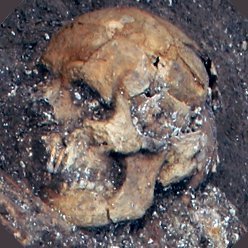
Facial reconstruction of a 6,000-year-old man from Areni, Armenia... Areni-1 Cave, is the site of the world’s oldest known winery. Excavations begun in 2007 uncovered Chalcolithic-era vessels, some containing adolescent skulls, along with evidence of ancient winemaking facilities such as fermentation vats, wine storage jars, and grape remains. The cave’s stable temperature and low humidity preserved remarkable organic finds, including the world’s oldest known leather shoe. The 5,500-year-old shoe, 24.5 cm long (European size 37), made for the right foot, was crafted from a single piece of leather. Its laces also survived. The shoe had been stuffed with grass, probably to help maintain its shape. It remains unclear whether the shoe belonged to a man or a woman. Straw skirt and fragments of a human brain were also found in the cave. According to some specialists, nobody actually lived inside the cave, and wine consumption there was ritualistic in nature. Some cave finds suggest that the local wild tribes practiced ritual cannibalism. Deep within Areni Cave, near food storage containers, archaeologists discovered the remains of children and adults buried in clay pots, which were relatively well preserved. Three skulls belonged to young individuals died most likely from whip blows. According to one expert, researchers proposed a working hypothesis that parts of the sacrificed bodies were eaten by participants in a religious ritual. In this way, they believed they were communicating with the world into which the innocent victims had passed. The reconstructed individual was 18 ± 3 years old. He had a medium cranial length of 177.5 mm, a medium-large cranial width of 145 mm, and a very narrow face/bizygomatic breadth of 113 mm. His nasomalar and zygomaxillary angles - 141° and 135° - were on the higher end of Caucasoid ranges and closer to Mongolid values. The individual was brachycephalic. In craniological samples from the Bronze and Iron Ages of Armenia, no cases of brachycrania had previously been encountered (A. Yu. Khudaverdyan, B. Z. Gasparyan, R. Pinhasi, A. S. Kananyan, N. A. Hovhannisyan, 2017). Genetically, all sampled male individuals from Areni-1 Cave belonged to Y-DNA haplogroup L1a1. Their mtDNA lineages included K1a8 and H2a1. Autosomally, they were predominantly of Mesopotamian ancestry, with some Steppe Eneolithic ~25% or Nalchik-related ~ 40% admixture, the source of which is not yet fully understood. They also carried genes associated with light hair and blue eyes. Older Neolithic individuals from Azerbaijan with fully Mesopotamian ancestry, such as those from Polutepe and Mentesh Tepe, likewise carried genes for light hair and blue eyes. These people were later succeeded by the Kura-Araxes culture, which is associated with Northeast Caucasian speakers.show more
Ancestral Whispers
35,029 次观看 • 3 个月前
The biggest lie that changes our entire understanding of... history is the claim that the modern human species has existed for 300,000 years, yet for 295,000 of those years people were only hunter-gatherers, and only in the last 5,000 years developed written language and civilization, with modern technology emerging only in the last 200 years. If you were to take a baby from an early population of Homo sapiens 300,000 years ago and raise that child today, they would fit in perfectly. Your history, and with it, your entire perception of reality, is a lie. Start searching for the truth.show more

Open Minded Approach
77,651 次观看 • 25 天前
Well… this is awkward. I’ve done a complete 360.... I originally believed the basalt floor tool marks east of Khufu’s pyramid were ancient saw cuts and possibly evidence of lost technology. Then a 180. A few years ago, I made a video arguing they were modern. George Reisner’s Harvard expedition worked extensively in this area, a modern road once crossed over these stones, and I’d heard accounts from locals describing how people used modern tools to remove stone for the forgery trade. Given all that, it seemed like a reasonable conclusion at the time. After taking a much closer look today, however, I’ve changed my mind. I’m now convinced these cuts are ancient.💯 That doesn’t mean the technique was impossible for the ancient Egyptians. Clearly, it wasn’t. But aspects of how they achieved these cuts may still be lost to us. So the “modern cuts” debunking theory can now be placed quietly in the bin. Chalk one up for the alternative historians and YouTubers who argued these cuts were ancient. They were right after all, and I stand corrected. Funny old thing, evidence. It has an inconvenient habit of changing minds.show more
Anyextee
42,281 次观看 • 17 天前
This is how the ancient religious texts, esoteric knowledge,... and even literacy are preserved during the Geophysical Event. That's why the temples and monasteries are built high in the mountains. Plato knew about this since ancient times, as this knowledge was passed from the ancient Egyptian priests through Solon. From Timaeus: "...whenever, again, the gods, purifying the earth with waters, inundate it, those who dwell in the mountains are preserved as herdsmen and shepherds... there is always a smaller race of men..."show more
Open Minded Approach
93,303 次观看 • 1 个月前
These are real Ice Age bodies🧊 Dima and Lyuba,... two woolly mammoth calves found in Siberia, were discovered decades apart but preserved with astonishing detail by permafrost. One was exposed during a mining operation. The other emerged from a riverbank and left scientists stunned by how intact she was. What ancient preserved body do you think is the most unbelievable ever found?show more

History Content
36,223 次观看 • 4 个月前
Facial reconstruction of a 3,600-year-old Mycenaean Greek In the... middle of the 20th century, archaeologists discovered in Mycenae Grave Circle B, another royal cemetery that preceded Grave Circle A. The burial complex was discovered accidentally in 1951 when workers were excavating a nearby 13th-century BCE tomb known as the Tomb of Clytemnestra. Grave Circle B consists of 26 graves, dated to 1675–1550 BC, including 14 shaft graves. The shafts, up to 12 meters deep, were marked by burial mounds or stone stelae. The cemetery was probably used for about 100 years. The remains of 35 individuals were found in the graves. The large number of undisturbed graves allowed archaeologists to gain insight into the life of the Mycenaean elite of that time. In the women’s graves, many ornaments were found: earrings, necklaces, and gold and silver pins. Alongside the male skeletons were swords, daggers, and arrowheads; men’s clothing was decorated with gold. In one of the graves, a helmet made entirely of boar’s tusks was discovered. There are more female skeletons than male ones, and overall the female burials are richer. A unique find is a posthumous mask made of electrum, which was not placed on the deceased’s face but kept in a wooden box beside him. Another interesting artifact is a duck-shaped bowl made of rock crystal. Unlike the remains from Grave Circle A, the skeletons from the burials of Grave Circle B are well preserved. The bones of the men show traces of combat injuries, suggesting that some of these individuals likely died in battle. As early as the 1950s, it was suggested that members of several (probably four) noble families were buried in Cemetery B over 3–4 generations. To test this hypothesis, in 1995 anthropologists reconstructed faces from seven skulls found in the burials. Researchers discovered a clear resemblance between two individuals — Z59 and F51 — and divided the seven buried individuals into three groups: “heart-shaped,” “elongated,” and “beak-shaped” faces. In 2008, a genetic study was conducted on 22 skeletons from Grave Circle A. Samples were taken from mandibles and clavicles. Mitochondrial DNA was successfully obtained from four individuals, showing that a man and woman from the same grave (where the posthumous mask was found) were brother and sister. Researchers believe that both men and women of the royal lineage in this ancient society inherited power by right of birth. The skull of an individual from grave Sigma (Σ131) is particularly well preserved. It is the only one in which the lower jaw was present. It is believed that he may have been the founder of the dynasty that established this cemetery, since his grave is one of the earliest in Circle B. There were no pottery or metal objects in his grave, but the burial was marked by a large heap of stones. The anthropologist Lawrence Angel reckoned that he lived to be about 55 years old, judging from the exostoses on his shoulders and feet. Although today these would not be considered precise indicators of age—and his dental age may have been slightly younger than 55—he was still the oldest of all those buried in Circle B. Angel described him as a massively built man, big enough to draw attention in a crowd, and estimated his height at 1.75 m. He suffered from osteoporosis and had a large abscess above the upper right permanent lateral incisor.show more
Ancestral Whispers
143,631 次观看 • 5 个月前
The Sahara Desert whales lie narrative: 30-million-year-old whale fossils... are lying on top of the Sahara, while the 4,500-year-old pyramids and the Sphinx were buried deeply in the sand! The mainstream narrative is that the whales were uncovered because the Sahara was a desert, but the Sahara has been a desert only for the last 6,000 years. Before that, it was a green oasis. How come the pyramids and the Sphinx were buried, but the 30-million-year-old fossils were not? Or were they washed away by a flood 6,000 years ago?show more
Open Minded Approach
29,640 次观看 • 1 个月前
A 2000 year old Roman water channel that still... flows today This incredible underground aqueduct is hidden right inside the Smyrna Agora in Izmir, Türkiye. Built by the ancient Romans it originally carried fresh spring water to the city baths and fountains. The stone arches are incredibly well preserved and the main channel is actually large enough for a person to walk through. After 2000 years the water is still actively flowing and is currently used to irrigate the modern archaeological site.show more

Ancient Content
628,117 次观看 • 5 个月前
The UFO/UAP phenomenon is ancient. It has been here... long before us, and it is connected to a grand hierarchy created by God. They are coming from higher dimensions, something that religions would describe as the Tree of Life. The phenomenon is part of us, and our soul is part of this grand system. We are currently in the lowest dimension, chakra, sefirot, or part of the soul, known as Malkhut in Kabbalah, Muladhara in Hinduism, and Khat in ancient Egypt. We are made of matter, but our soul is made of fire, and it is time for an upgrade. The Geophysical Event is connected to this transformation.show more
Open Minded Approach
136,661 次观看 • 3 个月前
Incredible new study at Washington State University found Egyptian... Blue emits near‑infrared light 🤯 This is a fragment of ancient Egyptian Blue paint. When researchers hit it with visible light (green, around 530–550 nm), the pigment absorbed it and re‑emitted near‑infrared light at 910–940 nm. Our eyes can’t see NIR, but a modified camera can, so the pigment looks like it’s glowing. Modern NIR‑emitting pigments are used today in anti‑counterfeiting, biomedical imaging, cooling tech, and more. In the hot sun of the Egyptian desert, if a person wore clothing painted in Egyptian Blue, they would stay cooler by radiating some of the absorbed sunlight back out as near‑infrared instead of trapping it as heat.show more

Ancient Hypotheses
181,635 次观看 • 6 个月前
Facial reconstruction of a 34,000-year-old man from Zhoukoudian, Beijing... Based on archaeological analyses and recent radiocarbon dating, this individual likely belongs to the same population cluster as the Tianyuan man, the oldest known carrier of Y-DNA haplogroup K2b, ancestral to P and subsequently to Q and R. Human remains of Homo sapiens were discovered during excavations of the Upper Cave in the 1930s. They disappeared in late 1941, along with the skulls and bones of the more ancient “Peking Man” (Homo erectus), during the Japanese occupation of Beijing. Fortunately, in the summer of 1941, the prominent anthropologist Franz Weidenreich (1873–1948), who was studying the Zhoukoudian materials, arranged for casts to be made of all anthropological finds from the site. After the war, some Upper Cave materials (animal bones and human skull casts) were recovered from a mixed collection of artifacts and fossil remains stored at the Peking Medical College. Later excavations at Zhoukoudian yielded additional Homo erectus bones, but nothing remained to be studied in the Upper Cave itself, as its deposits had been completely excavated in 1933–1934. Based on the presence of ornaments in the Upper Cave, researchers draw parallels with early Upper Paleolithic sites in Siberia (Altai), such as Kara-Bom (~43,000 BP). They argue that ornaments played a key role in communication and information exchange among Paleolithic hunter-gatherer groups, suggesting that similar decorative elements conveyed shared social meaning. However, this interpretation appears somewhat speculative. On the basis of ornaments, radiocarbon dates, and ancient DNA data from the Tianyuan Cave individual, the Upper Cave people show affinities with Paleolithic populations of western Eurasia, especially Siberia. It has been proposed that modern humans reached northern China via a “Siberian” route after 50,000 years ago (Ya. Kuzmin, 2018). The man’s skull is very massive, large, and long, with a high cranial vault, a sloping forehead, and strongly developed brow ridges. In general, it has been described as belonging to a Mongolid anthropological type, though many morphological features resemble those of Western European Cro-Magnons. The face is high and broad, but less flattened than that of modern populations of China. The orbits are low and Cro-Magnon-like in shape. The lower jaw is massive, with a well-developed chin. The bite is pincer-shaped.show more
Ancestral Whispers
52,859 次观看 • 5 个月前
This is the beautiful city of Kabul. In the... 90s under Mujahideen and Taliban, it was in ruins with barely half a million people and no greenery. After 2001, thanks to US aid, it became a modern city of nearly 5 million, one the Taliban were never made to rule.show more

Habib Khan
12,460 次观看 • 10 个月前
To find the real location of the lost Atlantis,... you need to listen to the ancient Egyptians! There is only one lost land mentioned in ancient Egyptian sources, and that is the Lost Egyptian Land of Punt. The Land of Punt was a mysterious trading kingdom frequently mentioned in ancient Egyptian texts. It appears in records as early as the Old Kingdom (c. 2500 BCE). The Egyptians called the land “Ta Netjer,” or “God’s Land.” So let’s find its real location, and you’ll see how it connects to Atlantis! Enter this deep rabbit hole thread, and by the end, many things will make sense! (1/12)🧵show more
Open Minded Approach
168,259 次观看 • 5 个月前
🕊️ The Faravahar: An Ancient Persian Symbol with a... Powerful Meaning High on the stone walls of Persepolis, the ancient capital of Persia, you can see a mysterious winged symbol carved into the rock. This symbol is called the Faravahar (or Farohar), and it is one of the most important signs of Zoroastrianism, one of the world’s oldest religions. At first look, the Faravahar may seem like a royal emblem or a symbol of power. But its meaning goes much deeper than that. The design comes from very old Middle Eastern traditions. Long before Persia, kings used winged sun symbols on seals to show divine protection and authority. Over time, the Persians gave this image a new meaning. In Zoroastrian belief, the Faravahar came to represent the human soul, its choices, and its journey through life. Every part of the symbol has a message: 🪽 The wings stand for growth, progress, and rising toward good thoughts and actions. 🧍 The human figure in the center reminds us that humans have free will and must choose between right and wrong. 🔄 The circular shape shows the ongoing journey of life and the balance between the spiritual and the physical world. In ancient Persia, the Faravahar was not just art on a wall. It showed faith, identity, and legitimacy. It reminded rulers and people alike that power should be guided by wisdom, truth, and moral responsibility. Even today, the Faravahar invites curiosity. Is it a symbol of God? A guide for the soul? Or a sign of royal authority? Perhaps it is all of these at once. What is clear is this: the Faravahar is a timeless symbol that shows how deeply spiritual belief and leadership were connected in ancient Persia—and how those ideas still speak to us today. ✨show more

Unearthed 🏺
12,740 次观看 • 6 个月前
In 2021, I discovered and recreated a mind-blowing physical... privacy project: a custom baseball cap fitted with infrared diodes that can hide you from surveillance cameras (hello, Flock!). It was an incredible experience, but unfortunately there weren’t enough buyers. I just stumbled across an old video from that time… The most fascinating (and slightly unsettling) part of this tech is that, in theory, you could make a facial-recognition camera see a completely different person instead of you. Pretty dangerous stuff! Do you think there’s still demand for devices like this? 🤔show more

Officer's Notes
305,381 次观看 • 24 天前
This image shows the remarkably preserved mummy of Maiherpri,... an ancient Egyptian noble from the 18th Dynasty.His tomb was discovered in the Valley of the Kings (KV36) and contained a vast array of burial goods, highlighting his high status.He held prestigious titles, including "Fan-bearer on the Right Side of the King," and his mummy shows distinct curly hair that has remained visible for over 3,000 years. Explore Egypt with Billy Carson - LINK IN COMMENTSshow more

Billy Carson II
19,931 次观看 • 1 个月前
Yesterday, Lue Elizondo did a Q&A on X, and... when he was asked about the connection between the phenomenon, the ancient Nephilim, and giants, he said that he was well aware of the stories, as he himself served in Afghanistan and the Middle East. This means that the story about the encounter with the red-haired giant in the desert in Kandahar really circulated among the soldiers and is not a made-up story by the media. The story goes that the red-haired giant emerged from a cave and neutralized one of the soldiers with his spear before he was taken down with heavy gunfire. The giant was clothed as if he were from the Bronze Age. Funny enough, the last time a giant was mentioned in the Bible was during the battle of David and Goliath in the Bronze Age.show more
Open Minded Approach
130,445 次观看 • 3 个月前
One of the reasons why Antarctica is a forbidden... zone is because it contains remnants of ancient civilizations from when the continent was located in the tropical regions. The most important expeditions in the late 1940s were Operation Highjump in Antarctica and the missions of the 46th and 72nd Reconnaissance Squadrons in the Arctic—the opposite polar region. This is the best-kept secret: humanity and civilization are much older than we are told, and there is an elite breakaway civilization living among us.show more
Open Minded Approach
170,853 次观看 • 1 个月前