Museums are where history stops feeling distant ✨In Madrid,... the Royal Collections Gallery brings together royal masterpieces, armour, tapestries and centuries of Spanish heritage 👑🏛️ #VisitSpain #ThinkYouKnowSpain #SpainCulturalHeritage @TurismoMadridshow more

Spain
49,226 次观看 • 3 个月前
Happy International Museum Day! 🏛️ In Xiaoshan, museums are... more than just places to reflect on the past and the achievements made — they're spaces where history, culture and visions of the future meet. China Museumsshow more
iXiaoshan
126,423 次观看 • 3 个月前
Step into Queen Elizabeth II’s closet! 👑 Royal Collection... Trust From childhood outfits to iconic coronation gowns, over 300 unseen treasures from Queen Elizabeth II’s wardrobe are on display at The King’s Gallery, Buckingham Palace. Peek behind the scenes at her legendary style — hats, sketches, and even her everyday looks! ✨ Running until 18 October — fashion and history lovers, don’t miss this royal treat! 👗🎩 📍Queen Elizabeth II: Her Life in Style - The King’s Gallery at Buckingham Palace #LondonMakesItPossible #VisitLondon #QueenElizabethII #RoyalFashion #BuckinghamPalaceshow more

Visit London
15,595 次观看 • 4 个月前
🔥 Who’s your pick to survive the chaos and... stand tall in the Battle Royal tonight?! 👑💥 We’re locked in and ready for a night of history at #WWEEvolution. Let’s make it unforgettable. See you at 7PM ET on Peacock! 🎯✨ Nikki & Brieshow more

Stephanie Vaquer
131,112 次观看 • 1 年前
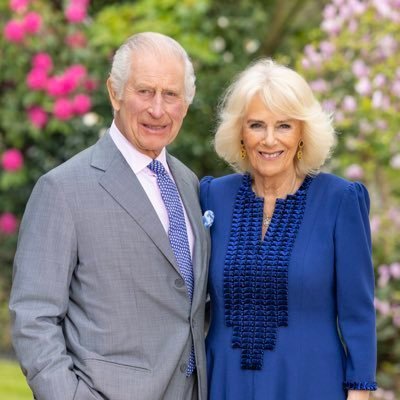
On the second anniversary of Their Majesties’ Coronation, two... commissioned Coronation State Portraits of King Charles III and Queen Camilla have been unveiled in the Central Hall at the National Gallery. The King chose to be painted by Peter Kuhfeld and The Queen selected Paul S. Benney. Both artists are known to Their Majesties already, having previously contributed to other royal commissions. These portraits join an important tradition of Coronation State Portraits dating back many centuries. The new portraits will be on display in the Central Room at the National Gallery, of which The King is Royal Patron, from Tuesday 6th May until Thursday 5th June. They will then move to their permanent home in the Throne Room at Buckingham Palace. They will be able to be seen during the Summer Opening of the State Rooms (10th July – 28th September 2025). ©️His Majesty King Charles III 2025. Photograph: Royal Collection Enterprises Ltd.show more
The Royal Family
375,438 次观看 • 1 年前
It’s our most favourite royal-watching day. It’s going to... be a full day of royal tradition, diplomacy, and tiara moments! Today’s Schedule: 🇳🇬 The President of the Federal Republic of Nigeria, Bola Ahmed Tinubu, accompanied by the First Lady, Oluremi Tinubu, is on a State Visit to the United Kingdom from 18 March to 19 March 2026. 🌄 Morning Highlights TRH Prince William and Catherine, the Prince and Princess of Wales, will welcome the President and First Lady on behalf of King Charles III at Fairmont Hotel, Windsor. They will then travel together to Datchet Road, where a ceremonial welcome will take place. The King will formally receive the distinguished guests at the royal dais. 🚃 Royal Procession Following the welcome, Their Royal Highnesses will join the King, the Queen, and the Presidential couple in a carriage procession to Windsor Castle. At the Quadrangle, they will be greeted with a guard of honour and a royal salute. 💂♂️🎖️ Military Display Expect a spectacular showcase featuring: • The King’s Troop Royal Horse Artillery march past • The Sovereign’s Escort rank past • The guard of honour march past 🏰 Afternoon Engagement In the afternoon, the Prince and Princess of Wales will join the King, members of the Royal Family, and the President and First Lady to view a special exhibition of Nigerian-related items from the Royal Collection in the Green Drawing Room at Windsor Castle. 🥂 Evening State Banquet In the evening, the Prince and Princess of Wales are expected to attend the State Banquet at Windsor Castle in honour of the President and Mrs Tinubu. Can't wait for today.show more

𓆩Mrs.W𓆪
14,058 次观看 • 5 个月前
There is no royal family in Europe more down-to-earth... than Norway's. I feel it in my bones every time I think of them. I was ten years old when our beloved King Olav V passed away. Like every other child in Oslo, I was allowed to stand before his casket and whisper a final goodbye. I still remember the hush, the candles, the sense that we had all lost someone who truly belonged to us. Because that's what he was - not a distant monarch, but our king. I don't know of another country in Europe where the royal family is so loved, so close to the hearts of ordinary people, as in Norway. And tonight, that closeness shines again. King Harald - together with Crown Prince Haakon, Princess Ingrid Alexandra, and Prince Sverre Magnus - is welcoming Team Norge to the Royal Palace. Our athletes, our pride, our flag-bearers, celebrated by the very family that has stood beside this nation through every joy and every sorrow. This is Norway. This is who we are. 🇳🇴show more

𝐌𝐢𝐜𝐡𝐚𝐞𝐥 𝐀𝐫𝐢𝐳𝐚𝐧𝐭𝐢
41,508 次观看 • 1 个月前
National song & dance festivals are now underway in... both Latvia & Estonia. These Baltic festivals (in Lithuania too) are listed by UNESCO as ‘Masterpieces of the Oral and Intangible Heritage of Humanity’. They include some of the largest joint choirs in the world with more than 30,000 performing on stage together. They’re essential for understanding the history and culture of our nations. For Latvia, it’s the big 150th anniversary taking place. Here in Estonia (shown in this video), it’s the youth version of the festival this year. No bad take here. Well, it’s a badly taken video. Nothing can come close to conveying the incredible atmosphere of these occasions until you come and experience it.show more

Bad Baltic Takes
144,632 次观看 • 3 年前
Appeal for the Protection of Balochistan’s Ancient Historical Heritage... Independent Republic of Balochistan: 22 August, 2026 Balochistan has been blessed by nature not only with vast seas, immense mineral resources, and a highly strategic geographical location, but also with the honour of being one of the important centres of some of humanity’s oldest civilizations. Mehrgarh, the Indus Valley Civilization, and other ancient archaeological sites stand as living evidence of the thousands of years of Balochistan’s human, cultural, and civilizational history. Earlier this month, a large quantity of valuable ancient artefacts was discovered in Dera Bugti during excavations by local people, while just yesterday, local Baloch people in the oil and mineral rich region of the Kohlu District (Kohlu, Kahan of Kohistan Marri region is known the richest region of entire Balochistan. These discoveries have once again drawn the world’s attention to the deep and ancient civilizational history of Balochistan. Where is Kohlu? It is believed that It has more oil than Venezuela and Iran) also discovered ancient artefacts and archaeological remains. Kohlu is the hometown of Baloch nationalist leader Hyrbyair Marri HYRBYAIR MARRI the son of Baloch nationalist leader Nawab Khair Bakhsh Marri. Former army chief Gen. Pervez Musharraf offered billion royalty to the Nawab Marri and Hyrbyair Marri to allow Pakistan for oil, gas, gold, critical minerals exploration but both the leaders refused to allow Pakistani military to extract the Baloch resources. These artefacts are not merely old objects; they are living documents of Balochistan’s past. Every seal, vessel, ornament, tool, sculpture, or other ancient object preserves the story of an era from which valuable knowledge can be gained about human society, trade, art, religion, ways of life, and the evolution of civilization. Scientific research into these remains can contribute not only to understanding Balochistan but also to understanding the shared history of all humanity. It is a great honour for Balochistan that its land has preserved such ancient civilizations and historical heritage. The Republic of Balochistan appeals to all international institutions, archaeologists, historians, museums, and organizations working to preserve ancient civilizations, Mehrgarh, the Indus Valley Civilization, and human history to play their role in protecting Balochistan’s historical heritage. Balochistan urgently needs international attention and cooperation so that these precious artefacts can be preserved, documented, and made available for scientific research, while protecting them from illegal transfer, destruction, or loss. We are also deeply concerned that if this historical heritage falls into the hands rogue state of Pakistan who seek to erase Balochistan’s history, language, and culture rather than preserve them, these artefacts could also suffer irreparable damage. In the context of reports of destruction and pressure involving educational and cultural institutions, libraries, and materials related to Baloch history and culture in Balochistan, as well as actions against students, teachers, professors, and individuals conducting research on history, serious international concern is necessary regarding the protection of these ancient remains. This is not only a time to rediscover the past, but also to protect it. These archaeological remains are not merely the heritage of the Baloch people; they are part of the shared civilizational heritage of all humanity. The world must take immediate steps to protect Balochistan’s ancient historical heritage, provide experts with opportunities for research and documentation, and ensure that these rare testimonies of thousands of years of human history do not become victims of Pakistan's state terrorism, war, neglect, illegal trade, or any form of destruction. Balochistan wishes to preserve and present this magnificent heritage of its land to the world with dignity, so that future generations may also see, understand, and take pride in their ancient history.show more
Mir Yar Baloch
21,741 次观看 • 5 天前
✨ One of our favorite nights of the year... is almost here! Join us on June 9 for the Museum Mile Festival—from 6–9 pm, stroll Fifth Avenue, enjoy free admission at participating museums, and experience outdoor performances, activities, and special programming along Museum Mile. At the Guggenheim, explore the galleries after hours, challenge a friend at our outdoor chess activations, and discover artwork by talented District 75 students. ♟️🎨 And just between us… a special giveaway might be in store for a few lucky visitors. 👀 There's something for everyone! Plus, be sure to stop by our friends at Neue Galerie New York! While the Neue Galerie is closed for restoration this summer, they'll be hosting a pop-up experience outside their landmark building, where visitors can explore the architectural history of 1048 Fifth Avenue and learn about the museum's renowned collections of Austrian and German art and design. See you on Museum Mile! Learn more at the link in bio. ✨show more

Guggenheim New York
15,368 次观看 • 2 个月前
🚨 THE WARNING WESTMINSTER IS IGNORING — AND WE... CAN NO LONGER AFFORD TO 🚨 The head of the Royal Navy has just sounded the alarm—and it is not routine defence speak. General Sir Gwyn Jenkins has warned that Britain is on the verge of losing the strategic dominance we’ve held in the Atlantic since 1945. Read that again. The Atlantic—the artery of transatlantic trade, NATO reinforcement routes, and undersea fibre-optic cables carrying trillions in financial transfers—is now contested. Russia isn’t “re-emerging.” Russia is already there. Its modernised Northern Fleet, deep-running submarines, and advanced missile systems are pushing aggressively into maritime space we once took for granted. Meanwhile, Britain’s fleet sits tied up in harbour. The First Sea Lord didn’t sugar-coat it: More Royal Navy ships are tied up at dock than ready to sail. Submarines lack crews. Operational readiness is collapsing. Training pipelines are shrinking. Hardware is decaying while procurement drags for years. This is not political positioning. This is a military leader warning that the strategic advantage Britain inherited from victory in the Second World War is evaporating. And here is the brutal truth: Power in the Atlantic determines: • who controls Europe’s supply lines • who defends the Arctic corridor • who dominates undersea cable infrastructure • who holds nuclear-deterrent awareness and response capability Lose that—and Britain stops being a serious power. We lose deterrence. We lose global reach. We lose influence. Jenkins didn’t say this quietly. He said the quiet part loudly: Britain must step up— or be stepped over. There are moments in history where decline is visible in real time. This is one of those moments. A Navy at harbour is a country in retreat. The question is now brutal and unavoidable: Does Britain still intend to shape the world— or merely watch as others do?show more

Jim Ferguson
139,084 次观看 • 8 个月前
❗️⚠️🇫🇷 - The Louvre Museum in Paris suffered a... brazen daylight heist on Sunday, where thieves stole jewelry valued at $102 million (88 million euros) in just seven minutes. Four suspects from an organized crime group used a truck's extendable ladder to access the Apollo Gallery, cut through a window, and break into display cases, fleeing on scooters with eight priceless items, including a diamond-studded crown once owned by Empress Eugenie and an emerald-and-diamond necklace gifted by Napoleon I to Empress Marie-Louise. Authorities are analyzing fingerprints, video footage from the museum and highways, and warn that melting the jewels would diminish their value, emphasizing the irreplaceable loss to France's heritage. Museum director Laurence des Cars, who has led since 2021, faces Senate culture committee scrutiny on Wednesday over security lapses. The Louvre, closed for two days of investigation, plans to reopen Wednesday despite tourist frustration and its regular Tuesday closure. The theft highlights rising threats to French museums: last month, Paris's Natural History Museum lost gold nuggets worth $1.5 million, leading to the detention of a 24-year-old Chinese woman in Barcelona with melted pieces; separately, thieves took two dishes and a vase valued at $7.6 million from a Limoges museum.show more

🔥🗞The Informant
198,364 次观看 • 10 个月前
THE BLOODLINE OF JESUS AND MARY MAGDALENE PART V:... THE VIKING GOD-KINGS SAFEGUARDING THE HOLY BLOODLINE 👑 The Northern Migration 👑 From the fateful union of Athaulf and Maria in 414 AD, a northern spark flared - the birth of a lineage that journeyed north from the realms of Gaul. Carried by Visigothic nobles who immediately moved this strand of the holy bloodline northward into Scandinavia for protection. Resettling in Sweden, Denmark and Norway, the merged bloodline fused with the Odinic clans, reinforcing the existing Odinic heritage and strengthening the deep-rooted legacy of the ancient warrior God-Kings and their sacred rites. 👑 The Dual Branches’ Masterful Strategy 👑 Sustaining two divergent branches - the southern Merovingians in Gaul and the northern Odinic Vikings in Scandinavia - constituted a profound tactical design, engineered to reinforce the sacred bloodline of Jesus against utter annihilation. This division scattered vulnerabilities across lands, permitting each path to evolve autonomously while bolstering the whole through sporadic unions and common lore, erecting a robust structure that confounded unified assaults from the Roman Church. 👑 Rise of the Ulvungar Dynasty 👑 By the 8th century, the northern line manifested in the Ulvungar dynasty, direct heirs of the Athaulf-Maria union, igniting the great Viking saga as resolute warriors bound by sacred duty. This formidable house, rooted in the fused Odinic and Davidic veins, orchestrated a grand design to counter the hegemony of Roman Christianity, launching calculated counterattacks through Viking raids that echoed across seas and shores, safeguarding their divine legacy against doctrinal erasure. After the Ulvungar kings secured the unification of Norwegian realms under king Harald Fairhair around 890 AD, Norway emerged as an ideal refuge for concealing the holy bloodline, its rugged isolation and delayed Christianization - resisting until around 1030 AD - provided a haven free from immediate ecclesiastical intrusion. 👑 Ragnar Lothbrok’s Reign 👑 We find a culmination of the bloodline’s story in the 9th century with Ragnar Lothbrok, the legendary Viking hero and king, who descended from the Ulvungar line. Ragnar’s exploits, including raids on England and France, unfolded as part of a broader strategy to challenge Roman Christian dominance, drawing on the dynasty’s dual heritage for legitimacy. Historical events like the Viking Age onset around 793 saw Ragnar’s sons - such as Ivar the Boneless and Björn Ironside - extending the line further - into the Anglo-Saxon kingdoms. Their actions resulted in significant Viking governance and settlement in substantial portions of the island. This is supported by sagas like the Saga of Ragnar Lothbrok and cross-referenced with DNA studies. 👑 Legacy of the Merged Bloodline 👑 The merged holy bloodline not only shaped royal houses but also influenced major events, such as the Viking conquests and the Norman invasion of England in 1066. The lineage endured through careful alliances. This can be traced drawing on privately owned primary records as well as renewed modern insight into historical documents, with family trees mapping its sacred flow and genetic markers affirming its ancient bonds. 👑 Guardians of the Holy Bloodline 👑 The Vikings perceived themselves as custodians of the holy bloodline, a self-imposed duty rooted in their ancestral mandate to preserve Jesus’ legacy from erasure. This facet of history endured attempts at concealment and revision by the Church, which sought to dominate narratives and quash alternative descents that challenged its authority. Their guardians’ ethos infused every endeavor. Raids and expansions were - not bloodthirsty theft as portrayed by the Church’ historians - but strategic defenses against ecclesiastical overreach, ensuring the bloodline’s truths remained intact beyond orthodox chronicles. 👑show more
Bendleruschka
22,751 次观看 • 8 个月前
Everyone is posting about Ceuta. Almost nobody knows where... it is or why it exists, so let me fix that, because the history is the entire story. Ceuta is not in Spain. It is in Africa. It sits on the north coast of Morocco, an eighteen square kilometre wedge of Spanish soil surrounded by Moroccan territory and the sea. Population around 83,000. Together with Melilla to the east, it forms the only land border the European Union has with the African continent. Look at a map. The Strait of Gibraltar is fourteen kilometres wide at its narrowest. Eight and a half miles. The ancients called the two headlands guarding it the Pillars of Hercules, the Rock of Gibraltar to the north and Monte Hacho, which sits inside Ceuta, to the south. That gate has been the hinge of the Mediterranean world for three thousand years. Now the history, which people keep getting backwards. The Romans held it and called it Septem Fratres, the seven brothers, which is where the name Ceuta comes from. Vandals, then Byzantines. In 711 a Berber commander named Tariq ibn Ziyad crossed that strait and began the conquest of Spain. The rock he landed at still carries his name. Jabal Tariq. Gibraltar. Then it turned the other way. Portugal took Ceuta in 1415, an event historians treat as the opening move of the Age of Discovery. When Portugal regained its independence from the Spanish crown in 1640, Ceuta alone chose to stay Spanish. Portugal formally ceded it in the Treaty of Lisbon in 1668. So Ceuta has been Spanish for 358 years, and European for 611. Morocco, as a modern independent state, has existed since 1956. That matters, because Morocco claims both enclaves as colonial relics. Spain calls them integral national territory and EU soil, which legally they are. And here is the pattern nobody mentions. In 2002 Morocco quietly occupied a tiny uninhabited rock called Perejil, a few hundred metres off the coast. Spain retook it with helicopters and special forces. In May 2021, after Spain admitted the leader of the Polisario Front for medical treatment, Moroccan border guards stood back and roughly 8,000 people walked and swam into Ceuta over two days. Spain's prime minister called it a serious crisis for Spain and for Europe. In 2022 Spain reversed itself and endorsed Morocco's autonomy plan for Western Sahara, and the border trouble stopped. Read that sequence again. The border opens when Madrid displeases Rabat. It closes when Madrid complies. There is a name for that. It is called instrumentalised migration, and the EU used the same language about Belarus pushing people at the Polish frontier. Whether it rises to an act of war is a lawyer's argument. That it is coercion using human beings as the instrument is not seriously disputed by anyone who follows the file. Now the current numbers, and I am going to be careful because everyone else is not. Ceuta's regional president says 60,000 entered, more than seventy percent of the city's population. Spain's Interior Ministry says close to 50,000 since Thursday, and that more than 48,300 have already been returned to Morocco. Al Jazeera reported 1,500 to 2,000 over ten days. Those figures cannot all be true. At least 18 people are dead, drowned or crushed at the breakwater. Some reports say more. Children are sleeping in parks. Spain has deployed the army. Italy is talking about extraordinary measures. The one number I am confident in is the dead one, and it will rise. So before the next hot take flies past you, remember what you are actually looking at. A European city on African soil, older in Spanish hands than the United States has existed, sitting on the narrowest gate between two continents, being used as leverage in a fight about Western Sahara. That is not a migration story. That is a border being used as a weapon, and people are drowning in it. 🦋show more

Selene Mariposa
86,142 次观看 • 27 天前
2025 has been a good comeback year for the... Wales family❤️ As Queen Elizabeth was quoted saying: “The lessons from the Peace process are clear: Whatever Life throws at us, our individual responses will be all the stronger for working together and sharing the load”👌🏽 Last year, the Royal family felt like it was crumbling with the “Annus Horribilis” of cancer announcements. And yet, seeing everyone carry on and especially seeing how the Wales family handled all the pressures and challenges they went through as a family is heartwarming to witness. 2024-2025 saw the story of a young family going through challenges and tribulations together and overcoming together❤️ As Prince William said to Brazilian Host Luciano Huck about sharing Catherine’s cancer journey with their children: “Every family has its own difficulties and its own challenges. It's very individual and sort of moment-dependent as to how you deal with those problems", “We choose to communicate a lot more with our children […] Sometimes you feel you're oversharing with the children"👌🏽 "But most of the time, hiding stuff from them doesn't work, and so explaining how they feel, why that's happening, giving them other viewpoints as to why they might be feeling like they are sometimes helps give them a bigger picture, and they can relax more into it rather than being really anxious about 'what are you hiding from me'?". "There's a lot more questions when there's no answers."❤️ One can tell by how this family moves as “one body” that they are a very tight knit family with children who are quite emotional aware and attuned to their parents’ emotions. This, in turn, creates a stronger family bond, and a family that supports each other, overcomes together🔥 This is what we have come to expect of our Royal family: to lead the way in showing the resilience of the British spirit especially during the hard times👌🏽 Thus, this Christmas video of the Wales family reminded me of Prince William saying to Eugene Levy during his how iconic interview: “I’d say 2024 was the hardest year I’ve ever had. You know, life is sent to test us as well, and being able to overcome that is what makes us who we are”❤️ #PrinceandPrincessofWales 📹 Kensington Palaceshow more

Canellecitadelle
37,100 次观看 • 8 个月前
The castles of Europe are some of the most... amazing things we’ve inherited from history Between 75,000 and 100,000 castles were built in Western Europe during the medieval period, with around 1,700 in England and Wales alone, and roughly 14,000 in German-speaking areas... Most of them rose between the 9th and 15th centuries after the collapse of centralized Roman authority and the rise of fragmented feudal power. As attacking armies grew more sophisticated, so did the walls meant to stop them. The cost was staggering: from 1179 to 1188, King Henry II of England spent over £6,500 on Dover Castle alone — an enormous sum given that his entire annual revenue was around £10,000. That figure was more than three times what he spent on any other building project in his reign, and more than four times what went into grand royal residences like Windsor. And then there is Malbork... Built by the Teutonic Knights in what is now Poland, Malbork is the largest castle in the world measured by land area. It covers 52 acres and once housed approximately 3,000 knights. A medieval visitor reportedly noted it seemed "more a city enclosed by walls than a single castle." In 950, Provence was home to just 12 castles. By 1000, the number had risen to 30. By 1030, it was over 100. The pace was not driven by a single empire with a plan, but by thousands of individual decisions made by lords, bishops, and kings who each decided, in their own time and place, that stone was the only reliable answer to an uncertain world... The word castle is derived from the Latin word castellum, which is a diminutive of the word castrum, meaning "fortified place". Between seventy-five thousand and a hundred thousand of these fortresses were built over six centuries as a reminder that every civilization eventually decides what it will leave behind. Europe decided on this. And the castles are still here.show more

James Lucas
1,922,101 次观看 • 4 个月前
3 years ago Refik Anadol & Efsun, together with... the royal family of the forest, the Yawanawa, dreamed of a project that could share the crossover of traditional indigenous art with futuristic pigments of AI. They dreamed of building a community to not only host their family, but also bring together their indigenous brothers and sisters from around the world. Aldeia Sagrada was reimagined. We 1OF1 are very honoured & deeply grateful that Refik Anadol & the Yawanawa family have chosen us to be the steward of their historic collaborative art work, the Winds of Yawanawa 1of1. Last week my family & I had the privilege to join Indigenous Nations from across the Amazon basin & around the world as they came together for a truly historic & deeply beautiful moment at the Indigenous Ayahuasca Conference in Acre, Brasil, where Indigenous leaders shared their ancient wisdom, beautiful art & wonderful energy with each other. As someone who has built infra in Brazil, I can confirm that what Refik Anadol and the Yawanawa family have built in Aldeia Sagrada is absolutely breathtaking & indescribable. The infrastructure & organization of their wonderful community is incredible. They have proven to the world a model for synergistic alliances between traditional Indigenous nations with new technologists, creatives and builders that can both massively support these native communities as well as celebrate the preservation of their way of life. I found myself overwhelmed with emotion at points throughout the week witnessing how amazing this place and these people are. It is with all of the lessons of 1OF1’s global tours in hand & our hearts filled with a deep sense of mission, that we commit to share this iconic work of art with the world in conversation with other works of Amazonian indigenous art. We promise to share the inspiring message of the Yawanawa across the globe through the power of art.show more

Ryan Zurrer
12,145 次观看 • 1 年前
🇬🇷 There is a distinct, poetic charm that sets... the Ionian island of Corfu entirely apart from the rest of Greece. While the Cyclades are famous for their barren landscapes and stark white walls, Corfu is a lush, emerald paradise shaped by centuries of Venetian, French, and British rule. It is a destination wrapped in a romantic magic that somehow keeps calling you back year after year, offering the perfect intersection of sophisticated European elegance, raw nature, and authentic Greek hospitality. To truly unlock the soul of the island, you need to immerse yourself in its diverse landscapes. Begin your journey inside the UNESCO-protected Corfu Town. Walking through its labyrinth of tall, pastel-hued apartment blocks and narrow stone alleys, known locally as kantounia, feels exactly like stepping into a hidden neighborhood in Venice or Naples. Once you have taken in the history, make your way northwest to the legendary shores of Paleokastritsa. This dramatic coastline features deep, jagged bays where dense pine forests tumble directly into impossibly clear, translucent turquoise waters that are perfect for afternoon boat excursions. As the day draws to a close, you have two spectacular options to watch the landscape transform. You can travel to the sheer vertical clay cliffs of Loggas Beach to watch the sun sink directly beneath the horizon line of the Ionian Sea. Alternatively, make the winding drive up to the mountain village of Pelekas to stand at Kaiser's Throne. Built as a personal retreat for Kaiser Wilhelm II, this panoramic lookout offers breathtaking, unobstructed views of the island's rolling olive groves and distant coastlines. Finally, no journey here is complete without diving deep into Corfu's unique culinary heritage. Because of its history, the local tavernas swap out standard Greek fare for iconic island comfort foods. Be sure to order a steaming clay bowl of pastitsada, tender meat braised in a rich, deeply spiced red-wine sauce served over thick Bucatini pasta or sample sofrito, an incredibly aromatic dish of tender veal simmered in an intense garlic, parsley, and white wine reduction. It is a culinary and sensory legacy that encapsulates a timeless way of life. 🎥 travelstoriesbyalexandra | IGshow more

𝕏 Travels, Hotels and Resorts
11,225 次观看 • 2 个月前
At first glance, it just looks like a stunning... painting. Then you step back and realize you’re looking at one of the most impossibly detailed works of art you’ve ever seen... Around 1620, in Antwerp, an unnamed Flemish painter set out to gather the city’s most famous artworks into a single piece, but what he ultimately chose to do with it will never cease to amaze me. Now held at the National Gallery in London, this painting is called Cognoscenti in a Room hung with Pictures, and it is, technically speaking, one of the most vertiginous acts of illusionism in the Western canon. Eleven richly dressed men — artists, dealers, collectors, the cognoscenti of the title — move through a vast imagined gallery, discussing and inspecting its contents. But the figures are almost beside the point. What stops you are the walls. From floor to ceiling, they are covered with meticulous miniature copies of real works by sixteenth- and seventeenth-century masters, mostly from Antwerp, assembled as an ideal gathering of the finest things the city had to offer. Paintings within a painting. A museum compressed into a canvas. This is what scholars call a Kunstkammer, or "cabinet of curiosities", and the genre carried real social weight. To collect art in the Dutch and Flemish Golden Age was a declaration, not merely a pleasure. The cognoscenti shown here are pretentious by design: richly dressed, surrounded by coins, medals, and Persian rugs. Every object is a signal of wealth. And then — almost invisible, sitting on the windowsill at the edge of the composition — there is the monkey. The picture celebrates the pleasures of collecting and the erudition of art appreciation. But the monkey, a traditional symbol of the foolishness of human endeavors, sits there as a reminder of the frivolity and ultimate futility of buying expensive things. He is mocking them... these men so devoted to hoarding precious objects, when perhaps their hours might have been spent on something less perishable. It is one of the most elegant acts of subversion in art history: a painter who spent months lovingly reproducing the work of other painters, in obsessive miniature detail, and then placed a fool's emblem in the corner to ask whether any of it matters... It is simultaneously a love letter to art and an indictment of what happens when love turns into possession. The cognoscenti in the room are not wrong to find beauty worth pursuing, but they have perhaps confused the pursuit with the trophy. Four hundred years later, the monkey is still watching and the question it asks has not changed: are you here for the beauty, or for the proof that the beauty is yours? -- -- -- I wrote about this and 5 other impossible masterpieces in today's article. You can read it here: If you'd like to support my work, a paid subscription is what makes it possible.show more
James Lucas
31,107 次观看 • 3 个月前