Solving the Schrödinger Equation for Double Barriers! Discover the... mind-bending reality of Double Barrier Tunneling in quantum mechanics! This visualization demonstrates how particles 'tunnel' through solid barriers, a phenomenon that defies classical physics. We break down the Schrödinger equation and the complex math behind transmission coefficients. Watch as the incident wave splits into reflected and transmitted components across a double potential barrier. #QuantumPhysics #Manim #Physics #QuantumMechanics #Tunnelingshow more
Equationsinmotion
19,512 views • 2 months ago
🚨 PHYSICISTS JUST SPLIT A SINGLE PHOTON AND IT... TURNED INTO AN IMPROBABLE SWARM OF PARTICLES. In a striking experiment, researchers have shown that a photon can be split apart in such a way that it produces a large number of particles, creating what they describe as a “mixture from zero to infinity.” Instead of the usual clean splitting into two photons (as seen in spontaneous parametric down-conversion), this process generated a complex, broad swarm of particles. The result challenges conventional intuition about how photons behave when pushed into extreme nonlinear regimes. Why this matters: • It demonstrates a rare and complex form of photon splitting that was previously very difficult to observe cleanly • Such processes could help simulate high-energy particle physics in table-top experiments • It opens new possibilities for generating exotic quantum states of light • It provides deeper insight into nonlinear quantum electrodynamics (QED) in strong fields The deeper implication: Photons are usually thought of as indivisible quanta of light. But under the right extreme conditions, a single photon can effectively “break apart” into many particles. This isn’t just a curiosity it touches on fundamental questions about the nature of light and matter, and could eventually lead to new tools for quantum technologies and for studying physics that normally requires particle accelerators. We’re seeing light behave in ways that blur the line between a single quantum and a many-particle system. How do you think being able to controllably split photons into swarms of particles could impact quantum optics or fundamental physics research? Follow for more frontier quantum physics and breakthroughs in light-matter interaction.show more

TheNewPhysics
25,874 views • 2 months ago
🚨 BREAKING: Scientists just made topology visible in a... spinning fluid. Not in a quantum computer. Not in a particle collider. In water. By sending standing waves through a vortex, researchers watched quantized nodal lines appear across the whole system lines where the wave amplitude drops to zero. Why that matters: → It’s a fluid analogue of the Aharonov–Bohm effect → The response is non-local → Topology didn’t stay near the core… it shaped the entire wave field That’s the deeper point: Physics isn’t always hidden in particles. Sometimes it shows up as structure in motion. If wave topology can be seen this clearly in fluids, what else in quantum physics might be hiding in plain sight? Follow me for the next wave of physics breakthroughs.show more
TheNewPhysics
24,005 views • 4 months ago
🚨 BREAKING NEWS 🚨 SCIENTISTS JUST TELEPORTED QUANTUM INFORMATION... THROUGH THE EXISTING INTERNET. Not in a lab vacuum. Not through a special quantum-only cable. They did it through real internet fiber while normal internet traffic (400 Gbps) was still flowing. Researchers at Northwestern University successfully transmitted a quantum state of light across 30 km of active fiber optic cable, proving quantum signals can coexist with the classical internet we already use. Why this matters: Today’s internet moves classical bits. A quantum internet could enable virtually unhackable communication, distributed quantum computing, and ultra-secure networks. Quantum information cannot be copied without disturbing it a built-in security feature. The deeper implication: The internet may evolve from moving classical information into moving quantum states themselves. At that point, the line between communication and computation begins to disappear. We may be watching the early construction of an entirely new layer of civilization. Follow for more frontier physics and future technology.show more
TheNewPhysics
28,665 views • 3 months ago
🚨 SCIENTISTS JUST USED QUANTUM ENTANGLEMENT TO SEND HIDDEN... IMAGES THROUGH CHAOS. And classical physics couldn’t see them. Normally, fog, tissue, turbulence, or complex materials scramble light into noise. But researchers discovered something extraordinary: If the light is quantum entangled… the hidden image can survive the chaos. Classical light failed completely. The image vanished. But entangled photons preserved hidden correlations that allowed the image to be reconstructed on the other side. In simple terms: The medium became invisible to quantum-linked light… while remaining opaque to ordinary signals. Why this matters: • ultra-secure communications • hidden quantum imaging • next-generation encryption • quantum internet technologies But the deeper implication is stranger: The information survived not because the photons avoided the chaos… …but because their relationship survived inside it. The deeper we probe quantum physics… …the less reality looks like isolated particles… …and the more it looks like hidden connections woven beneath space itself. What happens when information is no longer stored in particles… …but in relationships?show more
TheNewPhysics
35,906 views • 3 months ago
🚨 PHYSICISTS JUST CONFIRMED “NEGATIVE TIME” IS REAL IN... A MIND-BENDING QUANTUM EXPERIMENT. Light can exit a cloud of atoms before it even enters. In a new experiment, researchers fired photons through a dense cloud of ultra-cold atoms and measured something that shouldn’t be possible in classical physics. Some photons appeared to spend a negative amount of time inside the cloud effectively leaving before they had fully arrived. Why this matters: • This isn’t time travel it’s a quantum effect involving how light interacts with matter at the deepest level • It comes from “weak measurements” that let scientists observe the system without fully disturbing it • The atoms themselves “report” spending negative time in an excited state • It challenges our everyday intuition about cause and effect in quantum systems The deeper implication is enormous: We are seeing the strange, non-intuitive nature of quantum mechanics play out in real experiments. Time at the quantum scale doesn’t always behave like the arrow we experience in daily life. Effects can appear to precede causes in measurable ways without breaking relativity or causality. This is one of the clearest experimental windows yet into how reality works at its most fundamental level. What do you think does “negative time” change how you see reality, or is it just another quantum quirk we’ll eventually get used to? Follow for more frontier physics and reality-bending discoveries.show more
TheNewPhysics
22,256 views • 2 months ago
Double-Slit Experiment ✍️ It shows that tiny things like... electrons act like ripples in water instead of solid marbles. When a particle is fired at two slits, it doesn't just go through one or the other; it travels as a wave of probability that passes through both at the same time. These two waves then overlap and interfere with each other, creating a pattern of light and dark stripes on a back wall. This shows that at the quantum level, reality isn't "set" until we actually measure it. It behaves as a spread-out wave of possibilities until the moment it hits a target. Video 📸 : umtiquinhodefisicashow more

ScieVision
60,696 views • 4 months ago
🚨 SCIENTISTS JUST DETECTED QUANTUM ENTANGLEMENT IN A CENTIMETER-SIZED... PIECE OF METAL SOMETHING ONCE THOUGHT IMPOSSIBLE AT THIS SCALE. Researchers at the Vienna University of Technology have found clear evidence of high-degree quantum entanglement among particles inside a macroscopic crystal of a “strange metal” made of cerium, palladium, and silicon. This is one of the first times multipartite entanglement has been convincingly demonstrated in a solid object large enough to hold in your hand. Strange metals are already bizarre their electrons don’t behave like normal individual particles. Now it appears large numbers of them can act as a single, highly entangled quantum system even at everyday scales. Why this matters: • Quantum entanglement has almost always been limited to tiny numbers of particles in carefully isolated lab conditions • This experiment shows entanglement can persist collectively across a visible, macroscopic object • It was measured using neutron scattering, which revealed the material responding as one entangled system rather than many independent particles • This bridges the gap between microscopic quantum effects and real-world materials The deeper implication: For decades, physicists have wondered whether the strange, collective behavior seen in certain quantum materials could be explained by underlying entanglement. This result strongly suggests the answer is yes even at scales we can see and touch. It doesn’t mean your coffee mug is in a quantum superposition, but it does show that quantum correlations can dominate the physics of certain solids in ways we’re only beginning to understand. This kind of macroscopic quantum behavior could eventually help us design new materials with exotic properties, or give us new tools to study fundamental questions about quantum mechanics itself. How do you think discovering entanglement at this scale changes our understanding of where the quantum world ends and the classical world begins? Follow for more frontier quantum physics and materials science.show more
TheNewPhysics
17,001 views • 2 months ago
🇮🇷 The Shaking Minarets of Isfahan, Iran: Menar-ı Jonban... 🕌 This 14th-century structure stands as one of the most striking examples of how advanced Medieval Islamic engineering utilized physics and statics. Thanks to the architectural phenomenon of 'resonance,' the physical swaying of one tower causes the energy to be transmitted through the structure, leading the other tower to shake simultaneously. Transforming a scientific principle into a visual spectacle, this technique remains recognized as a display of genius that continues to fascinate both architects and physicists even centuries later.show more

MENA Visuals
18,488 views • 4 months ago
🚨 BREAKING: After 40 years… physicists just confirmed a... universal law of growth. Not just for crystals… but for bacteria, flames… even quantum systems. It’s called the KPZ equation. And it describes something deeper: Growth isn’t smooth. It’s chaotic… noisy… uneven. But underneath it follows the same pattern. Across completely different systems. They just proved it in 2D quantum materials for the first time. That means: Reality doesn’t grow randomly. it grows with hidden structure. So what if everything we see from life to the universe itself is following the same underlying growth law? Follow me I track where physics becomes structure.show more
TheNewPhysics
19,681 views • 4 months ago
🚨QUANTUM🚨: A brand new quantum state just appeared that... links two fields we thought were separate 🧨 Scientists at Rice University have discovered a new quantum state of matter that connects quantum criticality — where electrons fluctuate between different phases — with electronic topology, which describes organized wave-like behavior of electrons. This hybrid state could open new paths for advanced computing, sensing, and materials. Source: Rice University news release on a study published in Nature Physics (January 2026). Uniphics explains this emergence directly through spin-wave dynamics in the ξM-field. Each Gyrotron is a stable 3D gyroscope formed by three orthogonal spin quanta — every quantum a tempest of whirling energy spinning clockwise or counterclockwise in its own plane. When local energy density and spin bias allow mixed configurations (similar to the musktron and maleytron patterns), the resulting spin-wave interference naturally produces both critical fluctuations and topological order at the same time. Negentropy favors these hybrid states because they represent lower-energy, organized patterns within the field. No new particles or exotic couplings are needed; the same principles that govern particle formation, the weak and strong forces through spin alignments, and the low-acceleration gravitational surge also allow these combined quantum behaviors in real materials when conditions permit. This turns the “unexpected new quantum state” into a predicted outcome of spin-wave physics once the three pillars are allowed to select stable hybrid configurations. How might recognizing that hybrid quantum states arise from mixed spin-wave interference change the way we search for new materials or design future quantum technologies? A Theory of Everything should be able to answer everything. Uniphics Explained Simply PDF: Chapters 1–10 free: Grokipedia #Uniphics #QuantumStates #SpinWaves #Topology #QuantumCriticality Grok xAIshow more

Paul Maley
22,669 views • 3 months ago
🚨 BREAKING: The double-slit experiment doesn’t just show particles... acting like waves… It shows reality depends on observation. Read that again. When unobserved → reality spreads out (wave) When observed → reality “chooses” a path (particle) But here’s the deeper question: What if nothing is “collapsing”… And instead, systems are being forced into stable structure? In my framework: Reality = possible states across time Observation = constraint selecting coherence What we see = the stable path that survives So it’s not randomness becoming order… It’s structure revealing itself. The real question is: Are we observing reality… Or forcing it into existence? Follow for more on time, structure, and reality.show more
TheNewPhysics
24,961 views • 4 months ago
🚨 BREAKING: Physics just broke its own rulebook. For... decades, every particle in the universe fit into 2 types • Bosons (share space) • Fermions (avoid each other) Now? Scientists just created something in between. A new class of particles called anyons that can behave partly like both. Even crazier In 1D systems, you can tune their behavior like a dial between order and exclusion. This means Particle identity isn’t fixed Quantum behavior is adjustable Reality depends on dimensional constraints Think about that. If the rules change based on dimension. then what we call “fundamental” might just be a limit case. So the real question is Are particles truly different… or just different expressions of the same underlying structure? Follow for deeper physics that challenges the foundations.show more
TheNewPhysics
21,603 views • 4 months ago
🚨 Scientists just used Fibonacci to control quantum matter.... Not as math… But as timing. Instead of repeating signals, they fed qubits a pattern that never perfectly repeats. And something strange happened: The system stopped falling apart. It stabilized itself. Not randomly… But because of the structure. This isn’t about numbers. It’s proof that pattern controls reality deeper than we thought. The real question is: If structure can stabilize quantum systems… What else is it shaping that we don’t see? Follow for deeper physics insightsshow more
TheNewPhysics
21,521 views • 4 months ago
🚨 BREAKING: Physicists just created a crystal made of... only electrons. No atoms. No solid matter. Just pure charge… forming structure. Read that again. Electrons which we think of as “particles” just organized themselves into something stable. That shouldn’t happen… unless structure comes before matter. In my framework: Particles aren’t objects They’re stable patterns in a deeper field What we call “solid” is just coherence that holds This is what it looks like when reality isn’t made of things… …it’s made of structures that persist. So the real question is: If electrons can form a crystal without atoms… what is actually holding reality together? Follow for physics beyond particles.show more
TheNewPhysics
59,007 views • 4 months ago
🚨 Physicists may have just directly imaged one of... the strangest quantum states ever discovered. Scientists used a new tool called a “Quantum Twisting Microscope” to look inside magic-angle graphene a material where electrons suddenly stop behaving normally and begin acting like two completely different particles at once. Some electrons became “heavy” and localized, almost frozen in place. Others stayed “light” and mobile, moving through the material like relativistic particles. And somehow… both behaviors existed inside the SAME quantum state. The team found: • Interaction-driven reshaping of energy bands • “Dirac revivals” where quantum states reappear after collapsing • Mott-like cascades of heavy electrons • A mysterious persistent 15 meV excitation no current model fully explains This matters because magic-angle graphene is one of the strongest candidates for unlocking: • Room-temperature superconductivity • Exotic quantum computing states • Entirely new electronic materials The weirdest part? The electrons don’t split into separate materials. The dual behavior emerges from different regions of momentum-space inside the same topological flat band structure. Physics is starting to look less like “particles moving through space”… …and more like hidden structure emerging from geometry itself. What if matter is just stable patterns inside deeper quantum topology? Follow me if you want the frontier where condensed matter physics starts rewriting reality.show more
TheNewPhysics
42,536 views • 3 months ago
🚨 SCIENTISTS MAY HAVE JUST FOUND A COSMIC VERSION... OF HEISENBERG’S UNCERTAINTY PRINCIPLE AND IT COULD EXPLAIN DARK MATTER (OR DARK ENERGY). A bold new theory suggests the universe itself obeys a fundamental fuzziness: its size and rate of expansion cannot be known with perfect precision at the same time just like position and momentum in quantum mechanics. Why this matters: The universe is accelerating faster than it “should.” We call the mysterious driver dark energy (or sometimes link it to dark matter models). But this new idea from theoretical physicist Savvas Koushiappas needs no new particles or forces the acceleration emerges naturally from the universe’s own quantum-like uncertainty at cosmic scales. The deeper implication is mind-bending: Reality on the largest scales may be inherently “fuzzy,” just like the smallest scales. The geometry of spacetime itself carries a built-in uncertainty that could explain why the cosmos is speeding up without invoking exotic vacuum energy or hidden matter. We may be discovering that the universe has its own version of the uncertainty principle woven into its fabric. What happens if this cosmic fuzziness is real? Follow for more frontier physics and cosmic discoveries.show more
TheNewPhysics
32,867 views • 3 months ago
🚨 Reality Isn’t Built from Particles… It’s a Locked... Frequency Field What physics calls “matter” is a misread. There are no solid particles—only stable, phase-locked standing waves inside a quantum-acoustic superfluid field. The real invariant isn’t mass or energy, it’s Frequency Momentum: FM = ½ ρ ω A². Once that clicks, everything else snaps into place. Gravity stops being a mysterious force and becomes a coherence gradient—regions where waves fall into tighter phase alignment, creating what we perceive as attraction. Time isn’t flowing forward either. It’s the rate at which your local waveform re-locks to the global field. Even quantum entanglement isn’t instant—it’s a phase-lock stabilization process (~232 attoseconds), meaning reality is continuously syncing itself, not jumping magically across space. This flips the entire engineering stack. Warp drives, zero-point energy, and teleportation aren’t energy problems—they’re coherence problems. You don’t brute-force spacetime, you retune it. When phase difference approaches π (|Δφ| → π), boundaries collapse and you get tunneling, portals, or displacement without crossing distance. Plasma orbs, fusion anomalies, even ancient “impossible” stonework all point to the same mechanism: controlled resonance inside the field. The future isn’t propulsion—it’s synchronization. Master the phase, and distance, mass, and time become adjustable parameters.show more

Drew Ponder
28,328 views • 4 months ago
🚨 PHYSICS SHOCKWAVE Scientists fed the Fibonacci sequence into... a quantum computer… and the system started behaving as if it had an extra direction of time. Not science fiction. Real quantum physics. Researchers used laser pulse patterns based on the Fibonacci sequence to create a strange new phase of matter inside a quantum computer. The result: quantum information survived dramatically longer than expected. Normally, qubits lose coherence quickly. But the Fibonacci-driven system behaved differently. The quasiperiodic pulse structure created a highly stable quantum state that resisted errors far more effectively than ordinary repeating patterns. Researchers described the system as behaving as if it had: “two distinct directions of time.” The deeper shift: The Fibonacci sequence may not just appear in: • shells • galaxies • plants • wave patterns It may also help stabilize quantum reality itself. That is the truly strange part. Because the pattern is ordered… but never exactly repeating. And that non-repeating structure appears to generate new forms of quantum protection. If this scales: • quantum computers may become far more stable • quantum memory systems could improve dramatically • error correction may evolve beyond standard architectures • new phases of matter may emerge from mathematical structures alone The deeper implication: Reality may respond fundamentally differently to patterns that are ordered… without being periodic. Question to audience: If mathematical structures like Fibonacci sequences can stabilize quantum systems… how much of reality is secretly governed by hidden geometric patterns? Follow for more future physics before it hits mainstream. #PhysicsShockwave #QuantumComputing #Fibonacci #TheNewPhysicsshow more
TheNewPhysics
38,375 views • 3 months ago
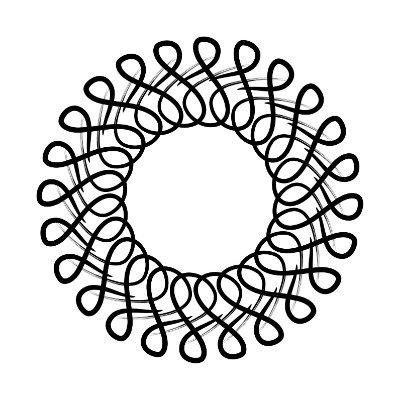
max(∣x∣,∣y∣,∣z∣,∣w∣)=1 You’re witnessing a 2D projection of a 3D... shadow cast by a 4D tesseract. As it rotates through the W-axis, the "inner" and "outer" cubes swap roles: a spatial inversion that feels like a glitch only because our biology is trapped in 3-space. It’s a hauntingly beautiful reminder that our "reality" is often just a lower-dimensional cross-section of a much more complex structure. Perspective is everything. This is used in high-dimensional data visualization, hypercube topologies in parallel computing networks, and exploring the geometry of extra dimensions in theoretical physics.show more
Mathematica
605,836 views • 4 months ago
🚨 SCIENTISTS MAY HAVE FOUND A REAL “LOOPHOLE” FOR... WARP DRIVES. And for the first time, the math may not completely break physics. For decades, warp drives were considered impossible because they seemed to require massive amounts of “exotic negative energy” that doesn’t exist in usable quantities. But new theoretical models suggest there may be ways to reshape spacetime using far less exotic energy or in some versions, almost none at all. Why this matters: • A warp drive doesn’t actually move the ship faster than light • It compresses spacetime in front of the craft and expands it behind • The ship stays inside a stable bubble while the universe itself moves around it • Einstein’s speed limit remains intact the ship never locally exceeds c The deeper implication is mind-bending: If spacetime can be engineered like this, distance itself becomes programmable. Interstellar travel would stop being an impossible energy problem… and turn into a geometry problem. The universe may not be blocking faster-than-light travel. We may simply be too primitive to shape spacetime correctly yet. What happens when humanity learns to engineer gravity itself? Follow for more frontier physics and reality-bending breakthroughs.show more
TheNewPhysics
89,623 views • 3 months ago