The Capuchin Crypt, a small space comprising several tiny... chapels located beneath the church of Santa Maria della Concezione dei Cappuccini on the Via Veneto near Piazza Barberini in Rome, Italy 🇮🇹. It contains the skeletal remains of 3,700 bodies believed to be Capuchin friars buried by their order. The order insists that the display is not meant to be macabre, but a silent reminder of the swift passage of life on Earth and of mortality. The apartments for this purpose are very small, yet harbour hundreds of such tenants. They lie here till they are dried up; when they are brought to light again, in order to yield their former spaces to their successors. - Arthur Aikin, "The Annual Review", 1806 When the friars arrived at the church in 1631, moving from the old monastery, they brought 300 cartloads of the remains of deceased friars. Fr. Michael of Bergamo oversaw the arrangement of the bones in the burial crypt. The soil in the crypt was brought from Jerusalem, by order of Pope Urban VIII. As friars died during the lifetime of the crypt, the longest-buried friar was exhumed to make room for the newly deceased, who was buried without a coffin and the newly reclaimed bones were added to the decorative motifs. Bodies typically spent 30 years decomposing in the soil, before being exhumed. The bones were arranged along the walls, and the friars began to bury their own dead there, as well as the bodies of poor Romans, whose tomb was under the floor of the present Mass chapel. Here the Capuchins would come to pray and reflect each evening before retiring for the night. The crypt, or ossuary, now contains the remains of 4,000 friars buried between 1500 and 1870, during which time Roman Catholic Church permitted burial in and under churches. As of 1851, the crypt was only opened to the public in exchange for an admittance fee for the week following All Souls Day. As of 2022, it is open to the public daily except for certain holidays. From 1851-1852, women were not admitted to the crypt. "This must be a revolting sight", said I to my friend; "and what appears to me yet more disgusting is that these remains of the dead are only exposed in this manner for the sake of levying a tax on the imbecility of the living". - J. B. de Chatelain, 1851 There are six total rooms in the crypt, five featuring a unique display of human bones believed to have been taken from the bodies of friars who had died between 1528-1870. • Crypt of the Resurrection, featuring a painting of Jesus raising Lazarus from the dead, framed by various parts of the human skeleton. • The Mass Chapel, as an area used to celebrate Mass, does not contain bones. In the altar-piece, Jesus and Mary exhort St. Felix of Cantalice, St. Francis of Assisi, and St. Anthony of Padua to free souls from Purgatory. The chapel contains a plaque with acronym DOM, which stands for Deo optimo maximo ("To God, the best and greatest"), a term initially used to refer to the pagan god Jupiter, but claimed by later Christians. The plaque contains the actual heart of Maria Felice Peretti, the grand-niece of Pope Sixtus V and a supporter of Capuchin order. The chapel also contains the tomb of the Papal Zouaves who died defending the Papal States at the battle of Porta Pia. • Crypt of the Skulls • Crypt of the Pelvises • Crypt of the Leg Bones and Thigh Bones • Crypt of the Three Skeletons: The center skeleton is enclosed in an oval, the symbol of life coming to birth. In its right hand it holds a scythe, symbol of death which cuts down everyone, like grass in a field, while its left hand holds the scales, symbolizing the good and evil deeds weighed by God when he judges the human soul. A placard in five languages declares: "What you are now we used to be; what we are now you will be." 🎥© holy.violence (IG) #archaeohistoriesshow more

Archaeo - Histories
22,441 görüntüleme • 11 gün önce
There is a room in Málaga that was built... to be the closest thing on earth to standing inside heaven. It is called the camarín of the Virgin of Victory, and it is hidden at the top of a tower inside the Santuario de la Victoria. To reach it, you climb and the ascent is the entire point... The building you are climbing through was completed in 1700, and it was designed as a single argument made in stone. At the bottom lies a crypt: a black chamber crowded with white plaster skeletons, a meditation on death and the brevity of life. From there a staircase rises, and as you climb it the light grows stronger and the imagery changes from bones to saints. The architects of the time understood this ascent as the soul's own journey, the dark crypt as the stage of penitence, the staircase as the stage of spiritual progress, and the room at the very top as the final stage: the union of the soul with the divine. That room at the top is the camarín, and its dome is one of the most extraordinary interiors in Spain... Every surface is covered in white and gold plasterwork. There is no empty space anywhere. The Baroque called this horror vacui, the horror of the void: the conviction that a space meant to represent heaven should not contain a single bare patch of stone. Out of that plasterwork emerge angels, flowers, birds, and mirrors. The mirrors are not decoration alone. They catch the light pouring in through the windows of the drum and throw it around the chamber, so that the gold seems to move and the whole room appears to shimmer and breathe. This wonder was built by people who believed that if you wanted to show a human being what heaven might feel like, you did not describe it to them. You built a room, and you let them climb into it... -- -- -- If you enjoyed this, I write a weekly newsletter read by over 50,000 people who love rediscovering the beauty of the past. You can join us here: If you'd like to support my work, a paid subscription is what makes it possible.show more

James Lucas
68,471 görüntüleme • 12 gün önce
The great bronze doors of St John Lateran (San... Giovanni in Laterano), the cathedral of Rome, once belonged to the ancient Curia Julia (Senate House), which still stands in the Forum. The doors, which date back to the reign of the emperor Domitian (r. 81-96), were moved to the cathedral in 1660, at the bequest of Pope Alexander VII (r. 1655-67), who had them adorned with the heraldic eight-pointed stars of his own coat of arms. From a symbolic viewpoint, the Holy Door takes on a special significance: it is the most powerful sign of the Jubilee, since the ultimate aim of the pilgrim is to pass through it. The opening of the door by the Pope constitutes the official beginning of the Holy Year. Originally, there was only one door, at the Basilica of St. John Lateran, which is the cathedral of the Bishop of Rome. Later, to allow as many pilgrims as possible to take part in the Jubilee experience, the other Roman Basilicas also opened their own holy doors. In crossing the threshold of the Holy Door, the pilgrim is reminded of the passage from chapter 10 of St John’s gospel: “I am the door. If anyone enters by me, he will be saved and will go in and out and find pasture.” Passing through the Holy Door expresses the decision to follow and be guided by Jesus, who is the Good Shepherd. The door is a passageway that ushers the pilgrim into the interior of a church. For the Christian community, a church is not only a sacred space, to be approached with respect, with appropriate behavior and dress code, but it is a symbol of the communion that binds every believer to Christ: it is a place of encounter and dialogue, of reconciliation and peace which awaits every pilgrim, the Church is essentially the place of the community of the faithful. In Rome, this experience takes on a special significance because of the special links between the Eternal City and Saints Peter and Paul, the apostles who founded the Christian community in Rome and whose teachings and example are models for the universal Church. The tombs of Saints Peter and Paul are located in Rome, they were martyred here; and together with the catacombs, these sacred sites are places of continuous spiritual inspiration. 🎥© thecatholictraveler (IG) #archaeohistoriesshow more
Archaeo - Histories
39,642 görüntüleme • 1 yıl önce
Mummy of Pacheri : It is the mummy of... a man about 1.65m tall, who lived during Ptolemaic Period (305-30 BC). It called 'Mummy of Pacheri', although the reading of the name remains problematic. The quality of its embalming, as well as the state of conservation make it a specimen noticeable and worthy of notice. The mummy is a perfect example for anyone wanting to understand the technique of embalming, and that is probably why it attracts such fascination from visitors. What adds to the charm of this mummy, is also its location in the museum. Indeed, located in a small niche at the back of the large sarcophagi room. At the top of the so-called Osiris crypt, the mummy is only visible in a certain dim light and remains well hidden, isolated from other artifacts, as if rest was a necessity for it in such a busy museum. According to the results of an X-ray analysis, this mummy is that of an adult man. His name, written hastily, can be read as either Pacheri or Nenu; the interpretation is still uncertain. The wide used collar covering his chest is formed of several rows of beads and includes falcon-headed clasps. The apron covering the body features various scenes arranged in registers, notably the mummy lying on a bed, surrounded by the goddesses Isis and Nephtys, and the four sons of Horus. Finally, the casing around the feet has two images of the funerary god Anubis. Louvre Museum (N 2627) 📽️© antiqua_archeologia (IG) - Subscribe for Weekly Newsletter - #archaeohistoriesshow more
Archaeo - Histories
57,028 görüntüleme • 2 yıl önce
Saint Michel d'Aiguilhe - the chapel on a volcanic... plug : The Chapel of Saint-Michel d'Aiguilhe is a fascinating little pilgrimage chapel perched atop a rocky needle of volcanic formation jutting dramatically high into the sky, at a place near Le Puy-en-Velay in France. The basalt needle on which the chapel is built rises approximately 280ft, and is reached by 268 stone steps that wind their way up the side of the rock. The chapel is surrounded by a walkway that provides a beautiful view of the city with its Cathédrale Notre-Dame du Puy and the old bridge crossing the cusps terminal. The chapel was built in 962 AD, but the rock needle itself has been a sacred place for thousands of years. A prehistoric dolmen was built there and the Romans dedicated it to Mercury before the Christians built a chapel. The chapel was built by the bishop of Puy to celebrate the return of St. Michael who was on a pilgrimage to Santiago de Compostela. It was a simple shrine built on a central plan, a square sanctuary and a tiny apsidole on each side. This original sanctuary and two of the apsidoles still survive today. The chapel attracted many pilgrims, especially since Le Puy was the starting point for one of the main routes to Santiago de Compostela. The 10th Century AD, frescoes were repainted in the original style and more were added. In 12th Century AD, the chapel was significantly enlarged by adding a short nave west of the original sanctuary, an elliptical ambulatory, two side chapels, a narthex with an upper gallery, a carved portal, and a bell tower. In 1955, archeologists discovered a treasure trove of sacred objects in the altar, which are now displayed behind an iron grate in the wall. 🎥© ken4photo (IG) #archaeohistoriesshow more
Archaeo - Histories
75,849 görüntüleme • 2 yıl önce
Is Baphomet really the Devil, and what does the... depiction mean? The Knights Templar were prosecuted in the fourteenth century, and under pressure it was written that they worshipped a deity from the East known as Baphomet. They were prosecuted by the elites who were threatened, the King of France and the Pope. The depiction of Baphomet comes from the French occultist Lévi in the nineteenth century as the Goat of Mendes, and it's an alchemical depiction of the balance of opposite forces. Later, in the twentieth century, that depiction was used by Satanic movements for something that has no connection to the real meaning of the depiction. The Goat of Mendes is actually the ancient ram-headed deity connected to Osiris and resurrection, known as Banebdjedet. Ba means soul, and Djed is the ancient name of Mendes, which also means the pillar spine of Osiris, so in a sense Banebdjedet means the soul that is climbing on the pillar. Before we go any deeper, you need to understand that Jesus was also connected to the ram, as He is the Lamb of God. The depiction of Baphomet is knowledge, not something that needs to be worshipped, but the Royal Families and the Pope wanted to forbid that knowledge that the Templars wanted to spread.show more

Open Minded Approach
28,620 görüntüleme • 3 gün önce
Facial reconstruction of a 4,300-year-old child from the Volga,... belonging to the genetically Yamnaya-like Catacomb culture. In the summer of 1989, an archaeological expedition of the Kuibyshev (Samara) State Pedagogical Institute investigated Kurgans of the burial ground near the village of Politotdelskoye (Kuzmina, 1990), a site comprising kurgans from different chronological periods. One of the Kurgans, dubbed Kurgan 4, contained an undercut grave (number 6). The oval entrance pit was oriented northeast–southwest and measured 1.78 m in length and 0.93 m in width. In the burial pit lay the skeleton of a child, around 7 years old. The soil beneath the skeleton and extending several centimeters around it was heavily stained with ochre. The coloration is especially strong in front of the torso, where the thickness of the stained layer reaches up to 10 cm. The bones themselves are lightly and generally evenly stained, with the hands being the most intensely colored. The skeleton was crouched on its left side, with the head oriented to the northeast. The skull is artificially deformed. The legs are slightly bent. The left arm is extended along the torso, while the right arm is bent at the elbow (the forearm lying across the torso, with the hand touching the left forearm). Along the left arm, in front of the face, by the left thigh, at the hands of both arms, on the left wing of the pelvis, and in the chest area, snake bones were found, heavily stained with ochre. Apparently, the snake bones belonged to several different snakes, although only one snake skull was discovered. The preservation of these bones is very poor, and their original arrangement is not fully intact. Animal bones were recovered behind the skull and near the left shoulder. Near the right mastoid process of the skull, a bronze pendant was found: a rounded spiral with one and a half turns, made from a rod of circular cross-section with flattened ends. Analysis of the most informative burials from the 1989 excavation at Politotdelskoye indicates attribution to the Volga–Don Catacomb culture.show more
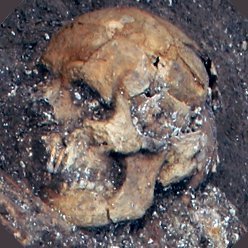
Ancestral Whispers
94,423 görüntüleme • 5 ay önce
More than 300 people tried to shelter themselves at... the site 2,000 years ago in hope of evacuation... An ancient Roman beach buried nearly 2,000 years ago due to the eruption of Mount Vesuvius has opened to the public in Italy after the completion of conservation work, in 2024. The busy city of Pompeii and the upmarket resort town of Herculaneum were smothered by a three-metre blanket of volcanic ash and pumice from the eruption in 79 AD. Many people were crushed or trapped in dwellings and temples where they took refuge. The following morning, a cloud of hot gas and ash swept in to suffocate the survivors. Many centuries later, the horrible reality was painstakingly unwrapped by archaeologists who restored the beach at the Herculaneum archaeological park by Gulf of Naples, giving visitors an experience of the town before the natural disaster struck. Herculaneum is located in modern-day Campania, Italy 🇮🇹. It is believed to be the site where more than 300 people tried to shelter themselves as they awaited evacuation by the army of Pliny the Elder, the Roman naval commander. The beach, which was discovered during 1980-90s, when skeletons of the inhabitants and other evidence of eruption were found during excavation, was reopened after years of restoration of work. "It was not only a restoration work but also a great research work because we know that representing a site, in an open-air archaeological place, also means being able to delve into scientific aspects: we carried out excavations and found remains and the passage of pyroclastic flows that hit the city in 79 AD with materials of all kinds," said Francesco Sirano, the director of the Herculaneum archaeological park. The most important discovery was of the “last fugitive” in 2021 – a 40-year-old man, trying to escape towards the sea with precious objects, reported ABC and NBC News affiliate KSBW. "Herculaneum, Pompeii, Oplontis: we are working on many projects", the Italian Minister of Culture Gennaro Sangiuliano, was quoted as saying by the outlet. "In the budget law we have refinanced the excavations and there are construction sites that are active like never before and are revealing new treasures, which fuel the activity of scholars." The minister said the restoration of this archaeological area “will represent a opportunity for socio-economic development”. 🎥© lookthroughhistory © The Independent #archaeohistoriesshow more
Archaeo - Histories
81,613 görüntüleme • 1 yıl önce
Our female warriors do not ask for "equality", they... demand victory. From the borders of the south to the thickets of the north, they are the watchers on the towers and the thunder in the field. They have traded the comfort of home for the grit of the front lines, proving that the soul of a Jewish warrior knows no gender only duty. In the Middle East, our enemies view women as property to be hidden or trophies to be taken. In Israel, we view them as the shield of the nation. They are the daughters of Deborah and the heirs of Yael, standing between our children and the savages who wish us gone. To the world, they are soldiers. To us, they are the heartbeat of our survival. If you want to know why we are invincible, look at the women who carry the weight of an entire nation on their backs without blinking. STOP SCROLLING AND SALUTE THE LIONESSES OF THE IDF! SHARE THIS TO SHOW THE WORLD THAT THE DAUGHTERS OF ISRAEL ARE BRAVER, STRONGER, AND MORE DEFIANT THAN THE ENEMY COULD EVER IMAGINE. AM YISRAEL CHAI! 🇮🇱🦁🔥show more

AMIRAN 🇮🇱
16,514 görüntüleme • 3 ay önce
St. John Lateran is the first church that was... built in Rome after Christianity became officially legalised. Above the altar of this church holds a reliquary that contains a piece of the table where the first Mass was celebrated by Jesus Himself(the Last Supper), and the altar also holds the skulls of St. Peter and St. Paul. I must come here one day.show more

Uche is a girl
19,772 görüntüleme • 5 gün önce
Madain Saleh, also known as Al-Hijr, is a pre-Islamic... archaeological site located in the northwest of Saudi Arabia. It is one of the most important archaeological sites in the Middle East and was designated as a UNESCO World Heritage site in 2008. Madain Saleh is a place of great historical and cultural significance, and it is a must-visit destination for anyone interested in the history and culture of the Arabian Peninsula. Madain Saleh was the second city of the Nabataean kingdom, which was established in 2nd Century BC. The Nabataeans were an Arab tribe who were known for their expertise in carving tombs and buildings out of rock. They were also skilled in agriculture, trade, and commerce. The Nabataean kingdom was centered in Petra, which is located in modern-day Jordan. Madain Saleh served as a strategic outpost for Nabataeans, and it was an important stop on the trade routes that connected the Arabian Peninsula with the Mediterranean world. Archaeological site of Madain Saleh covers an area of 13 square kilometers. It is located in a remote desert region, and it is surrounded by rocky mountains and valleys. The site contains around 130 tombs, which were carved out of the sandstone cliffs. The tombs are adorned with intricate carvings and inscriptions, which provide insights into the culture and religion of the Nabataeans. The most famous tomb at Madain Saleh is the Qasr Al-Farid, which means "the lonely castle." This tomb is located on a hilltop and is surrounded by a large courtyard. It is the largest tomb at the site, and it is considered to be one of the finest examples of Nabataean architecture. The tomb was never completed, and it is believed that it was abandoned after the death of the Nabataean king who commissioned it. Another important tomb at Madain Saleh is the Tomb of Lihyan son of Kuza. This tomb is located in the southern part of the site and is carved into a rock cliff. It features a large entrance hall, a central chamber, and a series of smaller rooms. The tomb is decorated with intricate carvings and inscriptions, which provide insights into the religious beliefs of Nabataeans. Madain Saleh is not just a site of tombs; it also contains a number of other important structures. These include the Al-Khuraymat and Al-Sabika temples, which were used for religious ceremonies and rituals. The site also contains a number of houses, wells, and cisterns, which provide insights into the daily lives of the Nabataeans. Madain Saleh was abandoned in the 3rd Century AD, after decline of the Nabataean kingdom. The site was rediscovered in the 19th Century by the Swiss traveler Johann Ludwig Burckhardt. Since then, it has been studied by archaeologists from all over the world. The site is now managed by the Saudi Commission for Tourism and National Heritage, which has carried out extensive restoration and preservation work. Madain Saleh is not just a site of historical and cultural significance; it is also a place of great natural beauty. The site is surrounded by rugged mountains and valleys, and it is home to a diverse range of flora and fauna. Visitors to the site can enjoy hiking and camping, as well as exploring the ancient ruins. Madain Saleh is a site of great historical and cultural significance, and it is a must-visit destination for anyone interested in the history and culture of the Arabian Peninsula. Ancient ruins at Madain Saleh provide a glimpse into the engineering and architectural skills of the Nabataeans, as well as their religious beliefs and cultural practices. However, as the site becomes an increasingly popular tourist destination, there are concerns about its preservation and the impact of tourism on the local environment. It is important that the Saudi government and local communities work together to ensure that the site is protected and that tourism is managed in a sustainable way. 🎥© Paris Verra #archaeohistoriesshow more
Archaeo - Histories
196,490 görüntüleme • 2 yıl önce
“In the modern world, man becomes a slave to... the feminine principle, seduced by images and illusions created by emotion and fantasy—decadent forms of eros.” —Julius Evola, Metaphysics of Sex The modern cult of equality has fixed its gaze upon the sexes. What had once been regarded as the polarity of man and woman, grounded in nature and consecrated by tradition, has been lowered to a counterfeit of sameness. Evola returned often to this inversion, discerning in it the same anti-hierarchical impulse that has disfigured every other sphere of life, and which, under the guise of liberation, has stripped both sexes of the dignity proper to their stations. What the age heralds as emancipation he judged to be a degradation, for feminism does not raise woman to her station but strips her of it, compelling her to abandon her essence in order to imitate man, while man himself, bereft of his higher path, sinks into a condition at once impoverished and grotesque. For Evola, culture was the victory of form over chaos, the conquest of the shapeless by order and measure. The city and the empire arose from the recognition of limits, of distinctions, of the rightful ranking of beings. Man attained his true stature as warrior and ascetic; woman realized her dignity as lover and mother. These types were not adversaries but counterparts, separate yet joined, each consecrated to the same principle of transcendence, each charged with its own path of heroism. In the sharpening of these forms, in the intensification of the masculine and the feminine, Europe attained its strength, and love retained its ancient dignity as a force at once generative and cosmic. There is also a beauty in the truth of form, for what is bound to nature and consecrated by tradition does not merely endure but shines. When the polarity of man and woman is clarified, when each fulfills the path proper to its essence, the result is not only strength but radiance. Beauty arises when limit is embraced, when form gives shape to matter, when order compels chaos into harmony. To behold such clarity is to glimpse truth itself, for truth and beauty are of one lineage, both testifying to the higher law that governs being. The modern age has broken this harmony. Bolshevism in the East proclaimed the equality of the sexes in the name of the collective. America in the West proclaimed the same in the name of emancipation. Beneath the opposing banners the result was alike: in one case, a promiscuous communality in which difference was dissolved, in the other, the masculinized woman of the factories and the salons. The poles collapsed, the bond was neutralized, eros was reduced to sterile companionship or the fleeting diversions of appetite. Evola named this impulse a radical pessimism, for beneath the assertion of equality lies the confession that woman, as woman, has no worth. She is compelled to take on the guise of man in order to claim value, and in so doing she forfeits the possibility of fulfillment. Man, in turn, is brutalized into a creature of appetite and utility, stripped of the higher forms once embodied in the ascetic and the warrior. Love itself, which depends upon polarity as fire depends upon the tension of elements, is extinguished, and with it the very possibility of renewal. What rises in its place is the gray world of neuter beings, uniform and without grandeur. Woman no longer appears as lover or as mother, but is driven into labor, into agitation, into pale imitations of intellectual life. Man no longer ascends as ascetic or warrior, but sinks into the tradesman, the showman, the brute. Thus the order of life is betrayed in its most intimate relation, and what once gave depth and height to being is consumed in the twilight of sameness. To revolt against this perversion is not to diminish woman but to restore her to her dignity. It is to affirm that difference and hierarchy are the ground of order, that polarity is the essence of love, that the higher destiny of mankind rests upon the distinction of the sexes. In defending this truth one does not merely preserve a passing custom, but upholds the principle of form itself. For in the bond of man and woman is mirrored the eternal strife of order with chaos, and in that strife the fate of the world is decided.show more

Chad Crowley
49,250 görüntüleme • 8 ay önce
The Book of Mormon: Another Testament of Jesus Christ... “is a volume of holy scripture comparable to the Bible. It is a record of God’s dealings with ancient inhabitants of the Americas and contains the fulness of the everlasting gospel.” As members of the Church of Jesus Christ of Latter-day Saints, we read, love, and strive to follow the teachings in Bible and the Book of Mormon. We love the word of God and want to share with you the joy it brings to us.show more
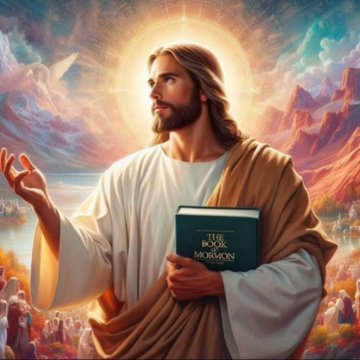
Book of Mormon: Another Testament of Jesus Christ
16,542 görüntüleme • 5 ay önce
Pope Leo XIV was in Naples today for the... veneration of San Gennaro and to visit the shrine of Our Lady of Pompeii. My eldest daughter Rafaella was also in Naples as she was there on a Catholic hen party with her good friend that is getting married this Summer. They had just got the wedding veil in Naples and the Pope was passing through the streets of Naples. As he was passing, they called out from the crowd to the Holy Father and asked if he would bless the veil. This is what happened. The girls are delighted and what a lovely thing to do for the promotion of the Catholic sacrament of matrimony;show more

Declan Ganley
15,872 görüntüleme • 29 gün önce
For 600 years, the only way to reach these... monasteries was to climb into a net and let monks haul you, by hand, hundreds of metres into the sky... The place is Meteora, which means suspended in the air, where enormous pillars of sandstone rise straight out of the plain of Thessaly, some of them climbing hundreds of metres into the air. They were shaped over millions of years by water and earthquakes into a forest of stone columns. On top of these pillars, against every instinct a human body has, monks built monasteries. They first came to these rocks in the 11th century, living as hermits in the caves and cracks of the cliffs. By the 14th century they began building on the summits themselves, seeking refuge as the Byzantine world collapsed and Ottoman power rose around them. As many as twenty-four monasteries were eventually raised on these peaks in central Greece. They had no stairways, no roads, and in many cases no obvious way up at all. For centuries, the only way to the top was to be lifted in a net or basket, hauled by hand on a rope wound around a wooden winch by the monks above. Food, building stone, supplies, and people all rose the same way, swinging in open air, hundreds of metres above the ground. Stairways were finally carved into the rock in the 1920s, and today six of the monasteries are open to visitors. G.K. Chesterton once said: "The world will never starve for want of wonders; but only for want of wonder." He was right. The wonders are still here. Whether we still have the wonder is up to us... If you enjoyed this, check out today's article for a deeper dive: And if you'd like to support my work, a paid subscription is what makes it possible:show more
James Lucas
162,961 görüntüleme • 9 gün önce