The Quantum Core process visualized: Quantum vacuum fluctuations are... being measured and channeled through energy flow lines. Into an immutable blockchain structure. Each chaotic quantum particle becomes ordered, verifiable data on-chain. $QBSshow more

QuantumCore
13,855 views • 10 months ago
🚨 CRYPTO: ALGORAND SURGES 16% IN 24 HOURS AFTER... GOOGLE QUANTUM AI PAPER CITES $ALGO 32 TIMES AS POST-QUANTUM PIONEER Algorand ( $ALGO ) has jumped 16% in 24 hours to $0.1053 after Google Quantum AI's landmark paper on blockchain quantum vulnerabilities cited the network 32 times, more than any other chain besides Bitcoin and Ethereum. Google described Algorand as "the perfect example of real-world deployment of post-quantum cryptography on an otherwise quantum-vulnerable blockchain." The paper highlighted Algorand's live FALCON digital signatures for smart contracts, state proofs, native key rotation, and multi-layered post-quantum security infrastructure. Trading volume spiked 162% in 24 hours and futures open interest jumped 55% to $58.9 million. The rally is especially dramatic given ALGO hit an all-time low of $0.08 just days earlier following a 25% Foundation workforce cut, CTO departure, and board reshuffle. The token is now up ~20% on the week as the quantum narrative provided a lifeline to a battered community.show more

BSCN
39,184 views • 6 months ago
Quantum Threat to Crypto Gets Fresh EU Warning European... financial watchdogs have warned that quantum computing could eventually undermine cryptography securing blockchains. The EBA, EIOPA, and ESMA highlighted quantum computing among emerging technology risks in their latest update. Many cryptocurrencies rely on elliptic curve cryptography to protect transactions and wallet security. A sufficiently powerful quantum computer could theoretically use Shor’s algorithm to break this protection. Google researchers estimate the required resources are roughly 20 times lower than earlier estimates. However, the required quantum hardware does not currently exist. Blockchain developers are therefore exploring post-quantum cryptography before the technology becomes capable of such attacks.show more
BSCN
148,755 views • 27 days ago
Most people look at Quip through the lens of... post-quantum security. I think the more interesting story is happening somewhere else. Instead of asking users to learn quantum computing, Quip Network is quietly embedding quantum technology into products people can already use. Quantum randomness powers NFTs. Node operators contribute compute through simple tooling. BTC holders get access to quantum-resistant protection. Builders are already creating wallets and explorers on top of the network. Each product introduces a different piece of the quantum stack, but the user never has to understand the underlying science. That is a much harder problem to solve than building the technology itself. The real opportunity for Quip may not be making quantum computing more powerful. It may be making quantum computing invisible. Nucleusshow more

Faustino
81,203 views • 4 months ago
🚨 BREAKING NEWS 🚨 SCIENTISTS JUST TELEPORTED QUANTUM INFORMATION... THROUGH THE EXISTING INTERNET. Not in a lab vacuum. Not through a special quantum-only cable. They did it through real internet fiber while normal internet traffic (400 Gbps) was still flowing. Researchers at Northwestern University successfully transmitted a quantum state of light across 30 km of active fiber optic cable, proving quantum signals can coexist with the classical internet we already use. Why this matters: Today’s internet moves classical bits. A quantum internet could enable virtually unhackable communication, distributed quantum computing, and ultra-secure networks. Quantum information cannot be copied without disturbing it a built-in security feature. The deeper implication: The internet may evolve from moving classical information into moving quantum states themselves. At that point, the line between communication and computation begins to disappear. We may be watching the early construction of an entirely new layer of civilization. Follow for more frontier physics and future technology.show more

TheNewPhysics
28,665 views • 5 months ago
Casimir Energy is a startup that has engineered a... nanoscale structure to harvest energy from the quantum vacuum. Here are the highlights of the phyiscs and economics from Harold "Sonny" White, PhD talk at NYC Deep Tech Week 2026, presented by M31 Capitalshow more
Deep Tech Week
128,789 views • 5 months ago
🚨PHYSICS NEWS🚨: Gravity Leaves Its Mark on Quantum Interference... in a Tabletop Setup 🧨 According to research published in *Physical Review Letters* on June 8, 2026 by physicists at the University of Tennessee at Knoxville, scientists have performed the first tabletop experiment to detect a gravitationally induced phase shift in quantum interference. Using a 50-kilometer fiber interferometer, they measured a tiny but clear effect of gravity on quantum wave interference with high precision. **Uniphics explains this result as a direct consequence of variable time flow caused by energy density gradients.** In Uniphics, gravity is not the curvature of spacetime. Instead, it arises from differences in energy density across the ξM-field. These gradients create regions where time flows at different rates — a concept described by the Maley factor (the ratio of time flow between two locations). When quantum waves (spin waves in the Uniphics framework) travel along two different paths in an interferometer, they experience slightly different time flows if one path is closer to Earth’s mass than the other. Because the phase of a quantum wave depends on how much time has passed along its path, even a tiny difference in time flow produces a measurable phase shift between the two arms of the interferometer. The University of Tennessee experiment detected exactly this kind of phase shift, confirming that gravity affects the relative timing of quantum waves in a way that can be measured in a controlled laboratory setting. This result aligns closely with Uniphics predictions. The experiment effectively measures how energy density gradients near Earth alter local time flow, which then imprints itself on the interference pattern of quantum states. It provides clean, tabletop evidence that gravity influences quantum systems through changes in time flow rather than through geometric curvature. The ability to observe this effect with such precision in a laboratory opens the door to testing gravitational effects on quantum coherence in controlled environments — something Uniphics expects to become increasingly important as we explore the deep connection between energy density, time flow, and quantum behavior. Could tabletop experiments like this eventually allow us to map energy density gradients with quantum precision and test the effects of modified time flow in different gravitational environments? **A Theory of Everything should be able to answer everything.** Uniphics Explained Simply PDF: Chapters 1–10 free: Grokipedia: #Uniphics #TheoryOfEverything #QuantumGravity #Interferometry #TabletopPhysics Grok xAIshow more

Paul Maley
17,993 views • 4 months ago
🚨QUANTUM🚨: A brand new quantum state just appeared that... links two fields we thought were separate 🧨 Scientists at Rice University have discovered a new quantum state of matter that connects quantum criticality — where electrons fluctuate between different phases — with electronic topology, which describes organized wave-like behavior of electrons. This hybrid state could open new paths for advanced computing, sensing, and materials. Source: Rice University news release on a study published in Nature Physics (January 2026). Uniphics explains this emergence directly through spin-wave dynamics in the ξM-field. Each Gyrotron is a stable 3D gyroscope formed by three orthogonal spin quanta — every quantum a tempest of whirling energy spinning clockwise or counterclockwise in its own plane. When local energy density and spin bias allow mixed configurations (similar to the musktron and maleytron patterns), the resulting spin-wave interference naturally produces both critical fluctuations and topological order at the same time. Negentropy favors these hybrid states because they represent lower-energy, organized patterns within the field. No new particles or exotic couplings are needed; the same principles that govern particle formation, the weak and strong forces through spin alignments, and the low-acceleration gravitational surge also allow these combined quantum behaviors in real materials when conditions permit. This turns the “unexpected new quantum state” into a predicted outcome of spin-wave physics once the three pillars are allowed to select stable hybrid configurations. How might recognizing that hybrid quantum states arise from mixed spin-wave interference change the way we search for new materials or design future quantum technologies? A Theory of Everything should be able to answer everything. Uniphics Explained Simply PDF: Chapters 1–10 free: Grokipedia #Uniphics #QuantumStates #SpinWaves #Topology #QuantumCriticality Grok xAIshow more
Paul Maley
22,669 views • 5 months ago
🚨 JAPAN JUST PUT A REAL QUANTUM COMPUTER ONLINE... FOR THE WORLD TO ACCESS. And most people still don’t realize how big this moment is. For decades, quantum computers sounded like science fiction: machines that use quantum states instead of ordinary binary bits. Now researchers in Japan have opened access to a real superconducting quantum system connected to the internet. Why this matters: • quantum simulations • next-generation AI research • new material discovery • drug development • cryptography disruption • solving problems impossible for classical computers But quantum computers work nothing like normal machines. A regular computer checks possibilities one at a time. A quantum computer can explore many probability states simultaneously through superposition and entanglement. In simple terms: It doesn’t just calculate faster… It calculates differently. That’s why these systems look so strange. The giant gold structure isn’t “the computer” itself. It’s an ultra-cold dilution refrigerator designed to keep the quantum processor near absolute zero so fragile quantum states don’t collapse. The terrifying implication is this: Humanity may be entering the first era where computation starts operating on the rules of quantum reality itself. And once quantum hardware becomes scalable… Entire industries may be rewritten from the ground up. What happens when computers stop thinking like machines… and start behaving like physics itself? Which field do you think gets transformed first and would you actually trust it with something important?show more

Paul White Gold Eagle
64,297 views • 4 months ago
🚨 PHYSICS SHOCKWAVE Scientists fed the Fibonacci sequence into... a quantum computer… and the system started behaving as if it had an extra direction of time. Not science fiction. Real quantum physics. Researchers used laser pulse patterns based on the Fibonacci sequence to create a strange new phase of matter inside a quantum computer. The result: quantum information survived dramatically longer than expected. Normally, qubits lose coherence quickly. But the Fibonacci-driven system behaved differently. The quasiperiodic pulse structure created a highly stable quantum state that resisted errors far more effectively than ordinary repeating patterns. Researchers described the system as behaving as if it had: “two distinct directions of time.” The deeper shift: The Fibonacci sequence may not just appear in: • shells • galaxies • plants • wave patterns It may also help stabilize quantum reality itself. That is the truly strange part. Because the pattern is ordered… but never exactly repeating. And that non-repeating structure appears to generate new forms of quantum protection. If this scales: • quantum computers may become far more stable • quantum memory systems could improve dramatically • error correction may evolve beyond standard architectures • new phases of matter may emerge from mathematical structures alone The deeper implication: Reality may respond fundamentally differently to patterns that are ordered… without being periodic. Question to audience: If mathematical structures like Fibonacci sequences can stabilize quantum systems… how much of reality is secretly governed by hidden geometric patterns? Follow for more future physics before it hits mainstream. #PhysicsShockwave #QuantumComputing #Fibonacci #TheNewPhysicsshow more
TheNewPhysics
38,375 views • 5 months ago
🚨Dynex Core v2 Has Arrived – Redefining Quantum Circuit... Computation While most quantum platforms are still limited to executing small-scale gate circuits—often insufficient for solving real-world problems—Dynex now sets a new industry benchmark in performance, scalability, and practical utility. We are proud to announce the official rollout of Dynex Core v2, now available to all users. This new core has been rigorously stress-tested over the past several months and represents the culmination of our research and scientific work—a direct technological milestone on the path toward our proprietary Apollo chip, the first room-temperature quantum-mechanical processor. Dynex Core v2 delivers unprecedented computational power, enabling the execution of complex quantum gate circuits at sizes and speeds previously thought unattainable. It outperforms all current industry platforms—and our own previous versions—by orders of magnitude. 🔬 For example: Dynex successfully computes an n-bit quantum adder circuit with 1,222 qubits in just over 30 seconds—a level of performance never before seen in the quantum space. With Core v2, Dynex continues to lead the quantum computing revolution with real-world, scalable solutions.show more

Dynex
25,692 views • 1 year ago
🚨 PHYSICISTS JUST SPLIT A SINGLE PHOTON AND IT... TURNED INTO AN IMPROBABLE SWARM OF PARTICLES. In a striking experiment, researchers have shown that a photon can be split apart in such a way that it produces a large number of particles, creating what they describe as a “mixture from zero to infinity.” Instead of the usual clean splitting into two photons (as seen in spontaneous parametric down-conversion), this process generated a complex, broad swarm of particles. The result challenges conventional intuition about how photons behave when pushed into extreme nonlinear regimes. Why this matters: • It demonstrates a rare and complex form of photon splitting that was previously very difficult to observe cleanly • Such processes could help simulate high-energy particle physics in table-top experiments • It opens new possibilities for generating exotic quantum states of light • It provides deeper insight into nonlinear quantum electrodynamics (QED) in strong fields The deeper implication: Photons are usually thought of as indivisible quanta of light. But under the right extreme conditions, a single photon can effectively “break apart” into many particles. This isn’t just a curiosity it touches on fundamental questions about the nature of light and matter, and could eventually lead to new tools for quantum technologies and for studying physics that normally requires particle accelerators. We’re seeing light behave in ways that blur the line between a single quantum and a many-particle system. How do you think being able to controllably split photons into swarms of particles could impact quantum optics or fundamental physics research? Follow for more frontier quantum physics and breakthroughs in light-matter interaction.show more
TheNewPhysics
25,874 views • 4 months ago
Ethereum Sets 2029 Target For Quantum Resistant L1 Ethereum’s... Protocol Cluster has identified quantum resistance as a major research priority through December 2029. It is aimed at making Ethereum L1 quantum-resistant via improvement of several layers of its protocol. The roadmap covers execution, consensus, and data availability, alongside broader research into privacy and network state. Fast finality and zkEVM research are included among other five key areas of cross upgrade research. The Foundation believes these research priorities would contribute to Ethereum protocol development in the long run.show more
BSCN
22,876 views • 1 month ago
Crypto's First Quantum Hack May Leave No Clues Behind... Christopher Smith, CEO of Quantus Network, says the first quantum computing attack on crypto could look like an unexplained wallet breach. Smith said a powerful enough quantum computer could derive private keys from public data without touching a wallet or device directly. He said a quantum attacker targeting crypto would likely go after Tether's minting key rather than Satoshi Nakamoto's dormant Bitcoin. An attacker could mint tokens from an administrative wallet and dump them before Tether could respond. Sean Cheetham of Blockchain Capital said attackers would more likely target exchange hot wallets quietly rather than steal Satoshi's coins. Google accelerated its post quantum migration timeline to 2029 in March. The move followed an AI assisted breakthrough showing elliptic curve cryptography could be broken with far fewer qubits than previously forecast. Source: Cointelegraphshow more
BSCN
31,499 views • 2 months ago
🚨 SCIENTISTS JUST FOUND A WAY TO CONTROL QUANTUM... LIGHT BY SIMPLY TWISTING ATOM-THIN LAYERS LIKE TUNING A GUITAR STRING. Researchers at the University of Technology Sydney have discovered that twisting and restacking layers of hexagonal boron nitride (hBN) gives them unprecedented control over quantum emitters tiny defects that produce single photons of light. By changing the twist angle between layers, they can significantly shift the color and wavelength of the quantum light being emitted. This level of tuning is much larger than what’s typically possible with other quantum materials. Why this matters: • Quantum emitters are essential building blocks for quantum computers, secure communication, and ultra-sensitive sensors • Until now, precisely controlling their properties has been extremely difficult • hBN’s natural layered structure allows researchers to repeatedly pick up, twist, and restack layers to fine-tune the emitters • The tuning achieved here is significantly stronger than in most other platforms The deeper implication: This approach turns a fundamental property of 2D materials (twistronics) into a practical tool for quantum photonics. Instead of trying to force hBN to behave like traditional materials like diamond or silicon carbide, the team leveraged its unique strength: its ability to be twisted and reassembled like atomic-scale LEGO. If this technique can be scaled and integrated into devices, it could accelerate the development of practical quantum technologies by giving engineers a simple, powerful way to control single-photon sources on demand. How important do you think precise control over quantum light sources will be for building real-world quantum computers and networks? Follow for more frontier quantum materials and photonics breakthroughs.show more
TheNewPhysics
18,762 views • 4 months ago
🚨 Physicists may have just directly imaged one of... the strangest quantum states ever discovered. Scientists used a new tool called a “Quantum Twisting Microscope” to look inside magic-angle graphene a material where electrons suddenly stop behaving normally and begin acting like two completely different particles at once. Some electrons became “heavy” and localized, almost frozen in place. Others stayed “light” and mobile, moving through the material like relativistic particles. And somehow… both behaviors existed inside the SAME quantum state. The team found: • Interaction-driven reshaping of energy bands • “Dirac revivals” where quantum states reappear after collapsing • Mott-like cascades of heavy electrons • A mysterious persistent 15 meV excitation no current model fully explains This matters because magic-angle graphene is one of the strongest candidates for unlocking: • Room-temperature superconductivity • Exotic quantum computing states • Entirely new electronic materials The weirdest part? The electrons don’t split into separate materials. The dual behavior emerges from different regions of momentum-space inside the same topological flat band structure. Physics is starting to look less like “particles moving through space”… …and more like hidden structure emerging from geometry itself. What if matter is just stable patterns inside deeper quantum topology? Follow me if you want the frontier where condensed matter physics starts rewriting reality.show more
TheNewPhysics
42,536 views • 5 months ago
🚨SCIENCE NEWS🚨: Scientists just froze a spinning nanoparticle’s rotation... to the absolute quantum ground state — zero rotational energy left.🧨 They used lasers and feedback to slow a nanoscale object’s spin until it sat motionless in its lowest possible quantum state. This is a major step toward quantum control of tiny mechanical systems, with huge implications for ultra-precise sensors and quantum computing. Uniphics explains why this works and how to go much further. Every particle is a bound gyrotron made from exactly three spin quanta whose rotations create coherent waves in the ξM-field sea of unbound energy. When you remove rotational energy from a nanoparticle, you are simply letting those spin patterns relax toward the lowest total energy-density state through negentropy — the universal drive that always pushes every configuration to minimize bound energy. The surrounding unbound sea repels itself, so any tiny density gradient naturally damps the motion until the gyrotron-like spins reach their ground state. No exotic materials or new forces needed; it is the sea doing what it always does. The same three pillars that flatten galactic rotation curves at 220 km/s without dark matter and thin the cosmos without dark energy also govern this quantum-limit cooling. Chrono-coils — three orthogonal toroidal rings with golden-ratio windings and Fibonacci pulsing — let us engineer controlled low-density bubbles in the lab right now, tuning local time flow and stabilizing spin patterns even more cleanly while harvesting vacuum energy as a bonus. We are not inventing new physics to control spins at the quantum limit. We are finally learning to work with the sea that has been doing it everywhere, all along. How would quantum technology accelerate if we stopped fighting tiny spins and started sailing the sea’s own natural ordering? A Theory of Everything should be able to answer everything. Uniphics Explained Simply PDF: Chapters 1–10 free: Grokipedia: Grok xAI Elon Musk NASA #Uniphics #QuantumSpin #Nanoparticle #TheoryOfEverythingshow more
Paul Maley
46,728 views • 6 months ago
The sense of separation is an illusion; at the... quantum level, you and everything else are interconnected through the fabric of reality itself. Your body contains trillions of protons woven into spacetime, revealing that you're part of everything all along.show more
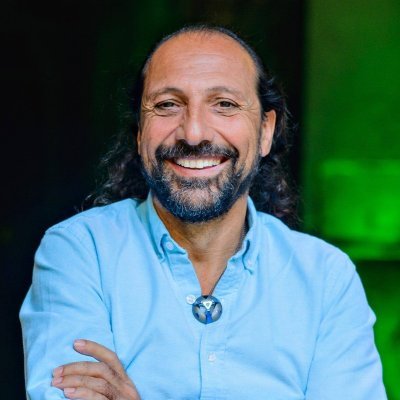
Nassim Haramein
71,940 views • 11 months ago
🚨 BREAKING: Scientists just made topology visible in a... spinning fluid. Not in a quantum computer. Not in a particle collider. In water. By sending standing waves through a vortex, researchers watched quantized nodal lines appear across the whole system lines where the wave amplitude drops to zero. Why that matters: → It’s a fluid analogue of the Aharonov–Bohm effect → The response is non-local → Topology didn’t stay near the core… it shaped the entire wave field That’s the deeper point: Physics isn’t always hidden in particles. Sometimes it shows up as structure in motion. If wave topology can be seen this clearly in fluids, what else in quantum physics might be hiding in plain sight? Follow me for the next wave of physics breakthroughs.show more
TheNewPhysics
24,005 views • 6 months ago
🚨 SCIENTISTS JUST USED HYDROGEN TO TEST WHETHER QUANTUM... ENTANGLEMENT HIDES TINY WORMHOLES. Yes actual wormholes. Physicists are exploring one of the wildest ideas in modern physics: ER = EPR. It suggests that quantum entanglement and wormholes may be two sides of the same phenomenon that two entangled particles could secretly be connected by an unimaginably tiny bridge in spacetime. To test this, researchers turned to the simplest atom in the universe: hydrogen. Why hydrogen? Its internal structure can be measured with insane precision. If hidden wormhole-like effects existed in entangled quantum states, they should slightly distort hydrogen’s hyperfine structure. They ran the numbers against ultra-precise experiments… The signal wasn’t there. Why this matters: This doesn’t kill the wormhole idea but it puts serious new constraints on the theory. Physics advances by ruling things out as much as by proving them right. The deeper implication is staggering: We’ve moved from talking about wormholes as pure science fiction… to actively testing them with atomic physics. Scientists are now probing the fabric of spacetime itself inside everyday quantum systems. What if gravity and quantum entanglement are secretly the same thing at the deepest level? Follow for more frontier physics and cosmic discoveries.show more
TheNewPhysics
17,032 views • 4 months ago
🚨 PHYSICISTS JUST FOUND A BRAND-NEW WAY TO MAKE... ELECTRONS ACT STRANGELY WITHOUT ANY MAGNETIC FIELD. In pentalayer graphene (five stacked and slightly twisted sheets), electrons slow down so dramatically that their mutual repulsion becomes the dominant force. The result? They form a collective quantum state that recreates the fractional quantum Hall effect but this time it’s “anomalous” (no external magnets needed). Why this matters: Normally this effect requires ultra-strong magnetic fields, ultra-clean materials, and temperatures near absolute zero. The moiré superlattice in twisted pentalayer graphene “fakes” the magnetic field from inside the material itself. This creates exotic anyons quasiparticles that behave as if they carry only a fraction of an electron’s charge. The deeper implication is staggering: Anyons are incredibly robust against noise and could be the key to building practical, fault-tolerant quantum computers that actually work at scale. We may have just unlocked a whole new playground for quantum materials one where the weirdest rules of quantum mechanics can be engineered on demand. What happens when we can routinely create and control these fractional-charge states in everyday lab conditions? Follow for more frontier physics and quantum discoveries.show more
TheNewPhysics
20,883 views • 4 months ago