three GitHub projects show how much vision can fit... inside an ESP32-S3 esp32-camera handles the first layer: sensor data, JPEG frames, PSRAM, and frame buffers 🖇️ once the camera pipeline works, esp-who adds ready-made vision tasks such as face detection, pedestrian detection, and QR recognition 🖇️ the third project explores a smaller but more ambitious setup: training and deploying a custom vision model directly on the microcontroller 🖇️ put the pieces together and the loop becomes straightforward: capture an image run the model turn the result into a decision trigger something in the physical world a light, a servo, an MQTT event, or a local log the useful part is the short path from something the camera sees to something the hardware doesshow more

ard
20,947 просмотров • 24 дней назад
the smallest useful physical AI project has two jobs:... 1 notice one thing 2 do one thing about it this small demo puts a flame inside a test box water comes through the tube and the flame goes out that is the first loop: physical world → sensor reading → decision → action i put together a practical ESP32 guide to building that layer! distance, motion, heat, sound, touch, and a safe first project to start with👇show more
ard
57,342 просмотров • 7 дней назад
RoadScan-AI-Automated-Pothole-Detection-Tracking RoadScan AI is a computer vision system built... to automatically detect and track potholes in road footage — including dashcam, drone, and fixed-camera video. At its core, the system uses a YOLO11n model fine-tuned on a custom pothole dataset, paired with ByteTrack for multi-object tracking. This enables the system to maintain a consistent identity for each pothole across frames rather than treating every detection as a new, isolated event.show more

Ryohei Sasaki@engineer
102,347 просмотров • 14 дней назад
for everyone who still doesn’t believe you can run... local AI on an ESP32: here’s the same class of chip booting an entire operating system. Windows XP boot screen. welcome screen. the Bliss wallpaper. and, of course, an error dialog😁 we went from fitting a 28.9M-parameter language model into an ESP32-S3... to recreating the full Windows XP experience on a tiny 240×240 display. the era of "microcontrollers are only good for blinking LEDs" is overshow more
ard
276,455 просмотров • 1 месяц назад
You pretrained a robot policy on millions of camera... frames. Now you want to add a force sensor. Do you really have to retrain on everything from scratch? MuSe adds a force-torque sensor to a frozen vision-only policy using a tiny amount of contact data. - lifts contact-rich task success (peg insertion 60% to 87%, vase wiping 33% to 77%) - fuse the new sensor both early (shared token space) and late (cross-attention), train the policy as a world model that predicts future video, future force, and actions together, and replay old vision-only data with the force input masked to prevent forgetting. - adding new sensor modalities to pre-trained World Model can be cheap & improve performance significantlyshow more

Vai Viswanathan
36,059 просмотров • 2 месяцев назад
this creator just built a zero-delay auto-aim system on... an $8 microcontroller he deployed a custom local AI algorithm on a cheap ESP-32 to track human movement with absolute 0-pixel accuracy. the system completely eliminates standard computation delay. it processes the bounding box and moves the sniper reticle instantly, locking onto the target in real time. the next step is hooking it up to a physical robotic arm. it proves you don't need a massive GPU rig to run complex computer vision. 1. runs locally on a microcontroller 2. local AI inference for zero latency 3. 100% targeting precision when an eight-dollar chip can track movement with zero latency, AI becomes dangerous local infrastructure. this article breaks down exactly how the ESP-32 is powering this physical hardware shift.show more
ard
1,185,964 просмотров • 1 месяц назад
This is probably the most interesting part of the... Astra workflow. Turns out GPT-6 Astra + Dreamina Seedance 2.5 is an actual pipeline. Astra codes the geometry → Blender → Clay Renderer Plugin → final render on Dreamina. Once the clay model is ready, the plugin lets you pass the Blender setup directly into Dreamina. Seedance 2.5 then handles the rendering while preserving the scene's camera and layout. So the jump from a basic 3D structure to finished footage happens without the usual back-and-forth. And you're not paying a markup for the pipeline—full 2.5 quality stays accessible. Try it now 👇 #Dreamina #DreaminaPartnershow more

GrowAIHub
116,009 просмотров • 6 дней назад
Wow! Send A File By Just The Camera! A... vibe coder used AI to build a file transfer system that sends data between two phones using only a screen and a camera. One phone displays a new type of animated QR codes while the other scans them to rebuild the file, with no Wi-Fi, Bluetooth, or cables needed. It is fully optical and local. The system uses fountain codes that create each QR frame as a random mix of file data. This keeps transfers working even if some frames are missed, reaching speeds of about 129 KB/s for a 2 MB image. The entire project was built in one night and released as open source. The idea came from a music project where the developer wanted to share MP3 files without streaming or using the same network. Animated QR codes became the solution, showing a creative new way to transfer files with everyday phone hardware. GitHub link:show more

Brian Roemmele
16,658 просмотров • 1 месяц назад
Normally, teaching a camera to recognize something new means... collecting images and retraining a model. This one skips that. You just type what you want it to notice. It's called NanoOWL, built by NVIDIA for real-time, zero-shot object detection. Type "an owl," "a face yawning or bored," or "indoors or outdoors" and it finds it live on camera, no training, no labeled data. You can even nest queries, like detecting a face, then finding the eyes and mouth inside it. > needs a Jetson Orin board specifically > plus TensorRT and PyTorch set up > Real embedded-hardware territoryshow more

Simplifying AI
24,811 просмотров • 19 дней назад
This guy built a visual scanner that reads 468... points on his face and 42 points on his hands from a regular webcam and turns them into a cloud of thousands of particles right between his palms. Inside, MediaPipe and TouchDesigner are linked: the first captures hands and face from the webcam with high accuracy, the second turns those coordinates into a live plane and feeds it into a POP system that instantly generates a swarm of particles in the shape of a head. No studio, no render farmer, no VR headset. Just a laptop, a webcam, and 1 TouchDesigner session. And traditional VJ studios keep teams of 5 people on a setup with lighting, custom hardware, and commercial plugins, while his expenses are only a TouchDesigner subscription and a regular USB camera. One laptop runs MediaPipe and TouchDesigner simultaneously, holds the camera stream at 60 FPS without drops, and in parallel processes 468 face points + 21 points on each hand. The camera captures frame after frame, MediaPipe in real time sends TouchDesigner the finger coordinates and face geometry, and the POP operator inside the engine translates those numbers into thousands of particle points with colors from bright pink to gold. This setup immediately defines the role of the tool and the limits of its autonomy. It knows where the fingertips are at every moment of the frame. It knows how to read the face geometry at any angle to the camera. It knows how to draw a swarm of particles between them with the right color and contour. → MediaPipe pulls 468 points from the face and 21 points from each hand, 60 times per second → TouchDesigner receives those coordinates, builds a virtual rectangle between the fingertips, and feeds it into the POP system → POP generates thousands of particle points in the shape of a head, coloring them in a gradient from bright pink to gold → The HUD layer adds green corners and a blue neon frame, styling the image like an AR interface → All layers assemble into 1 real-time frame that projects back onto the video in the camera window → The final image is recorded to a file or broadcast to a projector for a live installation And only when the guy spreads his hands wider does the plane between the palms stretch; brings them together, it narrows. Otherwise the system runs on its own. And when he moves from his home room to a concert hall, the same laptop with the same webcam launches the same TouchDesigner session in just 5 minutes, without reconfiguration, without a new team, and without a single line of new code. In his work setup there is no studio of his own and no team for assembly. On the desk sits a laptop with a webcam, on top run MediaPipe and TouchDesigner with POP operators, and the same setup through a USB camera moves to any concert without a new configuration. Out of everything I have seen this year, this is the cleanest Creative Coding setup on 1 laptop: 0 render farms, 0 studio lighting, and between them 3 libraries, thousands of particle points, and 1 webcam.show more

Blaze
38,242 просмотров • 4 месяцев назад
this DIY camera stabilizer costs roughly $30–45 to build.... not because it beats DJI. because it doesn’t try to. it uses a 3D-printed frame, an ESP32, an IMU, and two $4 micro servos to keep a lightweight action camera roughly level. for comparison: DJI’s RS 4 Mini starts at $309. the $260+ difference is not just branding. DJI gives you three brushless axes, smooth motion, better mechanics, calibration, battery management, and a product that works out of the box. this build gives you something else: a working feedback-control system you can hold in your hand. $40 buys the lesson. $309 buys the polished result.show more
ard
54,946 просмотров • 29 дней назад
We are getting absurdly close to the point where... “learning Blender” means learning how to direct an AI. A shot like this looks soft and playful on the surface, but under it is the usual 3D pain: modeling, layout, materials, lighting, atmosphere, animation, and endless tiny fixes until the frame stops looking dead. That is why Kimi K3 matters. With Blender MCP, you can describe a scene like a robotic goat walking through a dreamy field and let the model help build the environment, place the camera, shape the materials, script the motion, and iterate inside the real Blender project. The real shift is not text-to-image. It is text-to-workflow. Kimi K3 does not just give you a pretty output and disappear. It can help move the actual scene from rough setup to something that looks art-directed. Soon the hardest part of 3D will not be the software. It will be whether your imagination is good enough to deserve tools like this.show more

Rina
45,651 просмотров • 1 месяц назад
The surprising part of this workflow isn't just the... render — it's how little friction there is between the model and the final shot. Turns out GPT-6 Astra + Dreamina Seedance 2.5 is an actual pipeline. Astra codes the geometry → Blender → Clay Renderer Plugin → final render on Dreamina. Dreamina's Clay Renderer Plugin lets the Blender clay setup go directly into Dreamina, where Seedance 2.5 adds the finished look without disturbing the camera or layout. And you're not paying a separate premium for the pipeline — the rendering stays affordable. Worth trying 👇 #Dreamina #DreaminaPartnershow more

SANI BULA
189,630 просмотров • 6 дней назад
Who says microcontrollers are only for sensors and IoT?... One developer used an ESP32-S3 to create an entire collection of interactive generative art, proving that embedded systems can be a creative medium too. The projects use Adafruit Qualia ESP32-S3 with a 2.1" round TFT display and an IMU for motion-based interaction, while the artwork is first prototyped in JavaScript and then ported to C++ and deployed with the Arduino IDE. Along the way, you will learn about computer graphics, embedded displays, animation, IMU sensors, generative art, optimization, and real-time rendering on resource-constrained hardware.show more

Praveen Kumar Verma
10,503 просмотров • 1 месяц назад
I'll always root for a team that open-sources its... best work, and Robbyant just did it properly. Robbyant, Ant Group's embodied-AI company, released LingBot-Vision, a vision foundation model for robots, and the part I love is the data. They trained it on 161M images, filtered down from 2B raw ones and mostly pulled straight from the open web, with no human labels, no edge detectors, no depth sensors anywhere in the loop. It learns the exact edges of objects from raw pixels. That's roughly a tenth of the data DINOv3 saw, and under a third of the training. And it shows in the results. On depth, working out how far away things are, the 1B model edges out a 7B on NYU-Depth. It also powers LingBot-Depth 2.0, which reads the surfaces cameras usually choke on, glass and mirrors, and halves indoor depth error. LingBot-Vision is fully open. Weights from the 1.1B flagship down to a tiny 21M version, code, and the paper. This is the timeline I want more of. Robbyantshow more

Chubby♨️
48,249 просмотров • 2 месяцев назад
Blender just became a prompt box. With Kimi K3... connected through Blender MCP, you can describe a scene like this in plain English and let the model handle the ugly part: terrain, buildings, lighting, materials, camera movement, animation, and the Python scripts holding everything together. The interesting part is not the first render. Kimi can inspect the result, notice that the camera clips through a tree or the city looks suspiciously like plastic, then edit the actual Blender scene and render it again instead of restarting from zero. You still need taste, because “make it cinematic” remains one of humanity’s least useful instructions. But the distance between an empty Blender file and a fully editable 3D world just got embarrassingly small. A few years ago, creating this meant weeks of modeling, scripting, lighting, and animation. Now you can describe the world, watch Kimi build it, and spend your time fixing the final 10% instead of manually constructing the first 90%. Kimi K3 + Blender MCP is basically text-to-3D without trapping the result inside a useless generated video. Every object, material, light, camera, and keyframe stays editable.show more
Rina
264,903 просмотров • 1 месяц назад
Seedance 2.0 has a fix for character drift almost... nobody uses. Every new text description is a fresh interpretation of appearance. That's where the drift comes from: a slightly different face, a slightly different outfit, proportions that shift from scene to scene. The @ Image tag solves this directly — attach a photo once, and it becomes the fixed source of truth for face, outfit, and proportions across the entire multi-shot sequence. The @ Video tag works the same way for motion and camera — tag a reference instead of describing it, and the model copies that exact style instead of an approximation. You're not making the model remember. You're just stopping yourself from reminding it differently every single time.show more

Zentrix⌚️
88,931 просмотров • 1 месяц назад
A Gaussian Splat can become a world where Robots... and AI agents can act. In our latest OVER Research experiment, we placed a robot inside a real-world 3D capture, with a VLM making decisions based on what it sees. At every step, the robot holds a pose in the reconstruction, gets a newly rendered view of the environment, takes an action, moves, and sees the world again from its new position. Why does this matter? Because 3D captures can become more than reconstructions to explore. They can become environments where embodied AI and robots can navigate, act, be evaluated and eventually train across real-world spaces at scale. Capture a place once. Then turn it into a world where AI and Robots can act. The full experiment, including what we discovered once we actually put the loop to the test:show more

Over the Reality 🌐
14,946 просмотров • 11 дней назад
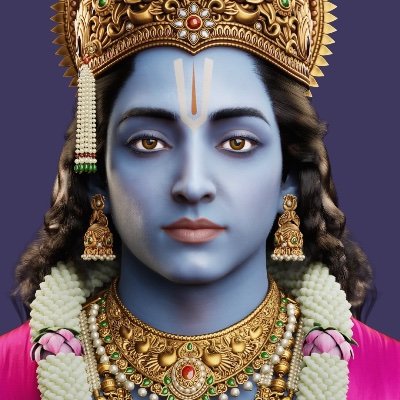
It is believed that chanting this stotram three times... a day, for six months, fulfils the wishes of devotees. The Yantrodharaka Hanumat Stotram is a hymn in the praise of Lord Hanuman written by Shri Vyasaraja (Vyasatirtha). One day, when sage Vyasaraja was meditating on the banks of River Tungabhadra, he obtained a vision of Lord Hanuman. In order to capture this vision, he etched an image of a monkey on a rock. To his great surprise, the monkey from the illustration came alive. So, he etched an image once again. But, a live monkey materialised from the image once more. So, he repeated this process twelve times. After the twelfth time, he drew a monkey and encased it within a geometric pattern (a yantra) so that it wouldn't incarnate. Hence, the idol came to be known as the 'Yantrodharaka Hanuman' or the 'Hanuman held in the yantra'. Today, one finds a temple around this idol, known as the Yantrodharaka Hanuman Temple, near Hampi.show more
Bhagavad Gita
23,406 просмотров • 5 месяцев назад
Train a TensorFlow object detection model – then deploy... it on a robot 🤖 Iulia Feroli (Iulia Feroli) shows how to turn a notebook into a real-time object detection app. This tutorial works for any project – though we demonstrate the deployment on (and assisted by!) the #ReachyMini, an open-source robot from Pollen Robotics. Built with PyCharm + Claude Code. 👉 Watch it in action:show more

PyCharm, a JetBrains IDE
34,908 просмотров • 4 месяцев назад