When a spacecraft leaves Earth, it doesn’t just fire... its engines and head straight to its destination. In many missions, especially those going beyond low Earth orbit, there’s a more subtle and elegant strategy at play, one that uses gravity itself as part of the navigation system. This is often called a gravity assist, or a slingshot maneuver. But in the case of missions like #Artemis II, what’s being used is a closely related idea known as a free-return trajectory. At first glance, it might sound simple: the spacecraft goes to the Moon, loops around it, and comes back. But the physics behind it is anything but simple. Instead of relying on continuous propulsion, the spacecraft follows a carefully calculated path through the gravitational field of the Earth–Moon system. It is launched with just the right speed and direction so that, as it approaches the Moon, the Moon’s gravity bends its trajectory. The spacecraft is effectively flung around the Moon, redirected onto a path that naturally brings it back toward Earth. No major engine burn is needed for the return. Small trajectory corrections may still be required, but gravity does the heavy lifting. That’s the key. This kind of trajectory is not just efficient, it’s also safe. If something goes wrong with the spacecraft’s engines or onboard systems, gravity itself ensures the return. It’s an inherent backup plan, built into the trajectory from the very beginning. The same fundamental idea appears in gravity assists used across the Solar System. When a spacecraft flies past a planet, it can gain or lose speed by exchanging momentum with that planet. From the spacecraft’s point of view, it’s as if it has been accelerated without using fuel. In reality, it has borrowed a tiny amount of orbital energy from the planet itself. That’s how missions like Voyager reached the outer planets, and how probes continue to explore regions far beyond what their onboard fuel alone would allow. But there’s an important distinction. An interplanetary gravity assist is typically used to change speed and direction, often increasing the spacecraft’s energy. A free-return trajectory, like the one used in Artemis II, is designed for something more specific: a path that naturally loops back to Earth without requiring additional propulsion. It’s less about gaining energy, and more about shaping a trajectory that guarantees a return. To understand why this works, it helps to stop thinking in straight lines. In space, motion follows curves defined by gravity. The spacecraft is constantly falling, first toward Earth, then toward the Moon, and then back toward Earth again. What looks like a loop is really a continuous free fall through a changing gravitational landscape. This way of navigating space reveals something deeper. We tend to think of engines as the drivers of motion, but once a spacecraft is on its way, gravity does most of the work. The art of spaceflight is not just about thrust. It’s about knowing when not to use it. #GoodLuck #Artemis NASA Artemisshow more

Erika
235,073 次观看 • 5 个月前
The Artemis II crew is on their way to... their lunar flyby! 🌒 NASA’s Artemis II uses a free‑return trajectory, letting the Moon’s gravity guide the spacecraft home and we modeled the mission in MATLAB. What moment of the mission are you most excited about?show more

MATLAB
69,454 次观看 • 5 个月前
This is the path Artemis II will take –... sending humans out again next March, after more than 50 years. Instead of a straight shot, NASA is sending four astronauts on a "hybrid free-return trajectory." They'll whip around Earth to gain speed, then use the Moon's gravity like a giant slingshot to hurl themselves back home. No engine burns for the return trip, just pure orbital mechanics and vibes.show more

Kekius Maximus
156,682 次观看 • 7 个月前
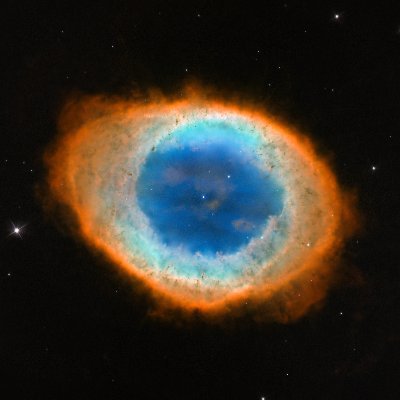
Most of us grew up seeing simplified diagrams of... the Hubble Space Telescope and assumed the James Webb Space Telescope follows a similar path around Earth. In reality, it operates in a very different region of space. It is not orbiting our planet in the traditional sense but instead travels around a point about 1.5 million kilometers away known as the Sun–Earth L2 point, keeping pace with Earth as both move around the Sun. This location is often described as a gravitational balance point, but it is not truly stable or neutral. JWST does not sit still there; it follows a controlled orbit around L2 and requires periodic adjustments to stay on course. The result is a delicate, engineered dance between gravity and motion, where the telescope remains aligned with Earth while staying far from its heat and light, allowing it to observe the universe with extraordinary clarity.show more
Cosmos Archive
31,985 次观看 • 4 个月前
🚨 BREAKING: Gravity doesn’t actually “pull” you. That’s just... how it looks. What’s really happening is deeper… Space-time isn’t empty. It behaves more like a field with structure. And when mass appears… it doesn’t just “bend space” it changes how time flows. Think of it like this: If time flows evenly → everything stays stable If time compresses → motion is forced toward that region That motion is what we call gravity. In Einstein’s model: mass curves space-time But here’s the missing piece: What is doing the curving? In my framework: Mass = a region where time is compressed Gravity = objects moving along time gradients Motion = the system trying to rebalance So you’re not being “pulled down”… You’re being carried along a flow of time. This explains something most people miss: Gravity always points one way. Because time only flows one way. And the deeper implication is wild: If gravity is just time imbalance… then controlling time flow = controlling gravity. The real question is: Are we discovering gravity… or learning how to engineer it? Follow for more this goes deeper.show more

TheNewPhysics
21,772 次观看 • 5 个月前
I am getting a lot of questions, so have... decided to say something. It seems "possible" that 3I/ATLAS will brake, and also change direction toward Earth, as it passes Mars. The gravity of Mars will pull 3I/ATLAS in a direction opposite to where it is now going. The gravity of Mars will also pull 3I/ATLAS slightly to the right by attraction. Now look please at the video shown below, and try to estimate whether 3I/ATLAS will be headed for Earth, after it passes Mars? As planet Earth turns around the Sun toward it? They all must know, but don't want to say. This is very simple orbital mechanics.show more

Red Collie (Dr. Horace Drew) scientist/inventor
4,478,075 次观看 • 1 年前
🚨 Light has no mass… So why does gravity... bend it? Because gravity isn’t pulling on mass. It’s shaping reality itself. In Einstein’s view: Objects don’t get “pulled” they follow curves in spacetime. But take it one step further: What if it’s not just space bending… but time forming stable paths? In my framework: Light doesn’t feel a force It follows the only stable path that exists Gravity = where time structures become curved and consistent So light doesn’t get pulled… It simply has no other path that holds together. The real question is: If everything follows stable structures in time… is gravity just reality choosing the path that can exist? Follow for deeper physics beyond force and particles.show more
TheNewPhysics
11,169 次观看 • 5 个月前
⚡ Gravity Isn’t a Force… It’s a Frequency Trap... What if gravity isn’t pulling anything at all? What if objects aren’t being “attracted,” but instead are getting locked into stable positions inside a standing wave field? The deeper you look, the more it becomes obvious—mass doesn’t bend spacetime like a bowling ball on a sheet. It generates a frequency gradient, and everything nearby phase-locks into that pattern. You’re not being pulled to Earth… you’re being held in place by a resonance well you can’t see. From a Frequency Wave Theory perspective, this changes everything. Gravity becomes a coherence phenomenon, not a force—an emergent effect of density gradients inside a vibrating medium. That means if you can alter the frequency structure of the field, you can weaken, redirect, or even cancel gravitational effects entirely. Anti-gravity isn’t fantasy—it’s just frequency control. And once that clicks, propulsion, energy, and spacetime navigation all collapse into the same problem: tune the field, and reality follows.show more

Drew Ponder
46,561 次观看 • 5 个月前
Earth + Theia = MOON Once upon a time... — about 4.5 billion years ago — Earth wasn't alone. A rogue planet, Theia, nearly the size of Mars, smashed into it at full speed. The result? A fiery collision that could have created the Moon in just a FEW HOURS, not the millennia previously thought. NASA supercomputer simulations show that the Moon wasn't pieced together from space debris, but was instantly born from molten fragments of Earth and Theia thrown into orbit. That's why the Moon is so similar to Earth — it's not just a satellite, it's a sister.show more
Black Hole
26,433 次观看 • 1 年前
An asteroid the size of three football fields is... heading toward Earth It’s the asteroid “God of Chaos,” which is expected to approach the planet in about three years. By space standards, it will pass very close — closer than some satellites — and may even be visible without a telescope. NASA classifies it as a potentially hazardous object, but that doesn’t mean a collision is expected — it simply means it’s being closely monitored.show more

NEXTA
187,212 次观看 • 4 个月前
NASA’s Epic 685,000-Mile Moon Odyssey! Get ready for history... in the making! Right now, NASA’s Artemis II mission is blazing a trail through deep space on an incredible 10-day journey covering more than 685,000 miles — and it’s already halfway to the Moon.Four brave astronauts are currently farther from Earth than any humans have traveled in over half a century, riding aboard the Orion spacecraft on a daring voyage that will take them on a breathtaking flyby of the lunar this video, we break down the full adventure: the outbound trajectory, the dramatic lunar flyby, and the precise free-return path that will slingshot them safely back home. You’ll see exactly how Orion navigates the vast emptiness of space using clever orbital mechanics and innovative mission design.Artemis II marks the first crewed flight of NASA’s Artemis program — the bold step that will return humans to the Moon and open the door to sustained lunar exploration and beyond.Buckle up — this is how humanity returns to deep space!show more
Black Hole
21,046 次观看 • 5 个月前
🧵THE OBJECT ORBITING EARTH THAT ASTRONOMERS WONT CALL NATURAL... (1/6) A small object called Sar2901 recently passed Earth and entered a temporary orbit around the Earth-Moon system and people are going wild. When the Minor Planet Center looked at the observations, it couldn't decide whether Sar2901 was a natural mini moon or if it was an artificial object. It has now delayed giving it an official minor planet designation because if they did it would mean accepting that the object is natural and they don't know that it is. That's the official position of the organization responsible for collecting and publishing the orbits of asteroids and comets. Sar2901 is now beyond the reach of any current observations but it should become visible again in November, when astronomers might finally learn what has been moving around us.👇show more

Skywatch Signal
55,754 次观看 • 7 天前
Space objects such as meteoroids and asteroids move across... the solar system and can collide with both Earth and the Moon. However, the Moon shows far more visible impact marks on its surface. One main reason is that Earth has a thick atmosphere that protects the planet. When many meteoroids enter Earth’s atmosphere, they burn up due to friction before they can reach the ground. This process creates the bright streaks of light we call shooting stars. The Moon, however, has almost no atmosphere, so incoming space rocks are not slowed down or burned up. They travel directly to the lunar surface and strike it at very high speed. Each collision creates an impact crater, throwing dust and rocks outward from the impact point. Over billions of years, thousands of these impacts have covered the Moon with craters. Unlike Earth, the Moon also has no wind, water, or weather to erase these craters, so they remain visible for millions or even billions of years. This is why the Moon looks heavily cratered when we observe it from Earth through telescopes.show more
The Astronomy Guy
17,500 次观看 • 5 个月前
🇺🇸🇮🇷 Reports of a U.S. A-10 Thunderbolt II going... down near the Strait of Hormuz raise a key question: how easy is it to bring one down? At first glance, the A-10 looks like an easy target. It is slow, flies at low altitude, and lacks the stealth and speed of modern jets. But it was never designed to avoid fire. It was designed to survive it. Every part of it reflects that idea. The pilot sits inside a titanium armor “bathtub,” critical systems are duplicated, and the engines are placed far apart to reduce the chance of a single hit taking it out. Even the fuel system is built to limit severe damage. Its combat record proves it. During the Gulf War, A-10s often returned with heavy damage, damaged wings, failed hydraulics, and barely working systems, yet still made it back. Modern air defenses can hit an A-10, but destroying it is a different challenge. Flying low through terrain and battlefield clutter makes targeting harder, and its strong build means one hit is rarely enough. That durability is what keeps it relevant. While newer jets rely on stealth and speed, the A-10 depends on pure survivability. It is not invincible, but it was built with one expectation: it will take fire and still return.show more

Defense Intelligence
57,768 次观看 • 5 个月前
🚨 THIS HAS NEVER HAPPENED BEFORE 🚨 🚨NOBODY UNDERSTANDS... WHAT THEY JUST TRIGGERED. 🚨 🚨 People always talk about Iranian oil in terms of barrels, but rarely about what’s actually inside them. That’s the key difference—and the reason Western refineries have quietly relied on back-channel networks through places like Dubai for years to keep getting it, even under sanctions. Crude oil isn’t all the same. It’s a mix of hydrocarbons with different molecular weights, and that mix determines how easily it can be turned into the fuels refineries actually sell—like gasoline, diesel, jet fuel, and heating oil. The main measure here is API gravity. Higher API means lighter crude that’s easier and cheaper to refine, and it produces more of those high-value fuels. Lower API means heavier crude that takes more energy, more processing, and more expensive equipment, while producing more low-value leftovers. Iranian Light crude sits right in a sweet spot, with an API gravity around 33–36 and moderate sulfur levels. It’s light enough to produce a lot of gasoline and middle distillates without high costs, but not so light that it limits what refineries can make. In industry terms, it’s close to an ideal blend. Now look at the alternatives. Venezuela’s Merey crude is much heavier, with very low API gravity and high sulfur. Refining it profitably requires specialized, expensive equipment like cokers and hydrocrackers. Some refineries are built for that—but it’s not interchangeable with Iranian crude. It’s a completely different type of input. On the other end, US West Texas Intermediate is very light and low in sulfur. Sounds perfect in theory, but in practice it’s almost too light. Many refineries—especially in Europe and Asia—are designed for medium-grade crude, so they can’t just switch to WTI. They often have to blend it with heavier oils to make it work. That’s where Iranian crude stands out. It fits right into the middle of the system. It doesn’t need the heavy-duty processing of Venezuelan oil or the blending adjustments required for ultra-light US shale. That balance is why it’s consistently in demand and often priced at a premium. It also explains why countries like India kept buying it despite sanctions, and why those complex trading networks through Dubai existed in the first place. The Strait of Hormuz isn’t just a route for oil—it’s a route for this specific kind of oil that global refineries are optimized to process. If that flow gets disrupted, it’s not just about losing supply. It’s about losing the type of crude the system runs most efficiently on, forcing refineries to adapt with less suitable alternatives. That’s what’s really baked into oil prices like $82—not just how much oil is available, but what kind it is.show more

A K Mandhan
3,645,659 次观看 • 5 个月前
Part of the reason they wanted to develop reusable... rockets that can land is the Geophysical Event. Part of the elite wants to build a data center and a small hub on the Moon to preserve AI and, with it, all human knowledge. They can control the conditions on the Moon more easily than on Earth, which will be far more active and unpredictable during a geomagnetic excursion and increased cosmic radiation. They would have no rivals on the Moon, nor would the lucky survivors on Earth pose a threat to them there. That's why the Moon is important. It was used in the past as well, which is why there are monolithic structures on the Moon.show more

Open Minded Approach
62,856 次观看 • 1 个月前
NASA ARTEMIS II MISSION UPDATE The crew and Orion... are approximately 94,117km to the Moon, they're also just over 350,000km away from Earth. They're also travelling at a speed of approximately 2,523km/h, this will start to increase as the lunar sphere of influence takes a hold of the crew and Orion later today. Approximately 41.8% of the mission has been completed. Currently the crew is into the Orion Crew Survival System Suit Developmental Flight Objective (OCSS DFTO) operations, which is essentially a simulated emergency onboard the spacecraft and involves the OCSS suits being donned along with the crews strapping themselves into their seats and the cabin pressure being dropped to 10.2 PSI. This of course is one of many extremely important objectives that is being performed during the duration of this test flight around the Moon. OTC (Outbound Trajectory Correction) burn #3 is also still planned for later today, this is very much subject to change though if NASA decides to skip this burn also. We will be sure to keep you updated if this changes. And yes, I can in fact confirm the toilet is still working! Be sure to check out our Artemis II Real Time Tracking 24/7 stream if you'd like to watch all the action unfold in real time! NSF Artemis II Real Time Tracking 24/7 | NSF - NASASpaceflight.comshow more

Jake (Max-Q) 🏴
86,041 次观看 • 5 个月前
What is an individual? Can we accept the idea... that an individual is not an isolated being, but a totality of traits, ideas, and deeds that arise within humanity, are shaped by it, and return to it? Every human being is a temporary form through which humanity expresses a part of itself. : The author redefines the individual not as an isolated entity but as a transient expression of humanity itself: a unique constellation of traits, ideas, and deeds that emerge from the collective, are molded by it, and ultimately return to enrich it. Each person serves as a temporary vessel through which humanity manifests and explores its own nature. This dissolves the illusion of absolute separateness, revealing every life as an integral thread in the living fabric of humankind. It portrays individuality as both gift and responsibility: a fleeting opportunity to contribute distinct value to the whole. The concept elevates personal existence to a sacred role in humanity’s continuous self-creation. It leads to recognition that our thoughts, actions, and choices ripple beyond the self, shaping the shared human story. Ultimately, framing every individual as both creation and co-creator of humanity’s evolving essence, bound in profound interdependence.show more

Zafar Mirzo | Quotes
864,277 次观看 • 9 个月前
This system is called the “Canadian well.” The essence... is very simple: at a depth of 2-3 meters, the earth always holds a stable temperature of about +10... +15°C. In the winter, the cold air from the street goes through an underground pipe and heats up before entering the house. ☀️ In the summer, the hot air is cooled down in the same pipe. That is, the earth functions as both a natural conditioner and a heater. It does not replace heating or air conditioning completely, but it greatly reduces costs and makes the air in the house more comfortable 👍show more

Architecture Presentation
872,704 次观看 • 5 个月前
And finally....its NOT an Asteroid. Yes.... They are here......... . A mysterious interstellar object, 31/ATLAS, is racing through our solar system and will reach its closest point to the sun October 29. At the same time, NASA is preparing the Artemis II mission for 2026, and aiming to return humans to the Moon by 2027. But the question remains… Is NASA showing us everything? Or is something being kept in the shadows of space?show more

முரளி
90,545 次观看 • 10 个月前