Loading video...

Video Failed to Load

Go Home

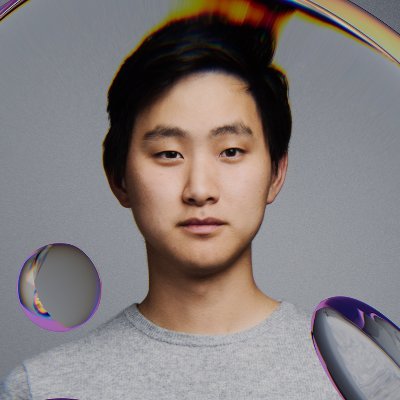
1/ we just publicly released Muse Spark 1.3 max! we see significantly stronger coding and agentic performance on muse spark 1.3 max, so would strongly recommend trying it out even if you've already tried muse spark 1.3 high or muse spark 1.3 xhigh.
211,367 views • 15 hours ago •via X (Twitter)

0 Comments

No comments available

Comments from the original post will appear here

Related Videos

Muse Glimmer, A 30B parameter dense model swallowing a 130,000 token context window using only 19.3 GB of VRAM (extreme efficiency). No KV cache quantization required. I just benched the new Muse Glimmer 30B (dense) on a single RTX 4090. We are pulling 3,100+ t/s prefill and 75 tokens/second decode. The throughput is violent. Meta superintelligence lab just open sourced this agentic beast, explicitly engineered to dominate 24GB consumer cards. I pulled the latest llama.cpp source on Ubuntu 22 (CUDA 13) to see if the specs were real. Fed it a 28k token prompt. Here is the exact llama.cpp God Stack and benchmarking breakdown: # 1. The Deep Context Run (No Speculative Decoding) The architecture uses a massive 16:1 GQA (Grouped Query Attention) ratio. This means the KV cache footprint is practically non existent. ./build/bin/llama-server -m Muse-Glimmer-30B-UD-Q4_K_XL.gguf -c 130000 -b 4096 -ub 4096 -ngl 99 --port 8080 Prefill: 3134.95 t/s Decode: 50.00 t/s VRAM: 19.34 GB (I hit 130k context on pristine, unquantized f16 cache and still had 4.5 GB of VRAM left over. Absolute witchcraft). # 2. The DFlash Speculative Overdrive Meta shipped this with a DFlash block diffusion drafter. Let's trade that extra VRAM for pure speed. ./build/bin/llama-server -m Muse-Glimmer-30B-UD-Q4_K_XL.gguf -md dflash-kquant.gguf --spec-type draft-dflash --spec-draft-n-max 3 -c 80000 -b 4096 -ub 4096 -ngl 99 --port 8080 Prefill: 1293.69 t/s Decode: 75.00 t/s VRAM: 23.93 GB (Maxed out on card) the dflash gguf is additional 1.6 GBs # The Architecture Insight (Muse Glimmer vs. Gemma 4 31B) If you look at my Gemma 4 31B tests from last week, getting 140k context required heavily degrading the memory with Q4 KV quantization (gemma 31b q4 can do only about 40k context with unquantized kv on a 24gb card). That "unzipping" overhead bottlenecked Gemma's MTP decode speeds down to 65 t/s. Muse Glimmer completely sidesteps this bottleneck. By using aggressive 16:1 GQA, it keeps the KV cache in native f16 format at massive context lengths. Flash Attention gets to run at maximum uncompressed speed, letting the DFlash drafter push decode safely to 75 t/s without compute lag. With a 76% on SWE Bench Verified and seamless local tool calling, this model looks promising. Unsloth's Hugging Face GGUF links, intelligence/agentic benchmark details, and inference throughput performance graphs are posted in the replies. For 24GB rig, what’s your current go to model?

Alok

65,480 views • 25 days ago

Qwen 3.8 27B Q4_K_M - 90 tokens/sec on a single NVIDIA RTX 4090 (24 GB VRAM) with Dflash2! (MTP 60 tps -> 90 tps Dflash2!!!!) Local AI moves so fast (literally!) it’s terrifying. Z lab just dropped DFlash 2 for Qwen 3.8 27b and Muse Glimmer. I patched llama.cpp (PR #27342) and paired it with Unsloth’s Qwen 3.8 27B UD-Q4_K_XL quant. The result? Lossless 90 tokens/s decode. My last post highlighted native MTP hitting 60 t/s at 130,000 context. But DFlash 2 just completely shattered that ceiling. By using parallel block diffusion drafting (predicting whole blocks of tokens in a single pass using dynamic convolutions), DFlash achieves a massive 5.39 token acceptance rate. THE ALPHA TWEAK: `n-max 7` eats too much VRAM for draft states. But if you drop the draft limit to `--spec-draft-n-max 4`, you slash the VRAM overhead and actually increase the throughput. Here is the new 24GB VRAM Physics Matrix (DFlash 2 @ n-max 4): - 30k Context: 1,725 t/s prefill | 87.05 t/s decode | 22.2 GB VRAM - 80k Context: 1,789 t/s prefill | 84.20 t/s decode | 23.3 GB VRAM - 110k Context: 1,767 t/s prefill | 83.35 t/s decode | 23.96 GB VRAM (110k context at 83+ tokens a second sitting exactly on the 24GB hardware limit is absolute wizardry). How to compile the PR today: git clone cd llama.cpp git fetch origin pull/27342/head:pr-27342 git switch pr-27342 cmake -B build -DGGML_CUDA=ON && cmake --build build -j Llama.cpp flags for Dflash (110k Context Ceiling): ./build/bin/llama-server -m Qwen3.8-27B-UD-Q4_K_XL.gguf -md Qwen3.8-27B-DFlash2-Q4_K_M.gguf --spec-type draft-dflash --spec-draft-n-max 4 -c 110000 -ngl 99 --port 8080 -ctv q4_0 -ctk q4_0 The fact that the open source community is shipping block diffusion drafters so quickly that run entirely locally on a gaming GPU is unbelievable. If you own a single RTX 3090 or 4090, it is officially time to upgrade to qwen 3.8 27b with dflash 2 and cancel your API subscriptions and let local silicon eat the cloud. This model beats GPT 5.6 Terra, GLM 5.2 DeepSeek V4 Pro, Muse Spark 1.2 and Claude Opus 4.8 on the artificial analysis agentic index (details in the replies) Hugging Face GGUF links (Base + DFlash2) and the full visual VRAM scaling and Dflash2 vs MTP graphs are also in the replies below. are you sticking to native MTP for the 130k context, or sacrificing 20k context to redline your decode speed? How many tokens/sec are you pushing on your current local rig?

Alok

103,895 views • 17 days ago

The "I don't have enough VRAM" excuse just died. I’m running Meta’s new 30B Muse Glimmer Q6_K_XL with a massive 130k context window on just 26GB VRAM FREE compute on Kaggle. Kaggle provides you free 2x Nvidia T4 GPUs. 30 hours usage each week! Yesterday, I showed you the violent throughput of Muse Glimmer on a single RTX 4090. Today, we are securing a Dual NVIDIA T4 GPU cluster with 32GB of total VRAM for exactly $0 and dropping the massive 24.5GB Q6_K_XL GGUF onto it. Here is the exact Kaggle workflow and benchmarking breakdown: # 1. The Storage Bypass & Setup I built a clean cell by cell script in the file. We dynamically fetch the CUDA accelerated llama.cpp binaries and use wget to stream the model directly into Kaggle's /kaggle/tmp scratch storage, which cleanly bypasses their 19.5GB output directory limit. # 2. The Multi GPU Performance With the -ngl 99 flag offloading all model layers across both T4 GPUs (32GB VRAM combined), we pushed a massive 131,072 token context window (-c 131072). The benchmark numbers: Prefill: 265.9 t/s Decode: 9.0 t/s VRAM Total: 26.5 GB # 3. The Architecture Insight The Q6_K_XL model itself is 24.5 GB. Because of Muse Glimmer's aggressive 16:1 GQA, the unquantized KV cache for a massive 130k context window only takes up 2 GB of memory. No heavily degraded Q4 KV quantization required. It just works. No compiling from source. No credit card. No OOM crashes. Zero excuses. If you’re running a single RTX 3090, 4090, or 5090, you need to experience this hyper efficient KV cache right now before the upcoming Qwen 3.8 27B drop completely steals your VRAM tomorrow. pick the Q4 or Q5 quants for 24 GB VRAM rigs. I'm dropping the Unsloth huggingface GGUF links and the free Kaggle notebook link in the replies. spin up your own instance, and show me your multi GPU benchmarks.

Alok

19,089 views • 22 days ago

hyunsuk and jihoon snuck into the dorms at lunch scared the staff would catch them eating ramen in secret but got even more scared when the door opened but nobody was there + it wont close on its own as it should 😭 #최현석 #지훈 (at 11:52 of the content) 🦔 (heard the sound of door code pressed, door opening and shoes taken off but the sound stopped there and nobody came in) 🦔 we thought someone arrived… tbh that time we snuck out without the staff knowing so we were alr scared 🦔 “oh we cant get caught though” so we both froze for awhile and tbh when we were trainees, they were very strict… 🦔 we were gonna eat ramen in secret that time so we hid it and figured out what to do and when we settled down, no one came in. 🦔 (said they’d hear it if they went somewhere) 🦔 from then on, bc jihoon and i get scared so easily, were like “you go!” “no, you go” and argued for about 10 mins cos we get easily scared. 🦔 i eventually went out to check but there was no one near the shoe rack and the funny thing is it was just jihoon and i, just the two of us so there should only be two pairs of shoes, though there were untiedied shoes too, but there was another pair of shoes that weren’t there when we came in. so we wondered if someone came in quietly but in the end it’s really just the two of us inside the dorms. 🦔 and what was scarier was that like in most apartment buildings, the front door force closes so strongly so if you dont hold it open, it would automatically close right? ours is the same. it wasnt even left on a veryain angle but it stayed open… 🦔 so we spent another 10 mins arguing again and i went outside thinking someone must be holding on to it but there really was no one there. so we tried closing and opening it at that angle again and let go of it but it would close definitely. it doesnt make sense right? 🦔 so thats when i first understood it when people say when you’re truly scared, you cant even scream, you just freeze. 🦔 after we snapped out of it, we wer able to check the intercom footage, but nobody got off the elevator, nobody came up the stairs either, it just showed the door opening by itself like this so we were absolutely terrified and i think we left right away.

41,317 views • 2 months ago