Video yükleniyor...

Video Yüklenemedi

Ana Sayfaya Dön

17 projects worth ₹7,172 crore, across 9 States & UTs - approved under the Electronics Component Manufacturing Scheme. 🎯Focus areas: 1.⁠ ⁠Developing strong design teams. 2.⁠ ⁠Achieving Six Sigma quality for all ‘Made in Bharat’ products. 3.⁠ ⁠Promoting Swadeshi - supporting indigenous suppliers to move up the value chain.
103,260 görüntüleme • 8 ay önce •via X (Twitter)

0 Yorum

Yorum bulunmuyor

Orijinal gönderinin yorumları burada görünecek

Benzer Videolar

𝐈𝐧𝐝𝐢𝐚 𝐰𝐚𝐬 𝐨𝐧𝐜𝐞 𝐭𝐡𝐞 𝐰𝐨𝐫𝐤𝐬𝐡𝐨𝐩 𝐨𝐟 𝐭𝐡𝐞 𝐰𝐨𝐫𝐥𝐝. 𝐍𝐨𝐰, 𝐮𝐧𝐝𝐞𝐫 𝐏𝐌 𝐌𝐨𝐝𝐢, 𝐢𝐭 𝐢𝐬 𝐫𝐞𝐜𝐥𝐚𝐢𝐦𝐢𝐧𝐠 𝐢𝐭𝐬 𝐦𝐚𝐧𝐮𝐟𝐚𝐜𝐭𝐮𝐫𝐢𝐧𝐠 𝐬𝐭𝐫𝐞𝐧𝐠𝐭𝐡. 🏭 For decades, restrictive policies, the Licence Raj and missed opportunities held Indian industry back. Since 2014, the focus has shifted towards building at scale, attracting investment and strengthening domestic production. 📱 Electronics production: ~$31 bn → ~$133 bn 📲 99%+ of mobile phones sold in India now made domestically 🏭 Mobile manufacturing units: 2 → 300+ 🛡️ Defence production: ~₹1.51 lakh crore in FY25 💻 10 approved semiconductor projects across 6 states 📈 Overall exports: ~$825 bn in FY25 𝐖𝐚𝐭𝐜𝐡 𝐡𝐨𝐰 𝐏𝐌 𝐌𝐨𝐝𝐢’𝐬 𝐦𝐚𝐧𝐮𝐟𝐚𝐜𝐭𝐮𝐫𝐢𝐧𝐠 𝐩𝐮𝐬𝐡 𝐢𝐬 𝐫𝐞𝐛𝐮𝐢𝐥𝐝𝐢𝐧𝐠 𝐭𝐡𝐞 𝐜𝐫𝐮𝐜𝐢𝐚𝐥 𝐛𝐫𝐢𝐝𝐠𝐞 𝐟𝐫𝐨𝐦 𝐟𝐚𝐫𝐦𝐬 𝐭𝐨 𝐟𝐚𝐜𝐭𝐨𝐫𝐢𝐞𝐬, 𝐚𝐧𝐝 𝐫𝐞𝐜𝐨𝐧𝐧𝐞𝐜𝐭𝐢𝐧𝐠 𝐁𝐡𝐚𝐫𝐚𝐭 𝐰𝐢𝐭𝐡 𝐢𝐭𝐬 𝐡𝐢𝐬𝐭𝐨𝐫𝐢𝐜 𝐢𝐧𝐝𝐮𝐬𝐭𝐫𝐢𝐚𝐥 𝐬𝐭𝐫𝐞𝐧𝐠𝐭𝐡.

BJP

173,481 görüntüleme • 6 gün önce

👪👪👪PI NETWORK NEWS: A WARNING TO THE PI NETWORK PIONEERS: FOCUS ON PI, DO NOT FOLLOW OTHER PROJECTS Dear Pi Network Pioneers and Community Leaders, Over the past nearly 5 years of mining Pi, we have witnessed the growth and unwavering commitment from the Pi Network community. However, I have noticed a concerning issue: many community groups are directing participants towards other projects with promises of quick profits through coins with small values. This could lead to distraction and undermine the collective goal of Pi Network and the sustainable development of the project. I want to caution all of you, especially those managing community groups with large followings. You have a significant influence on the community, and therefore, we must take responsibility for guiding everyone toward the right goals. Pi Network is not a short-term project; it is a project that brings long-term and sustainable value to all of us. Pi is our future, and we must focus on developing it. 🎯🎯🎯Why should we focus on Pi Network?🎯🎯🎯 🎯1. GCV (Global Consensus Value): One of the main objectives of Pi is to establish a stable global consensus value, with 1 Pi = 314,159 USD. This is a grand vision, and to achieve it, we need to focus on building a robust Pi ecosystem, educating the community about Pi’s value, and encouraging Pi’s use in commercial transactions. 🎯🎯2. Supporting the growth of the Pi Ecosystem: We cannot just focus on mining Pi without paying attention to building and developing the ecosystem around it. Inviting businesses to accept Pi as a payment method, helping them understand and use Pi, is a crucial task that every Pioneer can contribute to. 🎯🎯🎯3. Sustainable and long-term value: Other projects may entice you with promises of quick profits, but these coins will not provide you with sustainable value. Remember, Pi Network has been and is building a solid foundation for the future. If we persist, Pi will succeed, and when it does, we will all enjoy great rewards. ⚠️⚠️⚠️A Warning about Other Projects You may have noticed that some people have been lured into other projects, hoping to make quick profits from coins with low values. But be cautious! These projects may only be short-term ventures, lacking stability, and failing to offer real value in the long run. If you are an influential figure with a large following, you must be careful in guiding your community. Don’t let the tempting offers from other projects distract you from Pi’s bigger goals. Remember, Pi’s success will be our success. 🔥🔥🔥Focus on Pi – We Will Have Everything🔥🔥🔥 If you want to succeed, focus on Pi. This is the project that will change the future, and Pi is our "home" in the future. We cannot lose faith in Pi because it is the only path that will lead us to long-term success and prosperity. Let’s educate the community about Pi, spread Pi’s value to everyone, introduce Pi to merchants, and help them accept Pi as a payment method. We can build a strong ecosystem around Pi, where Pi is not just a cryptocurrency but the foundation of a new, sustainable economy. We must unite and not let external factors distract us. Remember, if Pi succeeds, we all will reap the rewards. Let’s focus on Pi, not follow other projects. Pi will succeed – and you will have everything! Sincerely, JoJo💫 👪👪👪 --------------------------------------- 🥰P.S.: The global GCV team always welcomes your support and participation in our community activities. Join us to learn more about the value of GCV in the Pi Network. The GCV home is very happy to welcome you. For the future of our Pi Network, let's support each other enthusiastically! 🥰🪷 Join the group on Telegram here: --------------------------------------- 👉Please Like, Share, Comment, for more information and let Pi spread quickly! Thank you! Pi Network #PiNetwork Doris Yin 东方紫莲🪷 Lumari 🦋 NONNY PADJA NTT ❤ Eagle woman 🦅 @MoretopMovie M.Rad Olivier Ndatimana PATRICK CHUA 婧恬 LiangShi π MAYASS ALI KIAVASH brave Lee @1Pi_usd314159 Olivier Ndatimana Marcel Dango Mazi victor onyido Cherif A.I Herine Makosewe love life 2025 Mohammed Alademi Daniel Chen

JoJo-π

26,151 görüntüleme • 1 yıl önce

Davide Asnaghi (Davide Asnaghi) is the co-founder and CEO of Diode Computers, Inc., a Brooklyn-based startup using AI to design and manufacture circuit boards in the United States. Before Diode, Davide worked on Apple’s Special Projects Group and spent time in Hong Kong and Shenzhen studying Asia’s electronics manufacturing ecosystem. That experience convinced him that PCB design, despite powering everything from smartphones and satellites to medical devices and autonomous systems, remained one of the most overlooked layers of the tech stack. Since its founding just two years ago, Diode has landed Physical Intelligence and Saronic as customers and partnered with Anthropic to help Claude become a better electrical engineer. The company’s ultimate ambition: to make hardware as nimble as software. In our conversation, we explore: 1. Why the West outsourced PCB manufacturing to Asia in the 2000s and why bringing it back matters for American competitiveness 2. What Shenzhen’s manufacturing culture does better than Silicon Valley (and what the U.S. can learn from it) 3. How Diode’s models can one-shot much of schematic design and compress hardware timelines from months to weeks 4. The three-week YC pivot that transformed Diode from a design validation tool into a full-stack manufacturer 5. Why circuit boards are the “forgotten middle child” between silicon and software 6. How Diode partners with Anthropic to make LLMs better electrical engineers 7. What it takes to build a hardware company in 2025—and why the talent bar must stay incredibly high 8. How Italian, American, and Chinese cultures shaped Davide’s approach to entrepreneurship and manufacturing Thank you to the partners who make this possible .TECH domains: An identity for builders at their core: Guru_HQ: The AI source of truth for work: Brex: The intelligent finance platform: (0:00) Intro (4:15) Why Davide calls himself a copper merchant (5:53) Diode’s mission to rebuild PCB manufacturing in the U.S. (7:58) What success looks like (9:00) Growing up in northern Italy and spending a year in Minnesota (13:14) Why Italy produces fewer venture-backed founders (15:30) Why Hong Kong accelerated Davide’s learning (19:09) Silicon Valley vs. Shenzhen (22:05) What Davide learned in Apple’s Special Projects Team (24:11) Why Davide left Apple after two years (26:54) Meeting his co-founder, Lenny (29:32) How Davide uncovered the need for better PCB design and manufacturing (33:23) PCB manufacturing in Asia, and Diode’s approach (41:29) The YC pivot that changed Diode’s business (44:39) Inside Diode’s customer journey (48:10) Where the value is in electronics manufacturing, and Davide’s AGI thesis (51:30) What separates a working board from a great one (55:32) Where Diode fits in the electronics stack (59:55) Diode’s early near-death moment and long-term vision (1:02:30) Diode’s exceptionally high bar for hiring (1:04:48) Where Davide gets his best ideas (1:07:00) Final meditations The Generalist

Mario Gabriele

37,137 görüntüleme • 2 ay önce

With Tim Cook stepping down, most people are talking about the iPhone, the App Store, and the stock price. But there is one move he made that almost nobody talks about and it is the single biggest reason iPhone crushed its competition in the early years. In 2005, two years before the iPhone launched, Cook made a bet. Flash storage was still relatively rare at the time and smartphones didn't exist yet. But Cook saw what was coming, a future where mobile devices would all need flash memory and he knew that if that future arrived without Apple having locked up supply, they'd be fighting for components against every phone maker on earth. So he prepaid $1.25B to suppliers including Samsung and Hynix to corner the market on NAND flash memory through 2010. The contract had a catch, suppliers had to prioritize Apple's orders over everyone else's. This was a massive gamble and if the iPhone flopped, Apple was still on the hook for the full purchase commitment. The iPhone did not flop. It went on to sell tens of millions of units in its first two years with zero supply chain slowdowns. And while Apple scaled freely, competitors couldn't get the components they needed to build a credible response. They were literally locked out of the supply chain. The move was so effective that Cook ran the same playbook across the business. He bought $100 million of holiday season air freight capacity in advance, months before competitors thought to book it, leaving rivals scrambling to ship products during the most critical sales window of the year. He cut Apple's component suppliers from 100 down to 24 and slashed inventory turnover time from 30 days to 6 days within his first seven months at the company. By 2012, Apple was turning over its inventory every 5 day, Dell took 10, Samsung took 21. Jobs is credited as the product visionary but Cook was the supply chain visionary and in the early smartphone wars, the supply chain was the moat.

Milk Road AI

78,952 görüntüleme • 3 ay önce

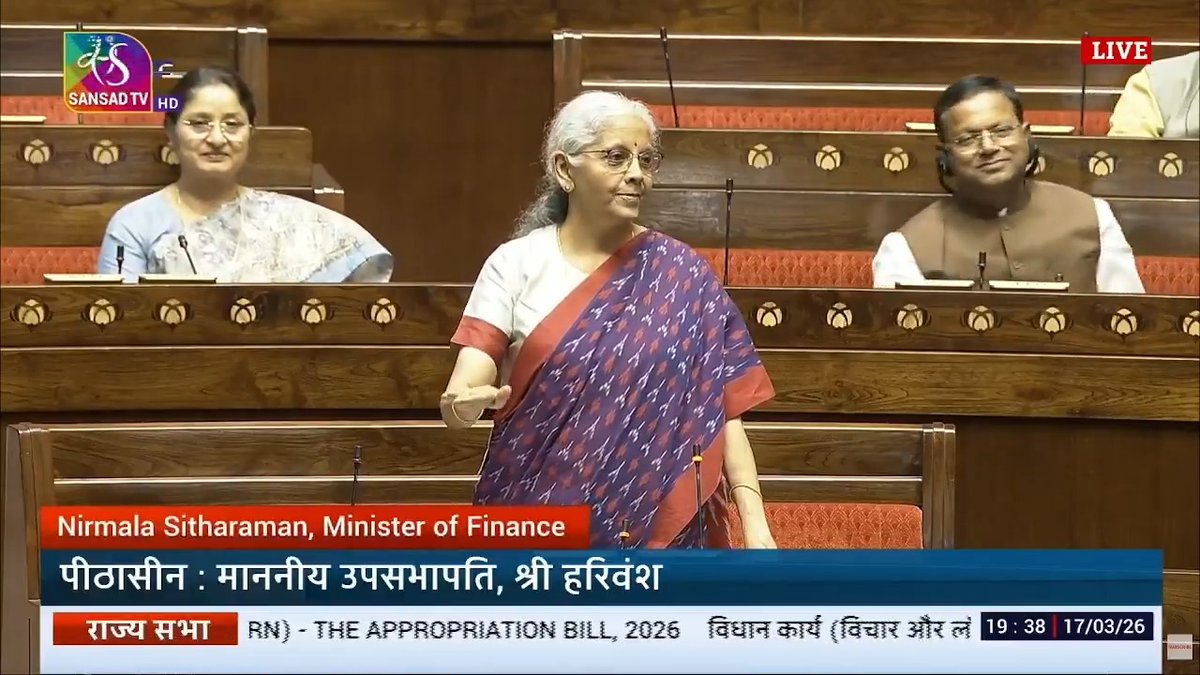
For BSNL, our government has provided three revival packages totalling ₹3.22 lakh crore. We have dealt with the burden of oil bonds, addressed the “Fragile Five” economy, and undertaken bank restructuring and recapitalization. These were not small amounts but those of ₹3 lakh crore - ₹4 lakh crore, and now even fertiliser subsidies. Wherever there were weaknesses in the economy, they were left unaddressed earlier, and we are now paying for all of it. Yet, we are being questioned about GDP growth and fiscal deficit. The reality is that we are clearing the liabilities left behind. On spectrum allocation, after our government came to power, spectrum in bands such as 700 MHz, 800 MHz, 1800 MHz, 2100 MHz, 2500 MHz and 3300 MHz has been provided to BSNL at auction-determined prices for 4G and 5G services. On BSNL, I must respectfully say that every criticism made against it is incorrect. If anything, BSNL was pushed into a critical condition earlier. It was in the ICU, and we have revived it and brought it back on track. The Union Cabinet has approved revival packages for BSNL. The capital infusion between 2022 and 2023 stands at ₹2.26 lakh crore. This includes spectrum allocation, capital expenditure on infrastructure, AGR dues, and restructuring of the PSU. The Make in India mandate for BSNL is a strength, not a restriction. There is no restriction on BSNL. In fact, under the Atmanirbhar Bharat initiative, BSNL has placed an order for 1 lakh indigenously developed 4G sites for pan-India deployment. As of 28th February 2026, 97,906 sites have been installed with 4G equipment, out of which 96,103 are already operational. Additionally, the BharatNet Programme is strengthening BSNL further. An amount of ₹1.39 lakh crore has been approved to extend optical fibre connectivity to all villages across the country. - Smt Nirmala Sitharaman in Rajya Sabha

Nirmala Sitharaman Office

129,297 görüntüleme • 4 ay önce

The soil of Singur has always inspired me. My journey of struggle is deeply intertwined with this land, and I am truly moved by the warmth and affection with which the people of Singur embraced me today. First and foremost, I extend my heartfelt condolences to the families of those who lost their lives due to the unplanned SIR. I am also deeply saddened by the untimely demise of Maharashtra’s Deputy Chief Minister, Shri Ajit Pawar. I pray for the eternal peace of his departed soul and convey my sincere condolences to his family. From the soil of Singur today, I inaugurated Phase II of the Banglar Bari (Gramin) housing scheme, fully funded by the State Government. In this phase, 20 lakh families will receive ₹1.20 lakh each to build their homes, with a total outlay of ₹24,000 crore. In Phase I, 12 lakh rural families had already benefited at an expenditure of ₹14,400 crore, enabling homeless and families to secure dignified pucca homes. Across both phases, the State Government is investing ₹38,400 crore to benefit 32 lakh rural families. Alongside this, I inaugurated the Ghatal Master Plan for flood control and drainage improvement across flood-prone regions of Paschim Medinipur and Purba Medinipur. Nearly 10 lakh people will benefit from this ₹1,500 crore initiative, covering 801 sq km. I also flagged off 50 Sufal Bangla vehicles and initiated the disbursal of compensation under the Bangla Shasya Bima scheme for crop losses caused by natural calamities during the Kharif 2025 season, amounting to ₹80 crore. Over 2.35 lakh farmers will receive direct financial assistance in their bank accounts through DBT. I also inaugurated 150 agricultural machinery hiring centres and 603 machinery hubs across the State and distributed 29,000 modern agricultural equipment to farmers in various districts, with a total value of ₹160 crore. Today, I distributed 7,727 land pattas across 22 districts. Furthermore, with the support of the World Bank, I announced West Bengal’s healthcare reform programme, ‘Unnoto Suswasthya’, which will focus on non-communicable diseases, maternal and child health, and adolescent health, with a total outlay exceeding ₹3,700 crore. I also inaugurated 1,077 projects across 28 departments worth ₹5,694 crore and laid the foundation stones for 616 projects worth ₹2,183 crore. The soil of Singur will always remain close to my heart. It continually inspires me to walk the path of truth and to stand for people’s rights. An Agro-Industrial Park has already been developed in Singur on 8 acres at a cost of ₹9.20 crore, and a private industrial park is coming up on 77 acres, creating employment for thousands. Unable to match Bengal’s pace of development, the Bangla-birodhi Central Government is now conspiring to disenfranchise legitimate voters through its unplanned and coercive SIR process. Ordinary citizens are being harassed, lives are being lost, and Bengal is being repeatedly targeted and humiliated. Touching the soil of Singur today, I renewed my resolve to continue this fight. I will soon go to Delhi myself to defend the democratic rights of our people. No autocracy will ever be allowed to take root in Bengal.

Mamata Banerjee

33,369 görüntüleme • 5 ay önce

#AdaniEmbraer Adani-Embraer Landmark Aviation Partnership Adani Defence & Aerospace and Brazilian aerospace giant Embraer signed a historic Memorandum of Understanding (MoU) at the Ministry of Civil Aviation. This partnership aims to establish India's first private-sector Final Assembly Line (FAL) for regional transport aircraft, specifically targeting the 70–146 seat segment. The collaboration is designed to build a "world-class aviation ecosystem" rather than just a standalone manufacturing plant. The focus areas include: •Final Assembly Line (FAL): Setting up a facility to assemble Embraer’s regional jets (E-Jets family) on Indian soil. •Indigenization: A phased increase in local manufacturing of parts and components. •Value-Chain Integration: Leveraging Adani’s existing footprint in airport infrastructure, MRO (Maintenance, Repair, and Overhaul) services, and pilot training. •Supply Chain Development: Establishing a robust domestic network of suppliers to support global aerospace programs. Jeet Adani, Director (Adani Defence & Aerospace / Adani Airport Holdings) Jeet Adani characterized the agreement as a "vision taking flight," emphasizing its alignment with the national mission of Atmanirbhar Bharat. "It represents India's determination to build world-class aviation capabilities on our own soil. This project will redefine the future of aviation in our country." Arjan Meijer, President & CEO (Embraer Commercial Aviation) Meijer highlighted India as a "pivotal market," projecting a demand for at least 500 aircraft in the regional jet category over the next 20 years. He noted that the partnership combines Embraer's engineering excellence with Adani’s industrial scale. •Regional Connectivity (UDAN): The partnership directly supports the government's UDAN scheme by providing cost-effective aircraft suited for Tier-2 and Tier-3 cities. •Bilateral Ties: The deal strengthens strategic relations between India and Brazil, fostering technological and industrial cooperation. •Employment: The project is expected to generate high-skilled employment and move India up the global aerospace value chain. •Market Positioning: Currently, approximately 50 Embraer aircraft (commercial, defense, and business) operate in India. This move positions Embraer to compete more effectively with the duopoly of Airbus and Boeing by offering locally assembled alternatives. •Location: While not yet finalized, Jeet Adani confirmed that a couple of sites are under evaluation, with a final decision expected within the next two months. •First Rollout: Government officials suggested that the first aircraft could potentially roll out of the Indian facility within the next five years. •Investment: Specific financial figures remain confidential, but the scale is described as a multi-billion dollar commitment to India's aerospace infrastructure. Source Highlights: •MoU signed in the presence of Civil Aviation Minister K Rammohan Naidu and Defence Secretary Rajesh Kumar Singh. •Aligns with the 'Make in India' initiative to reduce import dependence.

Sheetal Chopra 🇮🇳

173,233 görüntüleme • 5 ay önce

citadel doesn't analyze 500 stocks they compress them to 5 hidden forces - then trade the forces most people saw the math behind this in a stats class and scrolled past it. nobody told them it was worth $30 billion a year technique is called PCA - principal component analysis Karl Pearson published it in 1901 in a free journal. it's in every stats textbook on earth here's what it does: you feed it 10 years of daily returns across 500 stocks it ignores earnings reports, management teams, every narrative retail obsesses over it finds underlying forces moving groups of stocks together without anyone naming them what comes out: > component 1 - broad market direction (~45% of all movement) > 2 - growth vs value tilt (~12%) > 3 - sector rotation (~8%) > 4 - volatility regime (~5%) > 5 - liquidity premium (~3%) five numbers explain 73% of everything moving in markets a quant desk doesn't ask "will NVDA go up tomorrow" it asks: which regime are we in, and where does this regime historically lead portfolio built around forces, not tickers if component 3 signals sector rotation at a historical inflection, they rotate without reading a single 10-K Two Sigma runs this across equities, bonds, commodities and currencies simultaneously Save this before someone turns it into a $2,000 data to build this is free - Ken French's factor library, CRSP, any linear algebra textbook 150 lines of python is the whole engine what Renaissance has isn't secret data or better intel

Livsun

21,441 görüntüleme • 25 gün önce

MIT announces the Initiative for New Manufacturing | Peter Dizikes, MIT News The Institute-wide effort aims to bolster industry and create jobs by driving innovation across vital manufacturing sectors. MIT today launched its Initiative for New Manufacturing (INM), an Institute-wide effort to reinfuse U.S. industrial production with leading-edge technologies, bolster crucial U.S. economic sectors, and ignite job creation. The initiative will encompass advanced research, innovative education programs, and partnership with companies across many sectors, in a bid to help transform manufacturing and elevate its impact. “We want to work with firms big and small, in cities, small towns and everywhere in between, to help them adopt new approaches for increased productivity,” MIT President Sally A. Kornbluth wrote in a letter to the Institute community this morning. “We want to deliberately design high-quality, human-centered manufacturing jobs that bring new life to communities across the country.” Kornbluth added: “Helping America build a future of new manufacturing is a perfect job for MIT — and I’m convinced that there is no more important work we can do to meet the moment and serve the nation now.” The Initiative for New Manufacturing also announced its first six founding industry consortium members: Amgen, Flex, GE Vernova, PTC, Sanofi, and Siemens. Participants in the INM Industry Consortium will support seed projects proposed by MIT researchers, initially in the area of artificial intelligence for manufacturing. INM joins the ranks of MIT’s other presidential initiatives — including The Climate Project at MIT; MITHIC, which supports the human-centered disciplines; MIT HEALS, centered on the life sciences and health; and MGAIC, the MIT Generative AI Impact Consortium. “There is tremendous opportunity to bring together a vibrant community working across every scale — from nanotechnology to large-scale manufacturing — and across a wide-range of applications including semiconductors, medical devices, automotive, energy systems, and biotechnology,” says Anantha Chandrakasan, MIT’s chief innovation and strategy officer and dean of engineering, who is part of the initiative’s leadership team. “MIT is uniquely positioned to harness the transformative power of digital tools and AI to shape future of manufacturing. I’m truly excited about what we can build together and the synergies this creates with other cross-cutting initiatives across the Institute.” The initiative is just the latest MIT-centered effort in recent decades aiming to expand American manufacturing. A faculty research group wrote the 1989 bestseller “Made in America: Regaining the Productive Edge,” advocating for a renewal of manufacturing; another MIT project, called Production in the Innovation Economy, called for expanded manufacturing in the early 2010s. In 2016, MIT also founded The Engine, a venture fund investing in hardware-based “tough tech” start-ups including many with potential to became substantial manufacturing firms. As developed, the MIT Initiative for New Manufacturing is based around four major themes: - Reimagining manufacturing technologies and systems: realizing breakthrough technologies and system-level approaches to advance energy production, health care, computing, transportation, consumer products, and more; - Elevating the productivity and experience of manufacturing: developing and deploying new digitally driven methods and tools to amplify productivity and improve the human experience of manufacturing; - Scaling new manufacturing: accelerating the scaling of manufacturing companies and transforming supply chains to maximize efficiency and resilience, fostering product innovation and business growth; and - Transforming the manufacturing base: driving the deployment of a sustainable global manufacturing ecosystem that provides compelling opportunities to workers, with major efforts focused on the U.S. The initiative has mapped out many concrete activities and programs, which will include an Institute-wide research program on emerging technologies and other major topics; workforce and education programs; and industry engagement and participation. INM also aims to establish new labs for developing manufacturing tools and techniques; a “factory observatory” program which immerses students in manufacturing through visits to production sites; and key “pillars” focusing on areas from semiconductors and biomanufacturing to defense and aviation. The workforce and education element of INM will include TechAMP, an MIT-created program that works with community colleges to bridge the gap between technicians and engineers; AI-driven teaching tools; professional education; and an effort to expand manufacturing education on campus in collaboration with MIT departments and degree programs. INM’s leadership team has three faculty co-directors: John Hart, the Class of 1922 Professor and head of the Department of Mechanical Engineering; Suzanne Berger, Institute Professor at MIT and a political scientist who has conducted influential empirical studies of manufacturing; and Chris Love, the Raymond A. and Helen E. St. Laurent Professor of Chemical Engineering. The initiative’s executive director is Julie Diop. The initiative is in the process of forming a faculty steering committee with representation from across the Institute, as well as an external advisory board. INM stems partly from the work of the Manufacturing@MIT working group, formed in 2022 to assess many of these issues. The launch of the new initiative was previewed at a daylong MIT symposium on May 7, titled “A Vision for New Manufacturing.” The event, held before a capacity audience in MIT’s Wong Auditorium, featured over 30 speakers from a wide range of manufacturing sectors. “The rationale for growing and transforming U.S. manufacturing has never been more urgent than it is today,” Berger said at the event. “What we are trying to build at MIT now is not just another research project. … Together, with people in this room and outside this room, we’re trying to change what’s happening in our country.” “We need to think about the importance of manufacturing again, because it is what brings product ideas to people,” Love told MIT News. “For instance, in biotechnology, new life-saving medicines can’t reach patients without manufacturing. There is a real urgency about this issue for both economic prosperity and creating jobs. We have seen the impact for our country when we have lost our lead in manufacturing in some sectors. Biotechnology, where the U.S. has been the global leader for more than 40 years, offers the potential to promote new robust economies here, but we need to advance our capabilities in biomanufacturing to maintain our advantage in this area.” Hart adds: “While manufacturing feels very timely today, it is of enduring importance. Manufactured products enable our daily lives and manufacturing is critical to advancing the frontiers of technology and society. Our efforts leading up to launch of the initiative revealed great excitement about manufacturing across MIT, especially from students. Working with industry — from small to large companies, and from young startups to industrial giants — will be instrumental to creating impact and realizing the vision for new manufacturing.” In her letter to the MIT community today, Kornbluth stressed that the initiative’s goal is to drive transformation by making manufacturing more productive, resilient, and sustainable. “We want to reimagine manufacturing technologies and systems to advance fields like energy production, health care, computing, transportation, consumer products, and more,” she wrote. “And we want to reach well beyond the shop floor to tackle challenges like how to make supply chains more resilient, and how to inform public policy to foster a broad, healthy manufacturing ecosystem that can drive decades of innovation and growth.”

Owen Gregorian

77,197 görüntüleme • 1 yıl önce

"হে মোর চিত্ত, পুণ্য তীর্থে জাগো রে ধীরে-- এই ভারতের মহামানবের সাগরতীরে।" Today, from Jhargram, I had the honour of commencing Biswa Adivasi Diwas celebrations which will continue across districts till the 10th of this month. I also inaugurated 215 key projects worth more than ₹392 crore and laid the foundation for 106 new projects worth more than ₹157 crore. I was pleased to witness direct benefit transfers extended to over 3 lakh beneficiaries in Jhargram. There was a time when Jhargram bore witness to daily strife and unrest. But ever since the Maa-Mati-Manush Sarkaar came to power, we have ushered in peace, stability, and prosperity through sustained development, compassionate governance, and people-first policies. Today, however, we are confronted by forces who wish to undo all that we have collectively achieved. Through deliberate deprivation of funds, discriminatory detention and deportation of Bengalis in BJP-ruled states, and the backdoor imposition of NRC under the guise of Special Intensive Revision, attempts are being made to strip people of their identity, dignity, and citizenship. Our identity is our strength. Without it, everything else stands lost. This land is our Janmabhoomi and our Karmabhoomi. We shall never allow its people to be treated as second-class citizens on their own soil. We will continue to stand as one in defence of our people, our culture, and our constitutional rights.

Mamata Banerjee

18,915 görüntüleme • 11 ay önce

BREAKING: President Tinubu approves 27 road projects worth over N3.9 trillion across 15 states. The projects cover Adamawa, Benue, Cross River, Ebonyi, Ekiti, Kogi, Kwara, Lagos, Niger, Ondo, Osun, Oyo, Plateau, Taraba, and Yobe states. The road projects are as follows: 1. N1.8 trillion for the re-award of the 409-kilometre dual carriageway project in Niger State under the tax credit scheme to Aliko Dangote. 2. N276 billion for the dualisation of Ilorin-Ogbomoso Road. 3. N265 billion for the reconstruction of Iseyin-Eruwa-Agbesi Road in Oyo State and Kwara State. 4. N217 billion for the dualisation of old alignment Ijaye to FGC to Ilorin Road with a spur to Akinmorin. 5. N116 billion for the 21km Abakaliki-Afikpo Road in Ebonyi State. 6. N110 billion for the Ogbomoso-Oko-Illupu Road in Oyo and Osun States. 7. N104 billion for the rehabilitation of sections 1 and 2 of the Ilorin-Omorin-Ebe-Kabba-Obajana Road in Kwara and Kogi States. 8. N98 billion for the construction of 30km Idi-Araba-Ayede-Olodo Road in Oyo State. 9. N92 billion for the rehabilitation of Baban-Lamba-Sharan phase 2 Road in Plateau State. 10. N86 billion for the reconstruction of Enugu-Abakaliki Road with a flyover. 11. N86 billion for the Adikpo-Ajayi-Tese-Akpa-Otukpo Road in Benue and Cross River State. 12. N83 billion for the Jimeta-Mayo Belwa Road project in Adamawa State. 13. N82 billion for the rehabilitation of Igbeti Road in Oyo State. 14. N74 billion for the construction of Igbeti-Soro-Kishi Road in Oyo State. 15. N71 billion for the construction of 52km Dabban-Makina Road in Niger State. 16. N62.99 billion for the Tungo-Karamti Road with 5 bridges between Adamawa and Taraba States. 17. N58 billion for the rehabilitation of Yola-Hong-Mubi Road phase 2. 18. N46 billion for the Amasiri–Okporojo Road. 19. N34 billion for the 18km Ikere-Ekiti-Ijare Road in Ekiti State and Ondo State. 20. N26 billion for the new flyover on the ongoing Trans-Sahara Road. 21. N24.7 billion for the rehabilitation of Kabba-Ifaki-Ado Ekiti Road in Kogi State to Ekiti State. 22. N21 billion for the flyover bridge at Oko-Olowo Junction in Kwara. 23. N15.7 billion for the construction of Pacific Road linking Igbe Laara to Ikorodu in Lagos State. 24. N15.5 billion for the 13km Badeku-Jaiye Road in Oyo State. 25. N15.246 billion for phase 2 of the Yola-Fufore-Gurin Road project in Adamawa State, covering 20km after the completion of the 17km first phase. 26. N15 billion for the augmentation for a 32.2-kilometre road project in Gashua, Yobe State, which was originally awarded in 2022. 27. Full business case for the operation and maintenance concession for the Lagos-Ibadan Expressway and the directive to commence reconstruction of the failed sections of the Ibadan axis using concrete. Minister of Works, David Umahi, also disclosed that the first 118km section of the Abuja-Kaduna-Kano Highway, valued at N137 billion, has been completed, while work on the remaining 164km section is expected to be completed in November.

Nigerian Affairs Journal

135,903 görüntüleme • 25 gün önce

“I would call Westinghouse Electric Company an American Company. It’s a legacy American company… it has a Canadian partner in Cameco Corporation but it’s an American company.” United States Secretary of Energy Chris Wright. He went on to say. "This is a plan to partner across the country to build a large amount of power…and to do so in a way that’s efficient…to re-stand up the supply chain IN THE UNITED STATES.” It doesn’t get any clearer than this. It’s time that Canadian policymakers like Timothy Hodgson wake up to the reality that building Westinghouse reactors in Canada will sacrifice huge economic benefits, and make us dependent on an increasingly unreliable and even hostile partner. The policy with the clear return on investment for what will be some of Canada’s largest capital projects of the 21st-century is clear. Investing in CANDU, our national reactor technology, locks in energy sovereignty, and 100 years of high productivity value add jobs in engineering services, component replacement and fuel fabrication, jobs that are nearly all based in the United States in the case of U.S. headquartered Westinghouse AP1000 reactors. We should not be making 100 year 50-100 billion dollar bets on U.S. generosity and goodwill. We have every indication that there is a strong "America First" tendency firmly rooted in the American body politic that will continue to rear its ugly head long after the Trump presidency has passed. Now that the USA has made the decision to invest 80 billion into Westinghouse projects south of the border in exchange for a future 20% stake in the company we can suffer no illusions about any false equivalency between Westinghouse and CANDU as Canadian champions. In 1980 Canada had 13 large CANDU reactors under simultaneous construction in 3 different countries around the world. These reactors have gone on to be the 3rd most widely deployed reactor technnology in the world alongside the American Pressurized and Boiling Water Reactor and have been amongst the top performers in the global fleet. In the aftermath of the collapse of Canadian telecoms giants and aviation aspirations its time to drop the inferioriy complex and lean into one of Canada's last bastions of high productivity, value add Canadian intellectual property and jobs. We have every incentive to do so.

chris keefer

12,422 görüntüleme • 8 ay önce

Gojek completes more food deliveries than GrubHub, Uber Eats, and DoorDash combined, and more rides per day than Lyft. Vikrama Dhiman (Vikrama Dhiman) heads all things product at Gojek Tech, including product management, design, and research, across teams in Indonesia, Singapore and India. He is among the most well-known and respected product leaders in all of Asia, and one of my most requested guests. In our conversation, we discuss: 🔸 The most common traits of successful PMs 🔸 The 3 W’s framework for PM career growth 🔸 The right way to push back as a PM 🔸 The Four A’s of leveling up in product management 🔸 Common pitfalls that stall PM careers 🔸 Advice for transitioning into PM 🔸 Why intent alone is not enough 🔸 Much more Listen now 👇 - YouTube: - Spotify: - Apple: Some key takeaways: 1. As a PM—especially early in your career—make sure you’re nailing execution before you spend too much time on strategy. Effective strategic thinking requires context on the company, product, and stakeholders that you might not have yet. But you always have opportunities to execute and make your team members’ lives easier. As you execute more, you’ll begin to understand the strategic needs more deeply, and you’ll have more opportunities to contribute at that level. 2. Three traits that make you a great PM to work with: a. Raise difficult issues without being difficult to work with b. Bring up important topics without drawing importance to yourself c. Remember that you are in charge of getting decisions made, not making the decisions yourself 3. Good PMs produce good artifacts: PRDs, product notes, design briefs, etc. These demonstrate your proficiency across core PM skills, and they are your opportunity to “have impact on the impact”—to add value to a team that is adding value to the company. If you’re not sure what to focus on next in your PM career, go scrutinize your recent artifacts and ask how they could be improved. 4. To push back on ideas without being difficult to work with, ask clarifying questions and bring the conversation to a logical space rather than an emotional one. Here are some of Vikrama’s favorites: a. Why has this become suddenly important? b. So that I am clear, can you help clarify xyz? c. What would success look like? d. What time frame do you need this in? 5. Vikrama’s 3 W’s framework for PM career growth comprises (1) what you produce, (2) what you bring to the table, and (3) what your operating model is. Strong product managers excel at two of the three W’s. Product managers who rise in their career excel at all three. 6. Three mindset shifts that can enable faster growth: a. Focus on things you can control: Concentrate your efforts on aspects of your role that you can influence or control, especially as you advance in your career. b. Always embrace change: As an IC PM, you experience rapid change. It’s important that as you get to mid/senior level, you never stop looking for ways to improve. c. How you see yourself: Cultivate a positive and growth-oriented mindset about yourself and your capabilities. 7. Three core competencies to focus on when transitioning into PM roles are (1) data, (2) design/research, and (3) technology. Someone from a design background should focus on strengthening data or tech skills to complement their existing expertise. Similarly, someone from a tech background should pick a design skill to focus on. This approach allows for maximum leverage.

Lenny Rachitsky

115,443 görüntüleme • 2 yıl önce

Here are the highlights from the Ministry of Commerce & Industry in the last week: 1⃣: Met Export Promotion Councils and Industry Associations to review FTAs, their impact, utilisation, and industry expectations from ongoing trade talks. Proposed SEZ reforms aimed at easing procedures and boosting growth were also shared. Urged industries to scale up manufacturing, diversify supply chains, and cut import dependence. 2⃣: India is now manufacturing toys domestically and exporting to 153 countries, thanks to consistent policy support and strict quality standards. At the 16th Toy Biz International B2B Expo 2025 at Bharat Mandapam, urged the industry to focus on strong branding, eye-catching packaging, and innovative design to tap global markets. 3⃣: The first consignment of 1 metric tonne of rose-scented litchis from Pathankot, Punjab, was flagged off to Doha, Qatar. Also, 0.5 metric tonne of litchi was flagged off to Dubai, marking a boost to India’s fresh fruit exports. While mangoes, bananas, grapes, and oranges lead, fruits like cherries, jamuns, and litchis are gaining global traction, strengthening India’s potential in global markets and benefiting our farmers. 4⃣: 'Indian Mango Mania 2025' was held in Abu Dhabi to showcase India’s finest mango varieties, including GI-tagged and regional specialities from Uttar Pradesh, Bihar, West Bengal, Madhya Pradesh, and several eastern states. Mango-based delicacies were also featured. The UAE remains the top export destination for Indian mangoes. 5⃣: The first National Skill Olympiad to promote seafood value addition and create a skilled workforce in the sector was held. It is an effort aimed at making India a global hub for value-added seafood exports.

Piyush Goyal

12,312 görüntüleme • 1 yıl önce

Developing multiple hub cities creates jobs, balances development, reduces congestion, and strengthens resilience. By investing in diverse hubs, we unlock new opportunities and drive sustainable progress for all. A nation thrives when growth is shared. Through the development of city and rural corridors, we are witnessing the rise of dynamic hub cities across the country, with Jimma emerging as a prime example. Guided by Prime Minister Abiy Ahmed's 10-point direction, recent investments will position Jimma as an international city by leveraging its unique strengths and regional advantages. Check out the progress in this short video and explore the 10-point direction below! 1. Increase the production of high-quality and specialty coffee 2. Introduce diverse organic tea products for both local and international markets 3. Utilise natural fertilisers to produce, package, and export high-quality fruit products. 4. Improve the quality and export of beef, milk, poultry, and eggs to meet international export standards 5. Develop a competitive spice industry by processing and packaging a variety of spices for global markets 6. Establish factory-level production of internationally standardised wood products 7. Develop ceramic factories to produce high-quality flooring, wall, and roofing materials for both local construction and export 8. Leverage Jimma’s natural, religious, and cultural heritage to position it as a key tourism destination 9. Strengthen Jimma’s well-known spirit of peace and hospitality 10. Enhance work ethics while addressing and transforming harmful cultural practices #PMOEthiopia

Office of the Prime Minister - Ethiopia

23,149 görüntüleme • 1 yıl önce