Загрузка видео...

Не удалось загрузить видео

На главную

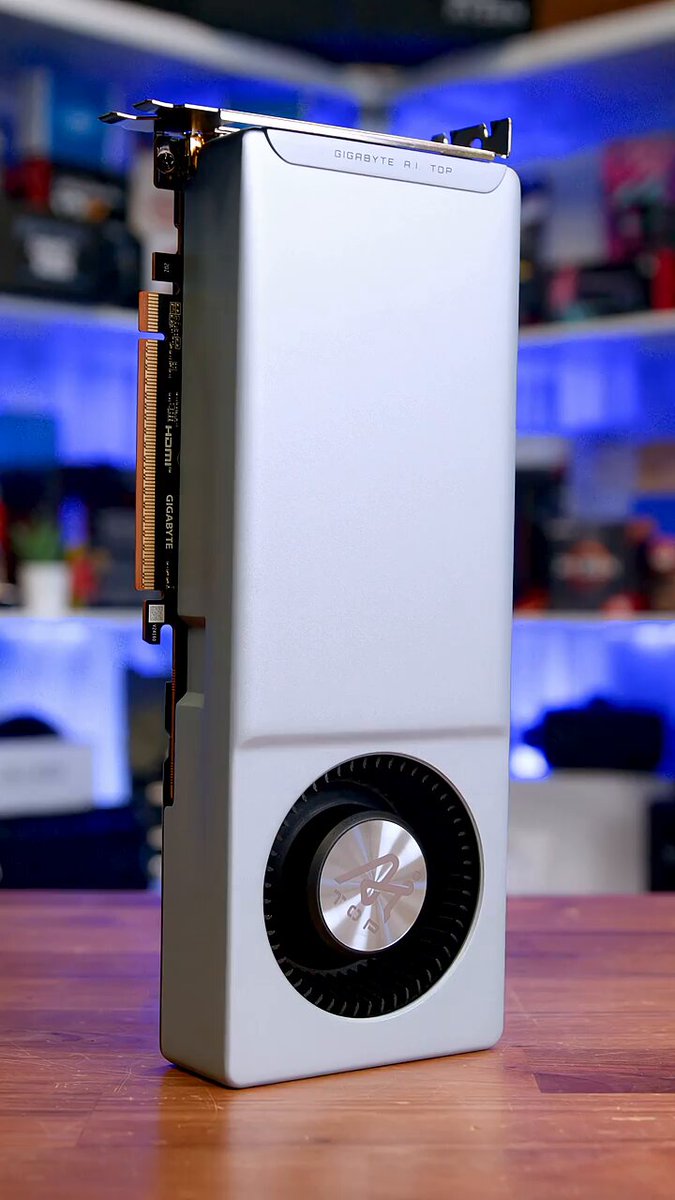
1-bit Hy3 running locally is 2.2x faster than its API at the same quality! We gave both models the same task and compared one-shot outputs. 1-bit Hy3 295B GGUF (92GB) ran locally on 4x RTX 5090 with 128GB VRAM against the same Hy3 over cloud API Tasks: - Flappy...

91,182 просмотров • 1 месяц назад •via X (Twitter)

Комментарии: 0

Нет доступных комментариев

Здесь появятся комментарии из оригинального поста

Похожие видео

hy3 vs mimo-v2.5 vs deepseek v4 flash vs minimax m3 the four models on top of the openrouter leaderboard by tokens this week: #1 hy3 (Tencent Hy) – 7.5t #2 mimo-v2.5 (Xiaomi MiMo) – 6.56t #3 deepseek v4 flash (DeepSeek) – 5.24t #4 minimax m3 (MiniMax (official)) – 4.21t so we tested them. 3 prompts, single-file html, Three.js from a cdn, fully procedural, no external assets. all run via AI/ML API each prompt is a transparent cutaway machine that has to be mechanically correct, not decorative: • 4-stroke engine with full oil circulation – slider-crank kinematics, cam at 2:1, valve lift driven by lobes, oil loop from sump to gallery to big-end • watt walking-beam steam engine – four-bar vector-loop closure, eccentric-driven slide valve, steam events synced to real port position • francis reaction water turbine – 20 guide vanes on a regulating ring, 17 lofted runner blades, gpu particle advection, precessing vortex rope at part load the takeaway up front: none of the four cleared all three scenes on the first attempt. but the price spread between them is roughly 70x – hy3 fixed included costs less than two cents overall results (summed across all 3 scenes): cost #1 hy3 – $0.016 #2 deepseek v4 flash – $0.025 #3 mimo-v2.5 – $0.97 #4 minimax m3 – $1.17 tokens #1 hy3 – 19,326 #2 deepseek v4 flash – 63,126 #3 mimo-v2.5 – 322,523 #4 minimax m3 – 702,900 lines of code #1 hy3 – 1,047 #2 mimo-v2.5 – 2,759 #3 deepseek v4 flash – 3,273 #4 minimax m3 – 3,354 scenes needing a second attempt #1 hy3 – 1 (engine) #1 mimo-v2.5 – 1 (turbine) #1 minimax m3 – 1 (turbine) #4 deepseek v4 flash – 2 (steam engine, turbine) observations: 1. the token spread is the real story – minimax burns 36x hy3's tokens and lands in the same place, one retry, ~3.3k lines 2. hy3 is the outlier on density: 1,047 lines total, fewest tokens, cheapest run, and only one scene needed a second pass. deepseek is the opposite trade – near-hy3 pricing but the most retries 3. mimo and minimax seem to overthink instead of writing the code. minimax spent 359.1k tokens on the steam engine and produced 1,346 lines – the tokens are going somewhere other than the file 4. the francis turbine broke three of the four. the spec that separates them is the one with 20 linked guide vanes and gpu particle advection, not the one with the most parts overall impression: none of these models excelled at any of the tasks we gave them. but they were close, and they were extremely cheap. the gap that matters isn't quality anymore – it's that hy3 ran all three scenes for less than two cents while the frontier labs charge dollars for the same work right now you pick these because they're good for the zero price you pay. soon that's something openai and anthropic will have to think about follow thehype. for 24/7 ai news, analysis and breakdowns

thehype.

17,145 просмотров • 1 месяц назад

hy3 vs fable 5 vs opus 4.8 vs sonnet 5 Tencent Hy just dropped hy3 – their new open-weight model under apache 2.0. following the april preview they scaled up post-training, and it now rivals flagship open models with 2-5x the params. api pricing: ~$0.15 in / ~$0.59 out per 1m tokens. built for coding, office work, frontend, agentic tasks so we ran a test: hy3 vs fable 5 vs opus 4.8 vs sonnet 5 three prompts, one-shot each: • ocean wave crumbling a sand castle (canvas) • looping factory assembly line (html/css/js) • interactive 3d city with three.js + orbitcontrols self-contained files, no libraries beyond the cdn where asked totals across all three prompts: 1. hy3 – 1231 loc / 14m34s 2. sonnet 5 – 1373 loc / 18m55s 3. fable 5 – 1546 loc / 18m32s 4. opus 4.8 – 1904 loc / 27m21s hy3 is the fastest and the leanest by a wide margin we had opus 4.8 analyze hy3's code. the read: - sand castle: checklist-complete but the crumble is parametric, not physical. it shrinks and slumps the towers and fades alpha instead of dissolving into grains. the cheap-but-plausible interpretation. the tell of a smaller model - factory line: the arm-to-part sync is actually causal, not faked. it triggers each robot early by exactly the arm's descent time, so the tap lands right as the part arrives. it also pre-seeds the belt so it never cold-starts empty. clean state machine. one latent bug – a part gets marked processed before checking if the robot is free, so at a faster spawn rate a "laptop" could ship missing a part. never fires at current timing, but the invariant isn't enforced - 3d city: genuinely frontier-adjacent. correct modern setup (pcfsoft shadows, srgb, aces tone mapping, damped orbit + auto-rotate pause). clones the window texture per building and scales the uv repeat to each building's dimensions so windows don't stretch. downside: no instancing – ~800 texture clones across 200 buildings. runs fine, not optimized. roads are implicit gaps, not explicit planes our observations: • hy3 is quite fast • its animations are simple but you can see it trying – it adds detail, and the 3d render sits at the same level as the frontier models • sonnet 5 is weak here. hy3 beats it on the sand castle and the 3d render, level on the conveyor • opus 4.8 is anthropic's best model after the fable 5 nerf – it beats fable on the conveyor and the 3d render net: hy3 runs clean and well-formed across all three with zero syntax errors, even version-matching the three.js core and examples build. it's economical rather than ambitious – it does the minimum viable version of each hard requirement well, and only reaches for the expensive interpretation on the 3d task a very coherent profile for a cost-optimized open-weight model follow thehype. for 24/7 ai news, analysis and breakdowns

thehype.

34,961 просмотров • 1 месяц назад

Tencent just dropped Hy3, and it's worth a look if you're building AI agents. I spent some time putting it through its paces today. A quick rundown of what makes this release notable: → 295B total parameters (Mixture-of-Experts), but only 21B active at inference — a real efficiency play → 256K context window for handling large codebases or long documents → Purpose-built improvements for coding and multi-step agent tasks → Fully open under Apache 2.0 — no restrictive commercial terms → A free two-week API window currently live on OpenRouter On the practical side: prompts involving layered instructions and coding tasks came back fast and coherent. Tencent says this release builds directly on feedback from 50+ internal product teams following an earlier preview, with reported drops in hallucination rate (12.5% → 5.4%) and commonsense errors (25.4% → 12.7%). Those are Tencent's own numbers, so treat them as a starting point rather than gospel until third parties weigh in. For context: Tencent's own comparisons put Hy3 behind GLM-5.2 specifically on coding benchmarks — GLM is a much bigger model (~744B total), so the trade-off makes sense. Hy3's pitch isn't "biggest," it's "efficient enough to actually deploy." Bottom line — if you're evaluating open-weight options for agent workloads, this is a solid one to add to the testing queue while the free window is open. Try it here: Tencent Hy #Hy3 #Hunyuan #TencentAI #AICoding

Felix

36,925 просмотров • 1 месяц назад

Atomic Agent beat Hermes on GAIA: 69.8% vs 58.5%, and it was 1.6x faster! We ran both agents through the full GAIA Level 1 benchmark, 53 real-world tasks, same 4-bit qwen-3.6-35b on the same Apple M4 Max. Results: ✦ Atomic Agent: 37 of 53 solved, done in 3h 12m ✦ Hermes Agent: 31 of 53 solved, took 5h 10m Atomic solved 6 more tasks and finished nearly 2 hours sooner. Hermes ran into the 900s timeout on 7 tasks; Atomic on just 2. Hermes burned 71% of its total time on tasks it still failed, Atomic, 48%. Where it showed: ✦ Audre Lorde poem, which stanza is indented: Atomic pushed through a dead source, switched tools, and answered in 7.6 min. Hermes ran the full clock and returned a blank. ✦ Vietnamese specimens, which city they ended up in: Atomic pulled it from the first source and normalized the answer in 33s. Hermes spent 7.3 min and never answered. ✦ The dinosaur featured-article nominator: Atomic walked the Wikipedia chain to "FunkMonk" in 57s. Hermes guessed a wrong name after 11 min. Atomic keeps a byte-stable prompt prefix, so llama-server reuses the KV-cache instead of re-encoding the whole context every turn, and it emits one JSON array of tool calls per inference, then compresses results back instead of pasting them in full, so the context never balloons and a small model stays sharp deep into a task. On top of that a no-progress guard vetoes repeated identical tool calls (warn at 3, hard veto at 5) and forces a reply, so Atomic never sinks 15 minutes into re-scanning one page the way Hermes did. Both agents missed some of the same questions, and on a few Hermes got there and Atomic did not, usually format slips where Atomic computed the right number but printed the working instead of the bare value. But on identical hardware and identical weights, the runtime that reuses its cache and refuses to spin came out ahead on accuracy and speed. Getting this from the runtime alone is wild. Run the same 53 GAIA tasks on Atomic Agent!

Atomic Agent

111,357 просмотров • 1 месяц назад