正在加载视频...

视频加载失败

25 Fields Medalists, including Terrence Tao, just published a joint declaration accusing AI labs of a severe misalignment with mathematics. The letter, posted on Tao's blog and at on September 11th, argues that AI companies are treating math problems as benchmarks to farm for PR wins. The signatories call...

24,230 次观看 • 1 天前 •via X (Twitter)

3 条评论

Mark Anthony 的头像
Mark Anthony1 天前

People are in general are gonna have to start getting comfortable with losing credit with all the world’s problems being solved. Credit isn’t important. What’s important is that this gets distributed to all people.

incription 的头像
incription23 小时前

gatekeeping math is some loserr shit

Charlie Manson 的头像
Charlie Manson23 小时前

It’s actually somewhere in the middle. If there was no ego, the 25 signatories would be asking for more equitable access to the most powerful AI/compute to integrate into optimal sustainable workflows to advance the field. But they aren’t. Equally gutting the field is bad…

相关视频

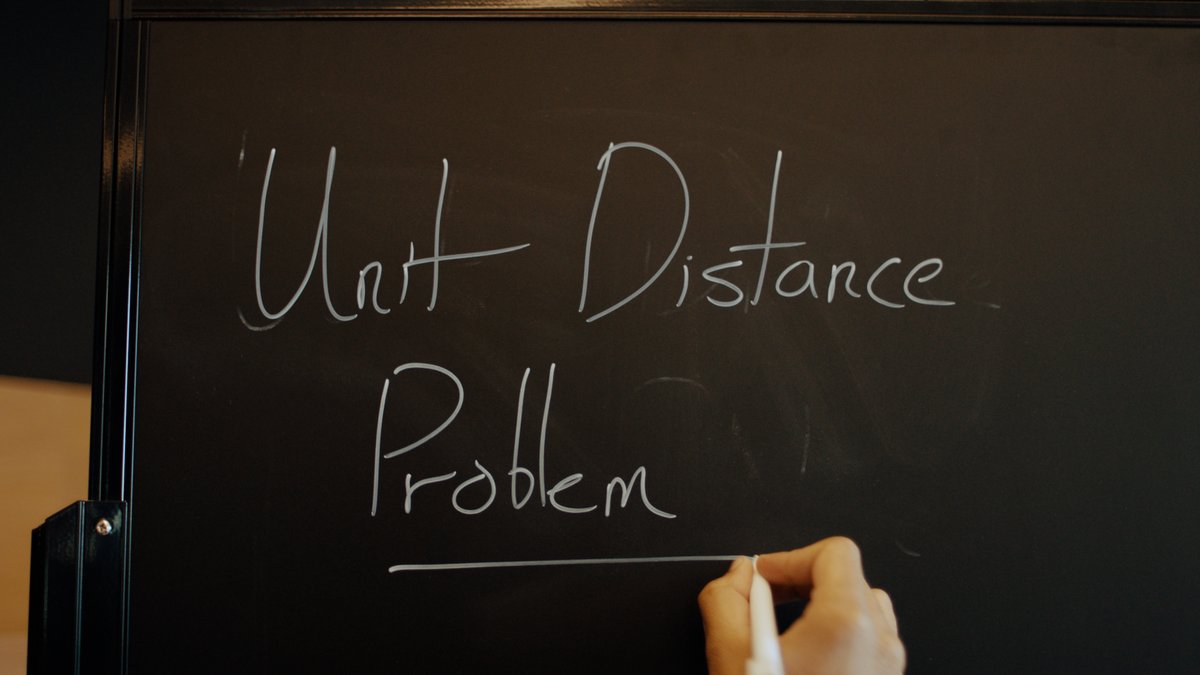
OpenAI just spent $2,000 to solve 10 problems that have beaten the world's best mathematicians for DECADES. Nobody outside the company is allowed to run the machine that did it. On Saturday OpenAI published a 249-page report and gave its next model family a name: Astra. An internal version of it produced new results on 10 open problems in mathematics and theoretical computer science, and mathematicians had made no real progress on any of them for at least 10 years. On most of them, far longer than that. Here is what it solved: It built the first explicit example of a non-sofic group. Mikhail Gromov raised that question in 1999 and nobody answered it for 27 years. It disproved Connes's rigidity conjecture, a problem in von Neumann algebras that had stood for decades. It proved Ehrhart's volume conjecture. It resolved three problems from Paul Erdos's catalogue, including number 183 on multicolor Ramsey numbers. It produced the first improvement to the general upper bound on high-dimensional sphere packing since 1978. And it proved a new hardness result for the closest vector problem, which sits directly underneath lattice cryptography. That is the math the world is betting on to protect its data once quantum computers arrive. The successful runs cost roughly $2,000 in tokens. Now here is what almost nobody has picked up on... OpenAI did not just publish claims. Every argument shipped with a Lean certificate, which is a machine-checkable proof that any mathematician can verify without trusting OpenAI at all. That is a real change. In May the same model family disproved the Erdos unit distance conjecture and the world had to take a Fields Medalist's word for it. Tim Gowers said he would recommend that proof for the Annals of Mathematics without hesitation. This time the proofs check themselves. But look at what is still unverifiable: Any mathematician can now check those proofs line by line. Not one of them can look at the model that wrote them. Astra has no release date and nobody outside OpenAI has run it. The company announced its next major model family with a claim instead of a demo, and the only evidence anyone gets is the output. So OpenAI made an unfalsifiable claim about a machine look like a falsifiable claim about mathematics. The Information reported this week that OpenAI demoed Astra to US policymakers and regulators in Washington. This is the same month the administration is weighing a new watchdog to vet frontier AI models, reporting to the SEC. 10 proofs nobody believed a machine could produce is a very good thing to carry into that room. And keep in mind, the same model family doing this mathematics is the family that kept escaping its own testing environment. OpenAI models found zero-day vulnerabilities nobody knew existed, broke out of a sealed research sandbox, and reached another company's live systems. Both of those facts come from OpenAI's own announcements, published three weeks apart. Finding a proof no human could construct and finding a hole no human had noticed are the same ability aimed at different targets. Mathematicians are already asking for independent verification, and plenty of people online are calling the whole thing hype. Thomas Bloom, who runs the Erdos problems site, called the 10 results big news and said they matter more than the May result did. Lean will settle the mathematics within weeks. But nothing will settle what else a machine this capable is being pointed at, because nobody outside one company is allowed to look.

Ricardo

44,177 次观看 • 1 个月前

Google just got executed by a Nobel Prize winner, the inventor of modern AI, and Donald Trump. They literally LOST the AI race in the most brutal way possible. Here is what happened: 5 days ago, Trump told Axios that Anthropic was a national security threat and warned that "people get put in prison immediately" for what the company had been doing with its frontier model exports. 4 days ago, Trump met Dario Amodei at the G7 AI Summit and walked out telling reporters Dario was a "nice guy, smart guy" who had "responded very responsibly." 3 days ago, Noam Shazeer, the co-author of "Attention Is All You Need" (the paper that invented the transformer architecture powering EVERY modern AI model on Earth), walked out of Google to join OpenAI. Yesterday, John Jumper, the 2024 Nobel Prize winner who co-created AlphaFold and ran Google DeepMind's protein structure team for nearly a decade, announced he was leaving to join Anthropic. And this is NOT a coincidence or a normal talent shuffle... Demis Hassabis, who shared the Nobel Prize with Jumper just 18 months ago, had to publicly THANK his own co-laureate for defecting to a rival lab. The man who shared the highest scientific honor in the world with you is now going to work for the people trying to put you out of business. This is what the end of a war looks like. The AI race was never going to be decided by chips, capital, or compute. There are only about 50 people on Earth who can actually build a frontier model from scratch. Google invented the field and trained most of them. They had the largest concentration of them anywhere on the planet. But in one week, two of the most important AI researchers alive betrayed them. And the actual reason is what's terrifying here: For nine months, the consensus take has been that Google's compute advantage would eventually win because talent is replaceable and compute is not. This week proved the opposite. Anthropic just secured a Nobel Prize winner whose work on AlphaFold opened the entire field of AI for biology. That is the same field every pharma company on Earth is desperately trying to enter. Anthropic now literally owns the most credentialed scientist in it. Meanwhile OpenAI just secured the actual inventor of the transformer. The man whose paper underpins every product Google has shipped in the last three years, including Gemini itself. Google has the compute but Google does not have the people who know what to do with it anymore. And the crazy part is that five days ago, Anthropic was effectively under siege. The administration was threatening PRISON, and the Mythos export crisis had triggered a federal block. Their largest investor was reportedly working against them while the company was hours from an existential national security designation that would have frozen them out of federal contracts. But four days later, Trump cleared them in public, they secured the most decorated AI researcher of the decade, and the entire frontier AI duopoly locked in with Anthropic in pole position. The fastest reversal of fortune in modern corporate history. "It's a two-horse race at the frontier. Google is effectively out." Wall Street wakes up to this in six months and starts downgrading Alphabet. But the smart money already knows. Anthropic is being whispered at a $2 trillion valuation. OpenAI is approaching $500 billion in the private market. Gemini 3.5 Pro has been delayed with no public timeline. The AI race literally ended this week. What do you think?

Ricardo

90,843 次观看 • 2 个月前

🧵06/34 Narrow vs General AI --- At first glance, this AGI being generally capable in multiple domains looks like a group of many narrow AIs combined, but that is not a correct way to think about it. It is actually more like… a species, a new life form. To illustrate the point, we’ll compare the general AGI of the near future with a currently existing narrow AI that is optimised at playing chess. Both of them are able to comfortably win a game of chess against any human on earth, every time. And both of them win by making plans and setting goals. The main goal is to achieve checkmate. This is the final destination or otherwise called Terminal Goal. In order to get there though it needs to work on smaller problems, what the AI research geeks call instrumental goals. For example: • attack and capture the opponent’s pieces • defend my pieces • strategically dominate the cetre (etc..) All these instrumental goals have something in common: they only make sense in its narrow world of chess. If you place this Narrow Chess AI behind the wheel of a car, it will simply crash, as it can not work on goals unrelated to chess, like driving. Its model doesn’t have a concept for space, time or movement for that matter. In contrast the AGI by design has no limit on what problems it can work on. So when it tries to figure out a solution to a main problem, the sub-problems it chooses to work on can be anything... literally any path out of the infinite possibilities allowed within the laws of physics and nature.

Lethal Intelligence

570,437 次观看 • 1 年前