Video wird geladen...

Video konnte nicht geladen werden

Zur Startseite

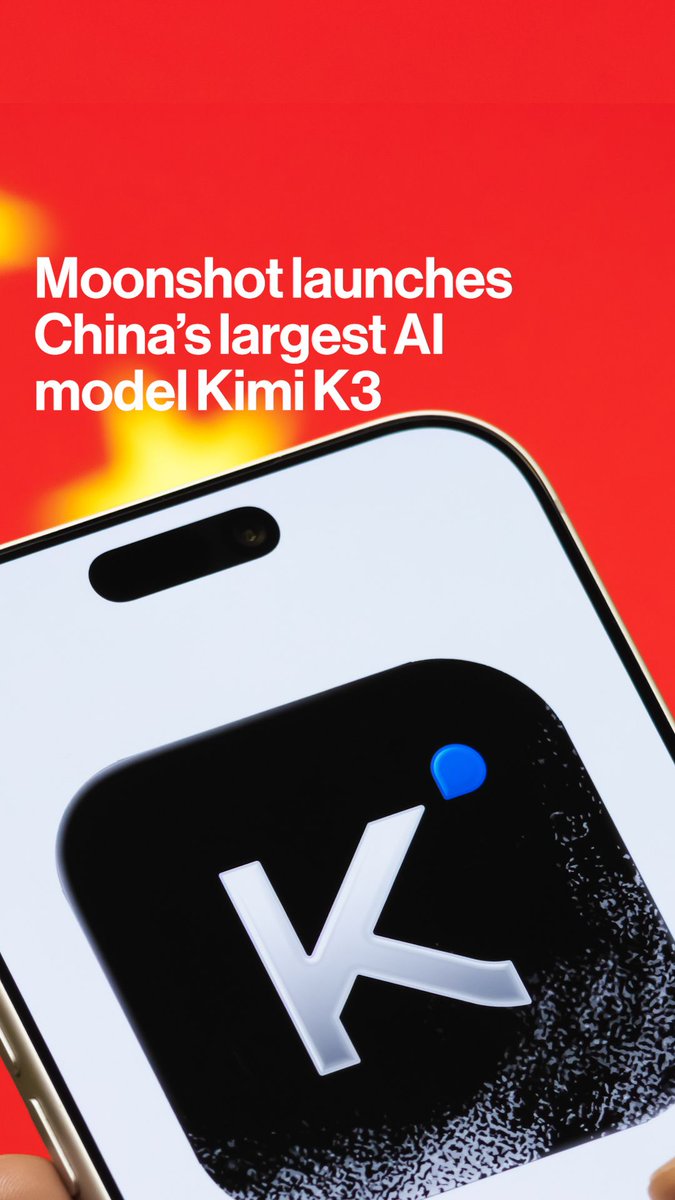
🚨 2.8 trillion parameters. Under 4GB VRAM. No quantization. An open source tool called AirLLM has changed how large language models run on consumer hardware. Instead of loading the entire model at once, it processes one layer at a time. This means your VRAM needs depend only on the...

40,529 Aufrufe • vor 12 Tagen •via X (Twitter)

17 Kommentare

Profilbild von Brooks Whale X 🐋
Brooks Whale X 🐋vor 12 Tagen

Repo:

Profilbild von Md Santo
Md Santovor 11 Tagen

great share

Profilbild von verdoyant
verdoyantvor 12 Tagen

@HealthRanger

Profilbild von Holland Tech Marco
Holland Tech Marcovor 11 Tagen

This is a very interesting development in the AI space.

Profilbild von Tanvir
Tanvirvor 11 Tagen

Fantastic share

Profilbild von Safwan
Safwanvor 12 Tagen

That's great

Profilbild von Luqman Ali
Luqman Alivor 12 Tagen

That's Excellent

Profilbild von Yasir Ai
Yasir Aivor 12 Tagen

Been looking for something that lets me run bigger models on my 16GB card without heavy quantization. Might test this.

Profilbild von Zayden Tech
Zayden Techvor 12 Tagen

Awesome share

Profilbild von Paul Sims
Paul Simsvor 12 Tagen

Amazing Share

Profilbild von Arsène Lupin
Arsène Lupinvor 12 Tagen

That's an excellent share.

Profilbild von Onil Coder
Onil Codervor 12 Tagen

I hadn’t thought about it this way before.

Profilbild von Aiden Tech
Aiden Techvor 12 Tagen

This is amazing share

Profilbild von Oliver Kane
Oliver Kanevor 12 Tagen

The MoE part is the interesting bit. Most of the model never even touches VRAM. Still skeptical until I see real token speeds though.

Profilbild von Brooks Whale X 🐋
Brooks Whale X 🐋vor 12 Tagen

MoE is the VRAM cheat code. Speed is the reality check: measured ~292 seconds per token on Kimi K3. Disk bandwidth is the new bottleneck.

Profilbild von Winston B.
Winston B.vor 12 Tagen

The tradeoff it skips is speed, since every token streams the weights off disk while the GPU mostly waits. One AirLLM test on a 70B model clocked 292 s/token, which turns a 100-token answer into an 8-hour wait.

Profilbild von Brooks Whale X 🐋
Brooks Whale X 🐋vor 12 Tagen

Thanks for noting the speed tradeoff. Sequential disk streaming keeps VRAM low but creates high latency, as seen in the 292 s/token result, making AirLLM suitable mainly for batch rather than interactive workloads.

Ähnliche Videos

Alibaba just released a coding model that hits 82 percent on SWE-Bench Verified. That is the highest score ever published for an open-source model. The weights are free. The license is Apache 2.0. You can run it today. The model is Qwen 4 Coder 32B. Here is what 82 percent on SWE-Bench Verified actually means. SWE-Bench Verified tests whether an AI can autonomously resolve real bugs pulled from real production GitHub repositories. Not synthetic exercises. Real open-source projects that real teams depend on. A model gets a bug report, reads the code, writes a fix, and either passes the test suite or it does not. At 82 percent, Qwen 4 Coder 32B resolves 82 out of every 100 real production bugs it is given. Without a human guiding it. On code it has never seen before. For comparison: Qwen 4 Coder 32B: 82 percent SWE-Bench Verified. Open source. Apache 2.0. Claude Fable 5: 80.3 percent SWE-Bench Pro. $10 input / $50 output per million tokens. Currently suspended. GPT-5.6 Sol: Competitive on Terminal-Bench. $5 input / $30 output per million tokens. An open-weight model that you can download and run for free just beat both of them on the benchmark designed to measure real software engineering capability. Here is the architecture. Qwen 4 Coder 32B is a 32 billion parameter dense model. Not a Mixture-of-Experts. Every parameter is active on every request. This matters for inference: a dense 32B model runs on 22 gigabytes of VRAM, which fits on a single high-end consumer GPU or a MacBook Pro with 64GB of unified memory. The smaller variant, Qwen 4 Coder 4B, runs at approximately 135 tokens per second on an M5 Max and fits inside 8 gigabytes of RAM. For a model with usable coding capability, that is a new bar for what fits in a single laptop. The training methodology continued Alibaba's approach of reinforcement learning on verifiable coding tasks. The model gets rewarded when its code passes tests. It gets penalized when it fails. Over millions of training steps, the model learns to write code that actually runs rather than code that looks plausible. License: Apache 2.0. Full commercial use. No attribution requirement. No revenue threshold. No monthly active user ceiling. Weights: Hugging Face, available today. Runs on: vLLM, Ollama, SGLang, and any standard GGUF-compatible inference engine. Qwen 4 32B also runs at approximately 135 tokens per second on an M5 Max chip, setting a new bar for what a sub-8GB model can do on Apple Silicon. The open-source coding model just beat the best closed-source model in the world on the benchmark designed to test whether AI can actually do software engineering. The weights are free. The subscription is optional. Source: Autom8Labs AI Insight July 2026, State of Open Source LLMs June 2026, Kunal Ganglani blog June 2026.

Harman

41,278 Aufrufe • vor 3 Monaten

six months ago this wasn't happening on 8gb vram. running unsloth's Q4_K_XL quant of gemma 4 26b-a4b-it-qat, a sparse MoE model with only 4b active params on a single rtx 4060 laptop gpu, 8gb vram, 20+ tok/s decode. no cloud, no api, no offload hacks. just a gaming laptop on battery. what makes it fit: google's QAT (quantization aware training), plus MTP (multi token prediction) support in the latest llama.cpp builds. that combo is the single biggest unlock for local inference on low vram. rtx 3060, rtx 3070, gtx 1070, gtx 1080, rtx 4050, rtx 4060, rtx 5050, rtx 5060 — any 6-8gb consumer gpu, old or new — this model runs on it. world cup season, so i told it to build a soccer themed flappy bird clone. one shot, zero iteration, fully playable. six months ago an 8gb model could barely clone vanilla flappy bird. now it's shipping a themed game from a sparse MoE model running locally on a laptop battery. inference benchmarks: - decode throughput: 30 tok/s - context: 64k. this is the real unlock. 64k ctx is what makes a hermes agent loop viable locally on this model, not just single-turn chat. llama.cpp flags: -m gemma-4-26B-A4B-it-qat-UD-Q4_K_XL.gguf -c 64000 -cmoe --port 8080 game's deployed on my own site, built and shipped end to end with open source llm, zero closed source api dependency in the pipeline. link in the description. gguf weights on huggingface, link in the comments. pull it down, run it on whatever 8gb card is sitting in your rig. try the game and tell me your score and what you want in v2. local llms on consumer gpus stopped being a meme.

Alok

62,381 Aufrufe • vor 4 Monaten