Video wird geladen...

Video konnte nicht geladen werden

Zur Startseite

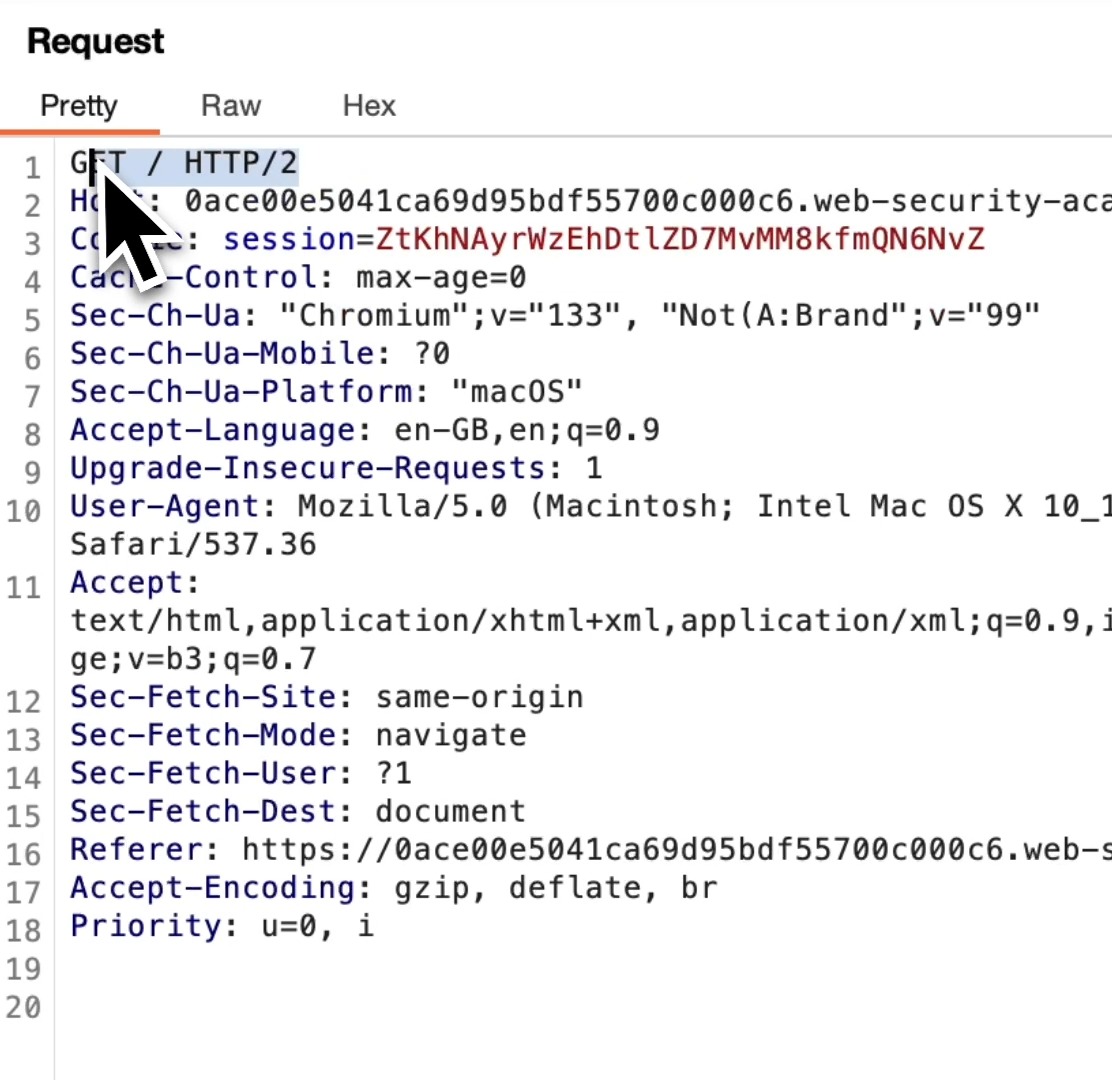
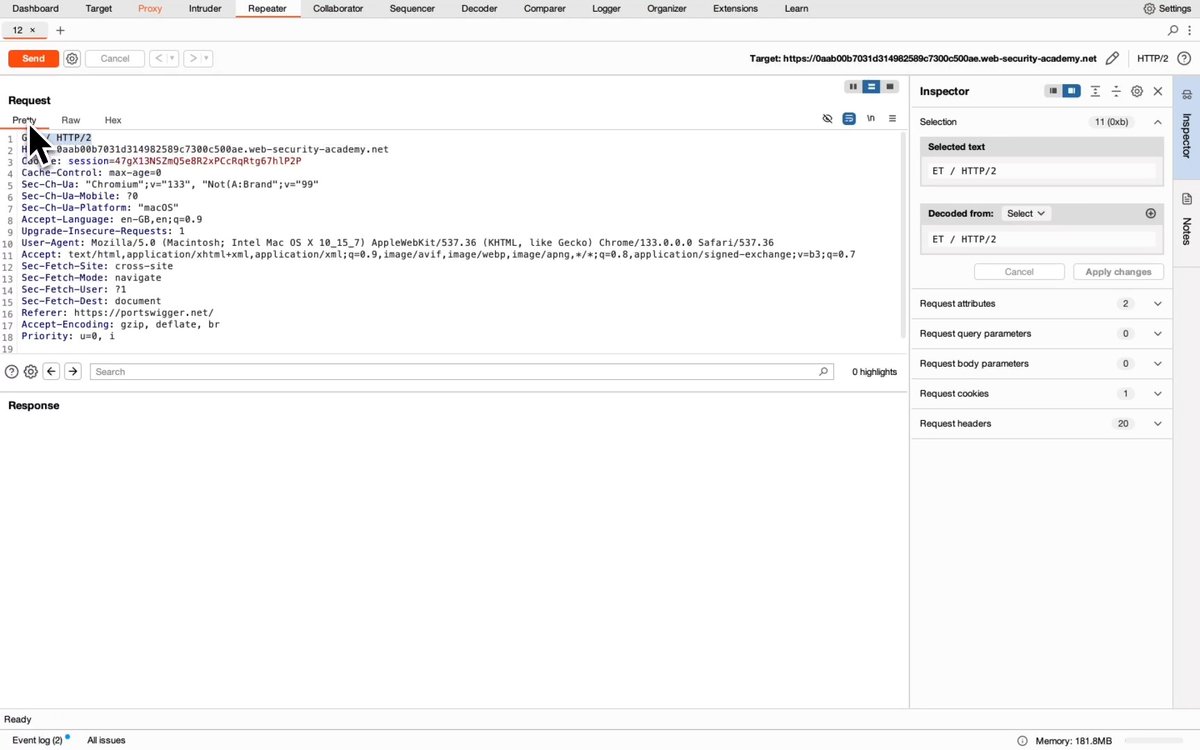
🌐🔐 4 WEB HACKING DEMOS EVERY ASPIRING ETHICAL HACKER SHOULD UNDERSTAND ⚠️ EDUCATIONAL DISCLAIMER: These demonstrations are intended strictly for educational purposes, cybersecurity knowledge, and awareness. Practical demonstrations are performed in a controlled lab environment using designated training applications and CTF challenges. The goal is to understand how web...

0 Kommentare

Keine Kommentare verfügbar

Kommentare vom Original-Post werden hier angezeigt

Ähnliche Videos

🤖 RUN YOUR OWN LOCAL AI — LLMs & CYBERSECURITY What if you could run an AI model directly on your own computer instead of sending everything to a cloud service? In this tutorial, I'm exploring local Large Language Models (LLMs) and how they can be useful for cybersecurity research. 🔹 WHAT IS AN LLM? A Large Language Model is an AI system trained to understand and generate text. Local LLMs can help with: 💻 Coding 🔎 Log analysis 📚 Security research 🐍 Python scripting 🌐 Networking concepts 📝 Documentation 🤖 Automation 🔹 WHY RUN AI LOCALLY? Running an LLM locally can provide: 🔐 More control over your data ⚡ Offline access 🧪 A private experimentation environment 💻 Custom workflows But "uncensored" doesn't mean "safe." A model can generate incorrect or dangerous information, so human judgment and authorization still matter. 🔐 USING AI FOR CYBERSECURITY A responsible workflow is: AI → Research → Human Verification → Authorized Testing → Defense AI can help you understand security concepts, analyze information, and automate legitimate tasks, but it shouldn't replace security expertise or authorization. 🎯 THE BIG LESSON The future of cybersecurity isn't just about learning hacking tools. It's also about understanding AI, LLMs, automation, privacy, and how these technologies can be secured and responsibly used. ⚠️ Educational purposes only. Use AI and security tools responsibly and test only systems you own or have explicit authorization to assess. 🔐 HACKWITHBANKS — Learn • Practice • Defend • Stay Ahead. #Hackwithbanks #AI #LLM #LocalAI #CyberSecurity

Hackswithbanks

247,000 Aufrufe • vor 1 Monat

☁️💻 YOU NEED TO LEARN AWS! — AMAZON WEB SERVICES EXPLAINED ⚠️ EDUCATIONAL DISCLAIMER: This content is strictly for educational purposes, cloud computing knowledge, and cybersecurity awareness. Practical exercises should be performed in authorized learning environments using accounts and resources you control. Always follow cloud-provider policies, protect credentials, and check potential charges before creating resources. 🌐 WHAT IS AWS? Amazon Web Services (AWS) is a cloud computing platform that provides computing power, storage, databases, networking, and security services over the internet. Instead of purchasing and maintaining physical servers, organizations can use cloud infrastructure to build and operate applications. ### 🔑 7 AWS CONCEPTS EVERY BEGINNER SHOULD KNOW 1️⃣ EC2 — Virtual Servers Run virtual computers in the cloud for applications, websites, and testing. 2️⃣ S3 — Cloud Storage Store files, backups, images, and other objects. Incorrect permissions can expose private data. 3️⃣ IAM — Identity and Access Management Control who can access AWS resources and what actions they can perform. 4️⃣ VPC — Virtual Private Cloud Create logically isolated networks and control how cloud resources communicate. 5️⃣ Lambda — Serverless Computing Run code in response to events without managing the underlying servers directly. 6️⃣ CloudWatch — Monitoring Collect metrics, logs, and alerts to help monitor applications and cloud resources. 7️⃣ CloudTrail — Activity Auditing Record supported AWS account and API activity to help investigate events and identify suspicious actions. ### 🛡️ CLOUD SECURITY PRINCIPLES 🔹 Enable multi-factor authentication (MFA). 🔹 Follow the principle of least privilege. 🔹 Never expose access keys or passwords in public repositories. 🔹 Configure storage permissions carefully. 🔹 Monitor activity and review security logs. 🔹 Set budgets and billing alerts before experimenting with paid services. ### 🎯 WHY LEARN AWS? AWS skills can support career paths in cloud engineering, DevOps, IT support, software development, and cloud security. KEY LESSON: Don't try to memorize hundreds of services. Understand the fundamentals, practise with small projects, and learn how the services work together. ☁️ Learn the cloud. Build practical skills. Secure your infrastructure. 🔐 HACKWITHBANKS — CYBERSECURITY & CLOUD EDUCATION #Hackwithbanks #AWS #AmazonWebServices #CloudComputing #CloudSecurity

Hackswithbanks

85,600 Aufrufe • vor 15 Tagen

🐧💻 2 COOL WEB-RELATED THINGS YOU CAN DO IN LINUX! 🔐 Linux is more than just an operating system. It provides powerful command-line tools for web research, network troubleshooting, and cybersecurity learning. In this tutorial, we explore two practical ways to use Linux tools to understand how websites and internet services work. 📚 WHAT YOU’LL LEARN: 🌐 1. Web Research & Website Information Gathering Learn how Linux command-line tools can help you inspect publicly available website information, check DNS records, look up domain details, and understand how websites connect to internet infrastructure. 🔎 2. Network Connectivity & HTTP Testing Discover how tools such as ping, curl, and dig help you troubleshoot network connections, inspect HTTP responses, investigate DNS resolution, and understand how your computer communicates with web servers. 💡 WHY THIS MATTERS: These skills are useful for learning Linux, understanding networking, troubleshooting websites, and building a foundation in ethical hacking and cybersecurity. ⚠️ DISCLAIMER: This content is strictly for educational purposes and cybersecurity awareness. Use these tools responsibly and only perform security testing on websites, networks, and systems you own or have explicit permission to assess. Publicly available information does not automatically grant permission to conduct security tests. Never use these techniques to disrupt services, access private data, or engage in unauthorized activities. 🚀 Follow Hackwithbanks for practical Linux, networking, and cybersecurity tutorials—from beginner fundamentals to advanced concepts. #Hackwithbanks #LinuxForHackers #Linux #EthicalHacking #CyberSecurity

Hackswithbanks

22,600 Aufrufe • vor 28 Tagen

💻🗄️ SQL TUTORIAL FOR BEGINNERS: LEARN HOW DATABASES REALLY WORK ⚠️ EDUCATIONAL DISCLAIMER: This content is strictly for educational purposes, database learning, and cybersecurity awareness. Practice using sample databases, your own projects, or authorized lab environments. Never access, modify, extract, or delete data from databases without explicit permission. Always protect sensitive information and follow applicable laws. 🔍 WHAT IS SQL? SQL (Structured Query Language) is used to communicate with relational databases. It allows developers to retrieve, organize, insert, update, and delete data. ### 🔑 8 SQL CONCEPTS EVERY BEGINNER SHOULD KNOW 1️⃣ Tables and Databases Databases organize information into tables containing rows and columns. For example, a customers table might store customer IDs, names, and email addresses. 2️⃣ SELECT — Retrieve Data Used to choose which columns you want to view. 3️⃣ WHERE — Filter Records Allows you to retrieve records that match specific conditions. 4️⃣ ORDER BY — Sort Results Organizes results in ascending or descending order. 5️⃣ Aggregate Functions Functions such as COUNT(), SUM(), and AVG() help summarize data. 6️⃣ GROUP BY — Organize Data into Groups Groups records with common values so you can calculate totals and statistics for each group. 7️⃣ JOIN — Connect Related Tables Combines related information from multiple tables using matching columns. 8️⃣ Primary and Foreign Keys Primary keys identify records uniquely, while foreign keys help establish relationships between tables. ### 🛡️ WHY SQL MATTERS IN CYBERSECURITY Understanding SQL helps security professionals recognize database risks, investigate application behavior, and understand vulnerabilities such as SQL injection. Developers can reduce SQL injection risks by using parameterized queries, validating input appropriately, and restricting database permissions. 🎯 KEY LESSON: Don't just memorize SQL commands. Understand how data is stored, how queries retrieve it, and how databases should be protected. Start with sample data, practise each concept, and build your skills step by step. 🔐 HACKWITHBANKS | DATABASE & CYBERSECURITY EDUCATION #Hackwithbanks #SQL #tutorial #database #Cybersecurity

Hackswithbanks

25,600 Aufrufe • vor 14 Tagen

New course: MCP: Build Rich-Context AI Apps with Anthropic. Learn to build AI apps that access tools, data, and prompts using the Model Context Protocol in this short course, created in partnership with Anthropic Anthropic and taught by Elie Schoppik Elie Schoppik, its Head of Technical Education. Connecting AI applications to external systems that bring rich context to LLM-based applications has often meant writing custom integrations for each use case. MCP is an open protocol that standardizes how LLMs access tools, data, and prompts from external sources, and simplifies how you provide context to your LLM-based applications. For example, you can provide context via third-party tools that let your LLM make API calls to search the web, access data from local docs, retrieve code from a GitHub repo, and so on. MCP, developed by Anthropic, is based on a client-server architecture that defines the communication details between an MCP client, hosted inside the AI application, and an MCP server that exposes tools, resources, and prompt templates. The server can be a subprocess launched by the client that runs locally or an independent process running remotely. In this hands-on course, you'll learn the core architecture behind MCP. You’ll create an MCP-compatible chatbot, build and deploy an MCP server, and connect the chatbot to your MCP server and other open-source servers. Here’s what you’ll do: - Understand why MCP makes AI development less fragmented and standardizes connections between AI applications and external data sources - Learn the core components of the client-server architecture of MCP and the underlying communication mechanism - Build a chatbot with custom tools for searching academic papers, and transform it into an MCP-compatible application - Build a local MCP server that exposes tools, resources, and prompt templates using FastMCP, and test it using MCP Inspector - Create an MCP client inside your chatbot to dynamically connect to your server - Connect your chatbot to reference servers built by Anthropic’s MCP team, such as filesystem, which implements filesystem operations, and fetch, which extracts contents from the web as markdown - Configure Claude Desktop to connect to your server and others, and explore how it abstracts away the low-level logic of MCP clients - Deploy your MCP server remotely and test it with the Inspector or other MCP-compatible applications - Learn about the roadmap for future MCP development, such as multi-agent architecture, MCP registry API, server discovery, authorization, and authentication MCP is an exciting and important technology that lets you build rich-context AI applications that connect to a growing ecosystem of MCP servers, with minimal integration work. Please sign up here!

Andrew Ng

142,542 Aufrufe • vor 1 Jahr

This is a standard practice for almost all Tier-1 banking applications in Nigeria, and for some fintech applications I’ve previously performed pentests on. Client-side encryption isn’t a total waste, or a waste of compute, as some people have claimed, but rather a measure to protect against API tampering or API request/response manipulation between the client and the server when implemented properly. Even with HTTPS, attackers can capture a decrypted version of web or mobile API data in transit because the browser and the server establish a level of trust during the TLS handshake. Attackers can leverage this trust to capture & proxy already-decrypted traffic, tamper with it, and then forward it to the server. This allows them to override what the user interface or client is originally supposed to send and replace it with data of their choosing. That is why validation needs to be performed on both the client and the server side. To wrap up, encrypting API requests and responses makes it significantly harder for attackers to tamper with data, even if they capture the traffic, unless they have access to the encryption details (algorithm, encryption mode, key size, secret key, and initialization vector), assuming asymmetric encryption is used. In the demo below, you can see how I discovered additional parameters (balance, is_admin) in the API response, captured the registration API request, despite it being sent over HTTPS from the interface, added the discovered parameters, and successfully inflated my balance to 50 billion and also escalated my privileges to admin, and ultimately deleted the accounts of two live users/customers. In the second slide, I captured an API traffic of a bank app, and you can see how difficult the payloads are to read.

Ghost St Badmus

218,042 Aufrufe • vor 11 Monaten

New Short Course: Building AI Browser Agents! Learn how to build AI agents that interact and take actions on websites in this course, created in partnership with and taught by and @namangarg0, Co-founders of AGI Inc. AI browser agents can log into websites, fill out forms, click through web pages, or even place orders online for you. They use both visual information, like screenshots, and structural data, like the HTML or Document Object Model (DOM) of a web page, to reason and take action. With the complexity of webpages and multiple possible actions at each step, it can be challenging for an AI browser agent to complete an assigned task. Because these agents run long action sequences, a single error—like clicking the wrong button or misreading a field—can lead to unexpected outcomes or errors that compound over time. In this course, you'll understand how autonomous web agents work, their current limitations, and how AgentQ enables them to improve through self-correction. In detail, you'll: - Learn what web agents are, how they automate tasks online, their architecture, key components, limitations, and an overview of their decision-making strategies. - Build a web agent that can scrape website and return course recommendations in a structured output format. - Build an autonomous web agent that can execute multiple tasks, such as finding and summarizing webpages, filling out a form, and signing up for a newsletter. - Explore AgentQ, a framework that enables agents to self-correct by combining Monte Carlo Tree Search (MCTS), a self-critique mechanism for continuous improvement, and Direct Preference Optimization (DPO). - Deep dive into MCTS, learn how it finds an effective path, illustrated by an example of Gridworld animation, and use AgentQ to complete web tasks. - Understand AI agents' current state and future directions—including key factors shaping their evolution, such as hardware, algorithm innovation, and data availability. By the end of this course, you will have hands-on experience building browser agents and a deeper understanding of how to make them more robust and reliable. Please sign up here:

Andrew Ng

186,182 Aufrufe • vor 1 Jahr