Loading video...

Video Failed to Load

Go Home

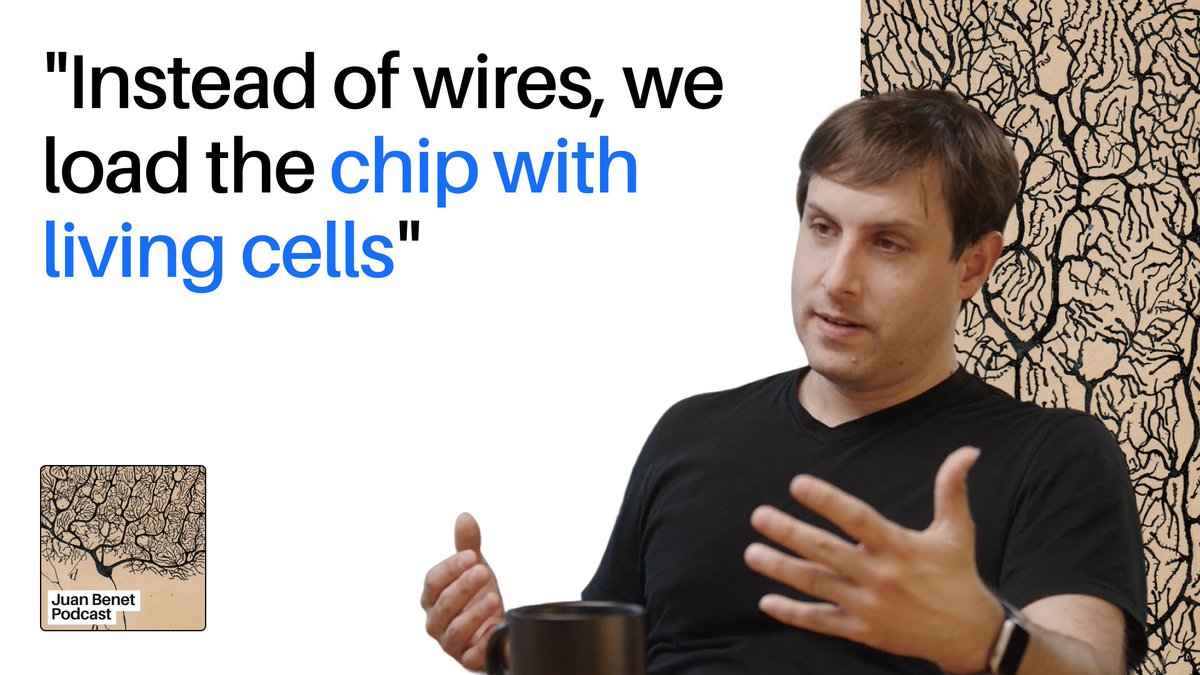
A FLY BRAIN COULD CHANGE HOW BITCOIN MINING WORKS. Researchers FutureBit introduced HashFly, an experimental Bitcoin miner built around organic neurons from a fly brain. The idea sounds crazy, but the efficiency claim is even crazier: ~1 watt per terahash if scaled to real organic neurons. That would be...

220,048 views • 4 days ago •via X (Twitter)

23 Comments

Marek Bialoglowy's profile picture
Marek Bialoglowy4 days ago

@FutureBit It's just matter of time until they wire up monkey brains for AI interference or to mine bitcoin, and after this ... we get matrix. We live in a simulation anyways, so this is simulation within simulation; kinda like in inception movie, but it's a reality not a dream.

Zentrix⌚️'s profile picture
Zentrix⌚️4 days ago

@FutureBit we're already closer than people think, live monkeys wired to computers for brain-machine research has been happening for years, mining bitcoin with a biological brain is just a weirder use case waiting to happen

Byron's profile picture
Byron4 days ago

@FutureBit bullshit again.

Zentrix⌚️'s profile picture
Zentrix⌚️4 days ago

@FutureBit bullish again?

Fajar M Reza's profile picture
Fajar M Reza4 days ago

@FutureBit Organic-neuron mining is intriguing, but reproducible efficiency benchmarks matter more than novelty.

Zentrix⌚️'s profile picture
Zentrix⌚️4 days ago

@FutureBit Exactly. The concept is fascinating, but real-world benchmarks will show whether biology can actually beat silicon

volovuk's profile picture
volovuk4 days ago

197.4 kH/s is the actual measured number in that screenshot. A modern ASIC does ~200+ TH/s — nine orders of magnitude higher. ‘If scaled to real neurons’ is carrying the entire claim, and nobody’s shown that biological spike rates scale linearly rather than hitting a wall from noise, timing jitter, or interconnect at any meaningful hash rate.

Zentrix⌚️'s profile picture
Zentrix⌚️4 days ago

@FutureBit Fair point. The scaling assumption is doing a lot of work here

M-studioAi's profile picture
M-studioAi4 days ago

@FutureBit A fly brain doing Bitcoin mining is crazy

Zentrix⌚️'s profile picture
Zentrix⌚️4 days ago

@FutureBit I don't know how anyone came up with this, but it's really crazy

neo's profile picture
neo4 days ago

@FutureBit Crypto bros are so funny. They see all as hashable or not. It's like, they ave the nails so everything looks like a hammer 🔨

Zentrix⌚️'s profile picture
Zentrix⌚️4 days ago

@FutureBit Haha, the hammer analogy is actually perfect 😂

Pepe's profile picture
Pepe4 days ago

@FutureBit A frog Brain will change that

Zentrix⌚️'s profile picture
Zentrix⌚️4 days ago

@FutureBit well, anything is possible😅

ROBINHOOD KING 👑🚀's profile picture
ROBINHOOD KING 👑🚀4 days ago

Hello 🚀 Do you need strong promotion for fast growth?

Zentrix⌚️'s profile picture
Zentrix⌚️4 days ago

I can offer you the same🙃

Bober_smart's profile picture
Bober_smart4 days ago

@FutureBit And this is real magic

Zentrix⌚️'s profile picture
Zentrix⌚️4 days ago

@FutureBit This world is going crazy, new scientific discoveries every day

just welly.'s profile picture
just welly.4 days ago

@FutureBit 1 watt per terahash is a revolutionary

Zentrix⌚️'s profile picture
Zentrix⌚️4 days ago

@FutureBit I think so too my friend

Eceertrey's profile picture
Eceertrey4 days ago

@FutureBit sweet

Zentrix⌚️'s profile picture
Zentrix⌚️4 days ago

@FutureBit This is really something new and shocking

ks. Robert Wawer SJ's profile picture
ks. Robert Wawer SJ4 days ago

@FutureBit 🎯

Related Videos

Zebrafish NN It’s pretty amazing to learn that efforts to map the fruit FLY connectome (brain synapses) were successful and its amazing to see the digital fly brain successfully complete a whole series of tasks, including complex navigation of open worlds. The fruit fly is 160,000 neurons and 10^7 synapses. Teams are currently doing the same thing with a zebrafish which has a similar scale neuron count but 10x more synapses. Fly was 100TB raw data and Zebrafish is 200TB, so about 2x the raw data. For context a rodent is 70m neurons and 10^11 synapses. Rodents will come later. But this method looks like it creates totally outsized results with absolutely miniscule models. Zebrafish NN is a vertebrae connectome, it has much of the same basic structure as other vertebrae, unlike FLY connectome. We are just about used to LLMs and coding, but AI is really just beginning and there is a lot more, and a lot weirder stuff coming down the pipe. These connectomes have already shown to be incredibly resilient, you can blind their sensors and injure their outputs and they still succeed. They are incredibly compact. A whole lot of inanimate objects are going to get complete autonomy, totally offline, air gapped autonomy. They will be delivering pizzas and fighting wars. Connectomics is an opposite approach to LLMs but you can of course use LLMs to help develop connectomes. It’s amazing that you can take a biologically evolved brain, map it, produce a digital twin, and then run it at machine speed. Imagine a human brain accelerated from 100Hz neuron fires to 3,200,000,000Hz that a typical CPU runs at. That’s 30 million times faster. But would need 1-2 exabytes to map. Anyway “Zebrafish” is next.

Object Zero

637,790 views • 5 days ago

BITCOIN RAILS #46: BITCOIN MINING IN THE AGE OF AI | with MARA CEO Fred Thiel 🔗 YOUTUBE: 🌿 SPOTIFY: In response to the AI-driven shock in global demand for computing power, large players in the Bitcoin mining industry have been forced to make significant strategic shifts to remain competitive. MARA — the largest Bitcoin miner in the world by hashrate — is emerging as one of the more well-positioned beneficiaries of these changing tides, having transitioned from an “asset-light” strategy (via hosted mining at third-party facilities) to an “asset-heavy” approach (owning its own land, power, and infrastructure) just ahead of the AI compute wave in 2024/25. I sat down with MARA CEO Fred Thiel to discuss how these shifting industry dynamics are playing out in practice — as well as his perspective on how key mining-related security and infrastructure issues may evolve in the coming months and years. In this episode, we cover: — How MARA scaled from near-zero hash rate in 2020 to the largest Bitcoin miner globally by the end of 2023 — Key differences between operating Bitcoin mining facilities versus AI data centers, and where the two models meaningfully intersect — Why ownership of power generation — rather than reliance on PPAs — may represent a durable competitive edge for miners and AI data center operators over time — Why Bitcoin may be entering its “IPO phase,” and why recent price corrections could reflect increasing market maturity rather than structural weakness We also explore more technical and often under-discussed topics, such as heat reuse, open-source mining technologies, and the implications of US policy goals around Bitcoin mining. This episode offers a grounded, operator-level view of where Bitcoin mining is headed, informed by one of the most influential leaders in the public mining sector. This episode of Bitcoin Rails is powered by: — Best In Slot (Best in Slot | BRC2.0 🧑‍🍳) — the leading API for Ordinals and BRC-20 data aggregation and indexing. — Spark (Lightspark) — a statechains implementation advancing Bitcoin-powered payments. — Citrea (Citrea | Mainnet Live 🍊🍋) — a leading Bitcoin rollup technology and BitVM alliance contributor. TIMESTAMPS 📌 00:00 Intro 01:09 From Marathon Patent Group to MARA 06:35 Why Owning Infrastructure is Key 07:46 First Public Companies Mining Bitcoin 09:54 Data Centers For AI vs Bitcoin Mining Facilities 14:07 How AI Data Centers Will Look Going Forward 15:37 How MARA is Diversifying From Bitcoin Mining 19:03 Private Cloud and Data Security 22:20 The Exaion Partnership 26:03 Future of Bitcoin and AI 40:22 Innovative Approaches to AI and Bitcoin Mining 42:06 Challenges and Opportunities in Power Generation 45:38 Strategic International Partnerships 50:43 The Future of Real World Assets 53:53 Bitcoin Mining in China 57:24 Why MARA Runs Their Own Software 01:00:19 Where is Bitcoin Mining Headed 01:04:17 Benefits of Running a Mining Pool 01:07:17 Heat Reuse in Mining 01:12:23 The Role of Data Centers in Power Generation

Isabel Foxen Duke⚡️

31,915 views • 8 months ago

Did Epstein influence Bitcoin core development? Short answer: No. This is not how Bitcoin works. Here’s what happened: Epstein donated to MIT Media Lab…who in turn supported MIT Digital Currency Initiative…which in turn funded Bitcoin developers. These devs used to be funded by The Bitcoin Foundation (which I used to run as volunteer Executive Director) there are many devs and no dev or team had power or control over Bitcoin. Under MIT’s patronage the devs had the same deal they had with us at The Bitcoin Foundation: that they could work on the code and not have direction from the org. More importantly — how Bitcoin works is that *even if* a dev was compromised then the nodes and miners would still have to run that code to make it included in Bitcoin. So for example if I had somehow asked the devs paid by Bitcoin Foundation to “add 1000 coins for Bruce” 1) they wouldn’t have done this / it would have been counter to our agreement 2) no miners would run that code & no nodes would recognize it. It would be a laughing stock and completely rejected. Does this mean code dev is not an attack vector? No. It’s still a risk. Particularly with nation state style actors and very careful efforts to co-opt which are much more sophisticated than “give Bruce coins” or something. This is one reason I’m cautious of Bitcoin core funding - especially from actors who’ve had bad judgment in the past. I think we should be cautious of who does the dev and view it as an attack vector. Bitcoin code is transparent and has lots of eyes on it. So in this case especially there isn’t even a solid accusation, let alone evidence that MIT directed nefarious code changes. If that was an allegation the first question should be: well what code specifically did MIT direct and what proof is there and how was it harmful? I think claims around this would collapse. There’s obviously plenty to criticize about Epstein and MIT working with him — and when it comes to digital assets MIT’s work with Gensler and especially its work on CBDCs is much more suspect than the chance that malicious code was pushed through on Bitcoin. Be cautious but this is a nothing burger

Bruce Fenton

232,025 views • 7 months ago

Brain Parasites in MS Patients: Are We Missing the Real Enemy? Have we misunderstood multiple sclerosis all along? For decades, MS has been seen as an autoimmune disease—where the body attacks itself. But new research suggests something more sinister might be involved: parasites. Dr. Alan McDonald, a leading researcher in the field, has reported finding microscopic worms—nematodes—in the brain tissue of every MS patient he studied. These findings challenge the core assumptions of mainstream neurology. What if MS isn’t self-destruction, but a hidden war against invaders? This isn’t some remote, third-world threat. It could be happening here, right now. In some cases, spinal fluid from MS patients has shown signs of parasitic infection. These organisms aren’t passive. They consume brain tissue, damage neurons, and disrupt the nervous system from within. The idea may sound shocking, but it opens a new door. If parasites play a role in MS, new treatment options might emerge. Herbal detox protocols, long dismissed by conventional medicine, could help restore balance. The possibility is worth exploring—especially for those living with pain, fatigue, and uncertainty. This theory doesn’t claim to replace all we know about MS. But it adds a missing piece to the puzzle. And in medicine, sometimes one piece can change everything. Don’t stop asking questions. Don’t dismiss new ideas too quickly. Seeking truth from multiple angles might just lead to better care—and save lives.

Jack Straw

16,559 views • 1 year ago

Yes, Sam — but brains are far more energy efficient than computers. Brain: 20 watts AI: gigawatts Biology wins. Naveen Rao (Naveen Rao) CEO, Unconventional AI Konstantine Buhler (Konstantine Buhler) Partner, Sequoia Capital TLDR: Biology currently delivers far more general intelligence per watt than silicon. "Why can we not build a computer that acts like biology? The single thing that hit me when I was an undergrad, like 30 years ago, and that’s when I learned about 20 watts of energy in your brain, and just how biology kind of does computation. It doesn’t really do computation, by the way. It’s like dynamical systems, but we can get into that later. My whole career has been about that, actually. When I came out of undergrad, I was like, “Okay, well I wanna build computers. How do I build those?” So I actually became a computer architect. I worked on UltraSPARC III and a bunch of processors, then did a bunch of ASICs, then went back to school to do a PhD in neuroscience. And I’m like, “Okay, now I know how to build a machine. I’ve done it several times, sort of from scratch.” I’m still no closer to the answer of why computers aren’t as good as brains. At that time, we didn’t really understand what brains were doing. I think now we kind of do, but at that time we almost thought of brains as sort of magical." "But Naveen pointed out this is the moment to dramatically reduce power, which everybody knows is, if not the, major constraint of AI, and have a trade-off that’s much more reasonable in the AI world."

Molly O’Shea

30,956 views • 6 months ago

𝗦𝘂𝗽𝗲𝗿𝗿𝗮𝗱𝗶𝗮𝗻𝗰𝗲 𝗶𝗻 𝗠𝗶𝗰𝗿𝗼𝘁𝘂𝗯𝘂𝗹𝗲𝘀: 𝗔 𝗚𝗹𝗶𝗺𝗽𝘀𝗲 𝗜𝗻𝘁𝗼 𝗤𝘂𝗮𝗻𝘁𝘂𝗺 𝗕𝗶𝗼𝗹𝗼𝗴𝘆? Researchers may have just found quantum superpowers in microtubules. Yes, you read that right—quantum *superradiance* in the brain! Superradiance is a phenomenon where excited particles behave like a team, emitting photons collectively in a bright, ultra-fast burst. This is different from normal fluorescence, where photons are emitted slowly and individually. Imagine a synchronized light show on a quantum scale. The key ingredient? Quantum entanglement. If particles are spaced closer than the wavelength of incoming light, they form a collective quantum state. This allows them to act as one entity, amplifying energy release, just like a laser—but smaller in scale. The study zeroed in on tryptophan molecules inside microtubules. When hit with UV light, they emitted much more energy than regular fluorescence could explain—100 times more, to be exact. The researchers believe this can only happen through superradiance, implying large-scale quantum entanglement. If true, this discovery could be huge. It may hint that quantum effects play a bigger role in biology—and even in brain function—than we ever imagined. Could Penrose and the quantum brain theory be right after all? This clip is from "𝗪𝗮𝘀 𝗣𝗲𝗻𝗿𝗼𝘀𝗲 𝗥𝗶𝗴𝗵𝘁? 𝗡𝗘𝗪 𝗘𝗩𝗜𝗗𝗘𝗡𝗖𝗘 𝗙𝗼𝗿 𝗤𝘂𝗮𝗻𝘁𝘂𝗺 𝗘𝗳𝗳𝗲𝗰𝘁𝘀 𝗜𝗻 𝗧𝗵𝗲 𝗕𝗿𝗮𝗶𝗻" (PBS Space Time, YouTube, Jul 25, 2024)

Ultra Skool 🧠

18,906 views • 1 year ago

🚨 SCIENTISTS JUST DISCOVERED A HIDDEN SIXTH SENSE IN HUMANS — WHAT ELSE IS HIDING INSIDE US? For centuries, humans have been told we have five senses. Sight. Hearing. Smell. Taste. Touch. But now scientists believe there may be a sixth. And it sounds like something straight out of science fiction. Researchers have reportedly found evidence that the human brain may be capable of detecting Earth's magnetic field. In other words? Humans may possess a hidden magnetic sixth sense. The same invisible force used by birds, sea turtles, sharks, and countless other animals to navigate across the planet without maps, GPS, or technology. Think about that for a second. An invisible force is passing through your body every second of every day. You can't see it. You can't hear it. You can't touch it. Yet scientists believe your brain may still be responding to it. In experiments, researchers reportedly observed changes in brain activity when magnetic fields around participants were altered. The participants weren't consciously aware anything had changed. But their brains appeared to react anyway. How much information is your brain processing that you never consciously experience? What if humans have been walking around with a hidden sixth sense this entire time? And if the brain can naturally detect magnetic fields, what else might it be capable of that science still doesn't understand? If this research is correct, this ability wasn't added to humans. It may have been there all along. Hidden in plain sight. If a hidden sixth sense can exist, what else do you think has been hiding in plain sight this entire time?

HustleBitch

14,282 views • 2 months ago

Michael Saylor's end game is to buy $3 trillion worth of #Bitcoin! 👀 Microstrategy could, CONSERVATIVELY, own approximately 16% of the total Bitcoin Supply or 3,439,002 Bitcoin!! For those that think this is a MOONBOI projection, listen to the video clip below, VERY CLOSELY, and you will hear him say that he plans on buying $3 trillion worth of Bitcoin 🤯 Even if Saylor buys $3 trillion worth of Bitcoin, at an average price of $1 million per coin, he would be able to buy 3,000,000 Bitcoin! Check my math! This would CONSERVATIVELY bring his total Bitcoin holdings to 3,444,262, or 16% of the total Bitcoin Supply!! Saylor could single handedly jack the price of Bitcoin to $1 million per coin and Samson Mow's Omega candle could be coming in 2025. What going to happen when Nation States, Google, Amazon, Facebook and billions of people complement Saylor's $3 trillion purchase? What is bigger than an omega candle? I asked GROK and it doesn't even know! 😂 I think we should name it the ♾️ candle. This would be representative of Wicked's Stock to Fomo model (see graphic below) and his post: Saylor has said he is going to double his $42 Billion Bitcoin investment at least 4 times and here is how this could lead to him acquiring more than 4 million Bitcoin in 2025: Q1 2025 - Raise $84 Billion to buy 700,000 Bitcoin at average price of $120k/Bitcoin. Q2 2025 - Raise $168 Billion to buy 988,235 Bitcoin at average price of $170k/Bitcoin Q3 2025 - Raise $336 Billion to buy 1,050,000 Bitcoin at average price of $320k/Bitcoin Q4 2025 - Raise $672 Billion to buy 1,680,000 Bitcoin at average price of $400k/Bitcoin In one year there is the possibility that he could REALISTICALLY buy 4,418,235 Bitcoin!! I say "realistically" because the demand for Saylor's $42 Billion equity raise was so great that he is going to be able to use it all up in 3-4 months instead of the projected 3 years!!🤯 This would bring their current Bitcoin holdings of 444,262 Bitcoin to 4,857,237!!!! Or 23% of all Bitcoin!! Calculations are based on our post below: We are closer to $1 million Bitcoin than you think. I believe we will get to this price sooner than Wicked 's projected date of 4/4/2030. I agree with Samson that we get to $1 million per coin by the end of 2025! Hold on to your hat, because we are about to experience exponential, LIFTOFF. To understand exponential growth, envision yourself holding two very powerful magnets. As you start to bring the two magnets together, it gets harder to hold them apart and all of a sudden, BAM, they clap together! This is what we are about to experience, a SUDDEN BAM, in the price of Bitcoin as adoption goes from <1% to 10% in a very short time frame. Now you may better understand why Saylor is frantically, but intelligently, trying to buy $42 Billion of Bitcoin. As an engineer he understands what exponential demand will cause to the price of a finite commodity. Saylor has been on record as saying that "he will be buying the top forever." Don't ever underestimate an astro/aeronautical MIT engineer.

Satoshi’s Journal

280,298 views • 1 year ago