Loading video...
Video Failed to Load
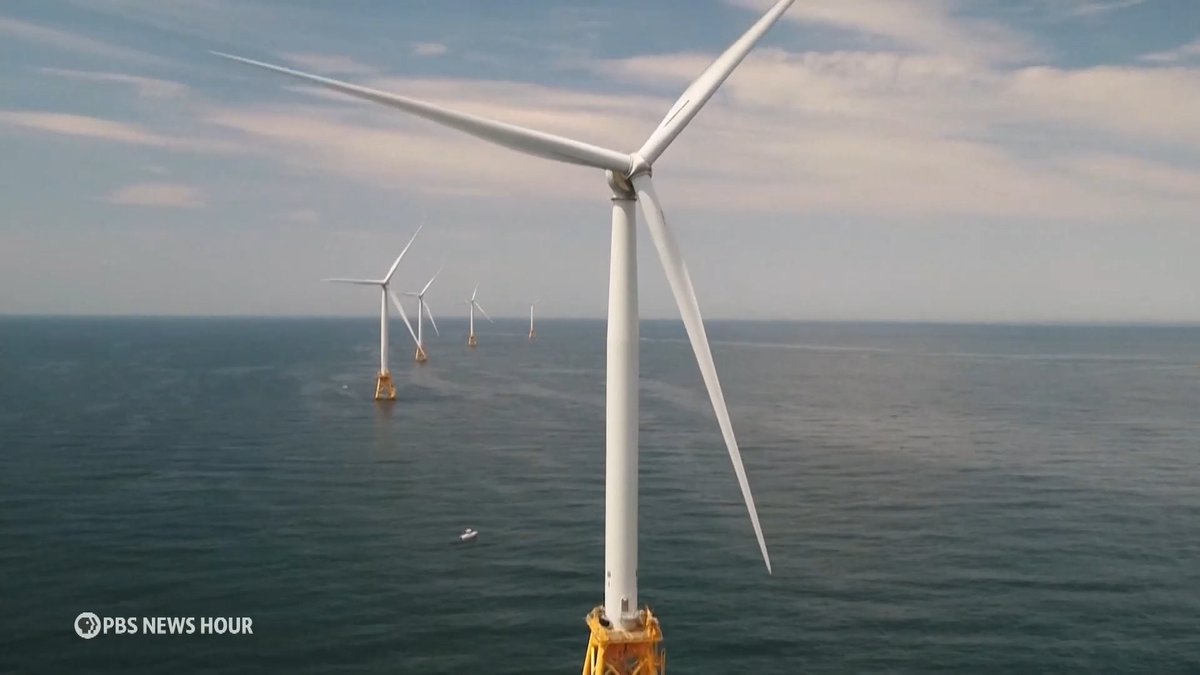
A new Science Advances study shows offshore wind turbines actually warm the sea surface. Spikes near as much as one degree Celsius, which is as large as natural summer variability. Turbines slow the wind, explains the study. This weakens mixing, shuts down upwelling, and in turn traps heat at... show more
92,243 views • 3 months ago •via X (Twitter)
0 Comments
No comments available
Comments from the original post will appear here



![Illegal Levels Of Whale-Killing Pile-Driving Noise By Wind Industry Documented New documentary, "Thrown To The Wind, Part 2," provides more hard evidence that the wind industry is harming whales The wind industry is not killing endangered whales off the East Coast, say government agencies and the news media. But it is. Before 2016, when the wind industry’s increased boat traffic, sonar mapping, and construction began, eight humpback whales were found dead per year between Virginia and Maine. Since 2016, an average of 25 humpbacks were found dead annually. And last year, there were a record 83 whales found dead. And yet the Associated Press insisted last month that “there’s no evidence that limited wind farm construction on the Atlantic Coast has directly resulted in any whale deaths.” [Emphasis added.] That’s true. But there’s also no evidence that smoking directly causes cancer. Nor is there evidence that more carbon dioxide directly warms the planet. AP is playing the exact same, deliberately misleading, game that it accuses the tobacco and fossil fuels industries of playing. This is disturbing because the US government and media are blaming the spike in whale deaths on climate change, which is far less direct than the wind industry’s huge increase in boat traffic in previously untrafficked sea lanes, its high-decibel sonar, and its high-decibel pile driving. Last year, the most thorough investigation to date of whale deaths found a strong correlation with wind industry activity. Lisa Linowes of Save the Right Whales Coalition did the study. Linowes tracked whale deaths within the same timeframe and location as offshore wind sonar surveys. “As the amount of offshore wind activity increased within an area,” she notes, “so did whale deaths.” In last year’s “Thrown To The Wind” documentary, Rand documented illegally high levels of whale-harming sonar noise by the wind industry. And now, in a sequel, “Thrown To the Wind, Part 2,” filmmaker Jonah Markowitz documents Rand measuring illegal levels of noise from pile-driving by the wind industry off of Martha’s Vineyard. The boat crew can hear the noise through the air. “That’s loud to hear from here,” says one of the men. “And I got my ear muffs on and everything.” It’s so loud that Rand has to adjust his equipment. “I am overloading,” he says. “I need to change my gain.” Says one sailor, “Sounds like a noise from a horror movie.” “Sounds like thunder coming in,” says another. “It's insane.” The sound is equivalent to the blast from a 155-millimeter Howitzer. The environmental groups and Democratic governors championing the illegal pile-driving off the East Coast are the same groups that fought oil drilling there just a few years ago, claiming it would be too noisy. It is illegal to harm or kill endangered species. The North Atlantic right whale is critically endangered, with fewer than 400 individuals in the species left. The push by the US government, the wind industry, and the news media to build industrial wind projects proven to kill whales is the biggest environmental scandal in the world. A handful of honest conservationists are fighting billions in wind industry/taxpayer money. That money has financially corrupted the politicians, the regulatory agencies, and the news media through political donations and advertisements. The money has even corrupted the people who do the autopsies of the whales. We won a big victory last year, in helping to halt a wind project off the coast of New Jersey. Unfortunately, the US government and wind industry are moving forward with plans to build wind projects along the rest of the East Coast. If they go forward, they will make the North Atlantic right whale extinct.](https://image.24vids.com/tw-1744432358202425619/ext_tw_video_thumb/1744431315741790209/pu/img/vyD2_mdRr_Trl45i.jpg)


![CNN’s Abby Phillip: [The Department of Energy said today] that they're ending wind and solar subsidies, taking more energy out of the system, not putting it into the system. So, yes, I mean, I'm not sure there's any problem solving happening.” Ben Ferguson: "If you look at windmills and you look at them in Texas and other states, they have been a disaster compared to what they were supposed to produce. They're not producing. So why would you invest in a BAD INVESTMENT. By the way, they’re doing this in Europe as well, the data is now there. The solar and wind isn't gonna fix our grid, and then if you're saying any more solar panels or wind turbines, we're totally screwed. We will have to go to 78 degrees.” Abby Phillip: “Here's the thing. I think that there is an argument to be made for all of the above energy, right?” Ben Ferguson: “But if it's ineffective and it doesn't work, why do it?”](https://image.24vids.com/tw-2073022917974065218/amplify_video_thumb/2073022746989060096/img/1lL2FEW4LiV0Wpc_.jpg)

