Video wird geladen...

Video konnte nicht geladen werden

Zur Startseite

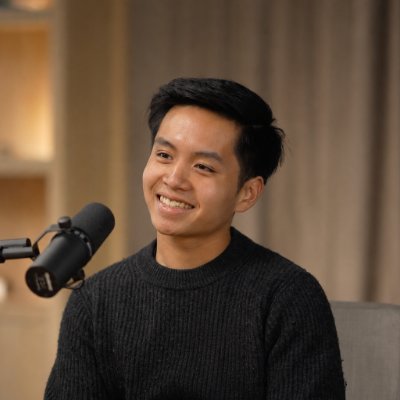
A quant fund that's returned 20% a year for 20 years claims it has no informational edge. It doesn't know anything the market doesn't. The CEO on what the edge actually is: Suhaimi Zainul-Abidin, CEO of Quantedge, explains: "There are two ways you can invest well. You can have...

70,267 Aufrufe • vor 6 Tagen •via X (Twitter)

0 Kommentare

Keine Kommentare verfügbar

Kommentare vom Original-Post werden hier angezeigt

Ähnliche Videos

William got margin called and pledged over $1B of his own stock to fund Column. He explains why extreme personal risk is what makes great founders, and why we see less of it today: "I think that the good founders bet on themselves and take an extreme amount of risk to do that. The extreme amount of risk part is something that we no longer have. But when there's literally only one door in front of you. You don't have a choice, and that fear and innate desire creates another part of you. It creates creativity, it creates inspiration. It's extremely valuable part of the founder journey. And in many ways, Silicon Valley we've actually removed that. I don't know why we don't talk about it more. If you go back to pre 2008, you're on the edge of the knife. We don't create environments where a founder has to bet themselves. I think starting companies are just too f**king safe. It's caused a lot of companies to be super safe companies like, we're gonna pivot to AI...that's not bold, that's not ambitious. It's because we are attracting founders that actually want to be employees. They don't think if I don't pull this off, I'm going to become bankrupt. My life is over and I think that's pretty healthy. That's when you bring out the rawness of humanity and I don't see that very much anymore. The weird thing is an early stage employee takes way more risk than an early stage founder. And I don't think we should actually de-risk the early stage employee. I just think we need to increase the risk for founders. I think we need to make failure much more expensive."

Patrick OShaughnessy

86,597 Aufrufe • vor 4 Monaten

The Onion Theory of Risk by Marc Andreessen: "I think the single biggest thing entrepreneurs are missing, both on fundraising and how they run their companies, is the relationship between risk and cash. The relationship between risk and raising cash, and then the relationship between risk and spending cash. So I've always been a fan of something that Andy Ratcliffe taught me years ago, which he called the onion theory of risk. Um, which basically is, you can think about a startup like on day one, um, as having every conceivable kind of risk, right? And you can basically just make a list of the risks. And so you've got, you know, founding team risk. You know, do the founders, are the founders gonna be able to work together? Do you have the right founders? You're gonna have product risk. You know, can you build a product? You'll have technical risk, right? Which is maybe you need a machine learning breakthrough or something to make it work. Are you gonna be able to do that? Um, you'll have, you know, launch risk. Will the launch go well? You'll have, you know, market acceptance risk. You'll have revenue risk. A big risk you get into in a lot of businesses that have a sales force is, can you actually sell the product for enough money to actually pay for the cost of sale? So you have the cost of sale risk. If you're a consumer product, you'll have a viral growth risk. Well, you get the thing of viral growth. And so, a startup at the very beginning is basically just this long list of risks. And then the way that I always think about running a startup is also the way I think about raising money, which is it's a process of peeling away layers of risk as you go. And so you raise seed money in order to peel away the first two or three risks. The founding team risk, the product risk, and maybe the initial launch risk. You raise the A round to peel away the next level of product risk. Maybe you peel away some recruiting risk because you get your full engineering team built. Maybe you peel away some customer risk because you get your first five beta customers. And so basically the way to think about it is you're peeling away risk as you go. You're peeling away risk by achieving milestones. And then as you achieve milestones, you're both making progress in your business, and you're justifying raising more capital. And so you come in, and you pitch somebody like us, and you say you're raising a B round. The best way to do that with us is you say, okay, I raised a seed round, I achieved these milestones, I eliminated these risks. I raised the A round, I achieved these milestones, and I eliminated these risks. Now I'm gonna raise a B round. Here are my milestones, here are my risks. And then by the time I go to raise a seed round, here's the state that I'll be in. And then you calibrate the amount of money that you raise to spend to the risks that you're pulling out of the business. And I go through all this, in a sense this sounds kind of obvious, but I go through all this because it's a systematic way to think about how the money gets raised and deployed. As compared to so much of what's happening, especially these days, which is just, my God, let me go raise as much money as I can. Let me go build the fancy offices, let me go hire as many people as I can, and just kind of hope for the best."

Founder Mode

106,909 Aufrufe • vor 7 Monaten

Steve Jobs on how he learned to run a company: Question: "You're 21. You're a big success. You know, you've just sort of done it by the seat of your pants. You don't have any particular training in this. How do you learn to run a company?" Steve Jobs: "You know, throughout the years in business, I found something, which was that I always ask why you do things. And the answers you invariably get are, oh, that's just the way it's done. Nobody knows why they do what they do. Nobody thinks about things very deeply in business. That's what I found. I'll give you an example. When we were building our Apple I's in the garage, we knew exactly what they cost. When we got into a factory in the Apple II days, the accounting had this notion of a standard cost, where you'd kind of set a standard cost and at the end of a quarter you'd adjust it with a variance. And I kept asking, well, why do we do this? And the answer was, well, that's just the way it's done. And after about six months of digging into this, what I realized was the reason you do it is because you don't really have good enough controls to know how much it costs. So you guess, and then you fix your guess at the end of the quarter. And the reason you don't know how much it costs is because your information systems aren't good enough. But nobody said it that way. And so later on, when we designed this automated factory for Macintosh, we were able to get rid of a lot of these antiquated concepts and know exactly what something cost to the second. So in business, a lot of things are, I call it folklore. They're done because they were done yesterday and the day before. And so what that means is if you're willing to sort of ask a lot of questions and think about things and work really hard, you can learn business pretty fast. It's not the hardest thing in the world. It's not rocket science. It's not rocket science."

Founder Mode

32,290 Aufrufe • vor 6 Monaten

Rick Rubin tells Andrew Huberman how he deals with creative or writer’s block. He treats his work like a diary entry (and doesn’t worry about internal or external judgment): ➡️ “What's the cause of the block? The block is usually something that's either personal ("I'm not good enough") or it can be a confidence issue ("I don't have anything to say") or it could be...thinking about someone else ("nobody's going to like what I make"). Do you know what I'm saying? So, it's either fear of self-judgment or external judgment. If you're making something with a freedom of "this is something I'm making for myself for now", that is all [you have to do]. It is a diary entry. Everything I make is a diary entry. The beauty of a diary entry is that I can write my diary entry and you can't tell me that my diary entry wasn't good enough. Or that [the diary entry] is not what I experienced. Of course it's what I experienced: I'm writing a personal diary for myself and no one else can judge if it is my experience of my life. Everything we make can be that: a personal reflection of who we are in that moment of time. It doesn't have to be the greatest you could ever do. It doesn't have to have any expectation that it's going to change the world. It doesn't have to sell a certain number of copies for any reason. It doesn't have any of those things at all. It is "I'm making this thing for me and I want to do it to the best of my ability and to where I feel good about it". [The work] is honest of where I'm at and if you're living in this world of just being honest to where you're at, there's nothing blocking you. There are no blocks. The blocks are all based on dealing with a different force or a different perception that is made up.” ⬅️

Trung Phan

1,619,840 Aufrufe • vor 2 Jahren

French economist Thomas Piketty explains to Zack Polanski that how a local wealth tax should Include an exit tax, adding rich should pay their fair share in proportion: "Let me make very clear that individual countries like Britain or France can very well have uh, uh, progressive wealth tax and billionaire on their own right away." "They don't need to ask the permission of their neighbors or the United Nation, or they don't need to wait for world unanimity." "The only thing they need to do when they do wealth tax on their own is to make clear that if you have made your wealth in, in Britain for many decades by benefiting from the public services in Britain, by the legal system of Britain, because creating wealth, accumulating wealth is always the outcome, uh, of a collective process where you use institution, the legal system, the education system, the health system, the transportation system, the road system." "If you have benefited from this during many decades, you cannot simply walk away at age 50 or 60 or whatever and say, okay now, bye bye, I don't pay tax anymore." "So the first, the only important thing you need to do when you set up a wealth tax, say in Britain, is to say even if you go away, you keep paying." "The way the Americans do it, is by saying as long as you keep U.S. citizenship, you pay even if you're in Switzerland, wherever you want." "I don't think this is the best way." "I think a better way would be to make people pay in proportion to the years of, of residents that they have spent in the country." "So if you have spent your first 50 years in Britain, you move at age 51, well that's fine, do that." "But you know, you keep paying 50, 51st of the tax that you would have paid." "So the fiscal cost for the treasury is quite limited." "Yes, so that's the important point." "And once you have said that, I think all the arguments about tax evasion sort of fall down almost immediately." "Now people will tell you, oh, but you cannot do that." "Of course you can." "The problem is that we have put ourselves in a situation to think that the very specific treaties about capital flows, what we have come to call free capital flows that were set up in the 80s and 90s, are sort of law of nature." "The idea that you have a sacralized right to benefit from the public services legal system in a country as much as you want, and then you push on a button and you can transfer your assets wherever you want and nobody can follow you and nobody can make you pay." "And it's a sort of new sacralized right." "But look, this is a uh, completely crazy system." "This is a machinery to make normal people middle class and lower class people hate globalization." "And if you tell people there's nothing you can change about this." "There's nothing you can change about inequality, about economic policy." "We see the only thing government can do is to control their border for, uh, migrants." "And then of course, 20 years, 30 years later, the entire political conversation is about border control and identity." "But that's because you close the discussion entirely about, uh, uh, economic and fiscal policy." "So we have to reopen the discussion." "And the first thing to do that is to question free capital flows in the sense that you don't have the freedom to escape taxation after you have benefited from the public services and public institution of a country during so long." "So if you address this directly and make clear that you will keep paying in proportion to the number of years you have stayed in Britain, then um, um, I mean, you can also combine that with rules about the location of the assets themselves." "As long as the assets are located in Britain, of course you can make people pay." "But it's important to, to have also the number of years you've spent in the country so that even if you move your assets away, you keep paying and you don't have the choice otherwise your assets can be taken away from you if some of them are in Britain, if you return to Britain and you've not paid your tax, well, you will be subject to the sanction which anybody not paying your tax." "So that's the first big thing, is that you don't need to have a world wealth tax." "You can do a lot at the level of Britain." "And we should not use this global wealth tax idea as an excuse not to do at, uh, the country level what national governments can do at their own level."

Farrukh

220,434 Aufrufe • vor 1 Tag

Garry Nolan says there are more groups doing what skywatcher is doing right now “we know how to call them” “Skywatcher is one group of several that I'm aware of that are doing it independently.” Source -Sol Foundation 🔗 in comments Garry -“The, the information's out there, we, you know, it's already pretty well understood. I mean, look, there's been enough whistleblower types where the information of how to do this has leaked out. You know, we know how to call them. Whether you believe in psionics or not, it seems to be part of the process. So we know how to call them. The question is not can you video them? Skywatcher has already shown that you can video them and there'll be more of that kind of stuff, I think coming in the future, you know, so Skywatcher is one group of several that I'm aware of that are doing it independently. So that's citizen science. I mean, I think the answer is you don't wait for the government to do it, for you. Don't wait for daddy or mommy to tell you what's going on. You just do it yourself. Because as long as you're not going out there with, with guns or energy, weapons, trying to pull something down and, you know, get yourself in a bad situation, there's no reason people can't do it themselves and organize. So, you know, that's, that I think is the threat in a way that one needs to use against the governmental authorities who think that they hold all the, all the, all the marbles at this point, they don't anymore because the people who've been in the program, like Jake and others who've, you know, made that statement publicly, have basically made their knowledge and ability public. So do it.”

neandrewthal

74,654 Aufrufe • vor 1 Jahr