Загрузка видео...
Не удалось загрузить видео
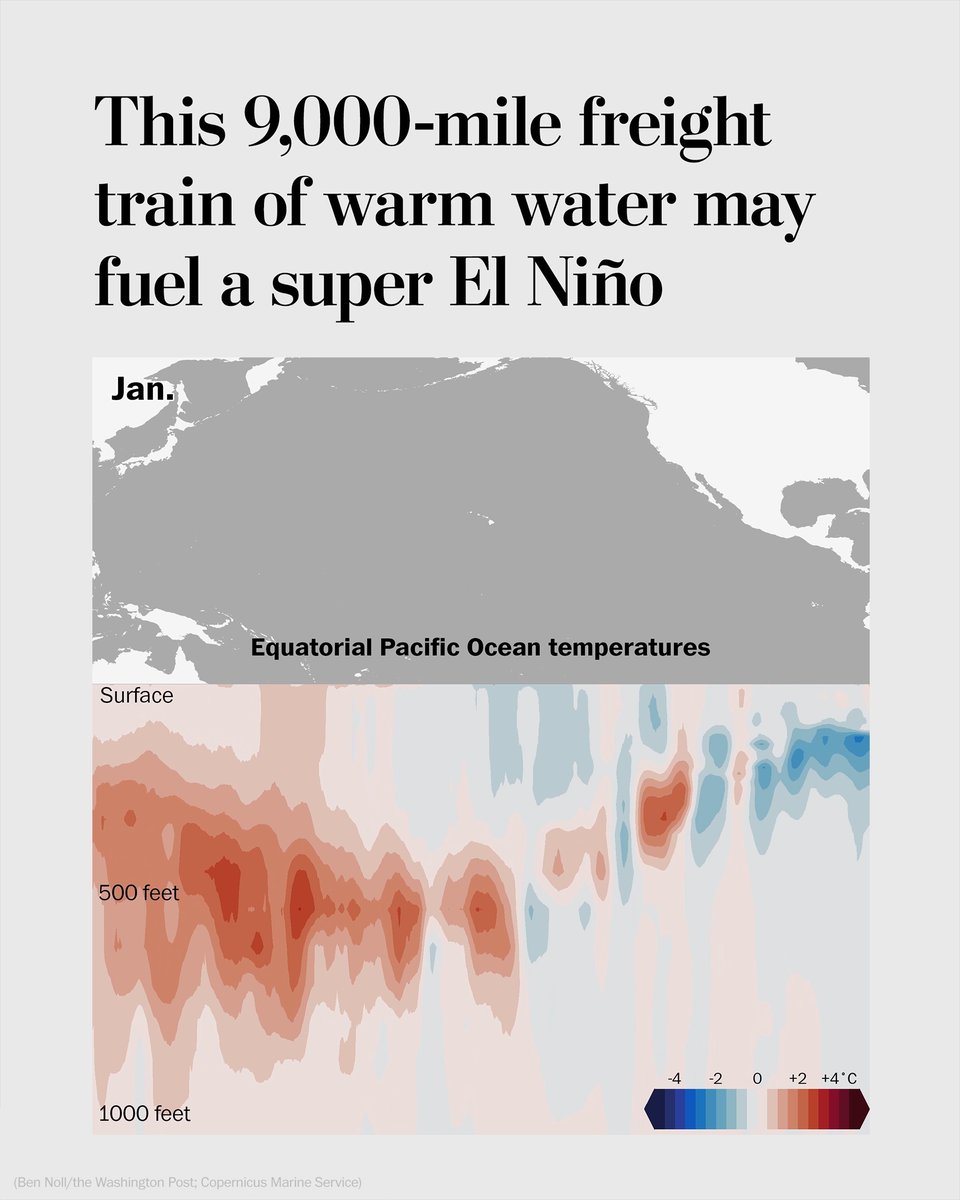
A remarkable 3.5˚C rise in central equatorial Pacific Ocean temperatures is possible by November, shows new ECMWF, which would mark the strongest El Niño on record. Possible strength scenarios range from +2.8˚C to +4.3˚C, with sweeping consequences on global climate into 2027.

529,780 просмотров • 3 месяцев назад •via X (Twitter)
Комментарии: 35

Both the traditional and relative indices are forecast to break El Niño records, ECMWF shows. This represents a notable strength increase compared to last month. The event may peak in December — not November — meaning the projections here would keep rising for another month.
Global temperatures look rather extraordinary later this year 🚀 Odds favor 2026 becoming the second warmest year on record, but there's a chance it could break the record set in 2024 if El Niño's strength reaches record heights.
El Niño will influence precipitation extremes. A moisture connection from the tropical Pacific to the U.S. during fall could drive flooding rainfall. Meanwhile, droughts are possible in the Caribbean, northern South America, West Pacific, India, Indonesia and Australia.
Model updates coming out over the next week are likely to follow ECMWF's lead of an even stronger El Niño prediction. This is mostly because of a new, potent westerly wind burst unfolding in the Pacific, pushing yet more warm water toward the east. Stay tuned!

Ben, I'm wondering about the COMBINED global impact of the the historic El Nino and the anomalous AMOC-induced cold blob in the north Atlantic. Are there analogs for that setup?
Not sure. The forcing signal from El Niño dwarfs just about everything else. I suppose extra cold water in the Atlantic will just help boost El Niño.

<rubs hands> this is perfect....now release the Murder Hornets, Lyme disease and bottled Ebola/Hantavirus!! Run Humans....RUNNNN!!!

For all you voters who aren't big on science, this is not a good thing.

Buhahahaha..
And intelligent people would say it was caused by the variations in core fluid dynamics not carbon dioxide

We've heard it all before. It's getting boring.

Could ai servers in the water in Asia be progressing that temperature and in effect strengthening El Niño?

I’m seeing Ice Age is coming and then a 7 degree increase in the same day. Pick a struggle Earth.

Ok, hasnt been a significant increase in one hundred years. This will not happen this time either. Go back k to comic con

A record-breaking El Niño could severely disrupt global weather and bird migration patterns. Keep an eye on your local skies for unusual sightings

RED!!!!!!!11!!!!!!!!

@grok what are the implications of this weather for the Mid-Atlantic states in the USA

Inshallah upstate ny gets a dry winter this year

Thanks for the updates, Ben! What are your thoughts on the El Niño 1+2 zone and what effect might the South Pacific anticyclone have in the comin months?
Observed conditions now are running near the upper end of what was predicted months ago. Objectively, the guidance is not running too hot.
Je prédis une vague de froid extrême dans les 6 prochains mois avec tous les événements actuels et à venir qui s’accumulent.

Yeah, you care to tell my apartment complex owner in Vancouver, WA (run by private equity bros from Texas) to let us have window air conditioners instead of these shitty and expensive portable AC units?

boomers will say "turn on the AC"

+3.5°C of Pacific warming is staggering. Knock-on effects into 2027 will hit agriculture, hydro, and peak electricity loads. This is why net zero targets require rapid action.

Imagem assustadora, a boca do inferno🔥🔥

@grok will this make California get more rain?
Possible or likely? 2 very different outcomes

@Mina58614 Very interessting

@capitalweather

U.K. has winter weather all year round now !Will it mean warm weather for us

@grok Does this make hurricanes less likely this year?

EURO has been running HOT all year.
Hmm, I'm not so sure about that. The observed conditions now are on the upper-end of the ensemble distribution from the model run in February.

The Western edge of Scandinavia is getting colder every year in the last 5 years.

SI nel 2030 #MoriremoTutti per LIQUEFAZIONE🤡