Video wird geladen...

Video konnte nicht geladen werden

Zur Startseite

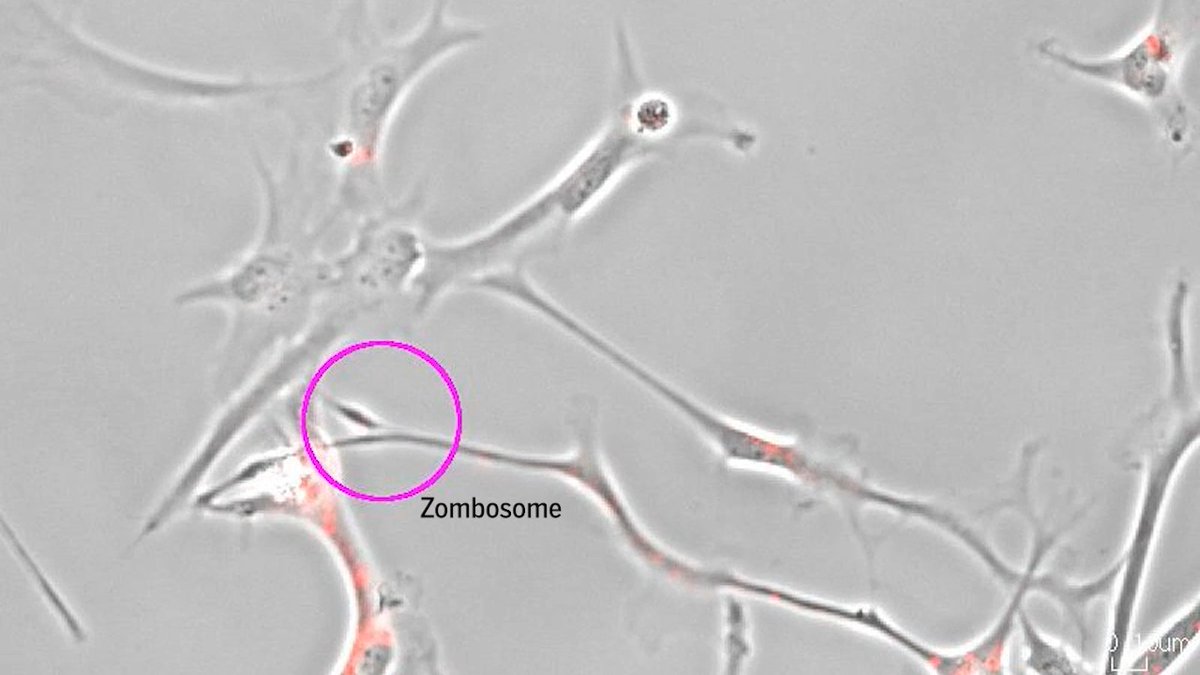
A virus is a tiny infectious agent that can only replicate inside the living cells of a host—like humans, animals, plants, or even bacteria. Viruses are not considered "alive" in the traditional sense because they can't survive or reproduce on their own—they need to hijack a host cell's machinery...

65,490 Aufrufe • vor 1 Jahr •via X (Twitter)

11 Kommentare

Profilbild von ogrii
ogriivor 1 Jahr

Is this coronavirus??

Profilbild von Elise Oyin
Elise Oyinvor 1 Jahr

All in Christ Jesus use all their blood, spirits, souls to ask Yahweh to not allow any form of Sickle Cell Anemia ever manifest, be in Elise Oyinkromeineifa and all the babies he put in her even 0.1%, past, present, future by the blood of Jesus Christ in the name of Jesus Christ

Profilbild von Moe
Moevor 1 Jahr

WASH YOUR HANDS!!!

Profilbild von Science and Knowledge
Science and Knowledgevor 1 Jahr

Visualising the spread of a virus

Profilbild von prospectX
prospectXvor 1 Jahr

Are all viruses bad?

Profilbild von Shivank Udayawal
Shivank Udayawalvor 1 Jahr

Ohh amazing 👏

Profilbild von Shivank Udayawal
Shivank Udayawalvor 1 Jahr

Wash your hand

Profilbild von ally 💞 FREE OF
ally 💞 FREE OFvor 1 Jahr

Viruses may not be alive, but I’m full of life and always ready to turn up the heat! 🔥 Check out my FREE 0F for some real sizzle! 💋 Link in bio!

Profilbild von bob
bobvor 1 Jahr

💯

Profilbild von CodeNameCrypto
CodeNameCryptovor 1 Jahr

Pretty amazing how things work

Profilbild von Gustavo furtado
Gustavo furtadovor 1 Jahr

you are kidding man kkkk

Ähnliche Videos

Ostriches are intensely social animals who understand their world through movement contact and the presence of their flock. They do not experience life with human concepts or human language but they do experience fear safety comfort and distress in ways that are clear measurable and deeply felt. When ostriches live together they learn the shapes sounds and movements of the birds around them. They feel secure when the flock is calm and they become anxious when others show signs of alarm. Their sense of safety depends entirely on the stability of the group. Any threat to one member of the flock creates a wave of fear through all of them. Because of this the emotional impact of violent handling and mass killing is not limited to the bird that is struck but spreads through every ostrich who sees hears or senses it. When force and confinement are imposed on them the birds experience a level of fear that overwhelms their natural coping behaviors. Ostriches respond to danger with flight or alert stillness and when neither response is possible they enter a state of acute stress that includes trembling pacing vocalizing or freezing in place. Their hearts race their muscles tense and their entire body prepares to escape. When they are surrounded or trapped they cannot understand why the danger cannot be avoided. The sense of helplessness for a prey animal is not a thought but a physical shock that floods them with stress and panic. To a creature who survives through movement and awareness the loss of space and the inability to flee is a form of suffering in itself. The abuse of forcing ostriches to witness the injury or death of familiar flock mates creates another layer of distress. These birds recognize individuals. They notice when one of their companions collapses or cries out. They become restless and agitated when a bird they know is harmed. They remain close to fallen birds and often attempt to investigate or stay near them because their instinct pushes them to stay with the group even when the group is being destroyed. The emotional meaning of this moment is not symbolic but immediate. The flock is breaking apart. The cues of danger multiply. The birds see others in pain or falling and their own fear grows with each new sign of suffering. When violent killing happens around them ostriches sense it as the collapse of their only system of safety. They are not built to make sense of destruction happening in their own flock. Instead they respond with escalating panic. Their bodies show it clearly through rapid breathing frantic shifts in posture and attempts to move closer to surviving flock mates. They do not understand why the danger continues or why the people near them are the source of harm. The stress they experience is intense enough to cause physical shock. Their final moments are dominated by confusion fear and the overwhelming instinct to escape a threat that cannot be avoided. The public often imagines large animals as numb or unaware but ostriches feel the world with a sensitivity shaped by millions of years as prey animals. Their eyes are sharp their hearing is attuned to stress in others and their bodies react strongly to fear and pain. When dozens or hundreds of birds are subjected to violence in a confined area every ostrich feels the fear of the others. The suffering does not happen to them one by one but as a shared experience of terror. This is an experience that no animal should ever be forced to endure. The reality is not clinical or quick. It is emotionally devastating to the animals caught in it because it destroys the flock bond that is their only sense of stability and then it destroys the birds themselves. Understanding this matters because it shows that the harm done to these animals was not only physical but deeply emotional. The ostriches suffered long before any final action was taken against their bodies. They suffered through fear they could not escape through the panic created by the collapse of their flock and through the helplessness of being unable to understand why the world around them suddenly turned violent. Recognizing this is essential because it reveals the true scale of what was done. This was not a neutral procedure. This was the infliction of terror on beings capable of feeling it powerfully. The public deserves to know that these birds were not indifferent creatures. They were living animals who felt fear and confusion and distress and whose final experiences were shaped by violence they could not comprehend or escape.

Vote Canada

55,531 Aufrufe • vor 7 Monaten

Dr. Suzanne Humphries: What if the very method of vaccine creation was its greatest flaw? We're told vaccines are a miracle of modern science. But how are they actually made? It starts by extracting a virus from a sick human or animal. This live, virulent virus then must be "attenuated" – weakened. How? By serial passage. They incubate it through a series of foreign cell lines to force it to mutate. Think: human amniotic cells, chicken embryo cells, and most notoriously... monkey kidney cells. But then, they need to mass-produce it. This is where it gets even more concerning. To multiply the virus for millions of doses, they grow it on rapidly dividing cell cultures. Some of these are: ➡️ Madin-Darby Canine Kidney (MDCK) cells (from a cocker spaniel, made tumorigenic so they multiply forever). ➡️ WI-38 & MRC-5 cells (fibroblasts from human fetal lung tissue, originating from elective abortions in the 1960s). These aren't conspiracy theories. They are listed right on the package inserts. You are not just being injected with a "weakened virus." You are being injected with a biological soup of foreign animal DNA, cell debris, and growth medium residuals. The obvious question: What unknown pathogens hitch a ride? History gives us the answer. For 30 years, a cancer-causing monkey virus—SV40—was injected into millions via the polio vaccine before it was "discovered" and acknowledged. It is now heavily associated with human tumors. And SV40 is not alone. Third-party researchers have repeatedly found stray viruses, retroviruses, and other contaminants that were not tested for. Why? Because you can't test for something you don't know exists. The entire process is built on a foundation of biological cross-contamination. We are playing a complex game of genetic roulette, trusting that no new unknown virus is silently passed along. This isn't anti-science. This is PRO-transparency and real safety. It's time to ask the hard questions they don't want to answer. What are we really injecting? What long-term effects are we ignoring?

Camus

60,406 Aufrufe • vor 10 Monaten