Загрузка видео...

Не удалось загрузить видео

На главную

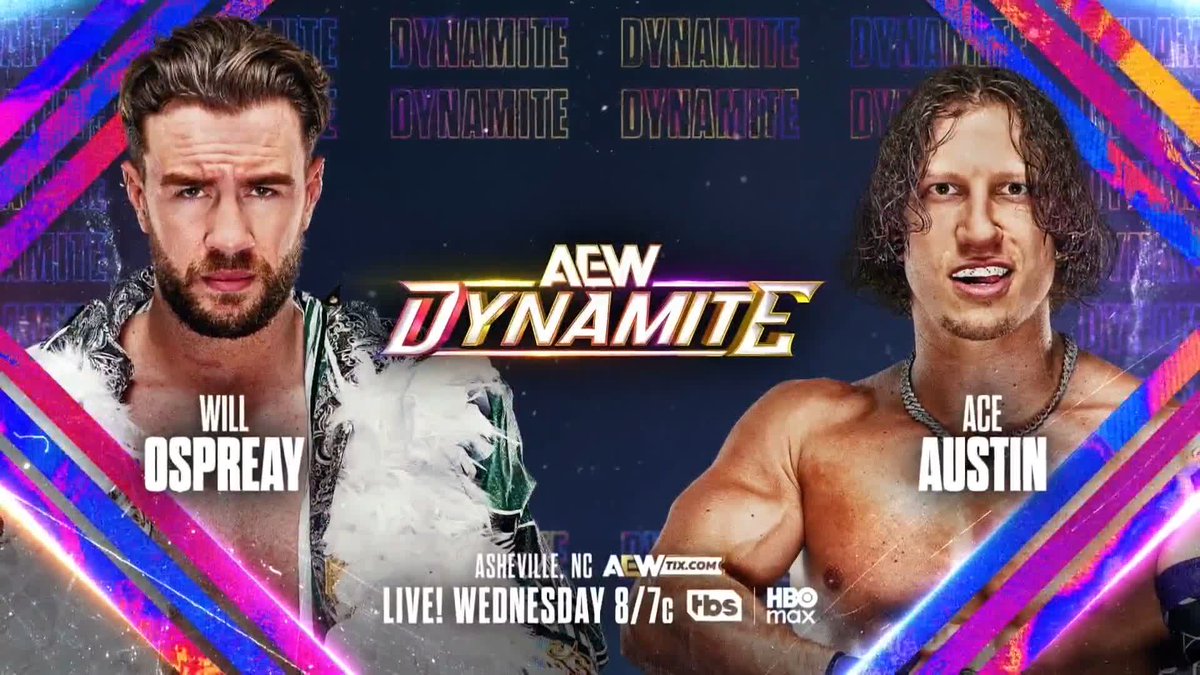
.Ace Austin 🤘🏼♠️ エース・オースティン hits Zero Hour with purpose. Facing Lee Johnson, he’s locked in turning this matchup into another step forward! Watch #ROHFinalBattle Zero Hour!

10,817 просмотров • 8 месяцев назад •via X (Twitter)

Комментарии: 0

Нет доступных комментариев

Здесь появятся комментарии из оригинального поста
Похожие видео

Figure 03 just finished an 8-hour work livestream, imperfect, but already good enough to replace a lot of repetitive warehouse labor. 🤖 Brett Adcock put a team of F.03 robots on a factory-style package sorting task for a full shift. The job was simple and brutal: detect the barcode, pick the package, flip it label-side down, place it on the conveyor, repeat. Soft poly bags, rigid boxes, moving belts, messy orientations. That is exactly the kind of boring physical work factories pay humans to do all day. Early in the stream, the system handled 230 packages in 10 minutes. That is roughly 2.6 seconds per item — already in human-speed territory for this narrow workflow. The more important part: it was not one robot pretending to work all day. It was a team of Figure 03 robots keeping the line running. When one robot ran low on battery, it left the station and another robot stepped in. That is the real factory signal: not just autonomy, but shift continuity. F.03 is rated for about 5 hours of runtime, so the 8-hour result depends on fleet orchestration, charging, and handoff. That matters more than a single clean demo. The stream was not perfect. There were pauses, hesitations, missed orientations, and small recovery moments. Good. A perfect short clip hides failure. An 8-hour livestream exposes the parts that actually matter: endurance, recovery, throughput, and whether the robot can stay useful after the novelty wears off. Figure says this was fully autonomous on Helix-02, with zero human intervention. For logistics and manufacturing, that is the threshold worth watching. Not “can it do one impressive task?” Can it keep doing the boring task for an entire shift? Figure is not showing a general human replacement yet. But for structured, repetitive factory work, the gap just got much smaller. The timing is also interesting: Figure says BotQ has already delivered 350+ F.03 units and reached a 1 robot/hour production cadence. And F.04 is now in full design lock, with parts starting to ship. The next test is obvious. 8 hours was the proof of endurance. 24/7 is the proof of labor economics.

RoboHub🤖

16,818 просмотров • 3 месяцев назад

Made with kling 3.0 on Yapper How I made this video full tutorial in the comments Prompt Shot on ALEXA 65mm anamorphic lens. Photorealistic cinematic quality. Aspect ratio 2.39:1 widescreen. Teal shadows, warm amber highlights. Film grain. Rain-soaked New York street at night. Neon signs, streetlights reflecting on wet asphalt. Steam rising from manholes. Lens flares, motion blur. Dolby Vision HDR. 0.0s–2.5s: Extreme low-angle tracking shot — a lone female fighter strides down a narrow NYC street, rain pouring heavily. Leather jacket soaked, hair slicked back and dripping. Heels echo faintly on wet pavement. Camera tracks backward with subtle shake. Yellow taxi lights streak across puddles. Figures step out from alleyways and fire escapes, slowly surrounding her. She tilts her head, cracks her knuckles — calm, fearless expression. 2.6s–5.0s: Whip-pan — first attacker lunges. TIME REMAP: slow-motion as she pivots smoothly, dodging and delivering a sharp elbow strike. Water sprays on impact. Her jacket snaps with the motion. Another attacker crashes into a stack of trash bags and metal bins. Sparks flicker from a flickering streetlight overhead. 5.1s–7.5s: Drone shot — overhead view as she moves fluidly through multiple opponents. SLOW MOTION: precise kicks and spins land cleanly, bodies sliding across rain-slick asphalt. Steam swirls under golden streetlights. One attacker swings a bat — she catches it mid-swing, twists, and disarms them effortlessly. 7.6s–10.0s: 360° orbital shot — she leaps into a spinning kick, taking down two attackers at once. Camera circles her as another rushes from behind. Without turning, she blocks and counters instantly. Breath visible in the cold night air. Each strike hits in sync with a rising cinematic score. 10.1s–13.0s: First-person POV — the final opponent charges. SMASH CUT: rapid, close-range exchange in slow motion. Her final punch lands clean. Silence falls. Rain continues to pour. Slow push-in — she stands alone in the empty street, adjusts her jacket sleeve, exhales steadily. Low-angle shot. Eyes locked forward. Unshaken.

𝐍𝐚𝐯𝐞𝐞 𝐀𝐢

57,152 просмотров • 4 месяцев назад

Dave, I think I’ve cracked the code on how you can stop running 50% off sales next year, and it has nothing to do with tightening the prose or shortening the newsletter. The future is a Wrestling Observer meme coin ecosystem. Not one coin → a whole universe. You don’t need to discount subscriptions anymore, you tokenize them. $STARS alone prints money, but now imagine branching out: $MOTY, $BOOKER, $PROMO, $WORST, $FEUD, $HOF. Every Observer Award becomes its own speculative asset. Fans don’t just argue about the results anymore, they invest emotionally and financially. Award season turns into earnings season. Tokyo Dome weekends look like IPOs. By the time people realize what’s happening, they’re too busy defending the market cap to ask why the price ever needed to be 50% off in the first place. Step 1: Announce “this is NOT financial advice.” Repeat it 14 times. Immediately follow with numbers. Step 2: Launch the coins. Ticker ideas: $STARS, $PLANS, $FLIPZ, $MATH, $OBSVR, $PLANSCHG. Tagline: “value is subjective.” Subscribtion holders get an airdrop, but only if they’ve been subscribed “for a long time” (defined later). Step 3: Explain the tokenomics, vaguely. Supply is capped, but fluid. Burn mechanism exists, but contextually. Volatility is expected, historically speaking. Any confusion is the listener’s fault for misquoting. Step 4: Replace 50% off sales with “market events.” Instead of 50% off for Black Friday, it’s now “a temporary value correction tied to outside factors.” Price dips? That’s not a crash. That’s a buying opportunity for long-term observers. Step 5: Use ratings language to justify price. “The demo is up even if the total market cap is down.” “If you isolate Japan, it’s actually doing great.” “Quarter-hour holders stayed strong.” Someone points out the chart looks bad? Reply: “You’re focusing on the wrong metric.” Step 6: Critics = bad faith actors. Anyone skeptical is arguing in bad faith, cherry-picking timestamps, ignoring context, probably an agenda account. Fans defend the coin for free, because they already paid emotionally. Step 7: Plans change. Roadmap quietly updates. Phase 2 delayed. Phase 3 recontextualized. Phase 4 never existed. This was always explained if you “read carefully.” Step 8: Victory. Subscription price stays full. No more 50% sales. Fans now argue about charts instead of discounts. And if it all goes to zero? “I’m not saying it failed. I’m just saying expectations were unrealistic.” ⭐️⭐️⭐️⭐️¾ Six stars in the Tokyo Dome. Happy holidays 🎅🎄 This is NOT financial advice. This is NOT financial advice. This is NOT financial advice. This is NOT financial advice. This is NOT financial advice. This is NOT financial advice. This is NOT financial advice. This is NOT financial advice. This is NOT financial advice. This is NOT financial advice. This is NOT financial advice. This is NOT financial advice. This is NOT financial advice. This is NOT financial advice.

Nick LoPiccolo

20,698 просмотров • 8 месяцев назад

llama.cpp isn't just for text LLMs anymore. Pure C++ zero shot voice cloning just officially landed in mainline. Text generation was only step one. If you’re building autonomous local AI agents, real time voice assistants, or edge workflows, instant low latency audio is the missing piece. Thanks to PR #26254, Alibaba’s state of the art Qwen3 TTS model family is now natively supported directly inside the llama.cpp repository under the multimodal (mtmd) framework. No Python bloat. No massive PyTorch CUDA overhead. Just raw, hyper optimized C++ running GGUF voice weights. Here is why this native update is a massive deal for the open source local AI stack: # Multimodal Architecture (.gguf + mmproj) Qwen3-TTS splits the workload between the base language model backbone and a multimodal projection adapter. llama.cpp handles this using the llama-tts binary, mapping the text model alongside its --mmproj projector to process audio tokens seamlessly. # Zero Shot Voice Cloning in Seconds You don't need fine tuning or massive dataset training. Feed the C++ engine a single 5 to 10 second .wav audio sample using the --tts-speaker-file flag, and it accurately clones the exact timbre, tone, and accent on the fly. # Real World T4 GPU Benchmark & Resource FootprintRunning the 1.7B Base model in 8-bit quantization (Q8_0): - VRAM Footprint: ~7 GB peak VRAM during active zero-shot cloning. - Audio Quality: Studio grade, natural-sounding voice output in seconds. • - Execution: Direct execution via native compiled binaries or sub process calls. # Coming Next to llama-server (PR #26603) Beyond CLI execution, a native POST /tts HTTP endpoint is currently being added to llama-server, which will soon allow you to trigger voice generation directly via standard REST API requests! # quick note on Colab compilation: Because this code was merged into mainline very recently, pre-built third-party binaries haven't fully caught up yet. Compiling llama-tts directly from source on Google Colab's free CPU instance can take about 1 hour (or ~1-2 minutes if targeting single GPU arch like -DCMAKE_CUDA_ARCHITECTURES=75). Be patient during the build step, or compile it locally on your own rig for instant execution! To test this out yourself, I built a zero config Google Colab notebook that compiles llama.cpp, downloads the Q8_0 GGUF files from HuggingFace, and spins up an interactive Gradio Studio UI so you can record/upload 3 second clips and clone voices in real time. Stop sleeping on native C++ audio. The era of bulky Python audio pipelines is officially over. Links to the free Google Colab notebook and the official ggml org GGUF HuggingFace model repository are in the replies below! available in q4 and q8 both variants, 1 GB and 1.85 GBs respectively (requires additional ~500MB mmproj gguf) Are you building local voice agents yet? What does your current audio stack look like? Drop your setups below!

Alok

47,881 просмотров • 14 дней назад

"Filmed yesterday morning at Westside Animal Rescue in Phoenix. Carlos, 39, came in to "just browse" dogs, unsure if he was ready for the commitment. Staff introduced him to Rocky, a four-year-old Shepherd-Lab mix. Carlos sat on the floor with him for thirty minutes - calm, easy, a normal meet-and-greet. Then Carlos stood up and said he wanted to think it over. That's when Rocky moved. No barking, no jumping - he rushed forward and wrapped both front paws around Carlos's leg and held on. Carlos tried to step away; Rocky slid across the floor still gripping tight, shaking, tail tucked, whining softly. Volunteer Jessica was in the room. "Rocky wasn't being aggressive - he was terrified. You could see it in his whole body. He thought Carlos leaving meant being abandoned again." Carlos froze. After a long moment, he knelt back down. Rocky immediately climbed into his lap, still trembling. "What's his story?" Carlos asked. Jessica explained: Rocky had been surrendered twice, both times by owners who said they'd "be right back" and never returned. He doesn't trust that people come back anymore. Carlos sat on that floor for another hour before saying, "I can't leave him thinking I'm another person who's going to disappear on him." He filled out the adoption papers that afternoon. This morning, he sent us a photo - Rocky sprawled across Carlos's couch, all four legs stretched out, finally convinced someone is staying for good.

Crazy Moments

334,039 просмотров • 3 дней назад

k-pop battle dance created with seedance 2 Prompt: @ img1 : character reference, main dancer A, stylish K-pop outfit from reference, sharp choreography @ img2 : character reference, main dancer B, stylish K-pop outfit from reference, sharp choreography Two professional K-pop dancers ( @ img1 as Dancer A and @ img2 as Dancer B) face off in an intense yet fun dance battle in the middle of a bustling public plaza in Seoul at golden hour. Neon signs, Korean shop banners, and cherry blossom trees around. A large crowd of excited Korean locals (all ages, casual street fashion) quickly gathers in a circle, watching, cheering loudly, clapping, and filming with phones. 0-4s: Wide establishing shot, both dancers step into the open space, lock eyes, strike powerful starting pose. Crowd starts to form and murmur excitedly. 3-8s: Fast-paced K-pop battle begins — sharp isolations, powerful footwork, synchronized waves, body rolls, and competitive freestyle moves. Dancer A ( @ img1) hits a strong combo, Dancer B ( @ img2) instantly counters with even sharper moves. Camera orbits dynamically around them. 8-12s: Energy peaks — both dancers go all-out with big jumps, spins, and powerful final poses facing each other. Crowd goes wild, cheering “Wah!” and clapping loudly. 12-15s: Final freeze pose together, big smiles, crowd erupts in applause and whistles. Cinematic lighting, vibrant colors, slight film grain, high detail, 8K quality, dynamic camera movement, energetic and fun atmosphere, perfect character consistency from reference images, realistic Korean crowd reaction, street performance vibe.

Ciri

16,143 просмотров • 4 месяцев назад

This guy built an AI pipeline that generates hyperrealistic fashion models in 47 minutes and now dropshippers pay him $1,400 to clone the entire system. He got tired of watching e-com brands lose $8K per photoshoot when a single product angle changed so he built a 9-node workflow that generates 127 product videos from one Pinterest photo without hiring a single model. Here's the exact breakdown: → Claude writes a 34-parameter JSON brand DNA before any image is touched target psychographics, price anchor, vibe matrix, anti-inspiration blacklist → Pinterest becomes the model source library but you can't just download and animate → Kling 2.6 takes that static JPG and turns it into 5-second video but only after the prompt architecture is locked → Negative prompt node runs 41 exclusion terms: no plastic skin, no CGI glow, no symmetry artifacts, no doll face, no synthetic lighting → That one step kills the "AI look" that tanks engagement by 67% in the first 3 seconds → TikTok Studio uploads 19 videos in one batch with zero manual captioning because the brand voice was pre-programmed in step one → Atlas scrapes Amazon product links and auto-generates a Shopify store with hero images, pricing tiers, scarcity copy, and mobile-optimized checkout in 90 seconds → The store goes live before the first TikTok video finishes processing The key move 94% of people skip: you can't animate the photo before you inject the negative prompt. If you send a raw Pinterest image straight into image-to-video the face morphs into a wax figure. The fabric loses texture. The hands grow extra fingers. The whole thing screams "AI" and your CTR dies. His system runs the exclusion filter first so the model moves like she's shot on an iPhone 15 Pro in natural light. One brand hit 2.6M views on TikTok in 11 days with zero paid ads and converted at 3.7% because the videos looked like organic UGC not polished studio content. Brands now pay him $1,400 for the full pipeline setup + $340/month to keep the store synced with new product drops and seasonal video batches. The entire system runs on $23/month in API costs and one laptop. No photographer. No model agency. No product samples. Just a prompt template, a Pinterest account, and the discipline to filter out the AI artifacts before you render movement.

Shade

536,937 просмотров • 3 месяцев назад