Video wird geladen...

Video konnte nicht geladen werden

Zur Startseite

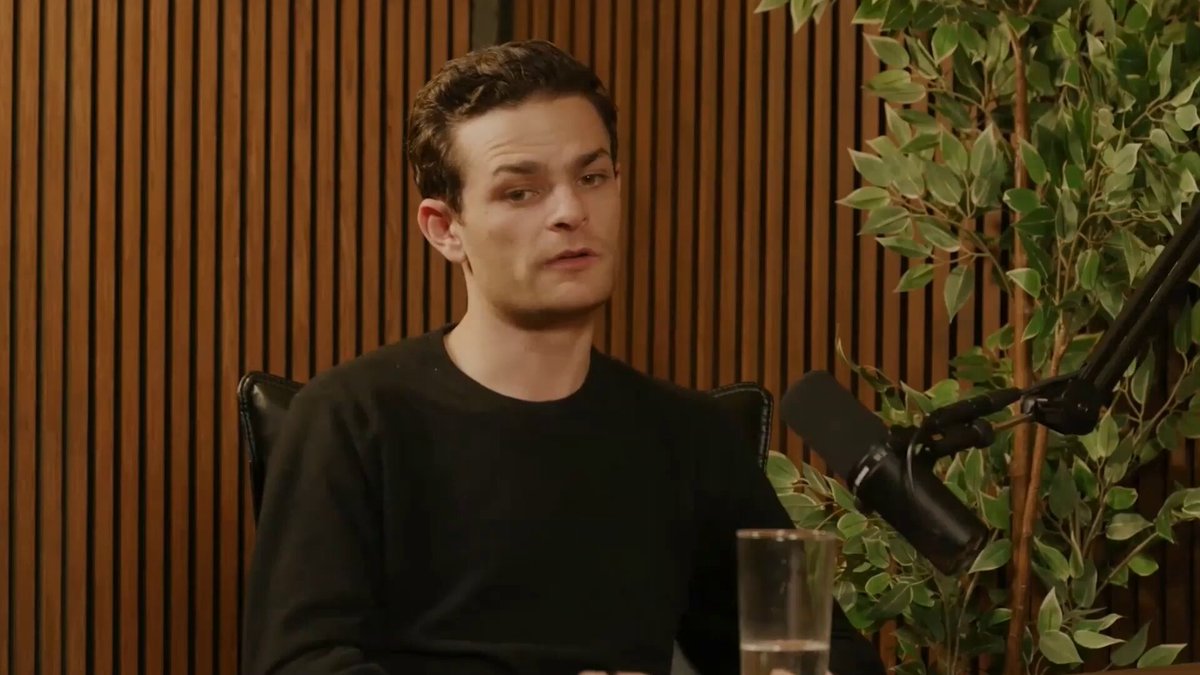
๐Ÿ†•!! AI and atomic-level structure prediction are accelerating drug discovery โ€” turning a slow, empirical search process into something closer to molecular engineering. Joshua Meier @_jackdent co-founders Chai Discovery chat their new bio foundation model, Chai-2. It enables zero-shot antibody discovery in a single 24-well plate โ€” with a...

14,840 Aufrufe โ€ข vor 1 Jahr โ€ขvia X (Twitter)

4 Kommentare

Profilbild von No Priors
No Priorsvor 1 Jahr

Youtube, or anywhere you get your podcasts

Profilbild von Jake Mintz
Jake Mintzvor 1 Jahr

@saranormous @joshim5 @_jackdent @chaidiscovery Bullish on anything @_jackdent

Profilbild von Robert Youssef
Robert Youssefvor 1 Jahr

@joshim5 @_jackdent @chaidiscovery sounds great, but let's not forget it still comes down to testing. lab work won't vanish overnight.

Profilbild von Alex Prompter
Alex Promptervor 1 Jahr

@joshim5 @_jackdent @chaidiscovery sounds like a game changer in drug discovery. compressing lab work into weeks is huge. curious to see how it unfolds in practice, though.

ร„hnliche Videos

How can generative AI and Robotics help advance drug discovery๏ผŸ ๐Ÿš€ Excited to introduce LUMI-lab! A foundation model-driven Self-Driving Lab (SDL) for autonomous ionizable lipid discovery in mRNA delivery ๐Ÿค–๐Ÿ” ๐Ÿ”ฌ What is LUMI-lab? LUMI-lab integrates molecular foundation models with autonomous robotic experiments to efficiently explore new LNPs (lipid nanoparticles, mRNA delivery vehicles) with minimal wet-lab data. ๐Ÿ”ฅ Key Highlights: - ๐Ÿง  Foundation model trained on 28M molecules using a three-step strategy: - Unsupervised pretraining to capture broad molecular knowledge - Continual pretraining to specialize in lipid-like molecules - Active learning fine-tuning within a closed-loop experimental system - ๐Ÿค– 1,700+ new LNPs synthesized & tested across 10 iterative cycles - ๐Ÿงช Brominated lipids autonomously identified as a novel structural feature that enhances mRNA transfectionโ€”an insight previously unrecognized in LNP design - ๐Ÿ† 20.3% in vivo CRISPR gene editing efficiency in lung epithelial cellsโ€”the highest reported for inhaled LNPs ๐Ÿš€ Why it matters? LNPs are the backbone of mRNA therapeutics, yet discovery has been slow due to data scarcity. LUMI-lab shows that AI-powered autonomous labs can accelerate mRNA delivery innovation๐Ÿš€๐Ÿ’ก ๐ŸŒ Beyond mRNA drugs, LUMI-lab exemplifies a scalable framework for AI-driven molecular discovery, pushing boundaries in material science & drug delivery. ๐Ÿ“œ Read the preprint: ๐Ÿ”— ๐Ÿ’ป Code available on GitHub: ๐Ÿ”— #AI #DrugDiscovery #mRNA #LNP #SyntheticBiology ๐Ÿ™ A huge team effort behind this work, with special appreciation to Bowen LI for driving the project. Kudos to Haotian Cui, @YueXu1995, Kuan Pang, Gen Li, and Bettycat567!

Bo Wang

27,626 Aufrufe โ€ข vor 1 Jahr

This is WILD! Nvidia just launched something that could compress the most expensive process in medicine from 12 years to 12 months. BioNeMo Agent Toolkit is an open, agent-ready platform that turns AI agents into autonomous scientific workers, giving them the ability to run real drug discovery workflows instead of just generating ideas. And more than 50 companies are already using it, including Anthropic, OpenAI, Eli Lilly, Databricks, Snowflake, Dassault Systรจmes and Schrรถdinger. Here is what it actually does. Traditional drug discovery costs an average of $2.6 billion per drug and takes over a decade. Most of that time and money goes into screening millions of compounds, designing proteins that bind to disease targets and running countless lab experiments to validate whether something works. BioNeMo agents now do all of that computationally before a single lab experiment begins. The demo Nvidia shared makes the speed impossible to ignore. An agent was asked to design 10 protein binders for PD-L1, a critical cancer immunotherapy target and it completed the full design, co-folding, scoring, and 3D structural analysis on GPU in under 90 seconds. What used to require weeks of wet lab work and PhD-level expertise now runs as a callable tool inside an AI workflow. The four core capabilities are virtual drug screening, protein binder design, genomic analysis, and medical imaging each one compressing tasks that previously took weeks into minutes. The institutional validation behind this is unusually strong. Nvidia and Eli Lilly announced a joint investment of up to $1 billion over five years to build a co-innovation lab running entirely on BioNeMo. The University of Washington's Institute for Protein Design is already running RosettaFold3 at 2x faster performance than the prior generation. And the market this unlocks is enormous, and Nvidia is sitting right at the center of it. The AI drug discovery market is projected to grow from $2.9 billion in 2026 to $13.8 billion by 2033 and McKinsey estimates generative AI could deliver $60 to $110 billion in annual economic value to pharma. Bullish on drug discovery!

Milk Road AI

23,155 Aufrufe โ€ข vor 1 Monat

Scientific discovery is reaching the limits of human capacity: too much data, too many disconnected fields, and too few ways to connect ideas fast enough to matter. The next breakthroughs in materials, medicine, energy, and beyond will not come from scaling todayโ€™s AI paradigm alone or from relying on serendipity alone. They will require a new kind of AI for knowledge discovery that not only models the world but shapes what it could become. At Unreasonable Labs, we are building superintelligence for knowledge discovery: systems that reason across disciplines, generate novel hypotheses, test them through simulation and experimentation, and help guide real-world discovery. Our AI engine is not confined to what it has seen in training. It creates new data, builds new tools, and maintains a persistent world model that grows more powerful as it reasons. Why now? Even today's most powerful AI models face a core limitation: they are trained on what we already know. True discovery begins when a system encounters something its current model cannot explain. This is why you cannot train your way to a discovery - a system has to reason through new problems, update its beliefs, and revise its understanding of the world as it thinks. Another critical insight is that rich knowledge already exists, but is not yet applied to solve pressing problems. It sits in millions of papers, patents, and datasets, trapped in isolated silos, often in legacy data vaults. What's missing is a way to connect it, scale it, unlock the potential, and synthesize genuine novel predictions. The time is now to build a system that enables practitioners to design, explore, and direct discovery, whether through human guidance or full automation, while capturing the tacit insight that domain experts bring. Steerable reasoning That is why we built an operating system for scientific discovery - one that replaces chance with steerable reasoning. Rather than retrieving static facts, our AI builds and continuously updates a living world model - a representation of knowledge the system can actively reason over, question, and revise. A concrete example: say you want to create "smart concrete" that can flex - a concept that doesn't exist yet. Our AI maps relationships across domains, finds a path from morphable smart materials to concrete, and identifies the most efficient way to bridge those concepts. It then autonomously writes simulations, tests the hypothesis, and refines the idea. Then it interacts with hardware to produce a physical artifact, and the loop expands into the real-world, where the machine becomes world-shaping. Our AI gives users full visibility into how the system arrived at a conclusion. It delineates which existing patents and papers it drew upon versus what is genuinely new - protecting IP and competitive concerns from the start, and offering deep compositional insights into technology advances. It takes unreasonable people to make progress Our team reflects the interdisciplinary expertise required to build this next breakthrough - my co-founder Yuan Cao Yuan Cao (formerly DeepMind) and Andrew Lew, Haiqian Yang, Matt Insler, Jennifer Kang and Julia McLaughlin. We are backed by $13.5M in seed funding led by Playground Global with participation from AIX, E14 Fund, and MS&AD. We are guided by advisors including Robert Langer (1,000+ patents), Kostya Novoselov (Nobel Prize in Physics), and Thomas Wolf (Co-founder of Hugging Face). We already have multiple pilot programs underway with leading industrial partners in materials science and engineering, with additional engagements developing across energy, logistics, bioengineering, and other strategic domains. The biggest challenges of our time - fusion energy, sustainable materials, new medicines - demand exponentially more innovation than humans alone can produce. We are not replacing scientists, and instead are making every scientist capable of leading their own team of AI-powered researchers. Abundant innovation leads to abundant prosperity. Watch our launch video below to see what we're building Unreasonable Labs ๐Ÿ‘‡

Markus J. Buehler

55,052 Aufrufe โ€ข vor 5 Monaten

Learn more about Boltz-2, the new open source AI model from MIT and Recursion capable of predicting protein binding affinity with unprecedented speed, scale and accuracy. โ–ช๏ธ Boltz-2 is the first model to combine structure and binding affinity prediction, approaching the accuracy of physics-based free energy perturbation (FEP) calculations while being over 1,000 times faster and less computationally expensive. ๐Ÿ’ฅ The model addresses a critical bottleneck in small molecule drug discovery. โ–ช๏ธ A powerful tool built on novel machine learning: โ€œBy predicting both molecular structure and binding affinity simultaneously with unprecedented speed and scale, Boltz-2 gives R&D teams a powerful tool to triage more effectively and focus resources on the most promising compounds,โ€ says Najat Khan, PhD, Chief R&D Officer and Chief Commercial Officer at Recursion. โ–ช๏ธ The added power of open source: โ€œBecause Boltz-2 is open-source, including its training code, scientists can easily adapt it for specific types of molecules, making it even more powerful as a tool to accelerate discovery," says Regina Barzilay, PhD, MIT School of Engineering Distinguished Professor for AI and Health, AI faculty lead at MIT Jameel Clinic for AI & Health and MIT CSAIL principal investigator. ๐Ÿ‘‰ Learn more, read the preprint, and access Boltz-2 here: ๐Ÿ“… Join us for live presentations, demos and discussions: ๐Ÿ“Ž MIT Presentation (Cambridge) โ€“ Monday, June 9. ๐Ÿ“Ž NVIDIA #GTC25 (Paris) โ€“ Wednesday, June 11. ๐Ÿ“Ž Molecular Machine Learning Conference - MoML (Montreal) โ€“ Tuesday, June 17.

Recursion

15,593 Aufrufe โ€ข vor 1 Jahr

Welcome to the Lab of the Future! ๐Ÿงฌ๐Ÿค– Excited to share LUMI-lab, out today in Cell โ€” a self-driving platform that pairs an AI foundation model with a robotic lab to autonomously discover ionizable lipids (LNPs) for mRNA delivery. The core problem: Designing lipid nanoparticles (LNPs) is hard. The chemical space of ionizable lipids is vast, experimental cycles are slow, and โ€” critically โ€” historical LNP datasets are far too small to train a predictive model from scratch. Most AI approaches in this space hit a wall immediately: not enough data to learn from. Our solution: lab-in-the-loop foundation model learning. Instead of training on LNP data alone, LUMI starts as a transformer-based foundation model pretrained across broad chemical space, building rich molecular representations before it ever sees a single LNP experiment. Then it enters a closed loop with a robotic synthesis platform: predict โ†’ synthesize โ†’ assay โ†’ update. Each round of real wet-lab experiments fine-tunes the model, which then proposes smarter candidates for the next round. The lab isn't just validating AI predictions โ€” it's actively teaching the model, continuously. What happened when we let it run: LUMI-lab autonomously synthesized and screened 1,700+ ionizable lipids in human bronchial epithelial cells. The top candidate โ€” LUMI-6 โ€” features a brominated lipid tail, a structural motif that had been largely overlooked in LNP design. LUMI found it without being told where to look. When formulated into LNPs and delivered intratracheally to mice, LUMI-6 achieved 20.3% gene editing efficiency in lung epithelial cells โ€” a compelling result for one of the hardest-to-reach therapeutic targets, directly relevant to diseases like cystic fibrosis and alpha-1 antitrypsin deficiency. Why this matters beyond LNPs: This is a proof of concept for a broader thesis โ€” that foundation model pretraining + active learning + robotic experimentation can overcome the data scarcity bottleneck that plagues AI-driven discovery in biology. You don't need a massive domain-specific dataset to start. You need a model that can generalize, a lab that can generate the right data, and a loop that connects them. Huge congratulations to first authors Yue Xu, Haotian Cui, and Kuan Pang, and to the entire Bowen LI team. Grateful to our collaborators at University Health Network and Leslie Dan Faculty of Pharmacy, and to Princess Margaret Cancer Centre Research Princess Margaret Cancer Centre Research. ๐Ÿ“„ Paper:

Bo Wang

57,510 Aufrufe โ€ข vor 5 Monaten

Today, we expand zero-shot drug design beyond binding to the design of multifunctional medicines, the intracellular proteome, and state-of-the-art atomic precision with our model, JAM-2. In a new report (below), we show: 1. The first drug-grade, fully computationally designed multispecific antibodies against five peptide-MHCs: Routine picomolar T-cell activation/cell-killing EC50s, >100-fold selectivity, and drug-like developability 2. The first fully generatively designed, drug-grade dual-variant KRAS G12 multispecifics: They recruit primary T-cells from human donors to kill G12V and G12C presenting cells at pM to single-digit-nM potency, completely sparing wild-type. 3. Atomic accuracy, from sequence alone: Angstrom-level agreement between Cryo-EM and JAM-2 de novo designs, requiring only target sequences (not structure) as input. 4. Unrivaled speed with an AI-native in-house wet lab: Designed, built, and tested five programs in one parallelized campaign, end-to-end in-house in ~6 weeks. 5. A higher validation bar for AI-generated drug candidates: In a field increasingly rife with hype and uneven standards of proof, we provide the highest quality public wet-lab validation of AI-designed antibodies to date. We share experimental methods in full, and invite folks to adopt and build on these standards. Truly individualized therapies will be the most important contribution of AI in drug design. These advances help accelerate this future.

Nabla Bio

179,160 Aufrufe โ€ข vor 1 Monat

"Mike - OMG, I just saw a promo for the new season of Deadliest Catch and you are SO YOUNG! I never knew you were actually in the show. Why arenโ€™t you still? Congratulations on 20 years!" Denise Rigel Hi Denise Yeah, I saw that too. 20 years. Donโ€™t they go by in a blink? The story of why Iโ€™m not the host of Deadliest Catch begins with the fact that 20 years ago, Dirty Jobs was not yet a hit on Discovery, and the network didnโ€™t really know what to do with me. Back in 2004, the pilot episodes for DJ were considered to be โ€œoff-brand,โ€ and Discovery had no plans to take the show to series. They liked me, though, and started sending me around the world on a series of expeditions. One of those trips was to a place called Dutch Harbor, Alaska, to bear witness to life on a crab boat. Well, bear witness I did. I was up there in October of 2004, hosting a show that was not yet a show, trying with the producers to figure out if we were filming a documentary, a reality show, a competition show, or a mini-series. It still wasnโ€™t clear three months later, in January of 2005, when I returned to host the snow crab season. That was the year that Deadliest Catch, tragically, lived up to its name, when six men died in the course of filming the show. And thatโ€™s when everyone stepped back and said, โ€œWaitโ€ฆwhat is this thing, exactly? How can so much danger be an everyday part of getting a job done?โ€ Later that year, Deadliest Catch and Dirty Jobs both went into full scale production, and cable television was forever changed. That's not hyperbole. The number of work-themed shows that evolved directly from the success of those two shows is stunning. Discovery, quite wisely, determined that Catch needed a narrator, not a host. Thus, all of my on-camera stuff was cut from Season 1. I was, however, invited to narrate the show, which I was honored to do. In fact, Iโ€™m headed to the studio right now to do a few more episodes for Season 20, which premieres tonight at 8pm, on Discovery. Check it out, and be reminded once again of a great and abiding truth, proven every year now for the last two decades โ€“ you canโ€™t script The Bering Sea. A big thanks to the captains and their crews, for sharing their world with the rest of us. And to all of the producers and cameramen who made it happen. And to Discovery, for giving us a home. Itโ€™s a hell of an accomplishment.

The Real Mike Rowe

88,216 Aufrufe โ€ข vor 2 Jahren