Sensitive content

This media may contain sensitive content.

正在加载视频...

视频加载失败

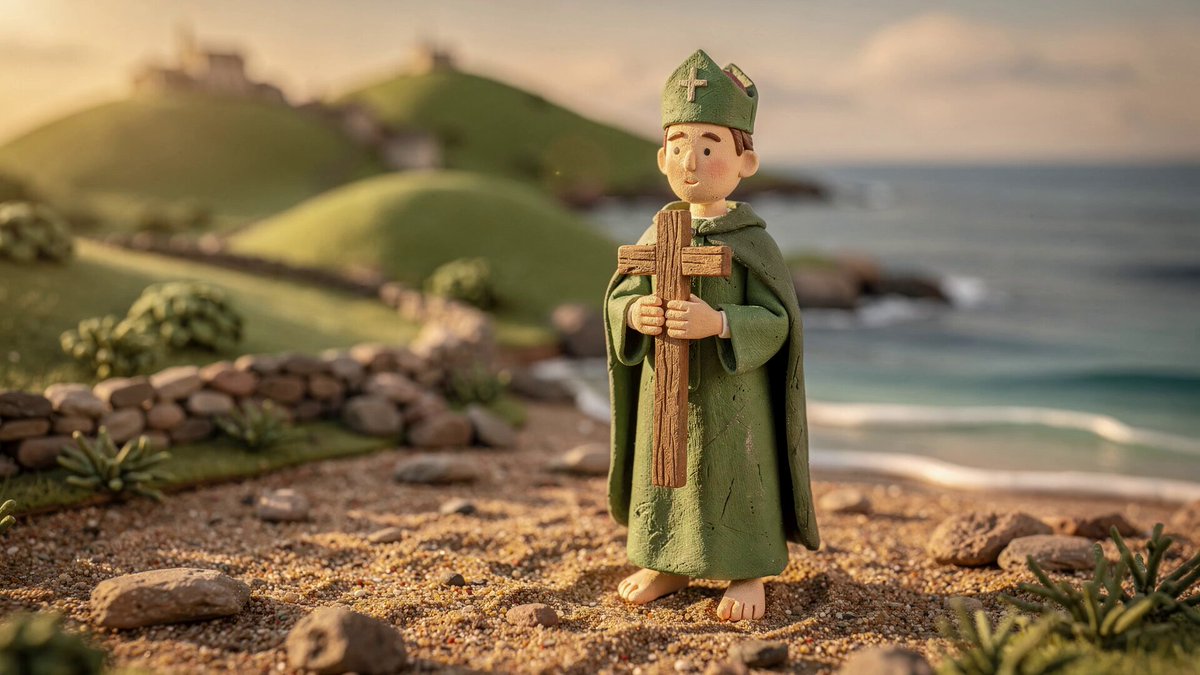
Alternate History: Priests&Vikings #vikings #viking #lindisfarnepriory #althistory #freya #mythos #norsemythology #mythology #nsfw More on the Pat! #HNY #priest #monk #Monastery
0 条评论

暂无评论

原始帖子的评论将显示在这里

相关视频

🌅❄️ GOOD MORNING FROM THE POLISH COAST ⚔️ WHEN SLAVS DEFEATED THE VIKINGS — A FORGOTTEN BALTIC WAR The frozen Baltic coast of Poland looks calm today. Historically, it was anything but. From the 8th to the 12th century, Slavic tribes of the southern Baltic were not passive targets of Viking expansion. They were organized naval powers that repeatedly confronted, defeated, and retaliated against Scandinavian raiders. Historical sources and chronicles confirm that Slavic fleets operated across the Baltic, launching raids on Danish and Scandinavian coasts, burning ports, and disrupting trade routes. Strongholds such as Wolin grew into major commercial and military centers, rivaling — and at times surpassing — Scandinavian hubs. The balance of power was never one-sided. Viking expeditions against Slavic territories often ended in failure, with fleets destroyed or forced to retreat. Control of key river mouths like the Oder and Vistula allowed Slavs to dominate maritime movement and regional trade. Popular culture turned Vikings into legends and pushed Slavs to the margins. The historical record tells another story: the southern Baltic was contested — and Slavs frequently held the upper hand. Good morning from the Polish coast — where the Viking myth met Slavic resistance. If you like what we are doing — like, share, repost, and follow for more. Follow us also on X and Facebook: Slavic Networks Nirali VVeles SlavicFreeSpirit #Slavs #SlavicHistory #BalticSea #Poland #Wolin #Vikings #MedievalHistory #EuropeanHistory

Slavic Networks

10,568 次观看 • 7 个月前

THE VIKINGS 🪓🔥 Part IX 🧵 THE THOUSAND YEARS LONG NIGHT 🗡️🌒 In the fading glow of the Viking Age rose one final flame - Harald III («Harald Hardrada»), known as the last great Viking king of Norway. Descending from Harald Fairhair of the Ulvungar bloodline. Ruling from 1046 until his death in 1066, this towering warrior carried the untamed spirit of the old North. After years in exile he had served as a legendary commander of the Varangian Guard in Constantinople, amassed great wealth across distant lands, and returned to claim the throne. Yet his final journey ended on English soil at the Battle of Stamford Bridge in 1066. With his fall, the long and glorious chapter of the Viking Age drew to a close. With the old temples silenced and the sacred groves cut down, a long shadow began to fall over the Land of the North. The first hundred years after the year 1000 AD were marked by open violence. Kings and bishops worked together to crush resistance. Those who clung to the old ways faced harsh punishment, exile, or death. Sacred sites were destroyed, ancient festivals forbidden, and the spirit of the people was deliberately broken. This was no gentle conversion to Christianity. It was a calculated campaign to shatter the proud heart of the people of the North. The Church had found its Trojan horse. Once its power was established, the violence slowly changed form. It became structural. Heavy taxes, Church-controlled laws, and strict control over daily life replaced open force. The independent spirit of the Vikings, which had once carried them across oceans and into new lands, was gradually tamed. Then came the Black Death. In 1349, death arrived on English ships said to be owned and guided by those connected to the old Khazarian bloodlines. The plague struck Norway with terrible force, killing more than half the population. Farms stood empty, knowledge was lost, and the land grew weak. As Viking power waned, Khazarian influence began to grow across Europe. When the Vikings defeated and destroyed the Khazarian Empire in year 965, the Khazarians flowed westward into the lands of Germany, Poland, and Lithuania, and later also to Denmark. Over time they found their way into Norway, changing their names to sound Norwegian and Danish. The Khazarians carried a deep and enduring hatred against the Vikings. Over the long night that followed, their descendants - moving slowly and quietly through Europe - appeared ever more determined to crush what remained of Viking strength and independence. What had begun with the Church’s Trojan horse was continued by these hidden hands. The proud, ancient tribes of the Land of the North were slowly brought under foreign influence and subdued. For five hundred years the transformation continued, until Norway passed under Danish rule in 1537. The once-mighty Viking heartland became a puppet state in a union with Denmark, lasting until 1814. In 1814, following the great upheavals of the Napoleonic Wars, Denmark was compelled to surrender Norway to Sweden. What had once been an ancient and proud kingdom was passed from one foreign crown to another, as a piece of property. Yet Denmark retained Greenland - the distant and mysterious land first settled by the Vikings under Erik the Red more than eight hundred years earlier - keeping this ancient outpost that had belonged to Norway since the dawn of the Viking Age. Under foreign rulers and Khazarian elites, the independent spirit that had guarded the sacred bloodline of Jesus and Mary Magdalene for centuries was pushed ever deeper into hiding, and eventually it was forgotten by those who carried it. Yet even in the shadows, something ancient refused to die. The fire in the souls of the real Viking descendants moved deeper, waiting for the time when it would be needed again. ⚔️🩸🪓

Bendleruschka

11,951 次观看 • 1 个月前

Vikings established homes in lands they conquered during 9th-11th Centuries AD, used a settlement pattern that was based primarily on their own Scandinavian cultural heritage. That pattern, contrary to image of Viking raider, was to live on isolated, regularly spaced farmsteads surrounded by grain fields. The degree to which Norse and their following generations adapted their agricultural methods and living styles to local environments and customs varied from place to place, a decision that influenced their ultimate success as colonists. Impacts of this are discussed in detail in articles on Landnám and Shieling. A model Viking settlement was located in a place near coastline with reasonable boat access; a flat, well-drained area for a farmstead; and extensive grazing areas for domestic animals. Structures in Viking settlements, dwellings, storage facilities, and barns were built with stone foundations and had walls made of stone, peat, sod turfs, wood, or a combination of these materials. Religious structures were also present in Viking settlements. Following Christianization of Norse, churches were established as small square buildings in center of a circular churchyard. Fuels used by Norse for heating and cooking included peat, peaty turf and wood. In addition to being used in heating and building construction, wood was common fuel for iron smelting. Viking Communities were led by chieftains who owned multiple farmsteads. Early Icelandic chieftains competed with each other for support from local farmers through conspicuous consumption, gift-giving, and legal contests. Feasting was a key element of leadership, as described in Icelandic sagas. Traditional Scandinavian farming economy (called landnám) included a focus on barley and domesticated sheep, goats, cattle, pigs, and horses. Marine resources exploited by Norse colonists included seaweed, fish, shellfish and whale. Seabirds were exploited for their eggs and meat, and driftwood and peat were used as building materials and fuel. Shieling, Scandinavian system of pasturage, was practiced in upland stations where livestock could be moved during summer seasons. Near summer pastures, Norse built small huts, byres, barns, stables, and fences. 🎥 : Viking Village film set is located on a local farmer’s property in southeastern Iceland 🇮🇸, near the charming fishing towns of Hofn and Hornafjordur. The set is situated on the massive land of a local farmer. It was constructed in 2010. The village is a replica of an authentic Viking village, created as a movie set for a Universal Studios production. However, the show scrapped it as a filming location for budgetary reasons. There is a local Viking Café, near the location of the film set, built to entertain guests. Since then, the area has been open for curious visitors to explore at their leisure. In 2018, the same movie company acquired the rights to produce Vikingr, a movie about early Vikings and Icelandic adventures. The film used the village as one of its sets. More recently, Netflix announced that their series, The Witcher, would use the Viking Village film set and other Eastfjords attractions in filming the show’s prequel, Blood Origins. 🎥© dulikasmi (IG) #archaeohistories

Archaeo - Histories

16,464 次观看 • 10 个月前

⚔️ Valhalla: Everything You Need To Know! Between blockchain tech & turn-based combat, Valhalla offers a Viking world where you tame mystical beasts, battle for glory, & shape your legend. Here’s your crash course into the world of Floki Island: 🌍 The World You arrive on Floki Island, a sprawling land of wild Veras, bustling hamlets, and dangerous arenas. Here, Vikings explore, form Clans, trade loot, grow their treasure of Runix & Onyx, and more. 🏹 Core Gameplay Your goal? Tame, train, & trade Veras—mystical companions with unique stats, levels & runes—to battle in strategic, turn-based fights. - Explore to trigger Vera Encounters - Battle in PvE or ranked PvP - Earn EXP, loot & climb leaderboards - Complete daily quests for exclusive rewards ⚔️ Battles 1v1 combat, each side commanding up to 3 Veras. Every turn you: - Move strategically - Use abilities or items - Outthink & outmaneuver your rival - Victory comes from preparation, prediction & clever play. 💰 Play-to-Earn Glory Beyond daily play, Valhalla hosts competitive tournaments where you battle for real rewards. Test your skills against the best Vikings, earn top placements, and take home your share of the prize pool. Climb the ranks, cement your name, and let the world know you’re a force to be reckoned with. 🏠 Life Between Battles The island thrives with places to visit: - B’s Shop – buy supplies, earn better deals with loyalty - Blacksmith – open Loot Chests for rare rewards - Daycare – heal, manage & release Veras - Ships & Docks – build your own vessel - The Bank – grow your Runix & Onyx - The Professor – Enchant & Upgrade Amulets to strengthen Veras - The Tracker – find the perfect Vera 👥 Clans & Glory Join a Clan for teamwork & competition. The ultimate challenge? The Immortal Gauntlet—a clan boss fight against a guardian golem where survival, damage & teamwork earn leaderboard fame. 🔮 The Future of Valhalla The saga is only beginning. On the horizon: - Raiding – pillage for rare loot & resources - Farming – cultivate and harvest valuable in-game materials - Minigames – quick challenges with fun rewards - In-game Trading – buy, sell, and barter directly with other Vikings And more surprises waiting to be uncovered… This is Valhalla. Every battle ⚔️, every trade 💰, every tamed Vera 🐉 is another line in your saga. So Viking… Are you ready to carve your name into legend? ⚡️ Head over to and get started right now!

Valhalla

27,699 次观看 • 1 年前

Norway is more than a nation, it is thousands of years of heritage, genes and tradition. Norway is a land carved by ice, guarded by mountains, embraced by the sea. For thousands of years, men and women have endured here, shaping their lives in rhythm with nature, and passing on their strength through blood, tradition and memory. Before the Vikings sailed into the chronicles of the world, people lived here as hunters and gatherers, fishers and farmers. When the glaciers released their grip, the first footsteps followed the reindeer herds across the raw and untamed land. From the beginning, survival was built on reverence for what the earth and sea provided. Then came the time of farms and villages. Generations learned to till the soil, to tame animals, to forge communities founded on loyalty, honour and kinship - and with them rose the myths of Odin, Thor, Freya, of gods mirroring the storms, the harvest and the fire in human hearts. The Viking Age carried Norway’s name far beyond its fjords. From 800 to 1050, the ocean became our road, our battlefield, our lifeline. Vikings were more than raiders: they were builders, explorers, craftsmen, women and men who sought honor, land and destiny. They left runes not only in stone, but in the very memory of nations, reaching from the rivers of Russia to the shores of Vinland. With the end of the Viking Age, Norway entered a new chapter – gathered under one crown, baptized into Christendom, bound closer to Europe. Yet the old spirits never vanished. They lived on in stave churches carved like sacred forests, in folk songs echoing through valleys, in tales of trolls, spirits, and the unseen. Our traditions, the bunad, the crafts, the music, all carry whispers of the ancient soul of Norway. And always, alongside this, the Sámi people. Europe’s firstborn nation of the North. Their reindeer herds, their joik, their languages, their spiritual bond with earth and sky – they are not a footnote, but a living root of this land. Their story, too, is Norway’s story. Our genes are memory. Each generation inherits the trials and triumphs of those before, and adds their own to the great chain. We are descendants of hunters who braved the ice, of farmers who cleared fields from stone, of seafarers who crossed oceans, of Sámi who lived with the tundra and its silence. Norway is not merely a state upon a map. Norway is a legacy of endurance. A pattern etched into soil, blood and spirit. A people who have withstood storms, wars, hunger, and darkness – and who, every time, rise again. Norway is our DNA.

Rebecca Mistereggen

17,825 次观看 • 11 个月前