正在加载视频...

视频加载失败

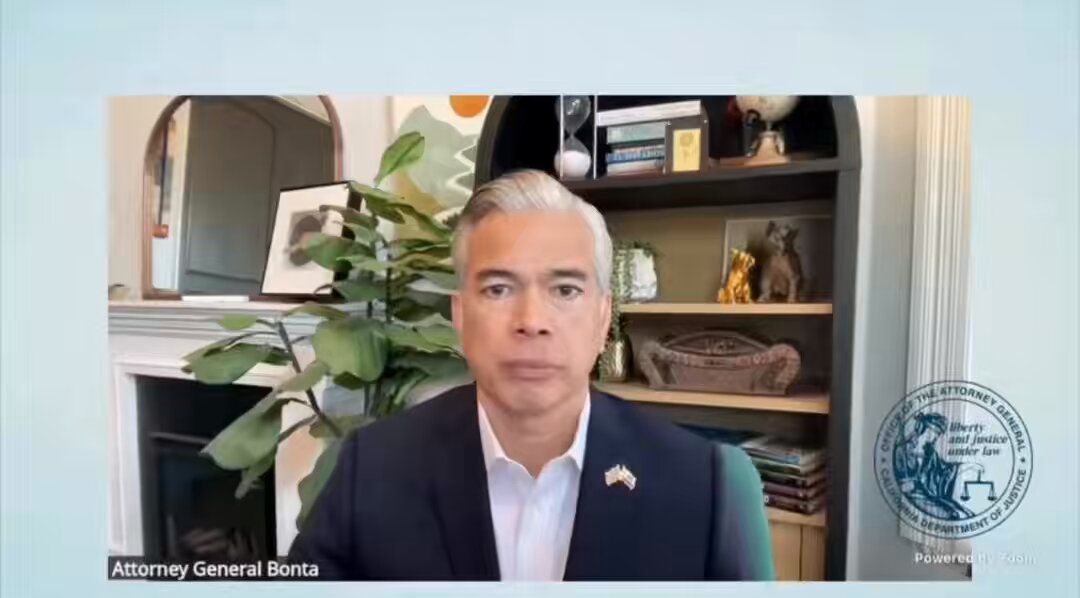
Amazon just got caught running a secret price manipulation operation with Levi's, Home Depot, Walmart, and many more. Every time you "comparison shopped" online, you were looking at prices that were already rigged. Here's what happened: Amazon would monitor prices on Walmart, Target, Best Buy, Home Depot, and Chewy...

2,922,395 次观看 • 2 个月前 •via X (Twitter)

0 条评论

暂无评论

原始帖子的评论将显示在这里

相关视频

World Premiere of Amazon — Market. Power! Monopoly? This documentary will show you how Amazon uses its size and power to raise prices, for you, the consumer. The documentary follows four sellers on Amazon, two in Europe, two in the US, and their journey to survive on the platform. It begins with an explanation of Amazon's pricing policies and the complex way Amazon enforces them. Watch this foundational beginning section carefully and your mind will be blown later in the documentary when you see what goes on behind the scenes, when you click buy. This is an extremely important documentary. Amazon responds to fair criticism and it is my hope, that with your support that we can change Amazon's policies. So sellers can set their own prices. And so you can pay less when you shop online. Timestamps ---Amazon in Europe--- 1:56 How Amazon's pricing systems work 5:24 Does Amazon follow its own pricing rules? 9:26 Europe's investigations into Amazon's market power 14:00 What happens when you sell off-Amazon for less? ---Amazon in the US--- 17:28 Amazon in the USA 20:15 The Brain Flakes 20:37 Calculating the revenues of sellers on Amazon 22:56 Is Amazon a Monopoly? 24:13 How Amazon uses its marketplace to subsidize its money-losing businesses 26:01 The ads on Amazon and how they drive up prices 27:00 How sellers are forced to use Amazon's other services ---Amazon in Europe--- 28:50 Competing with Amazon to be seen in search 29:53 What data analysis says about Amazon following its own rules 32:07 European investigations into Amazon's conduct 33:57 Is it possible to sell online without Amazon? 35:20 How Europe curbed Amazon's pricing behavior ---Amazon in the US--- 37:52 Does Amazon's Basics brand copy its sellers' products? 38:41 The Everyday Sling 40:27 Does Amazon use private data to decide what products to copy? ---Amazon in Europe--- 44:46 Is Amazon a monopoly that should be broken up? 46:52 Credits 47:08 Do you have an Amazon Prime account? I'd like to thank all who made this film possible. A special thank you and respect goes out to the sellers who appeared. It takes a lot of guts and conviction to stand up to one of the world's most powerful companies. To support their businesses, please click into the replies where you will find links to their (off-Amazon!) websites, as well as links to this documentary on other video viewing platforms! Thank you and enjoy!

molson 🧠⚙️

997,245 次观看 • 2 年前

This is the best presentation ever given about Amazon's retail business. If you own the stock, if you're thinking about owning the stock, if you are a prime member, or if you care about the future of ecommerce, you need to watch this video. In it, I make 12 predictions about Amazon's future and tell you why I'm qualified to do so. 1. How will the new CEO run Amazon? 2. Will Amazon be getting better or worse? 3. Will Amazon be able to take over the 3rd party warehousing market? 4. Will Amazon's Temu competitor "Amazon Haul" work? 5. What will Amazon's competitive landscape look like with China's Temu, TikTok, and Shein? 6. Will Chinese sellers take over on Amazon? 7. What do Walmart, Target, and eBay have to say about all this? 8. What's the future of e-commerce search amidst conversational AI? 9. Will Amazon lose its monopoly case against the FTC? 10. Will Amazon be broken up? 11. Will Amazon be able to continue to grow Prime customers? 12. Will fraud on the Amazon platform rise? And then finally, I will tell you how US e-commerce sellers can adapt to this future (it's bleak right now, but there are some unexpected glimmers of hope). I have a e-com crystal ball and I am not afraid to use it to tell you my contrarian but right predictions for where Amazon (and America) are headed. Buckle up and watch the best Amazon retail presentation you have ever seen. In the next tweet, I will provide a Yootube link as well as links to the AMZ Innovate conference (which I have zero financial relationship with) and links to my company's websites where you can buy our products FOR LESS THAN AMAZON and support me and my team for keeping it real about this giant company that accounts for ~80% of revenue. Thank you and enjoy! 👇

molson 🧠⚙️

48,112 次观看 • 1 年前

If you're an Amazon India customer, take 2 mins to read this if your money is dear to you. TLDR version, Amazon delivery partners are literally scamming customers. And Amazon India will do nothing to help you in this situation. Kiss your money goodbye! I raised this concern on social media a few days back, for a product (Levi's jeans) which was marked as delivered but I never received it. Their customer support team, did some investigation and came to the conclusion that the product was indeed delivered. Hence, they cannot do anything more to assist me in this situation (refer image) This was not a OTP based delivery, and neither does Amazon mention the name of the person who received the product on their app/website. If it was OTP based delivery, I would know someone has given the OTP so delivery has happened. With a name, at least I would know if there's any person with that name in the house. Now, I have absolutely no way to confirm if Amazon genuinely delivered the product. Except video camera evidence. So I went to see the CCTV footage of the day and time the product was marked as delivered. In the CCTV footage, I see something very strange. The Amazon delivery partner arrives at my place, gets off the bike, takes out the product and for the next couple of mins just keeps doing something on his phone. He doesn't call me, or at least I don't have any call record of calls at that time. In the meanwhile, another person walking out closes the door. That person is not me, neither works for me and neither known to me. Likely associated with a neighbour/tenant and I have no such instructions for my Amazon account for deliveries to be left with anyone else. One minute later the Amazon delivery partner decides to leave (see screenshot). The delivery partner doesn't even enter the house and just leaves after a couple of mins. Without even entering the house, Amazon successfully delivered the product! Wow! And if the delivery partner handed the product to any random person walking out of the house, is that the customer's problem? Was this a very expensive product? No, not at all. So why am I spending all this time to write this? 1. I just want to spread awareness to everyone out there who might be getting scammed by such malpractices from Amazon / delivery partners. 2. If Amazon claims a product is delivered, you can't do nothing about it. Irrespective of whether the product was actually delivered or not. Your money is gone, poof! 3. It should be the company's responsibility to prove that a product was successfully delivered but in India it seems anyone can walk over their customers. 4. I'm shocked that a customer has to go to these lengths to uncover such scams in India 5. If ordering on Amazon, I will always select cash on delivery as the default going forward Amazon India - Do not contact me in hope that I will delete this tweet or evidence now! PS: Video doesn't have the date/time stamp as aspect ratio has been cropped. Will only share that with company officials if someone from Amazon wants to see it. Or with consumer courts if I decide to pursue this further, definitely not worth my time for now. But in the US, I would have definitely filed a lawsuit for millions.

Gurjot Ahluwalia

12,416 次观看 • 9 个月前

There's a reason Walmart's Vizio TVs are so cheap. Walmart paid $2.3 billion to put advertisers in your living room. Every new Vizio will not turn on without a Walmart account. Walmart paid $2.3 billion in December 2024 for the right to make that the rule. The TV was never the product. Vizio's hardware business runs at a wash. The Platform+ segment, which is essentially advertising and ACR data, accounted for all of Vizio's gross profit in the years before the deal. The TVs themselves were the customer acquisition cost. Walmart bought 19 million active SmartCast accounts. That base grew about 400% from 2018 to 2024. Every account is a household with a screen pointed at the couch every night. The mechanism is automatic content recognition. The TV reads frames from whatever you're watching and matches them against a database. Cable box, game console, DVD, the Walmart app on your phone over the same Wi-Fi. The source doesn't matter. The screen is the sensor. In March 2026, Walmart announced the account requirement at IAB NewFronts and turned on the flywheel. 19 million viewing households on one side. About 150 million weekly Walmart shoppers on the other. Run them against each other and you get closed-loop attribution: saw the ad, drove to the store, bought the product. CMOs have been trying to build that for 30 years. The comparison is Amazon. Amazon ran $68 billion of advertising in 2025, roughly 8% of its $830 billion in GMV. Walmart did $6.4 billion against $713 billion in sales. That's 1%. Same playbook, $50 billion of headroom. The margin gap is the punchline. Selling a TV nets low single digits. Selling an ad against that TV's viewing data clears 70%. $2.3 billion divided by 19 million households is $121 per living room. The TV is the cheapest thing Walmart has ever sold you.

Aakash Gupta

1,383,744 次观看 • 2 个月前

Marc Andreessen: “I’m always urging founders to raise prices, raise prices, raise prices.” “We spend a lot of time working with our companies on pricing,” a16z co-founder Marc Andreessen explains. “It’s really this magical art and science that a lot of companies don’t take seriously enough.” Marc continues: “A core principle of pricing is that you don’t want to price by cost if you can avoid it. You want to price by value. Especially when you’re selling to businesses, you want to price as a percentage of the business value you’re creating.” He gives the example of building an AI that can do the job of a programmer, a lawyer, or a radiologist: “Can you price by value and get a percentage of what otherwise would’ve literally been a person? Or equivalently can you price by marginal productivity? If you can take a human doctor and make them much more productive because you give them AI, can you price as a percentage of the productivity uplift?” Marc argues that high prices are under-appreciated by founders: “The naive view on pricing is the lower the pricing, the better it is for the customer. The more sophisticated way of looking at it is that higher prices are often good for the customer because the higher price means the vendor can make the product better, faster. Companies with higher prices and higher margins can actually invest more in R&D and make the product better. Most people who buy things aren’t just looking for the cheapest price. They want something that’s going to work really well.” Marc also emphasizes this point in an interview in Elad Gil’s High Growth Handbook: “What I hear from companies is, ‘Oh, we have an awesome moat, and we’re still going to price our product cheap, because we think that’s somehow going to maximize our business.’ I’m always urging founders to raise prices, raise prices, raise prices. I’m always urging founders to raise prices, raise prices, raise prices. First of all, raising prices is a great way to flesh out whether you actually do have a moat. If you do have a moat, the customers will still buy, because they have to. The definition of a moat is the ability to charge more. And so number one, it’s just a good way to flesh out that topic and really expose it to sunlight. And then number two, companies that charge more can better fund both their distribution efforts and their ongoing R&D efforts. Charging more is a key lever to be able to grow. And the companies that charge more therefore tend to grow faster. That’s counterintuitive to a lot of engineers. A lot of engineers think there’s a one-dimensional relationship between price and value. They have this mental model of commerce like they’re selling rice or something. It’s like, “My product is magical and nobody can replicate it, and I need to price it like it’s a commodity.” No, you don’t. In fact, quite the opposite. If you price it high, then you can fund a much more expensive sales and marketing effort, which means you’re much more likely to win the market, which means you’re much more likely to be able afford to do all the R&D and acquisitions you’re going to want to do. And so we always try to snap people into a two-dimensional mindset, where higher prices equals faster growth.” Video source: a16z (2026)

Startup Archive

422,834 次观看 • 6 个月前