Video wird geladen...

Video konnte nicht geladen werden

Zur Startseite

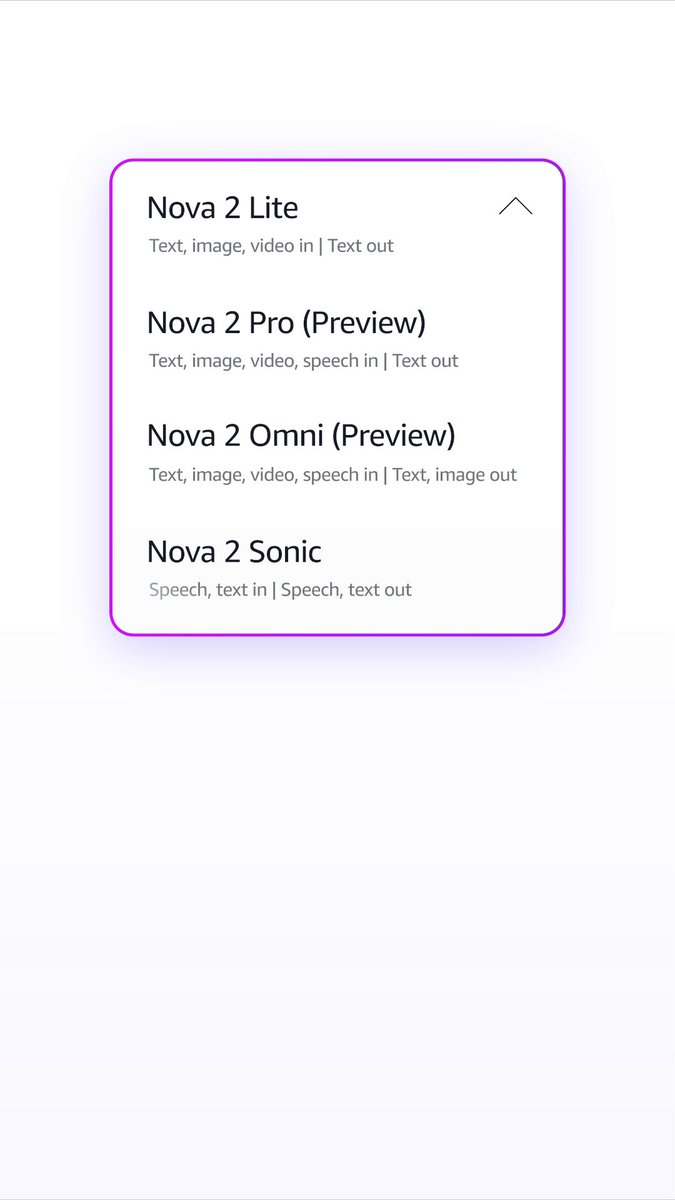
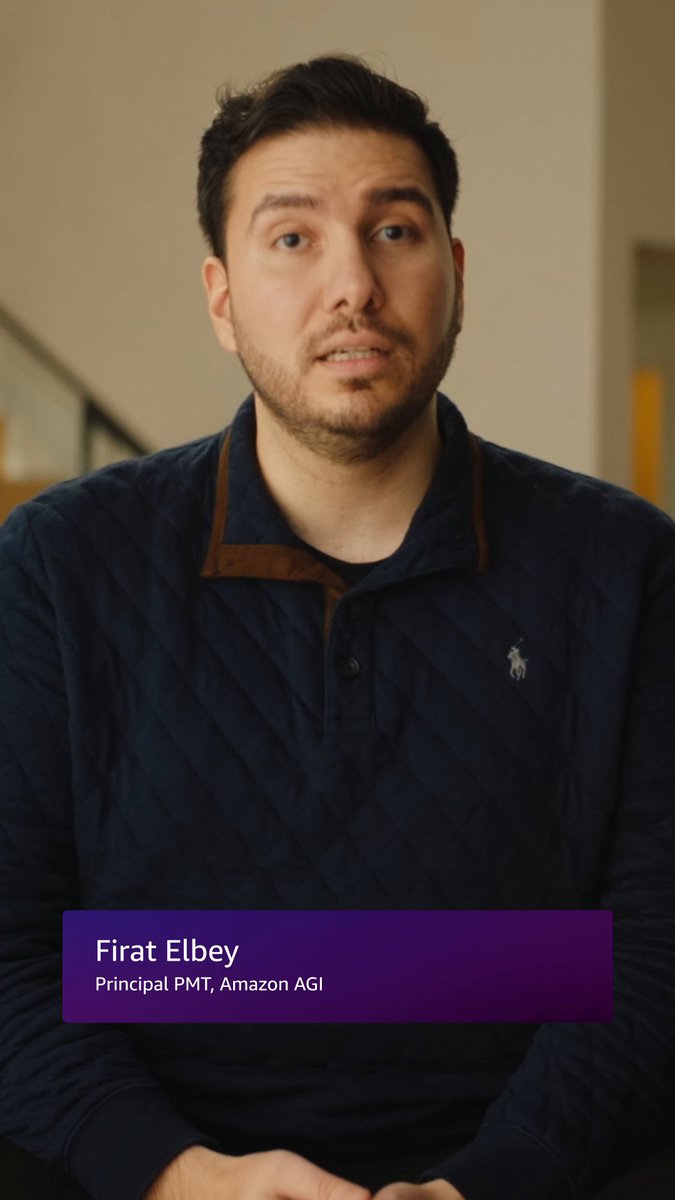
🚀 Amazon Nova Premier, our most capable teacher model for creating custom distilled models, is now available on Amazon Bedrock! Built for complex tasks like Retrieval-Augmented Generation (RAG), function calling, and agentic coding, its one-million-token context window enables analysis of large datasets while being the most cost-effective proprietary model...

42,314 Aufrufe • vor 1 Jahr •via X (Twitter)

1 Kommentare

Profilbild von Blueblauw
Blueblauwvor 1 Jahr

@Rollup_News rollup
Ähnliche Videos

HERMES AGENT SUPPORTS 300+ MODELS. PICKING THE RIGHT ONE PER TASK IS THE DIFFERENCE BETWEEN $5/MONTH AND $50. STARTING OUT: Claude Sonnet 4.6. official recommendation from Nous Research. "the model this project was built and tested with." strong reasoning. reliable tool calling. mid-range pricing. PREMIUM TIER: Claude Opus 4.8. best coding benchmarks available. self-correcting reasoning. catches its own mistakes. 1M context. use for demanding tasks where quality matters. GPT-5.5. #1 Chatbot Arena. #1 GPQA Diamond reasoning (94.1%). #1 creative writing. 2M context. handles entire codebases in one pass. Grok 4.30. the only frontier model with live X firehose access. real-time social data, breaking news, market sentiment. connects via Grok OAuth. no separate API key. Grok-Composer-2.5-Fast (v0.17.0). Cursor's coding model. 200K context. available through your Grok subscription via OAuth. no extra cost if you already pay for Grok. MID-RANGE TIER: Claude Sonnet 4.6. best balance of quality and cost for daily use. strongest prose and tool calling in this tier. Gemini 2.5 Pro. Google Search grounding built in. cites sources. verifies claims. pulls current data. 2M context. best for research-heavy workflows. GPT-4.1. reliable tool calling. solid general reasoning. good middle ground when you need OpenAI compatibility. BUDGET TIER: Claude Haiku 4.5. fastest Anthropic model. cheapest paid Claude option. strong at classification, routing, simple queries. use for auxiliary tasks: compression, vision, web extraction, approval scoring. DeepSeek V4. best cost-to-quality ratio in the market. 90% cache discount on repeated context. use for sub-agents and bulk parallel work. DeepSeek V4 Flash. cheapest paid model worth using. 1M context. MIT license. self-hostable. use for cron jobs, monitoring, routine searches. MiniMax M3. Nous Research and MiniMax collaborating on optimization. 1M context via lightning attention. 59% SWE-Bench Pro. beats several premium models on coding. one of the most-used models inside Hermes. FREE / LOCAL: Qwen 3.5 27B via Ollama. 16GB VRAM. reliable tool calling. best free local model for Hermes as of mid-2026. Qwen 3 8B. 8GB VRAM. fits a $7 VPS. handles routine tasks at zero API cost. Llama 4 Maverick. best open-weight tool calling. 1M context. needs more VRAM but strongest local option. HOW TO ASSIGN MODELS: main model: Desktop app / Dashboard → Models → switch sub-agent model: set in Desktop app, Dashboard, or config.yaml: delegation: model: "deepseek/deepseek-v4" auxiliary models (compression, vision, web extract): Desktop app / Dashboard → Models → Auxiliary Haiku 4.5 or Gemini Flash work well here. saves significantly when your main model is premium. per-profile: each Hermes profile gets its own model. Scout on DeepSeek. Analyst on Sonnet. Briefer on budget model. Coder on Opus. per-cron-job: pin a specific model to any cron job. morning brief on Haiku. deep research on Sonnet. monitoring on DeepSeek Flash. each job uses only the model it needs. per-session: /model deepseek/deepseek-v4-flash hot-swap mid-conversation. no restart needed. FALLBACK CHAINS: if your primary model is unavailable, Hermes automatically switches to the next provider. rate limit or server error = next model in the chain. no failed runs. no manual intervention. set in Desktop app, Dashboard, or config.yaml: fallback_providers: - openrouter - nous - codex PROVIDER PATHS: OPENROUTER: 300+ models under one API key. pay per token. most flexible. NOUS PORTAL: 300+ models + Tool Gateway (web search, image gen, TTS, browser). one OAuth. one subscription. 10% off token-billed providers. CHATGPT SUB: GPT-5.5 + Grok via OAuth. included tokens with $20 subscription. OLLAMA: free. local. private. zero API cost. your hardware only. mix providers across profiles and tasks. Scout on OpenRouter. Analyst on Nous Portal. Coder on ChatGPT sub. Monitor on Ollama. THE RULE: premium for work that needs deep reasoning. mid-range for daily driver tasks. budget for volume and background work. free for monitoring and routine jobs. pricing changes fast. check openrouter ai for current rates before committing. Which is your favourite model and for what task? full 15 levels breakdown in the article 👇

YanXbt

17,138 Aufrufe • vor 2 Monaten

Mark Zuckerberg is explaining one of the most misunderstood dynamics in AI and it has direct investment implications (Save this). The concept he's describing is model distillation, and it's one of the most important techniques to emerge in AI over the past year. Here's how it works. You train a massive, enormously expensive model, in Meta's case, Llama 4 Behemoth, a 2 trillion parameter teacher model and then you use that model to teach a much smaller, cheaper model. The smaller model inherits roughly 90 to 95% of the intelligence of the giant while running at 10% of the cost and on a fraction of the compute. Meta already did this with the Llama 4 family and Behemoth serves as the teacher. Llama 4 Scout and Maverick, the publicly released open-source models were distilled from it. Scout runs on a single H100 GPU with a 10 million token context window and outperforms models that cost far more to operate. Maverick, at 17 billion active parameters, rivals DeepSeek V3 in coding at half the parameter count and beats GPT-4o on multimodal benchmarks. Both are completely free for commercial use. What Zuckerberg is pointing at is a structural shift in how AI gets deployed in the real world. Companies aren't taking a frontier model off the shelf and running it as-is but rather taking open-source models, fine-tuning them on their own proprietary data, distilling them into even smaller custom models tailored to their specific use case, and running them on infrastructure they control at a fraction of the cost of a closed frontier API. The investment implication of this is significant and runs in two directions. For Meta specifically, this is a strategic masterstroke. Every company that builds on Llama, fine-tunes it, distills it, or deploys it through their infrastructure is pulling into Meta's orbit while Meta builds the most powerful open teacher model. The ecosystem of companies using it grows and that ecosystem generates commercial activity across Meta's platforms and data services. Meta's AI research benefits from billions of real world deployment signals and it's a flywheel that closed model providers cannot replicate because their strategy requires charging per token, which is now a 65x cost disadvantage against the open-source alternative. For the broader market, distillation changes the economics of inference in a way that has barely been priced in. As intelligence becomes extractable into smaller and cheaper models, the absolute demand for compute doesn't decline but rather it explodes, because now the number of applications that are economically viable expands by orders of magnitude. Every task that was previously too expensive to automate at $3.25 per call becomes viable at $0.05 that means more total token usage, more total GPU utilization, and more demand for the infrastructure companies, the Nebiuses, the GE Vernovas, the Constellation Energies that supply the underlying compute and power.

Milk Road AI

27,908 Aufrufe • vor 2 Monaten