Video wird geladen...

Video konnte nicht geladen werden

Zur Startseite

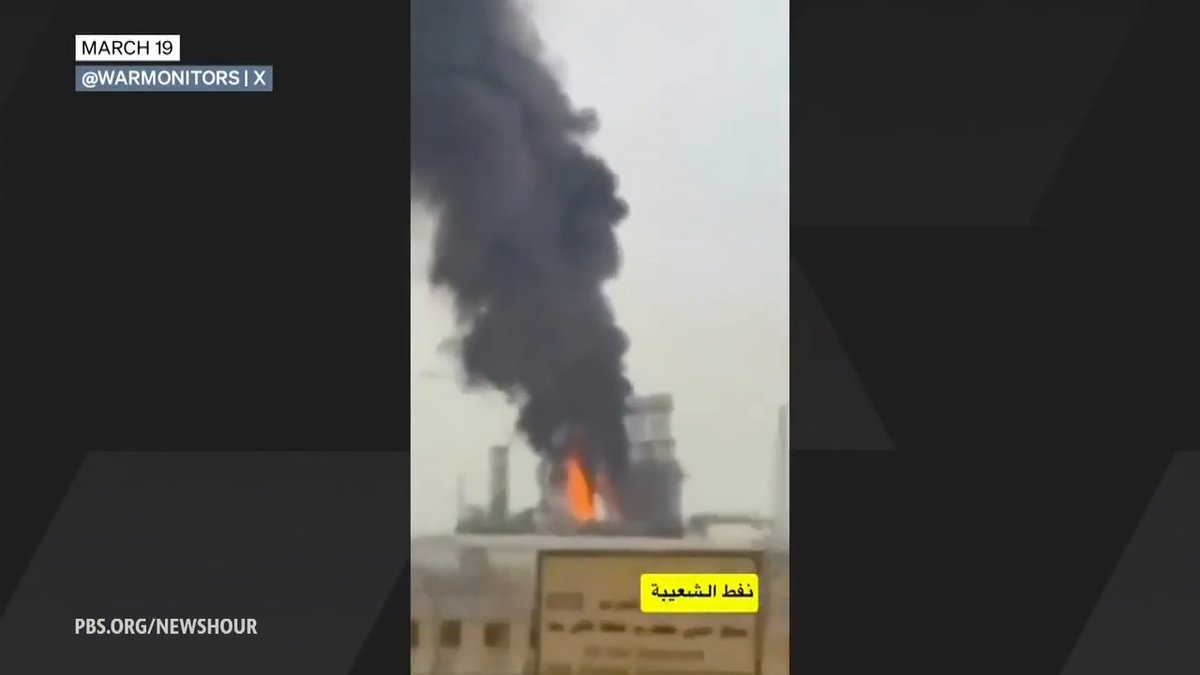
🇺🇸🇮🇷 America destroyed one rocket launcher with a single drone, and Iran answered with 515 missiles Andreas Krieg zeroed in on the mismatch. Washington chose a drone rather than an airstrike, deliberately small, hoping to stop the mine-laying without provoking much. Tehran replied with a strategic barrage across Jordan,...

323,643 Aufrufe • vor 2 Tagen •via X (Twitter)

0 Kommentare

Keine Kommentare verfügbar

Kommentare vom Original-Post werden hier angezeigt

Ähnliche Videos

The U.S. and Iran are locked in the same conflict, but waging completely different wars. America is destroying more targets, firing more advanced weapons, and delivering far greater firepower than Iran, but military analyst Andreas Krieg told Brandon Weichert it's still losing the war. Tehran is preserving its missile stockpiles, stretching the conflict out, and forcing the U.S. to burn through extremely expensive interceptors and precision munitions. It's a strategy of endurance, not dominance. According to Andreas, that's exactly why Iran doesn't need to win battlefield after battlefield; it simply has to survive. He points to Iranian strikes that have degraded U.S. surveillance and reconnaissance networks across the Gulf, forcing Washington to use more resources simply to maintain the same level of awareness. At the same time, the IRGC continues operating through decentralised units that don't depend on the military infrastructure America has spent weeks destroying. The U.S. can demolish radar sites, flatten bases and logistics hubs, but if the system keeps functioning, what's really changed? Andreas believes the trap Washington is falling into is measuring success by the number of targets destroyed rather than whether those strikes are changing the political reality. Meanwhile, America's own partners are paying the price. As civilian infrastructure inside Iran comes under attack, Tehran has responded by targeting energy facilities and desalination plants across the Gulf. Countries like Kuwait, Bahrain and Qatar suddenly find themselves pulled into a war they never chose. According to Andreas, Gulf leaders are now putting heavy pressure on Washington to dial back the escalation before their own economies and critical infrastructure suffer even greater damage. And then there's the question Washington still hasn't convincingly answered: What does victory actually look like? America is measuring success by how much damage it can inflict. Iran is measuring success by whether it can still fight tomorrow. Andreas believes only one of those strategies has a believable path to victory. Brandon Weichert Dr Andreas Krieg

Mario Nawfal

257,296 Aufrufe • vor 1 Monat

🇺🇸🇮🇷 Trump threatened to unleash the “gates of hell” against Iran, then he backed away, which in Washington may have been seen as restraint. According to Geopolitical analyst Pepe Escobar, Tehran interpreted it very differently. They saw it as proof that Iran’s deterrence had worked, America’s military options were narrowing, and that the longer Iran holds out, the more leverage it gains. Pepe says that transformed Iran’s objectives. Tehran is no longer thinking only about surviving the war, lifting sanctions or securing control over the Strait of Hormuz. According to his sources, forcing the U.S to retreat from West Asia has now become a central strategic goal. Iran began this conflict trying to prevent America from imposing its will. Pepe believes it now sees an opportunity to dismantle the military system that allowed Washington to threaten it in the first place. And Tehran reportedly believes it has found the mechanism. He says Iran has replaced its previous proportional retaliation policy with a new warning: Strike one Iranian energy target, and Iran will strike ten targets across America’s regional network. The message to Gulf governments is brutal. If they help Trump attack Iran, their refineries, pipelines and export facilities will pay the price. Pepe says that threat is one reason regional leaders pushed Trump to stand down. Saudi Arabia, in particular, understands that another major escalation could devastate the infrastructure it depends on to export oil. For decades, American bases were supposed to protect Gulf allies from Iran, but now those bases are putting the countries hosting them at risk. Pepe Escobar

Mario Nawfal

286,832 Aufrufe • vor 1 Monat

🇺🇸🇮🇷 Trump says the U.S is going to “hit Iran hard,” while Tehran is warning that from now on, every American attack will be met with a response “dozens of times greater.” That's an extremely dangerous change in the rules of this war. The latest U.S strike was deliberately limited: American forces hit rocket launchers on Larak Island that CENTCOM says were preparing to deploy sea mines into the Strait of Hormuz. Iran didn't respond proportionally; it launched a much larger barrage of missiles and drones toward U.S positions in the region. And that's the part that matters. Earlier in the war, Iran largely calibrated its responses because it still believed there was a deal to be made with Washington. That calculation appears to be disappearing, because Tehran believes America no longer possesses the escalation dominance it had at the beginning of the war. And Iran is now willing to prove it by deliberately responding harder than it gets hit, meaning Trump now faces a brutal dilemma. If he doesn't respond after publicly promising to “hit them hard,” Tehran can portray it as proof that American threats have lost their force. But if he does hit Iran hard, Tehran is explicitly threatening to escalate even more, and warning that no target in the region is beyond its reach. The most dangerous assumption Trump could make now is that the U.S still gets to decide where the escalation ends. Iran's telling him it has a say in that. Brandon Weichert

Mario Nawfal

336,090 Aufrufe • vor 2 Tagen

🇺🇸🇮🇷 Washington may call it economic pressure. Tehran may call it war. Former CIA analyst Larry Johnson says Iran could respond to a U.S. economic campaign the same way it would respond to a military attack, particularly if countries help enforce it. The logic is pretty straightforward: if allowing your airbases to be used against Iran makes you a target, why should allowing your banks and financial system to be used against Iran be any different? Johnson's answer is that it shouldn't. And that puts the UAE in an uncomfortable position. But Gulf states have already realised Washington is not the security guarantee it once appeared to be and are quietly repairing relations with Tehran. The fact that the UAE has avoided another round of strikes is hardly irrelevant. Then there is the bigger problem with the sanctions strategy. China is refusing to play along. Pakistan is hardly going to abandon Iranian energy to keep Washington happy. Iranian oil is increasingly being settled in yuan, outside the U.S. financial system. The irony is becoming difficult to miss. The harder Washington squeezes Iran, the more Tehran's biggest partners have an incentive to build ways around Washington. 10 years ago, Russia and China helped enforce the sanctions regime. Today, they are helping Iran survive it. Meanwhile the rial has collapsed, Iran is restricting shipping through the Strait, and Tehran has reportedly been discussed for a regional defence pact involving Pakistan, Saudi Arabia and Turkey. Washington is promising the most devastating sanctions yet. Johnson's response? "I'll hold my breath." SonofNewAmericanRevolution

Mario Nawfal

308,654 Aufrufe • vor 10 Tagen