Video yükleniyor...
Video Yüklenemedi
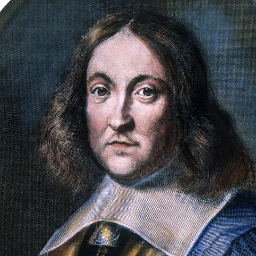
American physicist Edward Witten explains why it wasn’t until Einstein's work that we fully understand the reason behind the inverse square law, and why it's specifically a square rather than some arbitrary decimal 1 / distance² vs. 1 / distance¹·⁷⁴⁸²²⋅⋅⋅
427,898 görüntüleme • 2 yıl önce •via X (Twitter)
10 Yorum

I'm not sure what he means by "Newton could have used a different law." As he says, the inverse square is the result of geometry, so how could it be anything but inverse square?

Newton had to postulate inverse square law but in Einstein's theory it drops as a natural consequence! Great to know that.

It's 2 because the universe is 3-dimensional. It's 1 in a 2-dimensional universe (and 0 on the line).

That's just babblespeak. The inverse square law applies to Newtonian gravitational physics, Coulomb's electrostatic physics, and the physics of light irradiance. The inverse square law has nothing to do with Einstein's ontologies or complex calculus equations.

There's a rather intuitive way of considering it; How is the influence of a mass m distributed in homogeneous space at some distance r? Evenly across the surface of the bounding sphere. f = k * m/(πr^2)

Gravity requires an inverse square law if the attraction of a spherical ball is the same as that of a point mass at the centre. Newton knew that.

Correct however it still fails to correspond to what we witness in some observations and does not provide a full unified framework i.e quantum gravity, Ed knows we need a new idea @Cornell

I thought Gauss was the guy who figured out why it was an inverse square law...and isn't it only an inverse square in Einstein's theory in the weak gravitational field approximation?

No, this does not explain it, because it does not explain why the spreading of the field needs to be a constant.

What is this clip from?


![President Stubb: an American president can't order us to not fight against Russia should it attack more European countries. [Q]: If a future American president says, don't fight the Russians, come to a peace deal with them, they may have just invaded the Baltics, but you need to talk, not fight. Can they do that to you? [President Stubb]: No, and it's not going to happen. And remember that it's also tit for tat. There's a reason why the bilateral defence cooperation between the United States and Finland is deeper than ever. There's a reason why we have 25,000 soldiers training in Northern Norway and Finland next week, 5,000 of which are American. There's a reason why America wanted to buy 11 icebreakers, which they can use for their naval forces. There's a reason why we did the defense cooperation agreement. And the reason is that Finland has one of the most powerful militaries bordering Russia.](https://image.24vids.com/tw-2024742335666430035/ext_tw_video_thumb/2024742021504671744/pu/img/nr8YfW6MldT2-7ON.jpg)


