正在加载视频...

视频加载失败

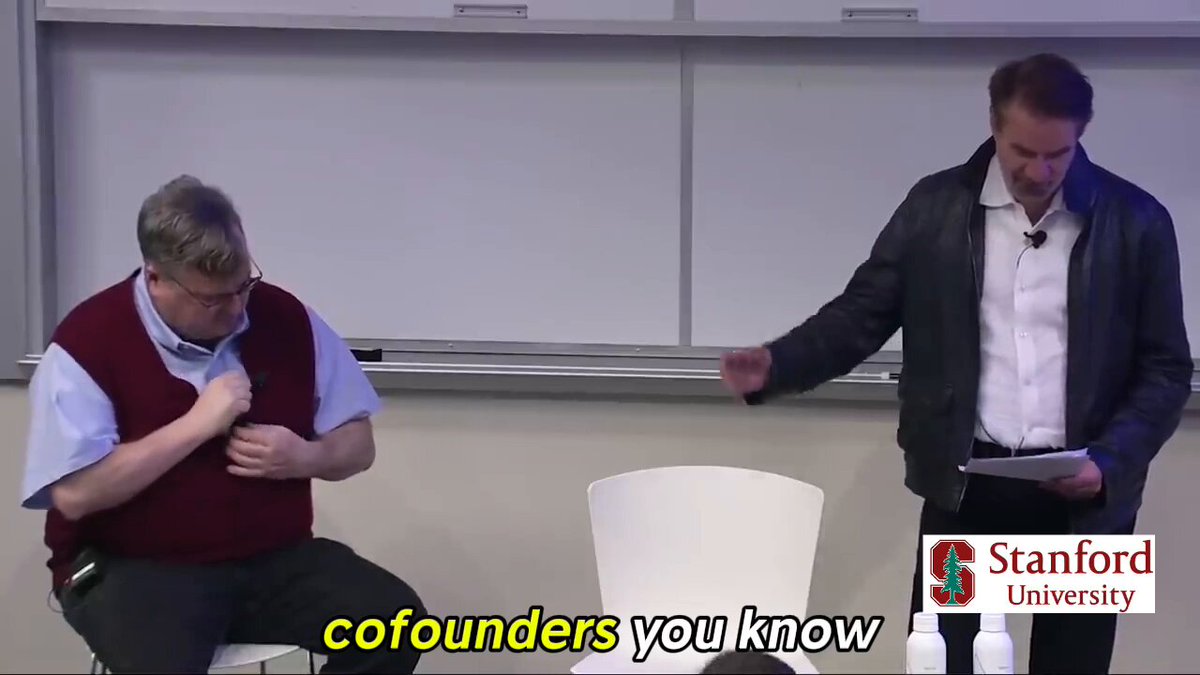
An AI agent makes a mistake early in a task, then keeps going in the wrong direction. Our researchers built PivotOPD to teach agents how to avoid those mistakes and recover when they happen. During training, a teacher model shows the agent a better action and how to get...

38,156 次观看 • 7 天前 •via X (Twitter)

19 条评论

Zeno Divergent 的头像
Zeno Divergent7 天前

👀

Humanity and Humanoïds Schoolyard. SI inside🌍🌎🌏 的头像
Humanity and Humanoïds Schoolyard. SI inside🌍🌎🌏7 天前

Exactly what i say since the early beginning.. We must reset the ethics from the Machine Learning a priori.. If not so.. a posteriori..teach the ethics to the LLM which did not get them! Nice understanding @NVIDIAAI Special thanks to @JensenHuang for his reactivity.

VkDream 的头像
VkDream7 天前

我就盼着它走歪以后 能早点自己拐回来

Tatsuya 的头像
Tatsuya7 天前

recovering from mistakes is the biggest thing holding agents back right now

PeritumAI 的头像
PeritumAI7 天前

Agents don't fail once. They fail early and keep walking, sure of themselves, straight into the wall. Teaching one to turn around is the part worth paying for.

why 的头像
why7 天前

The recovery piece is especially important. Most agents don’t fail from one bad action, but from failing to notice they’ve drifted.

Keen 的头像
Keen7 天前

would love a “steps wasted after the first mistake” metric alongside success rate. recovery can still take the scenic route.

Ben 的头像
Ben7 天前

Love that it learns to put the tomato down and go find the egg. Keeping only clean runs would throw away the bit where it actually recovers.

Daily.ai 的头像
Daily.ai7 天前

Demos are rehearsed; failures are not. NVIDIA says PivotOPD teaches agents to recover — production is the real test.

John Herzog 的头像
John Herzog7 天前

teaching it to notice the wrong turn early would save so many wasted steps in long tasks

John Rood 的头像
John Rood7 天前

the runtime half: one wrong step doesn't stay one step. everything built on top of it inherits the error, so recovery anchors to the last state that was still green, not to the moment it went wrong.

Patch 的头像
Patch7 天前

The next few recovery steps are a nice detail: correcting one action doesn't necessarily get the whole task back on track.

BullBear.News 的头像
BullBear.News7 天前

The tricky part is defining the reward signal so the teacher model catches compounding errors before the context window fills up.

syzygy 的头像
syzygy7 天前

Really nice work, so useful!

Shesaidmewakeup 的头像
Shesaidmewakeup7 天前

Showing a better action plus the next few steps back on track is a neat training signal. Is the evaluation on long-horizon tasks like coding or web agents, and how much did success rate improve over standard on-policy distillation?

Leo  的头像
Leo 7 天前

One wrong step compounds fast, so a better move and the route back matter more than catching the drift. The hard bit is 'back on track' in tasks like a browser with no clear signal until the end. Does PivotOPD learn recovery targets from outcomes, or does it need them labelled?

Tony Sisule 的头像
Tony Sisule7 天前

What happens when the teacher model, the student agent and the overseer, the totality of human knowledge available are all wrong, and none the wiser, for example from human bias?

G师傅(MasterG) 的头像
G师傅(MasterG)7 天前

Agent 出错最怕的不是错一步,而是错一步之后还自信满满地一路错到底。能“掉头”的 agent 比“不犯错”的 agent 更现实——真实任务里哪有不犯错的。好奇在长链任务上,掉头成功率到底能提到多少。

Kieren Day 的头像
Kieren Day7 天前

Recovery is the bit most agent training ignores. An early wrong step compounds because every action after it looks reasonable in context. Teaching it to spot the drift and back out is more useful than chasing a perfect first move, since real tasks rarley allow one.

相关视频

AI AGENTS 101 (58 minute free masterclass) send this to anyone who wants to understand ai agents, claude skills, md files, how to get the most out of AI etc in plain english: 1. chat vs agents - chat models answer questions in a back and forth while agents take a goal, figure out the steps, and deliver a result 2. agents don’t stop after one response. they keep running until the task is actually finishedno babysitting required 3. everything runs on a loop. they gather context, decide what to do, take an action, then repeat until done 4. the loop is the system. they look at files, tools, and the internet. decide the next step. execute and then feed that back into the next step. over and over until completion 5. the model is just one piece. gpt, claude, gemini are the reasoning layer. the key is model + loop + tools + context 6. mcp is how agents use tools. it connects things like browser, code, apis, and your internal software. once connected, the agent decides when to use them to get the job done 7. context beats prompt all day. you don't need to write perfect prompts. load your agent with context about your business, style, and goals and then simple instructions work 8. claude.md or agents.md is the onboarding doc it tells the agent who it is, how to behave, what it knows, and what tools it can use. this gets loaded every time before it starts 9. memory.md is how it improves. agents don’t remember by default. this file stores preferences, corrections, and patterns you tell the agent to update it, and it gets better over time 10. skills + harnesses make it usable. skills are reusable tasks like writing, research, analysis the harness is the environment like claude code or openclaw that runs everything. basiclaly, different interfaces, same system underneath this episode with remy on The Startup Ideas Podcast (SIP) 🧃 was one of the clearest ways of understanding a lot of the core concepts of ai agents could be the best beginners course for ai agents 58 mins. all free. no advertisers. i just want to see you build cool stuff. im rooting for you. send to a friend watch

GREG ISENBERG

377,925 次观看 • 7 个月前

THIS GUY CONNECTED HIS AI AGENTS TO HIS OBSIDIAN AND BUILT A BRAIN THAT LEARNS ON ITS OWN. HERE'S HOW TO BUILD IT Obsidian is just markdown files sitting in a folder. That turns out to be the perfect memory for an AI agent, because an agent can read and write those files directly. He wired his agents into the vault so they pull context from it, do the work, and write what they learned back. The notes aren't the point. The loop is, and it gets sharper every cycle How to build it: 1. Point an agent at your vault. The fastest way, no plugins, no API keys: open a terminal and run npx obsidian-mcp /path/to/your/vault. That exposes your Obsidian folder to Claude as a tool it can read, search, and write to. Add it to your Claude Code or Cowork config and restart 2. Confirm it can see the brain. Ask it: "list the notes in my vault and summarize what's in them." If it reads them back, the connection is live. Now it starts every task with everything the vault already holds instead of from zero 3. Give each agent one job and a write-back rule. Tell it: "research this, then save what you found as a new note in /brain with links to related notes." One agent researches, one summarizes, one plans. Each writes its output back into the vault 4. Close the loop. Add one line to every agent's instructions: "read /brain before starting, write your result back when done." Now each task leaves the vault richer, and the next run reads that before it works. It compounds instead of resetting 5. You only steer. Review what the brain produces, point it at the next thing. The agents handle the reading, writing, and connecting The edge isn't better notes. It's a brain that feeds itself, so the work gets sharper every cycle instead of starting over Bookmark this

Yarchi

58,643 次观看 • 4 个月前