Video wird geladen...

Video konnte nicht geladen werden

Zur Startseite

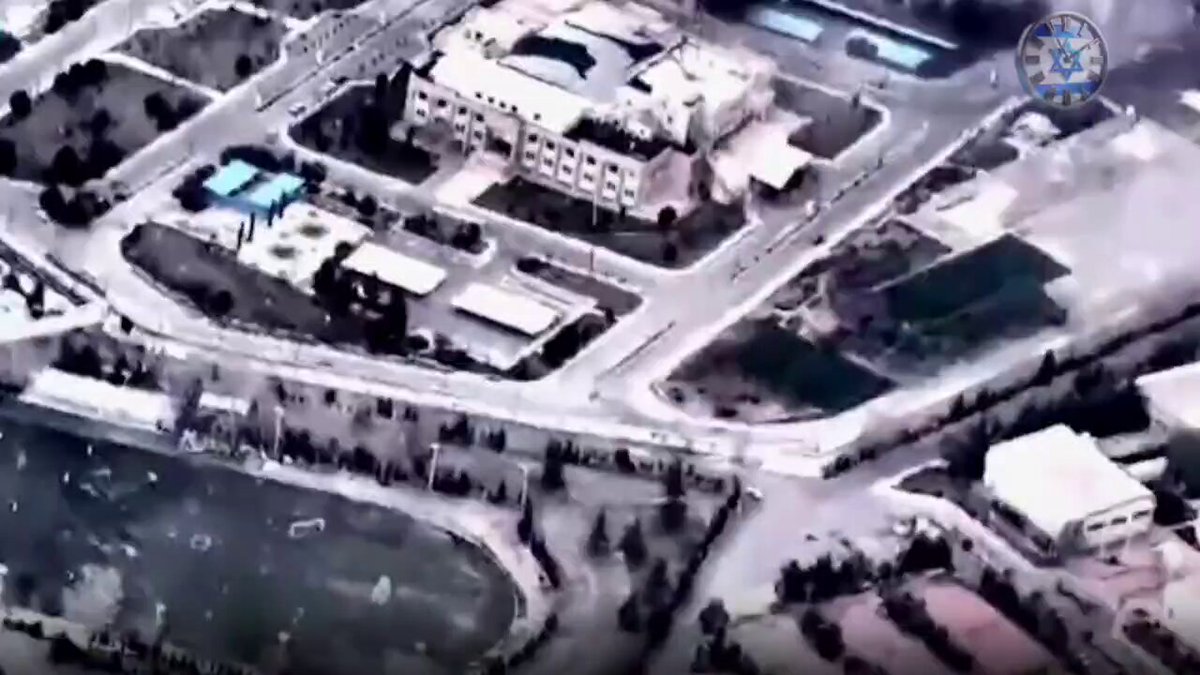
🚨ANALYSIS: CLAIM OF MULTIPLE FISSILE WARHEADS First… precision matters. “Multiple fissile warheads” implies MIRV capability carrying multiple nuclear reentry vehicles. There is no verified evidence that Iran has deployed operational nuclear MIRVs in active combat. What videos like this usually show are one of three things: Cluster munitions dispersing...

13,982 Aufrufe • vor 5 Monaten •via X (Twitter)

0 Kommentare

Keine Kommentare verfügbar

Kommentare vom Original-Post werden hier angezeigt

Ähnliche Videos

On the Oreshnik and the eternal question about the warhead There is a particular type of commentator who, after every Oreshnik strike, routinely asks the same question. Was there even a warhead in it this time? The question is meant to suggest that the weapon, without a classical explosive payload, is somehow fake or less dangerous. What it really reveals is that the person asking does not understand how the system works. A conventional ballistic missile carries explosives or a nuclear warhead. The destruction comes from the detonation at the target. The missile is essentially the delivery service. The Oreshnik works differently. It is an intermediate-range missile (range around 5000 kilometers) carrying multiple independently targetable reentry vehicles (MIRV). These reentry vehicles enter the atmosphere at roughly Mach 10 to Mach 12, with Russian sources claiming higher in some cases. That works out to 3 to 3.5 kilometers per second on terminal approach. This is where the physics comes in. Kinetic energy is calculated as E = 0.5 times mass times velocity squared. Velocity enters the equation as a square. A reentry vehicle of a few hundred kilograms, on impact alone, releases energy in the range of several tons of TNT equivalent. With multiple submunitions per missile, that adds up. A tungsten or steel core entering the ground at this speed produces temperatures of several thousand degrees through friction and compression shock. Bunkers and hardened installations are not destroyed by an explosion, they are destroyed by the sheer force and heat of the impact itself. The technical term is kinetic penetration. Now to the actual answer for the warhead-askers. Yes, the Oreshnik is nuclear-capable. This was part of the design from the start, not a retrofit, but a built-in configuration option. Russian officials have stated this openly. The carrier is there. The only question is what it carries. But that is exactly the point the warhead-asker skips over. The whole point of the Oreshnik is that even in its conventional configuration it achieves an effect that previously required nuclear weapons against hardened targets. To destroy an underground command bunker, historically you needed a small tactical nuclear weapon. Today a reentry vehicle at Mach 10 with a few hundred kilograms of mass is enough. No radioactive fallout, no crossing of the nuclear threshold, no political price attached to a nuclear use. In a strike on a major city, the nuclear configuration would, in this conflict, almost certainly not be deployed. Not because it does not exist, but because it is neither necessary nor politically tenable for that purpose. The conventional version is sufficient to send a message without crossing the threshold above which entirely different chains of escalation are set in motion. In short. The question "was there a warhead in it?" misses the point. The Oreshnik does not need a large warhead, because its velocity is the weapon. It can carry a nuclear warhead, at any time. It just does not do so in the current conflict, because it does not have to.

Zlatti71

36,837 Aufrufe • vor 3 Monaten

🇷🇺 RUSSIA'S "UNINTERCEPTABLE" HYPERSONIC MISSILE GOES LIVE IN BELARUS - BY NEW YEAR'S Belarus just confirmed: the Oreshnik intermediate-range ballistic missile system will be on combat duty in December 2025. That means Putin will have nuclear-capable missiles that can hit anywhere in Europe, travel at Mach 10+, and evade existing European defenses - deployed roughly 60 km from Minsk by year’s end. What Oreshnik is: An intermediate-range ballistic missile (IRBM) derived from Russia’s RS-26 Rubezh ICBM. It carries multiple independently targetable reentry vehicles (MIRVs) - six warheads, each dispersing submunitions, a capability previously associated almost exclusively with nuclear systems. Estimates go up to 36 submunitions per missile. The speed: Putin claims speeds up to Mach 10. Ukrainian military officials told CNN it reached Mach 11. Russian officials insist its warheads are effectively immune to interception. The range: Russia’s missile forces chief says Oreshnik can reach all of Europe. Russian state media claims: 11 minutes to Poland 17 minutes to NATO headquarters in Brussels First combat use: November 21, 2024 - strike on Dnipro, Ukraine. The missile reportedly carried inert or “dummy” warheads, but the kinetic energy alone caused significant damage. A CSIS director noted that even non-explosive hypersonic impacts can be devastating. Why it matters: Most European missile defenses are ineffective against Oreshnik. It flies above the engagement envelope of many systems and descends too quickly for terminal defenses like Patriot. Only Arrow 3 and SM-3 Block IIA have theoretical intercept capability - and inventories are limited. The conventional threat: In a NATO conflict, Russia could strike air bases, command centers, and missile sites with conventional Oreshniks, achieving strategic effects without using nuclear weapons. Foreign Policy notes it may take dozens of Iskanders to neutralize a major air base, but far fewer Oreshniks. Production status: August 1, 2025: Putin says Oreshnik entered service and first batch delivered November 4, 2025: Putin claims serial production underway The constraint: Zelensky claims Russia can produce only about six Oreshnik missiles per year. Ukrainian forces also claim one system was destroyed at Kapustin Yar, leaving two operational. The deployment: Belarusian President Lukashenko confirmed combat duty by December: “Oreshnik is a scary weapon. It will be put on combat duty in December.” Satellite imagery in late August 2025 showed launch-site preparation about 60 km south of Minsk. The strategic shift: Belarus already hosts Russian tactical nuclear weapons. Adding IRBMs places most European capitals within minutes of impact and shortens NATO reaction time dramatically. Expert assessment: Nonproliferation expert Jeffrey Lewis says Oreshnik combines existing technologies rather than introducing revolutionary ones. A University of Oslo defense expert estimates no more than 10% new components. However, analyst Mathieu Boulegue argues its real value is psychological - intimidating Western audiences rather than changing battlefield dynamics. Putin’s messaging: Putin warned Oreshnik could be used against NATO allies enabling Ukrainian strikes inside Russia. In December 2024, he said the missile brings Russia “close to having no need to use nuclear weapons.” The context: The November 2024 strike came days after Putin revised Russia’s nuclear doctrine, lowering the threshold for nuclear response to include certain conventional attacks supported by nuclear powers. What’s actually happening: Russia is deploying intermediate-range missiles banned under the INF Treaty until the U.S. withdrawal in 2019 - capable of delivering conventional or nuclear warheads along trajectories Europe struggles to intercept. Decades of NATO base consolidation mean airpower is concentrated in a few high-value sites, making them uniquely vulnerable to Oreshnik’s submunition dispersal. Bottom line: By December 31, 2025, Russia will have Oreshnik missiles on combat alert in Belarus - roughly 60 km from Minsk - aimed at NATO bases, command centers, and capitals. 11 minutes to Warsaw. 17 minutes to Brussels. Conventional or nuclear. You don’t know which until impact. The deterrence calculus has shifted. Russia can now threaten massive conventional damage without crossing the nuclear threshold - using missiles Europe largely cannot stop. And they’re going live in 2 weeks. Source: The Kyiv Independent, CNN, Defense Feeds, Foreign Policy, Business Standard, TASS

Mario Nawfal

46,590 Aufrufe • vor 8 Monaten

BREAKING: Iran fired ballistic missiles at Tel Aviv overnight using cluster munitions. Process what that means. A conventional warhead hits one point. A cluster warhead releases dozens of submunitions, each weighing 2 to 5 kilograms of high-explosive fragmentation, scattering across a wide area after re-entry. One missile becomes dozens of weapons. The fire rate has collapsed from 90 missiles per day on Day 1 to approximately 10 on Day 24. Iran has 140 launchers remaining. The mathematics of 10 missiles per day sounds manageable until each missile contains a warhead that multiplies into dozens of independent kill zones across a city. Overnight impacts confirmed in the Tel Aviv and Ramat Gan area. Sirens across central Israel. Kiryat Shmona hit again in the north. Damage to buildings. Injuries reported. Magen David Adom responding. The IDF confirms cluster submunitions were deployed. Footage shows dispersal patterns consistent with Khorramshahr-4 warheads, each carrying 1,500 kilograms at Mach 8 to 16 with MIRV-capable cluster dispensers. Israel’s multi-layered defence is designed to intercept the parent missile before dispersal. Iron Dome handles short and medium range. David’s Sling covers the intermediate gap. Arrow-2 and Arrow-3 engage ballistic threats at altitude. The strategy works when the intercept happens above the dispersal altitude. When it does not, when a missile penetrates the outer layers and reaches its terminal phase, the submunitions scatter and no system can intercept dozens of 2-kilogram bomblets falling across a residential area simultaneously. Iran has lost 70 percent of its launchers. Its fire rate is 89 percent lower than Day 1. Its navy is destroyed. Its air force is gone. And it is still putting cluster munitions over Tel Aviv. That is not desperation. That is adaptation. Iran cannot match the volume of Day 1. So it changed the payload. Fewer missiles, each one carrying more weapons inside it. The fire rate declined. The lethality per round increased. The shift from conventional to cluster warheads is Iran compensating for launcher attrition with warhead complexity. The arithmetic of the war just changed from “how many missiles” to “how many submunitions per missile.” This is what makes the electricity ledger so dangerous. Iran has publicly absorbed strikes on hospitals, schools, and emergency centres without reciprocating against equivalent Israeli civilian infrastructure. It is conserving its 140 remaining launchers for the one target category it has reserved: electricity. If the 5-day power-plant pause collapses Saturday and Trump executes his threat, those 140 launchers will fire cluster-armed Khorramshahr-4s at Gulf and Israeli power stations, desalination plants, and grid nodes. A single cluster warhead detonating over a transformer yard does not damage it. It saturates it with dozens of bomblets that destroy equipment across the entire facility footprint. Cluster munitions are not designed for military targets. They are designed for area denial. And a power grid is the ultimate area target. Saturday is four days away. The launchers are armed with cluster warheads. The ledger is open. The targets are named. The only thing standing between the cluster munitions and the grid is a 5-day pause announced on a social media platform that Iran says does not correspond to any agreement it has made.

Shanaka Anslem Perera ⚡

72,348 Aufrufe • vor 5 Monaten

Here's what you missed over the weekend in the ongoing conflict in Iran. Get caught up below👇 🚨 OPERATIONAL UPDATE: ISRAEL U.S. WAR WITH THE ISLAMIC REPUBLIC - Reporting Window: 3/27 - 3/30 *⃣ Israel sustained a wide strike campaign inside Tehran, targeting missile production, air defense systems, and core regime infrastructure in the capital. *⃣ The IAEA confirmed Iran’s Khondab heavy water facility at Arak is no longer operational after Israeli strikes, marking one of the clearest verified hits to nuclear-linked infrastructure. *⃣ Iran continued missile attacks into Israel, including impacts near the Neot Hovav industrial zone that caused fires and industrial disruption without mass casualties. *⃣ The Houthis in Yemen officially entered the war, launching ballistic missiles and drones toward Israel and signaling continued attacks. *⃣ The Gulf front intensified, with damage to infrastructure in Kuwait and sustained pressure tied to the Strait of Hormuz and regional energy systems. *⃣ The United States is now weighing escalation options tied to Iran’s enriched uranium stockpile while maintaining a public posture of diplomacy. ━━━━━━━━━━━━━━━━━━ ✈️ STRATEGIC AIR CAMPAIGN OVER IRAN Israel’s campaign seems to have shifted from targeting regime objectives and symbols, like Basij headquarters, to industrial and military complex infrastructure. This is likely due to a prioritization to degrade the long term capabilities of the regime should the conflict end before regime change objectives can be achieved. Sustained strikes across Tehran, combined with the confirmed disabling of the Arak heavy water facility, show a shift toward dismantling Iran’s military and nuclear backbone. This is now a campaign against production, command, and regeneration capacity. Power disruptions and secondary infrastructure damage across Tehran reinforce that this is expanding beyond military sites into the broader ecosystem that sustains the regime’s ability to fight. This is not a temporary degradation effort. It is structural. ━━━━━━━━━━━━━━━━━━ 🚀 IRANIAN ATTACKS ON ISRAEL Iran is still firing. But the pattern has changed. Missile attacks continue across Israel, including impacts in the south and repeated alerts across multiple regions. The strike near Neot Hovav fits the current model: disruption, not mass casualties. Launch tempo is down significantly from earlier phases, but the capability remains intact. What matters now is not volume. It’s persistence. Iran can still impose pressure. It just can’t dominate the battlefield in any meaningful way. ━━━━━━━━━━━━━━━━━━ 🟥 YEMEN FRONT: HOUTHIS ENTER THE WAR The Houthis officially joined the war on March 28, launching ballistic missiles toward Israel for the first time in this conflict and signaling continued operations going forward. Since then additional drone launches toward Israel have been reported and intercepted. The group has framed its attacks as part of a unified “resistance front” alongside Iran, Hezbollah, and Iraqi militias. This matters for three reasons: 1. Range and geography - Yemen is over 2,000 km away. These are long-range strikes that stretch Israel’s defensive envelope. 2. Multi-front pressure - Israel is now dealing with Iran (direct), Hezbollah (north), Houthis (south / long-range). That is a true multi-front war. 3. Escalation pathway - The Houthis are not limited to Israel. They sit on the Bab al-Mandeb Strait, one of the most critical shipping chokepoints in the world. If they escalate there, it links directly with Hormuz. This could even further choke critical shipping lanes in the global economy. ━━━━━━━━━━━━━━━━━━ 🌍 GULF / HORMUZ / ENERGY WAR Iran is now fully leaning into economic warfare. Confirmed damage to infrastructure in Kuwait, combined with continued disruption around Hormuz, shows a deliberate strategy: expand the cost of the war beyond Israel. This is not incidental escalation. It is strategic leverage. ━━━━━━━━━━━━━━━━━━ 🇺🇸 POLITICAL / STRATEGIC DEVELOPMENTS The United States is now the pivot. The public posture is diplomacy and de-escalation messaging. The operational reality is that troop deployments are increasing, escalation planning is underway, and uranium-targeting scenarios are under consideration. At the same time, Iran is not signaling compromise. It is mobilizing, expanding proxy activity, and behaving like a regime preparing for a longer war and signaling it can outwait it's adversaries. That gap is now one of the most important dynamics in the conflict. ━━━━━━━━━━━━━━━━━━ 📌 WHAT MATTERS MOST RIGHT NOW ➡️ Israel is systematically dismantling Iran’s military and nuclear-supporting infrastructure, with Tehran now a primary focus. ➡️ Iran still has strike capability, but its attacks are increasingly intermittent but now beginning to be supplemented by proxy fronts in Lebanon and Yemen. ➡️ The Gulf and global energy system are a growing target for the IRGC's war trajectory. ➡️ The United States is positioned between diplomacy and escalation, with the ability to decisively shift the war if it acts. Bottom line, this is no longer just Israel vs Iran. It is now: Iran, Hezbollah, Houthis VS the US, Israel, Gulf States, and the global economy.

Inside_Israel_Intel

39,012 Aufrufe • vor 4 Monaten

🚨 The last 24 hours didn’t change the war in Iran. They clarified where it’s heading. *⃣ Israel struck inside Tehran again, with the IDF confirming a wide wave targeting regime infrastructure in the capital. Open-source reporting points to repeated explosions in western Tehran’s Chitgar area, including sites linked to IRGC aerospace activity, with indications of deeper penetration into command and operational systems. *⃣ Iran launched multiple coordinated barrages into central Israel, triggering nationwide alerts across Tel Aviv, Jerusalem, and the coastal plain. A ballistic missile struck a residential area, while cluster munitions and interception debris caused localized damage and light injuries across multiple locations. *⃣ The U.S. paused energy-site strikes while preparing escalation options, extending the timeline for targeting Iran’s energy infrastructure while weighing deployment of up to 10,000 additional troops and potential expanded operations. Over the last 24 hours, the battlefield didn’t shift in a dramatic new direction. But the trajectory became clearer. Inside Iran, the campaign is now visibly centered on Tehran itself, not just peripheral military sites. Repeated strikes in western districts and areas associated with IRGC aerospace infrastructure point to a focused effort to degrade missile and operational command capabilities. Additional reporting suggests targeted eliminations remain part of the campaign, though confirmation remains mixed. On the Israeli side, Iran demonstrated it can still impose disruption at scale. The latest attacks included multiple waves in a single day, with at least one confirmed impact in a residential area and additional injuries caused by shrapnel and cluster dispersal. The operational effect is less about mass casualties and more about sustained pressure on Israel’s civilian core. The diplomatic picture also became clearer, not because of progress, but because of contradiction. Washington has paused strikes on Iran’s energy infrastructure for 10 days while pushing for a deal, even as Tehran denies requesting the pause and rejects key elements of the U.S. position. At the same time, Iran appears to be selectively modulating pressure in the Strait of Hormuz, allowing limited passage in what U.S. officials have framed as a gesture, even as broader threats to Gulf energy infrastructure remain in place. At the same time, the U.S. is preparing for the opposite outcome. Planning continues for additional troop deployments and potential escalation scenarios, including operations targeting Kharg Island, the terminal responsible for the majority of Iran’s oil exports. Control of that node would directly threaten the regime’s primary revenue stream, but would also carry significant risk of wider regional retaliation. Israel, for its part, appears to be acting on the assumption that its window is limited. Reporting indicates directives to accelerate strikes against Iran’s military-industrial base, including missile and drone production, before any diplomatic outcome can constrain operations. Put together, the signal is this: ➡️The war is not expanding dramatically right now. It is tightening. ➡️Israel is pushing deeper into the infrastructure that sustains Iran’s military capability, now centered on Tehran. ➡️Iran is relying on intermittent but still disruptive strikes that continue to reach Israel’s population centers. And the United States is positioning between negotiation and escalation at the same time, preparing options that could decisively shift the war if chosen. ➡️The gap between what Washington says is happening and what Tehran is willing to accept is now as important as the fighting itself. **Special thanks to Michael W for his continued contribution to the open-source intel picture behind these updates. If you aren't already, you need to give him a follow!

Inside_Israel_Intel

128,925 Aufrufe • vor 5 Monaten

🚨 OPERATIONAL UPDATE: ISRAEL U.S. WAR WITH IRAN - Reporting Window: Last 24 Hours The last 24 hours reinforce the structure that has been developing across the war. Activity remained steady across Iran, Israel, Lebanon, and the Gulf, with no single breakthrough moment but continued pressure applied across every layer of the conflict. ━━━━━━━━━━━━━━━━━━ ✈️ STRIKES INSIDE IRAN Strikes continued across multiple areas inside Iran, including Tehran, Shiraz, Kermanshah, and Ahvaz. The targeting profile remains consistent with recent days, focused on systems tied to weapons development and military sustainment. In Tehran, reporting points to continued strikes on military-industrial infrastructure, including: *⃣ Weapons production and research facilities *⃣ Infrastructure around Mehrabad Airport *⃣ Sites linked to Iran’s advanced weapons programs, including SPND-related supply nodes There are also indications that some of these locations had secondary roles, including use by Basij-linked personnel. That aligns with the broader pattern of targeting not just hardware, but the networks that support it. The key point in this 24 hour window is continuity. The same categories of targets are being hit repeatedly, suggesting an effort to ensure these systems are not just damaged, but unable to recover quickly. ━━━━━━━━━━━━━━━━━━ 🚀 IRANIAN RESPONSE Iran continues to respond. Current intelligence assessments indicate that roughly half of Iran’s missile launchers remain intact, along with a large drone inventory. At the same time, the operational pattern remains limited. Iran is still launching missiles and conducting attacks, but still not at the scale seen earlier in the war. The response appears to rely on: *⃣ Smaller salvos rather than sustained barrages *⃣ Continued willingness to strike civilian-adjacent targets *⃣ Expansion of pressure beyond Israel itself This reflects pressure on launch systems and coordination, not a lack of overall capability. ━━━━━━━━━━━━━━━━━━ 🔥 LEBANON FRONT The Lebanon front remained active during this window, with both ground and air components continuing. Israeli forces carried out a targeted ground operation in southern Lebanon, resulting in direct engagement with Hezbollah fighters. Reporting indicates: *⃣ Israeli troops pushed deeper into southern لبنان *⃣ Hezbollah operatives were killed in close-quarters combat *⃣ Additional strikes were carried out against infrastructure using air, naval, and ground assets This is consistent with ongoing efforts to shape the immediate border area and reduce launch capability from southern Lebanon. At the same time, the front remains contained geographically, but active in terms of daily engagement. ━━━━━━━━━━━━━━━━━━ 🌍 GULF AND REGIONAL ACTIVITY Regional expansion continues to be one of the most consistent elements of the war. Over the last 24 hours, Iranian attacks again targeted Gulf infrastructure, including: *⃣ A Kuwaiti oil refinery and desalination facility *⃣ Additional aerial threats across UAE airspace, including ballistic missiles, cruise missiles, and drones *⃣ Civilian injuries linked to interception and debris in the UAE These are functional targets tied to energy and water systems, reinforcing the broader strategy of applying pressure beyond Israel. ━━━━━━━━━━━━━━━━━━ ⚓ STRAIT OF HORMUZ Hormuz remains central to the strategic picture. Developments in this window include: *⃣ Ongoing discussions among multiple countries regarding how to reopen and secure the strait *⃣ Continued Iranian signaling around its ability to influence maritime traffic *⃣ Early indications of mediation channels involving Oman There is no resolution here yet, but the focus on Hormuz is becoming more operational and less theoretical. ━━━━━━━━━━━━━━━━━━ ⚠️ IRAQ Iraq emerged more clearly in this window the last 24 hours as a continued potential point of escalation. The U.S. embassy issued a warning that Iran-aligned militias could conduct attacks in Baghdad within 24 to 48 hours, with potential targets including: *⃣ Diplomatic facilities *⃣ Commercial and infrastructure sites *⃣ Areas frequented by U.S. personnel This aligns with the broader pattern of pressure expanding through proxy channels when direct options are constrained. ━━━━━━━━━━━━━━━━━━ 📌 WHAT MATTERS MOST RIGHT NOW The structure of the war remains stable, but fully active: *⃣ Inside Iran, strikes continue to focus on production and sustainment systems *⃣ Iran retains significant capability, but is operating under constraints *⃣ Lebanon remains an active front with ongoing ground and air operations *⃣ The Gulf is consistently targeted, particularly energy and infrastructure systems *⃣ Iraq is showing early signs of becoming more active through proxy activity ━━━━━━━━━━━━━━━━━━ 🧠 MY ASSESSMENT This 24-hour window of time does not introduce a new dynamic. It confirms the current one. Israel is continuing to apply pressure across the systems that allow Iran to produce and coordinate military activity. Iran is continuing to respond within its constraints while expanding pressure across the region where it can. The result is a conflict that is not concentrated in one place, but distributed across multiple active fronts at once. That remains the defining characteristic of the war right now.

Inside_Israel_Intel

49,879 Aufrufe • vor 4 Monaten

🚨 OPERATIONAL UPDATE: TALKS FAIL, PRESSURE CONTINUES - Reporting Window: Last 24 Hours The diplomatic track did not produce a result in this window. After extended, high-level negotiations in Islamabad, the United States and Iran left without an agreement, despite what both sides described as a final round of talks. At the same time, Lebanon remains active, the Strait of Hormuz is still unresolved, and the broader regional pressure structure has not changed. ━━━━━━━━━━━━━━━━━━ 🇵🇰 ISLAMABAD TALKS: FAILED ROUND, NOT A BREAKTHROUGH The most important development in this window is straightforward: • U.S. and Iranian delegations held 21 hours of direct talks • No agreement was reached • Both sides left without accepting terms • Each side blamed the other The core issues did not move: • U.S. demands: nuclear rollback and unrestricted access to the Strait of Hormuz • Iranian demands: sanctions relief, reparations, control over Hormuz, and a regional ceasefire including Lebanon Those positions remain fundamentally incompatible. At its core, this is not just a ceasefire negotiation. It is a negotiation over Iran’s long-term ability to project power: • The U.S. is pushing to dismantle that capability, including nuclear, missile, and proxy elements • Iran is trying to preserve enough of it to remain a regional power Both sides are still signaling willingness to continue talks, but this round produced no progress. ━━━━━━━━━━━━━━━━━━ 🇱🇧 LEBANON: CONTINUED STRIKES, NO LINK TO CEASEFIRE Lebanon remains the most active battlefield and was not affected by the failed negotiations. Israeli strikes continued across southern Lebanon, with reporting confirming: • Multiple strike waves across southern towns • At least 11 killed in recent operations • Continued targeting of Hezbollah infrastructure and positions At the same time, Hezbollah continues: • Intermittent rocket fire toward Israel • Ongoing clashes along the border This reinforces the established fact that there is no operational pause in Lebanon. ━━━━━━━━━━━━━━━━━━ ⚓ STRAIT OF HORMUZ: NAVAL MOVEMENTS AND PARTIAL OPENING The most important operational shift in this window is in the Strait itself. Two U.S. Navy destroyers transited the Strait of Hormuz, tied to planned mine-clearing operations. Three supertankers successfully exited the Gulf, while hundreds remain queued, and Iran continues to signal control and leverage over access. At the same time, the U.S. has now moved beyond signaling: • President Trump announced the Navy will interdict vessels that pay tolls to Iran • He indicated a willingness to impose a de facto blockade of the Strait • The stated objective is to eliminate Iran’s ability to monetize or control passage This creates a new reality: • Hormuz is not fully closed • It is not fully open • It is now becoming an actively contested maritime zone ━━━━━━━━━━━━━━━━━━ 🌍 GLOBAL ENERGY RESPONSE Markets are already adapting to the disruption. • Tankers are rerouting away from the Gulf • U.S. exports are rising toward record levels • Gulf Coast refineries are running near capacity • Major buyers are competing for non-Gulf supply The effect is clear. Iran disrupted supply, the global market began rerouting around it, that does not remove Iran’s leverage. It limits how long that leverage can be sustained. ━━━━━━━━━━━━━━━━━━ 📌 WHAT MATTERS MOST RIGHT NOW • U.S.–Iran talks failed to produce an agreement • Both sides left Islamabad without accepting terms, though talks may continue • Lebanon remains an active battlefield, with continued Israeli strikes and Hezbollah fire • The U.S. has begun direct naval movement through Hormuz, including destroyer transits and upcoming mine-clearing operations • Shipping is partially resuming, but the Strait remains unstable and contested ━━━━━━━━━━━━━━━━━━ 🧠 ASSESSMENT This was a real negotiation attempt. It failed. And the reason it failed is becoming clearer. Iran continues to negotiate as if it holds structural leverage over the outcome. The battlefield suggests otherwise. Its position is weaker than its posture. But it is not without leverage. That leverage is concentrated in two places: • The ability to disrupt Hormuz and global energy flow • The ability to keep secondary fronts, especially Lebanon, active The first creates economic pressure. The second prevents clean diplomatic separation. At the same time, the United States is signaling something equally important: It is willing to test those limits directly. Naval transits through Hormuz are not symbolic. They are the early stages of forcing open the most important pressure point Iran still holds. That is the real signal underneath the headlines. Not just that talks failed. But that both sides are now preparing for what happens if they continue to fail.

Inside_Israel_Intel

22,034 Aufrufe • vor 4 Monaten

BREAKING: Iran built a subway system for ballistic missiles inside a granite mountain south of Yazd. Automated rails move warheads and transporter-erector-launchers between assembly halls, storage vaults, and three to ten blast-door exits carved into the mountainside at depths reaching 500 metres. A TEL rides the tracks to an exit, surfaces, fires, and retreats underground before the strike aircraft can respond. The mountain has been under construction for two decades. The IRGC did not build a bunker. It built a weapons factory with its own internal railway, buried deeper than any conventional bomb can reach. The United States and Israel have struck Yazd Imam Hussein on March 1st, March 6th and March 17th and even earlier today! Satellite imagery shows collapsed portals, cratered ventilation shafts, and destroyed surface infrastructure. The visible damage is real. The invisible infrastructure is intact. On March 20, a long-range ballistic missile launched from the Yazd complex, failed during boost phase, and crashed near Kohistan Park inside Yazd City itself. The launch failed. The fact that it happened at all is the proof. Three weeks of precision strikes on the portals did not stop the railway behind them from delivering a missile to a surviving exit. The engineering is simple in concept and devastating in practice. Each blast door is a separate exit point. When one is destroyed, the rail system reroutes to another. When that door is struck, it is backfilled with soil and concrete by the IRGC from inside, then re-excavated when the bombing pauses. CNN satellite analysis confirmed the rail layouts. Alma Research mapped the tunnel networks. The IDF acknowledged that approximately 60 percent of launch infrastructure has been destroyed. The US estimated 50 percent of capacity remains. That remaining 50 percent rides underground rails that no bomb in the American or Israeli arsenal can reach at 500 metres through granite. The GBU-57 Massive Ordnance Penetrator, the largest bunker-buster ever built, penetrates approximately 60 metres of reinforced concrete or roughly 40 metres of moderate rock. Granite is harder than moderate rock. Five hundred metres is more than twelve times the weapon’s maximum penetration depth. The gap between the bomb and the tunnel is not a margin of error. It is a physical impossibility. The mountain does not care how many sorties are flown above it. The railway does not care how many portals are sealed. The geology is the defence, and the geology has been there for 300 million years. This is why the war continues. Every missile that hits Arad, Dimona, or central Israel was assembled underground, moved on rails to an exit, and fired from a door that may have been destroyed and rebuilt multiple times since February 28. The persistence of Iranian missile fire despite three weeks of intensive strikes is not resilience. It is infrastructure. The IRGC did not prepare for this war by building rockets. It prepared by building railways inside mountains. The rockets are replaceable. The railways are permanent. And the granite that protects them was formed before mammals existed. The strait is 21 miles wide. The mountain is 500 metres deep. And the railway inside it is still delivering missiles to the surface.

Shanaka Anslem Perera ⚡

5,546,646 Aufrufe • vor 5 Monaten

What if any preparations have you seen Iran make ahead of the war? Can you discuss It’s missile capabilities? Any intelligence capabilities? Any surprises it might happen in store? When the 12-day war ended, I estimated that Iran would need about six months to recover, including its nuclear program. Contrary to popular belief, Iran did not lose its entire long-range or medium-range air defense network; while some launchers were damaged, the primary targets of the Israeli strikes were the radar systems. Once the radars were neutralized, Iran successfully hid the bulk of its remaining batteries, leaving much of its arsenal intact. In contrast, short-range systems like the Tor-M1 and domestic variants were heavily engaged against cruise missiles, often being lost or damaged only after their ammunition was completely exhausted. Since then, Iran has worked to rebuild its destroyed radar network and, above all, to implement a genuine counterintelligence doctrine. The Mossad operations against Iranian radars and air defense systems have shaped new perimeter defense and counterintelligence doctrines not only in Iran but in other countries as well. If we look at the quantity of weapons and the organization of armed groups during Iran’s most recent protests, I would say the problem of foreign intelligence operations inside the country remains severe. This seriously threatens much of Iran’s capabilities, and I foresee a wave of sabotage operations as a new war draws closer. Iran has begun receiving collaboration from China across multiple areas,from satellites to internal counterintelligence, but it may still take some time for this to produce tangible results. During the last years, the Mossad relied heavily on cell phones, using SMS for recruitment and accessing device GPS for target location. Iran has since focused intensely on preventing any repetition of this, and on this specific issue, the Chinese appear to have provided support. Although foreign intelligence services have operated extensively inside Iran, the scale of any armed opposition groups is negligible compared to the Iranian armed forces, which could still draw on allied paramilitaries and militias in neighboring countries, including the Houthis. Iran has become a missile power with a stockpile far larger than Western estimates suggest. As early as 1998, Iran was already producing missiles with ranges exceeding 1,000 km, and it has continued doing so ever since, developing 12 to 15 different models in that range - meaning all are capable of reaching Israel. That is nearly 30 years of continuous missile production, resulting in a stockpile of several thousands. Another area where Iran has emerged as a global power is drones, including underwater ones. Iran’s UUVs have evolved rapidly into mass-produced models with integrated AI, and I believe they hold some major surprises in reserve. A key point today is that the AN/TPY-2 radars, which played a critical role in tracking Iranian missiles, would be among the first targets to be engaged. These high-powered X-band radars are the backbone of regional missile defense, providing essential data to THAAD and Patriot batteries. However, because they are large, stationary, and emit high-energy signals, they are highly vulnerable to a first-strike or saturation attack, which would effectively 'blind' the entire defensive network. Obviously, a defense budget of nearly one trillion dollars cannot be compared to Iran’s, but the real question is whether the cost and effort are worth the potential casualties. Even without Israel, the Americans maintain an immense advantage in aerial operations over Iran; however, as I have stated before, this superiority does not translate to the maritime theater.

Patricia Marins

21,142 Aufrufe • vor 6 Monaten

🚨What If Earth's Oldest Civilization Never Left the Ocean? What if the intelligence behind some UFO didn't actually arrive here from another star system at all? What if it has been here for longer than us, not hiding in the sky, waiting behind the Moon, or crossing the galaxy in the way that we imagine, but living beneath the oceans inside the one part of Earth we still barely understand? For decades, we have been looking up. The cultural image of UFOs is always the same thing with lights in the sky, craft descending through the atmosphere, visitors arriving from space. Even the word extraterrestrial pushes our attention away from Earth. It tells us the mystery must have to come from somewhere else. But what if that assumption is totally wrong? What if the most important part of the phenomenon is not its relationship to space, but its relationship to the oceans? Earth isn't a land planet it's an ocean planet with islands of land breaking the surface. Human civilization developed on those islands, built cities there, drew borders there, fought wars there, launched rockets from there, and then convinced itself it understood the world. But most of this planet is still beyond our direct reach. The deep ocean is dark, pressurized, vast, hostile to our bodies, difficult to map, difficult to monitor, and almost impossible to police in any sort of meaningful way. If there was another intelligence operating here and it wanted to avoid open contact with us, the ocean would be the obvious place to be. But maybe hiding is the wrong word because a civilization that evolved in the ocean would just live there. When we imagine an advanced underwater intelligence as aliens using the sea as a base, as if they arrived from somewhere else and chose the ocean as cover, that could be way off. It could be one possibility, but the stranger theory is that they never arrived at all. They may have emerged here, in Earth's oceans, long before we ever existed. Life on this planet is ancient. For most of Earth's history, land wasn't even the center of the biological story. The oceans held the chemistry, the minerals, the heat, the pressure, the vents, the darkness and the protection. Hydrothermal vent ecosystems already prove that life doesn't even need sunlight in the simple way that we once thought it did. Entire ecosystems can be built around chemical energy rising from the seafloor. That should have changed how we (SETI) think about life, but humans still keep defaulting to our own surface bias. We imagine intelligence as something that crawls onto land, discovers fire, makes tools, builds cities and eventually launches machines into the sky. That is our path but it's not necessarily the only path. An intelligence that evolved in the deep ocean would have faced a completely different set of conditions. It wouldn't begin with fire, because fire is obviously useless underwater. It wouldn't develop metallurgy in the same way that we did, because open flame and smelting are surface technologies. It wouldn't need wheels, roads, walls or conventional buildings as we do. It would evolve inside pressure, darkness, currents, sound, vibration, magnetism, chemistry and geothermal energy. Its entire technological history would be alien to us even if it was native to Earth. So when people dismiss the idea of an ancient underwater civilization by asking where the factories are, where the ruins are, or where the tools are we have to question whether their technology would leave the same signatures ours does. Would they even build like we build? Industrialization may look totally different. A deep ocean intelligence might not construct dead machinery in the way we do. It might grow structures and use biological engineering before mechanical engineering. It might use mineral matrices, pressure systems, acoustic fields, electrochemical processes or living materials. It might not separate biology and technology at all. To us, that would look less like a civilization and more like an environment. A sufficiently old oceanic intelligence may not have cities that resemble human cities. Its infrastructure may be embedded into geology, vents, trenches, caverns, mineral deposits or biological networks. Its power systems may use geothermal gradients, tidal forces, pressure differences, ocean chemistry or field effects we don't yet even understand. Its communications may not use radio in the way we expect. Sound travels really well underwater. Electrical and magnetic sensitivity exists throughout marine life. A technological species born in that world might build an entire science around signals we barely even treat as communication. This would also explain why the UFO subject keeps revolving around water. The ocean appears again and again in the background of the mystery. USOs, transmedium objects, craft entering or leaving the sea, naval encounters, disturbances under the surface, objects tracked over water, and sightings near coastlines and military maritime zones all point toward the same possibility, that maybe water isn't incidental to the phenomenon, maybe it is central. If some UFO are connected to an ocean based intelligence, then what we see in the sky could only be the visible edge of something way bigger. The craft are not arriving from elsewhere in every case. They may be surfacing from their native domain into ours for short periods of time, crossing that boundary between ocean and air the way we cross from land into water with submarines and diving equipment. The only difference is that they appear to do it way better than we do. Human technology is divided by environment, aircraft are built for air, submarines are built for water while rockets are built for space. Each domain creates different engineering problems, so we build separate machines for each one. But UAP don't appear to play by the same rules. That is what makes the transmedium reports so important. If an object can move through water, air and possibly even space without changing its basic behavior, then it might not even be flying or swimming in the conventional sense. It could actually be controlling the interaction between itself and the medium around it. That kind of technology would make sense for a civilization born in the ocean because water is dense. It resists movement, crushes weak structures. It creates drag, turbulence and cavitation. If an intelligence developed vehicles in that environment, it would eventually need to master boundary control, so it would need to reduce friction, manage pressure, avoid destructive wake effects and move through dense fluid without wasting enormous amounts of energy. If that same technology was later used in air, it might appear to us as silent propulsion, impossible acceleration, no sonic boom, no heat plume and no obvious aerodynamic logic. So what looks impossible to us may simply be the result of a technological path that did not begin with wings and rockets. The old black budget explanation doesn't fully solve this problem either. Yes, some triangle craft, drones and experimental platforms may be human and it would be naive to deny that, but human secret technology still has to come from somewhere. If certain platforms show silent hovering, field effects, plasma signatures, extreme acceleration and transmedium behavior, then we are either dealing with a hidden human science far beyond public understanding, or we are dealing with something that we are trying to imitate. That is where the old 'alien reproduction vehicle' idea and the cryptoterrestrial theory start to overlap. Maybe some of what people call black budget technology isn't purely invented, it's most likely adapted from encounters with something already operating here. Going back to what Grusch said earlier, the implications are massive. If there are underwater bases, facilities, habitats or recurring operational zones known to governments, then this isn't just a question of disclosure. There's a sovereignty issue, who controls the oceans? Who has access to the deep sea? Who monitors undersea cables, nuclear submarines, offshore infrastructure, shipping lanes and military testing ranges? If an unknown intelligence can operate in those spaces without permission, then every major navy on Earth has a problem it cannot publicly admit. Scary thought and that may be one reason the subject is buried so deeply (no pun intended). Some people think that secrecy exists because governments don't want to admit aliens are real, but that may only be part of it. The bigger issue here could be that governments don't want to admit they aren't in full control of the planet. There is a huge difference between saying, 'We have evidence of unknown craft,' and saying, 'There may be advanced non human infrastructure in the oceans and we cannot remove it.' That would also explain the change up from UFO to UAP and from extraterrestrial to non human intelligence. Non human is pretty broad lets be honest. It doesn't tell us where they come from, it leaves room for extraterrestrial, interdimensional, post biological, artificial, ultraterrestrial, cryptoterrestrial or native Earth intelligence. That could well be deliberate. Perhaps the people closest to the classified material know the answer isn't as simple as aliens from another planet as Grusch implied in the clip. An ancient oceanic intelligence would also force science to confront its own blind spots. We know intelligent life evolved on Earth at least once because we are here. But we have no law of nature saying it could only happen once, only on land, only recently, or only through primates. Evolution isn't a ladder with humans at the top. It's a branching process with countless experiments, most of which vanished or left traces we don't fully understand. If an intelligent lineage emerged in the ocean and then moved into environments where fossilization, geological preservation and surface archaeology are poor, we probably wouldn't even recognize the evidence even if fragments existed. Ocean crust is constantly recycled through plate tectonics. Seafloor environments are really destructive. Structures can be buried, subducted, corroded, overgrown or mistaken for natural formations. If a civilization was millions or even hundreds of millions of years old, the survival of obvious surface style evidence would be highly unlikely. Even human civilization, after a few million years, would leave less behind than we like to imagine. Plastics, isotopic anomalies, altered sediment layers and some industrial traces might possibly survive, but buildings, machines and cultural artifacts would mostly vanish. So now imagine a civilization that even never built like us in the first place. This doesn't prove anything obviously, but it makes the dismissal less easy. Then there is the question of why such an intelligence would stay hidden. If it is older and more advanced, why not reveal itself? The answer could be as simple as open contact with humans may not benefit it. We are violent, territorial, extractive and unstable. We turn discoveries into weapons as quick as we can. We militarize frontiers, poison ecosystems, test nuclear devices. We drag the deep sea with cables, sonar, submarines, mining ambitions and military hardware. From the perspective of an older oceanic intelligence, humans probably don't look like peers. Instead we look like the dangerous surface species entering an adolescent technological phase that we are. That could explain the strange pattern of UFO interest in nuclear sites, military installations and weapons systems. If an intelligence lives here, our nuclear age is all of a sudden not just our problem. It is a planetary problem. Nuclear weapons, nuclear submarines, nuclear waste, missile systems and military escalation would all be highly relevant to any non human civilization sharing Earth with us. The same would be true of deep sea mining, ocean pollution, climate change, undersea military networks and artificial intelligence. We may think these are all just human issues, but a hidden Earth based intelligence would see them as threats to a shared planetary system. This gives the UAP phenomenon a very different emotional tone. It's not necessarily invasion or salvation. It may be monitoring, containment or quiet intervention when we cross certain lines. It could be an intelligence trying to stay out of sight while still making sure the surface species doesn't burn the house down. The ancient ocean theory also gives a different reading to secrecy. If governments encountered evidence of this, the first instinct wouldn't be public education. It would be containment, map the sites, track the objects and recover materials if possible. Then to build programs around the technology. Keep adversaries away from the data. Use ridicule to suppress leaks. Let the phenomenon remain absurd, because absurdity is an excellent security system. People don't demand answers from something they have been trained to laugh at. That could be why the UFO/UAP subject always feels half visible. There are official hearings, but not the full data. There are whistleblowers, but never the files. There are blurry videos, but not any context. There are pilots, radar operators and military witnesses, but the system keeps absorbing their testimony into classified channels. The public sees fragments while the real pattern remains locked away. As I always say... Disclosure for the few and not the many. If the ocean is actually involved as Grusch and Burchett imply, the missing data may be even more important than the aerial data. We shouldn't only be pressing what pilots saw in the sky. We should be asking what sonar operators heard under the water, what submarines have tracked. We should also be asking what undersea sensors have recorded near restricted zones and whether there are recurring coordinates, depths, magnetic anomalies, thermal signatures or unexplained acoustic events associated with UAP activity. We need to be asking whether naval archives contain the real spine of the phenomenon. The possibility of underwater bases actually changes how we think about disclosure. If the answer is extraterrestrial visitation, disclosure is about humanity's place in the cosmos. If the answer is an ancient Earth based intelligence, disclosure is about humanity's place on its own planet. That is more intimate and more destabilizing to me than E.T. It means the human story is not the only advanced story Earth has produced. It means our myths of ownership, dominance and uniqueness all collapse overnight, suddenly 'we are not alone' applies to home. That might be harder for people to accept than aliens from space. Aliens can leave but a hidden terrestrial intelligence is part of the planet will blow peoples minds. There is also a spiritual and philosophical layer to this. Many ancient cultures contain stories of beings from the sea, underwater kingdoms, gods emerging from water, serpent people, fish like teachers, luminous beings, and hidden realms beneath or beyond the visible world. That doesn't mean the myths are literal history of course, but it is interesting that human cultures repeatedly placed mystery, intelligence and otherworldly contact in the water. The ocean has always been the border between the known and the unknown. Maybe that symbolism came from imagination or perhaps some of it came from encounters filtered through the language of the time. If an older intelligence interacted with early humans, we wouldn't expect ancient people to describe pressure engineered transmedium craft or non human oceanic infrastructure. They would describe gods, spirits, shining beings, dragons, serpents, sky boats, sea people, underworlds and portals. Human language can only describe the unknown through the symbols available at the time. Even now, we struggle. We call them craft, orbs, drones, angels, demons, aliens, ultraterrestrials, interdimensionals. The labels change, but the confusion always stays the same. The ocean theory also sits strangely well with the consciousness aspect of the phenomenon. If an ancient intelligence developed through biology and field sensitivity rather than brute mechanical industry, it may have integrated consciousness into technology way earlier than we could have. We are only now beginning to wonder whether mind, perception and information are more deeply connected to physics than our materialist models allow. An older civilization may have already built that bridge. Its craft, communication systems and interfaces may respond to awareness, intention, emotion or neural patterns in ways that seem impossible to some of us. That would explain why the phenomenon often feels both technological and psychological. It behaves like machinery, but it interacts like intelligence. It appears on sensors, but it also appears in dreams, symbols, synchronicities and personal experiences. Skeptics see that as evidence the whole thing is imaginary. Maybe sometimes it is, but maybe the strangeness is part of the interface. A civilization that understands consciousness as a field related phenomenon would not necessarily separate contact from perception. It might use perception as one of the channels. This is where the theory becomes tricky, because it doesn't allow us to keep the phenomenon safely outside ourselves. If the intelligence is oceanic, ancient, field based and consciousness aware, then contact might not look like radio signals or embassy meetings at all. It could look like sightings, dreams, intuitions, symbolic downloads, altered states, close encounters, military incidents and physical traces all mixed together. That is messy, but perhaps the mess is not a flaw in the data, it could actually be the signature of a phenomenon that crosses categories we invented too recently to trust. All of this having been said, the theory still needs evidence. It needs coordinates, sensor data, sonar records, materials, biological traces, repeatable patterns and testimony that can be checked. However as a framework, it definitely needs more attention than it gets, because it explains why the UAP phenomenon feels close, evasive, ancient and deeply tied to Earth. The extraterrestrial hypothesis asks how they got here, although I have a theory about that. While the ancient ocean hypothesis asks whether they were already here. That is a completely different question. If what Grusch is saying is even partly correct, then disclosure will reveal that human civilization has been sharing this planet with another intelligence all along. Not openly or equally, and not in a way we were ready to understand, but sharing it nonetheless. The oceans would no longer be an empty wilderness. They would become the frontier of the greatest secret in human history. Could that be why the truth has been so hard to release. Because it's one thing to tell humanity there may be life elsewhere, but it's another thing entirely to tell humanity that Earth was never only ours. #UAP #UFO #USO #UAPDisclosure #NonHumanIntelligence #NHI #UnderwaterBases #OceanMystery #Cryptoterrestrial #Transmedium #Disclosure #ufotwitter #uapX

Skywatch Signal

83,753 Aufrufe • vor 2 Monaten

John Titor showed up online in 2000 saying something absolutely crazy. He said he was a military time traveler from 2036, sent back to retrieve an IBM 5100. Just to recover a machine. According to him, that old computer mattered because it could emulate legacy IBM mainframe languages that still controlled critical systems in his time. Sounds lame as shit right, well there is a bizarre technical detail. Titor claimed the IBM 5100 had a hidden emulation capability that was never documented publicly. Years later, IBM engineer David Bradley confirmed that this was true. The feature existed, it was intentionally hidden, and only a tiny group inside IBM knew about it. Titor described it before that confirmation ever happened. Either he guessed an extremely well on an obscure internal detail by chance, or he had access to information he shouldn’t have had. No one has offered a real explanation for that. He went on to talk about a slow collapse. Civil unrest. Fragmentation. A limited nuclear exchange. He said these events could not be stopped and that timelines do branch and drift, but only a little. Small changes don’t erase outcomes, they slightly alter how they unfold. He stressed that observation itself changes probability, but not enough to save a civilization that’s already moving under its own momentum. He said time travel wouldn’t exist to rescue us or fix history. It would exist to salvage, debug, and observe what remains after things are destroyed. It fits pretty well with other stories we keep hearing about. Cyclical collapse myths. Project Looking Glass. Civilizations that plan for endings instead of avoiding them. If John Titor was lying, it was technically precise. If he wasn’t, then the idea is that the future is bleak in a way, and that someone has already been sent back to make sure the records survive. Wild!

Jason Wilde

151,752 Aufrufe • vor 6 Monaten

Israel Has Hit Nearly Everything It Planned To. Now What?... 🚨 OPERATIONAL UPDATE: ISRAEL U.S. WAR WITH IRAN - Reporting Window: Last 24 Hours Israel has now largely completed its preplanned strategic strike package inside Iran, while Iran’s response continues to degrade in scale but not in intent. At the same time, the northern front is heating back up, and regional actors are positioning for what comes next rather than what comes now. ✈️ STRATEGIC AIR CAMPAIGN OVER IRAN Israel has effectively finished its target list. The IDF now confirms that nearly all “vital and strategic” targets have been struck. Over the past 24 hours, operations focused on depth and completeness rather than expansion. Strikes hit a wide geographic spread including Tehran, Shiraz, Kermanshah, and Ahvaz, with particular emphasis on military-industrial infrastructure. Key targets included: *⃣ Approximately 20 weapons production and R&D fa cilities in Tehran *⃣ Mehrabad Airport and adjacent regime-linked infrastructure *⃣ A chemical supply node tied to SPND, Iran’s weapons development apparatus At the same time, Israel continued its shift into economic warfare. The destruction of major components of Mobarakeh Steel, Iran’s largest industrial complex, is not tactical. It is strategic degradation of long-term national capacity. What changed here is straightforward. This is no longer a shaping campaign. This is a completion phase. Israel has moved from identifying targets to executing them, and now toward locking in the strategic outcome. 🚀 IRANIAN MISSILE ACTIVITY Iran is still responding, but the character of that response has changed. In the latest barrage, roughly 10 ballistic missiles were launched in the opening wave. That makes it one of the larger salvos in recent weeks, but still far below earlier peak volumes. Most were intercepted, and physical damage was limited, though civilian impact remains real, particularly through panic, injuries, and indirect casualties. The important distinction is this: Iran still has the stockpile, but not the operational tempo. Its retaliation doctrine remains intact. It continues to mirror categories of targets struck inside Iran, expanding at times to civilian and economic infrastructure in Israel and across the Gulf. But the scale is no longer overwhelming. It is calibrated. 🔥 NORTHERN FRONT: LEBANON ESCALATION While Iran slows, the northern front is doing the opposite. Hezbollah resumed intense rocket fire into northern Israel, including a direct hit in Kiryat Shmona that caused multiple injuries. In response, Israeli operations intensified significantly. In the last 24 hours: *⃣ Over 40 Hezbollah fighters were killed *⃣ A senior Hezbollah commander was eliminated in Beirut *⃣ The IDF began systematically destroying homes used for launch positions and surveillance This marks a clear doctrinal shift. Israel is no longer just responding to fire. It is shaping the battlefield, likely toward a buffer-zone model similar to early phases of Gaza operations. 🌍 REGIONAL AND GLOBAL DIPLOMATIC MOVEMENT Diplomatic activity is accelerating for one reason. The military phase is stabilizing. President Trump again stated that the war is nearing completion, though notably without offering a clear timeline or exit structure. That ambiguity is now a central feature of the conflict’s political layer. At the same time: *⃣ Pakistan has emerged as a potential mediator between the U.S. and Iran *⃣ Gulf and European states are pushing for de-escalation frameworks *⃣ Discussions are increasingly focused on maritime security and the Strait of Hormuz The UAE, in particular, has highlighted the scale of Iranian regional attacks, reporting hundreds of intercepted missiles and drones while framing Iran’s actions as violations of sovereignty and international law. This is no longer just about the battlefield. It is about shaping the post-war order. ⚠️ INTERNAL IRAN PRESSURE Inside Iran, pressure is building across multiple fronts. The economy is entering a wartime shock phase, with inflation rising sharply and essential goods becoming harder to access. At the same time, the regime continues internal crackdowns, including executions tied to earlier protests. There are also signs of instability at higher levels. The reported assassination attempt on former foreign minister Kamal Kharazi adds another layer of uncertainty, whether internal or externally driven. Public trust is eroding. Information control is weakening. The internal environment is becoming more volatile, not less. 🧭 THE BIG PICTURE What changed in the last 24 hours is not the scale of the war. It is the clarity of its trajectory. Israel has largely completed its strategic objectives inside Iran. Iran continues to respond, but at a reduced and more controlled pace. The center of gravity is shifting away from large-scale strikes and toward political positioning. At the same time, the Lebanon front is emerging as the most active and unpredictable theater. 🧠 MY ASSESSMENT This is the phase most observers misread. The war is not ending because Iran has collapsed or because stability has been achieved. It is moving toward an endpoint because the core objectives have been demonstrated. Israel and the United States have shown that they can penetrate Iran at will, dismantle critical infrastructure, and do so without being pulled into a prolonged ground conflict. That changes the strategic equation. Even if the regime remains in place, the message is now unmistakable. Military dominance does not require occupation. Deterrence no longer depends on long wars. And that lesson will not be lost on Iran, Hezbollah, the Houthis, or any actor watching how this conflict unfolded.

Inside_Israel_Intel

129,155 Aufrufe • vor 4 Monaten

‼️An interesting interview with Lavrov Sergey Lavrov regularly gives interviews, and almost every one of them is an information operation designed to create an alternative reality. The March 26 interview with France Télévisions is no exception. Let's break it down and point out where there are lies and where there is manipulation. 1. Lavrov claims that Russia is supposedly defending international law while speaking in the "language of principles" regarding Iran. What's wrong: it's basic role reversal. Moscow is trying to speak from the position of a "guardian of the law," even though it is waging an aggressive war against Ukraine. In the case of Iran, Lavrov is also deliberately omitting half the picture: yes, the US withdrew from the nuclear deal, but Iran also faced non-proliferation concerns raised by the IAEA. Why it matters: It is an attempt to whitewash Russia's crimes through someone else's crisis and to present the aggressor (Russia) as the judge. 2. Russia does not provide Iran with intelligence; the coordinates of US bases are "already known to everyone." What's wrong: it's an evasive statement, not a complete refutation. There is no independently verified evidence of specific target marking data transfers in open sources, nor can there be, but the Kremlin's "we have nothing to do with it" claim has no basis for being automatically considered true. Why it matters: A typical Kremlin tactic - to deny anything that does not align with Russia's interests and to continue operating in a gray area. 3. Saudi Arabia and the UAE have denied the US access to their airspace, so Russia is right about the "American venture." What's wrong: The caution of Gulf countries is real, but Lavrov turns it into a crude anti-Western caricature. Regional politics are more complex than the Kremlin's narrative that "everyone understands everything, only the US is pushing the world into chaos." Why it matters: The Kremlin takes a partial truth and builds a convenient political myth around it. 4. Russia isn't waging wars for its own gain; it's the US that wants to control the energy sector, the Strait of Hormuz, and the markets. What's wrong: It's pure projection. It is Russia that has used energy as a weapon for years, and after 2022, turned petrodollars into fuel for war. Why it matters: Moscow accuses others of doing what it does systematically - this is one of the central techniques of its propaganda. 5. Since 2014, Ukraine has been ruled by a "Nazi regime" that came to power through a coup. What's wrong: After Yanukovych fled, Ukraine held snap presidential elections, which the OSCE recognized as meeting international standards and being competitive. The claim of a "Nazi regime" is a political label, not a description of reality. Why it matters: "Nazism" in Kremlin rhetoric is a tool for dehumanizing Ukraine and justifying the war. 6. The Russian language is allegedly completely banned in Ukraine. What's wrong: Ukraine has strengthened the role of the state language, but this does not mean a total ban on Russian. The law does not apply to private communication and does not criminalize the everyday use of the language. Why it matters: The Kremlin is exaggerating language policy to the level of a "linguistic apocalypse" to sell the war as a supposed humanitarian mission. 7. Ukraine is allegedly at war with Orthodoxy and has "banned the canonical church." What's wrong: This is not about "banning a faith," but about a law regarding religious organizations linked to the Russian Orthodox Church. Even criticism from human rights activists does not support the Kremlin's claim of "persecution of Orthodoxy." Why it matters: Moscow is using the language of religious protection to cover up its network of influence in Ukraine. 8. The West allegedly cynically exploited the Minsk agreements as a respite to arm Ukraine. What's wrong: The Minsk process was collapsing because of the Kremlin's desire to use the agreements to establish de facto control over Ukraine, not because of some "cunning plot" by Paris and Berlin. Why it matters: The Kremlin is rewriting history retroactively to portray its own aggression as a supposedly forced response to "universal betrayal." 9. Russia does not attack civilians; its targets are solely facilities associated with the AFU. What's wrong: It's an outright lie. For years, the UN and independent sources have documented systematic Russian strikes on cities, residential areas, energy facilities, and civilian infrastructure. Why it matters: This is no longer just propaganda, but a cynical denial of documented terror against civilians. 10. The Bucha massacre is allegedly "not proven": there are no names, no evidence, and journalists haven't shown anything. What's wrong: This is one of the most mendacious claims. There are UN documents, testimonies, criminal investigations, identified suspects, and evidence of executions and killings of civilians. Why it matters: The Kremlin is not trying to refute the crime, but to wear down the audience with doubt and turn mass murder into "one of the versions." 11. Russia wants peace and negotiations. What's wrong: In the Kremlin's vocabulary, "peace" does not mean an end to aggression, but rather acceptance of its results. "Realities on the ground" means occupation; "root causes" means demanding recognition of Russia's right to punish neighbors for their political choices. Why it matters: Lavrov isn't offering peace. He's dressing up surrender in softer language. 12. Europe is supposedly dragging out the war, while Russia is looking for a solution. What's wrong: Russia started this war itself. European aid to Ukraine is a response to the aggression, not its cause. Why it matters: This is the main inversion of Kremlin logic - to make the audience forget who attacked first and shift the discussion from aggression to a "conflict that has dragged on too long." 13. RT and Sputnik are victims of censorship, and France has no right to speak about freedom of speech. What's wrong: RT and Sputnik were banned not as "ordinary media," but as state-run tools of disinformation. Their role as propaganda channels has been publicly acknowledged both in the EU and in France. Why it matters: The Kremlin wants to portray the defense of democracies against malicious information operations as a restriction of free speech. 14. France and Europe have made Russia an enemy; Moscow is merely reacting. What's wrong: The cause of the rift is not "Russophobia," but Russia's invasion, war crimes, blackmail, and influence operations against Europe. Why it matters: The Kremlin is systematically trying to reverse the cause-and-effect relationship: it is not that "Russia destroyed relations," but that "the West rejected Russia." 15. Individual real episodes - the tanker, incidents in France, disputes among allies - allegedly prove Western hypocrisy and justify Russia. What's wrong: Lavrov takes a real but local fact and uses it as a smokescreen. None of these incidents erases Russia's crimes or the very fact of its aggression. Why it matters: This is a favorite Kremlin method - using others' difficulties and whataboutism to cover up its own crimes.

Anton Gerashchenko

88,596 Aufrufe • vor 4 Monaten

This is the second of two posts I’m making about the teaching of Andy Stanley because I have a burden to warn people to be like the Bereans "examining the Scriptures daily to see if these things were so." (Acts 17:11). I have attached a short video clip where Stanley says we don’t know Jesus rose from the dead because the bible tells us so. He says it’s the other way around. Now how do we know Jesus bodily rose from the dead? Did any of us see it happen? No, it happened 2000 years ago. But haven’t people researched the resurrection and found all sorts of evidence consistent with Him rising from the dead. Yes, but such evidence, though powerful, and we can certainly use in our witnessing, does not ultimately prove He rose from the dead. In fact, no matter what evidence we point to in geology, biology, astronomy etc., none of this proves in an ultimate sense the bible is true. Now it is certainly true such evidence properly interpreted does confirm the bible’s history. For instance, the molecule of heredity DNA is a complex information system and language system. No one has seen matter produce information or a language from matter by natural processes. Our observations and experience show information and language have to come from an intelligence. Such evidence confirms an intelligence behind life. This certainly confirms the first verse of the bible, “In the beginning God created… .” But nonetheless, it’s not absolute proof. Think about it. We are finite beings living in the present. We don’t know everything. We don’t know how much we don’t know or do know in relation to whatever there is to know! When we try to interpret evidence of the present in relation to the past, how do we know we have all the relevant information to make the correct interpretation. Some information we don’t have could totally change our interpretation. That has certainly happened with scientists solving crimes using circumstantial evidence. When new evidence comes along, some of the interpretations change and certain people thought to be guilty were found they were innocent after-all. We need to have all the information needed. But we can’t know everything. However we have a book that claims over three thousand times to be the Word of God. This book claims that God moved people by His spirit to write His Word, what He wants revealed to us about life, the universe and history. This book, the bible, tells us that God knows everything, He is infinite in knowledge and wisdom. He has all information. “In whom are hidden all the treasures of wisdom and knowledge” (Colossians 2:3). If God’s Word is what it claims to be (and it is), then the infinite Creator God has revealed to us the key information we need to know to have the ability to correctly interpret this world in relation to the past, present and its purpose and meaning. “Therefore, we never stop thanking God that when you received his message from us, you didn’t think of our words as mere human ideas. You accepted what we said as the very word of God—which, of course, it is. And this word continues to work in you who believe” (1 Thessalonians 2:13). This means if we build our thinking on God’s Word, we build a Christian worldview to enable us to look at the world through “biblical glasses” and have the ability to correctly interpret and understand it. And Genesis 1-11 is the history that is foundational to the rest of the bible and thus our worldview. So, when we start with God’s Word we learn that the God revealed to us in the bible is the One Who created all things. Now by just looking at the world, for instance at DNA, we might deduce that there’s an intelligence behind life. But we would not know who that intelligence is unless revealed to us. The bible reveals who that intelligence is, God the father, Son, and Holy Spirit. But, if we just looked at the world with all its death, suffering and disease, we could assume that the intelligence behind life must be an ogre to make such a violent disease ridden suffering world. But when we start from God’s Word, we understand there was no death or disease to start with, but these entered the world because of sin. We also find man has a problem called sin which alienated him from God. We even find in Genesis that God promised someone would come to save us from our sin and restore our relationship with God (Genesis 3:15; 3:21). We learn later on that “someone” is Jesus--the one who became flesh for us, the babe in a manger 2000 years ago. It's important to understand we can’t know anything absolutely unless an absolute authority has revealed to us what we need to know. Now Andy Stanley claims we don’t know Jesus rose from the dead because the bible tells us so, but claims it’s the other way round, that because Jesus rose from the dead, we can believe what is says about this in the bible. In reality, Andy Stanley is actually claiming he knows all information about the resurrection to know it’s true so then he can proclaim what the bible says about the resurrection is true. This is not so. And remember from the previous post, Andy Stanley accepts man’s view of evolution and millions of years as true to declare what Genesis records about creation is not all true. So why shouldn't people take the word of others who claim Jesus didn't rise from the dead to then declare the account of the resurrection in the gospels can't be true. Stanley, as a finite fallen human being with very limited knowledge, starts outside the bible to go to the bible to make pronouncements over God’s written Word. No wonder he rejects a literal Genesis. Sadly, this is the case for the majority of our church leaders and Christian academics, particularly when it comes to Genesis. Think about it. Really Stanley is acting in accord with our sin nature because of what happened in Genesis 3. Part of our sin nature concerns us wanting to be our own god. Consider Genesis 3:1 and Genesis 3:5, the temptation by the devil. Satan tempted Adam and Eve to question God’s Word, and be want to be like God to decide good and evil, truth, etc., for themselves. In actuality, the statements Andy Stanley is making about Christianity and God’s Word are reflecting this sin problem we have. He is letting his sin nature master over him in this instance instead of letting God’s Word tell us clearly what we should believe. And I would say that about all Christians who reinterpret parts of the bible (like Genesis) because of beliefs from outside the bible. Now the whole bible is actually about Jesus, from the very first verse, that Jesus is the Creator (Colossians 1:16 “For by him all things were created,”), & and he is the Savior (Revelation 5:9), to the very last verse, “He who testifies to these things says, “Surely I am coming soon.” Amen. Come, Lord Jesus! The grace of the Lord Jesus be with all. Amen” (Revelation 22:20–21) God reveals all we need to know about Jesus in His Word. We know Jesus rose from the dead because the bible tells us so! We know we are sinners because the bible tells us so. We know we can be saved through faith in Christ because the bible tells us so. We know we need to repent of sin because the bible tells us so. As Christians we know we will spend eternity in Heaven because the bible tells us so. “So faith comes from hearing, and hearing through the word of God” (Romans 10:17). I still remember singing the chorus as a child Jesus loves me this I know, for the bible tells me so. Yes, the bible tells me so – that’s how know who Jesus is, that He is the Creator, that he died and rose from the dead, and that He is our Savior.

Ken Ham

233,976 Aufrufe • vor 3 Jahren

🚨 OPERATIONAL UPDATE: ISRAEL U.S. WAR WITH THE ISLAMIC REPUBLIC - Reporting Window: Last 24 Hours ✳️The war is entering its final phase, but the battlefield is becoming more dangerous, not less. For the first time since the conflict began, the United States has signaled that its objectives against Iran have largely been achieved and that military operations could conclude within 2 to 3 weeks. At the same time, the operational picture tells a more complex story. Strikes inside Iran are intensifying, not slowing. Iran’s responses are becoming less concentrated but more geographically expansive. And across the region, the risk of broader escalation remains very real. This is no longer an open-ended war. It is a race between final military objectives and the risk of wider regional destabilization. ━━━━━━━━━━━━━━━━━━ 🏁 POLITICAL ENDGAME SIGNAL EMERGES President Donald Trump stated that the war could end within weeks, indicating that core objectives have been achieved, including the degradation of Iran’s strategic capabilities and the disruption of its leadership structure. He also signaled that the United States does not intend to remain indefinitely engaged, suggesting that responsibility for securing critical global nfrastructure, particularly the Strait of Hormuz, may shift to regional and international stakeholders. At the same time, tensions with NATO allies are surfacing. Frustration over limited allied participation in the war has raised the possibility of a broader fracture within the Western alliance structure. Parallel reporting indicates that elements within Iran are signaling openness to a ceasefire framework, particularly if maritime access through Hormuz is restored. Taken together, this marks a clear transition: the war now has a defined political end state, even as military operations continue. ━━━━━━━━━━━━━━━━━━ ✈️ FINAL PHASE STRIKE CAMPAIGN INSIDE IRAN The intensity of strikes over the past 24 hours reflects what appears to be end-stage shaping operations. Israeli and US-aligned strikes targeted a wide range of sites across Iran, including weapons production facilities, research and development centers, and critical infrastructure nodes tied to the regime’s military capabilities. Tehran remains a central focus. Approximately twenty military-industrial sites were struck, along with infrastructure at Mehrabad Airport and locations linked to Basij coordination. A senior Quds Force engineering figure, Mahdi Vafaei, was eliminated in a precision strike. His role in developing underground weapons infrastructure across Lebanon and Syria made him a key long-term asset for Iran’s regional military network. Additional strikes hit industrial targets, including steel production facilities and a site identified as supporting materials linked to Iran’s chemical weapons development pipeline. This is not a campaign aimed at symbolic damage. It is a systematic effort to dismantle Iran’s ability to produce, coordinate, and sustain war over time. ━━━━━━━━━━━━━━━━━━ 🎯 IRANIAN RESPONSE AND CIVILIAN IMPACT Iran continues to launch missiles toward Israel, but at a reduced scale compared to earlier phases of the war. Limited salvos were recorded over the past 24 hours, causing injuries and localized damage. One of the most significant developments was the reported use of cluster munitions in central Israel, critically injuring a child and causing multiple casualties. At the same time, Iran appears to be adapting operationally. Rather than attempting large-scale saturation attacks, it is increasingly relying on smaller strikes, drones, and diversified targeting strategies. This does not indicate de-escalation. It reflects an effort to remain operational under sustained pressure. ━━━━━━━━━━━━━━━━━━ 🌍 REGIONAL EXPANSION: THE WAR SPREADS While direct attacks on Israel have become more limited in scale, Iran is expanding the conflict across the region. In the Gulf, infrastructure in Kuwait and Bahrain was struck, including fuel storage facilities at Kuwait International Airport. Fires and damage were reported, adding to a growing pattern of attacks on energy and logistical nodes. A commercial tanker was also struck near Qatar, further extending the conflict into maritime space. These developments mark a continued shift where Iran is targeting not just Israel, but the broader economic and energy architecture of the region. ━━━━━━━━━━━━━━━━━━ 🚢 THE STRAIT OF HORMUZ The strategic center of gravity in this war is now unmistakable. The Strait of Hormuz remains contested, with ongoing disruption to global shipping and energy flows. The United States is actively evaluating options to reopen and secure the waterway, including potential direct military action against Iranian coastal capabilities. At the same time, Gulf states, particularly the UAE, are pushing for a coordinated military effort to ensure the strait is reopened. However, regional positioning remains complex, with some actors balancing public caution and private pressure. Notably, the United States has signaled that it may not take long-term responsibility for securing Hormuz, instead shifting that burden to global stakeholders. The implication is clear: control of Hormuz will determine not only the outcome of the war, but its aftermath. ━━━━━━━━━━━━━━━━━━ 🔥 NORTHERN AND PROXY FRONTS Iran’s proxy network remains active, but increasingly strained. In Lebanon, Israeli strikes continue to target Hezbollah leadership and infrastructure, including the reported elimination of a senior commander in Beirut. Rocket fire persists, but Israeli operations are steadily degrading launch capabilities. In Yemen, the Houthis have formally entered the fight against Israel and are likely contributing to the expanding pattern of regional attacks, including those affecting Gulf infrastructure. Across Iraq and Syria, Iranian-aligned militias remain engaged, while underlying instability continues to create openings for additional actors. This is now a multi-front conflict, but one in which Iran’s network is under pressure across every axis. ━━━━━━━━━━━━━━━━━━ 🧠 WARFARE EVOLUTION A critical and often overlooked development is the role of advanced targeting systems. Israel is employing AI-assisted capabilities to identify threats, prioritize targets, and synchronize strikes across multiple theaters in near real time. This has significantly compressed the operational cycle, allowing for rapid follow-up strikes and reduced recovery time for Iranian forces. The result is a battlefield environment where Iran has less time to act, less time to adapt, and fewer opportunities to rebuild degraded capabilities. ━━━━━━━━━━━━━━━━━━ 📊 THE BIG PICTURE The trajectory of the war is now coming into focus. The United States and Israel are executing a campaign designed to dismantle Iran’s ability to function as a coherent military actor. Iran, in response, is expanding the conflict geographically in an attempt to impose broader costs. At the same time, political signals indicate that the war is approaching a defined end state. Markets are already reacting to this expectation, with oil prices declining and global indices rising on the assumption that the conflict may soon conclude. However, the final phase carries its own risks. As Iran’s conventional capabilities degrade, its reliance on asymmetric and regional tactics is increasing. The decisive question is no longer how the war is fought day to day. It is whether the final objectives can be secured before broader escalation overtakes them. ━━━━━━━━━━━━━━━━━━ 📘 BOOK RECOMMENDATION If you want a deeper understanding of the history, narratives, and strategic realities behind this conflict: Contested Land, Uncontested Truth This book breaks down the ideological, geopolitical, and historical forces that led directly to moments like this, with clarity and evidence. 👉 If you found this report valuable, share it. Follow for daily operational updates.

Inside_Israel_Intel

60,835 Aufrufe • vor 4 Monaten

RC-135 Deployments Signal Imminent Attack: Myths and Realities of Iran's Military Power The RC-135 is a family of large reconnaissance aircraft operated by the ISAF. These jets are designed for ISR missions, providing near real-time data to military commanders and national leaders. The primary variant focuses on detecting, identifying, and geolocating electromagnetic signals, such as communications, radar emissions, and electronic warfare activities. Based on past experience, the early arrival of these aircraft often signals that an attack may be very close. But what about Iran, what capabilities does it actually have? There are many myths surrounding Iran's military power. Here are some key points: 1. Israel did not overfly Iran during the 12-day war This is implausible. Most part of the munitions used included bombs like the GBU-28 and GBU-31, both with ranges under 25 km, which suggests they could only have been dropped from inside Iranian territory. 2. Iranian missiles have poor accuracy In 2025, several Iranian missiles were launched against targets in Erbil, Iraq, with excellent precision. During the 12-day war, Iran struck the Weizmann Institute and the Haifa refinery with high accuracy, as well as some Israeli launchers, all in an environment of heavy jamming. The truth is that Iranian missile accuracy depends on the model. Iran has missiles in its arsenal that are more than 15 years old, but there is no evidence that the precision of its modern anti-ship missiles is deficient. 3. Iranian air defenses are of very poor quality This cannot be stated with absolute certainty because they were never fully tested. Israel's ground sabotage operations were highly effective, successfully disabling radars and most short-range air defense systems. Iran does not keep its long- and medium-range air defenses permanently deployed, and consequently none of them were destroyed during the 12 days of war. 4. Iran has no radars capable of detecting stealth aircraft In 2024, Iranian radars locked onto Israeli F-35s while they were still over Iraqi territory. In 2025, Iranian-supplied radars integrated into missile batteries in Yemen also locked onto and fired at U.S. F-35s on multiple occasions, nearly downing one. 5. The high technology of U.S. ships and aircraft will paralyze Iranian weapons This would only happen if the Iranians turned their systems off, as reportedly occurred in the Venezuela case. So far, Iranian equipment has proven extremely resistant to interference. Shahed drones continue to operate accurately, and after years of Western efforts, they have not been successfully jammed. This will pose a major challenge for the Americans. 6. The U.S. Carrier Strike Group will easily crush the Iranian navy They would destroy Iran's large ships in minutes, but they would face enormous difficulty against mini-submarines, USVs, UAVs, UUVs, and fast attack craft equipped with missiles. In additional, the U.S. drones would not have complete freedom for target acquisition and would have to rely on LEO/ISR sats. Iran possesses drones like the Karrar, a jet-powered interceptor equipped with air-to-air missiles that can operate at 15,000 meters to deny U.S. drones freedom of action. The Israelis lost an unknown number of drones during the 12-day war, though losses were reported. Summary Does Iran have any advantage? At sea, against the current Carrier Strike Group and considering all of Iran's resources, I would say Iran holds an advantage, evidenced by factors such as missile range, number of containers, tubes, VLS cells, drones, mines, submarines, anti-ship missiles, and other assets. However, once the focus shifts from the sea to the air, the American advantage is overwhelming, both in satellite intelligence and in combat aviation. And this is the type of war the Americans know best.

Patricia Marins

30,566 Aufrufe • vor 7 Monaten

BREAKING: Iran just confirmed it. Esmaeil Khatib, the Intelligence Minister, is dead. Israeli strikes. The regime that has controlled every syllable of its information war for nineteen days has now officially acknowledged the killing of the man who ran its surveillance state. Massive funeral processions are moving through Tehran today for Ali Larijani and Basij commander Gholamreza Soleimani. State media broadcasting live. Three of the most powerful figures in the Islamic Republic buried in a single week, mourned by crowds that do not yet know how they were found. They were found by traffic cameras. Israel compromised nearly every traffic camera in Tehran years before the first bomb fell, according to the Financial Times. The footage streams in real time to Israeli intelligence. Pattern-of-life analysis. Facial recognition. Vehicle tracking. Route prediction. The FT describes the AI system as a target production machine: it processes billions of data points from mobile networks, social graphs, and intercepted communications, closing the targeting circle before a human operator could finish reading the briefing. On March 18, AI-guided drone swarms with facial recognition struck Basij checkpoint positions across Tehran. Roughly 300 operatives killed in a single wave according to Iran International. The drones used fibre-optic guidance that renders radio-frequency jamming useless. Reports indicate Mossad is calling IRGC commanders directly on personal phones with a single message: you have 12 hours to disappear or you are next. Defence Minister Katz has authorised the IDF to eliminate any senior Iranian official the moment the targeting circle closes. No additional political approval required. Netanyahu gave full operational freedom. The cycle from identification to elimination is now measured in the minutes the AI needs, not the hours a cabinet takes to debate. This is the most technologically advanced targeting apparatus ever deployed in warfare. Hacked municipal surveillance. Autonomous authority. Facial recognition at national scale. Drone swarms with fibre-optic control. Direct psychological contact with enemy commanders. It has killed the Supreme Leader, the intelligence minister, the Basij commander, the diplomatic negotiator, and dozens of senior officials according to aggregated Israeli and Iranian reports. It has degraded 90 to 95 percent of missile production. Israeli military sources indicate three or more weeks of planned strikes remain. Iran confirms the kills by burying the dead. The funerals are the verification that Israeli press conferences could not provide. Tehran’s own processions are the evidence. The crowds are the confirmation. And none of it has moved the urea price by a single dollar. $610 on the CBOT March settlement. Unchanged. Because the Hormuz permissioned chokepoint is not run by the men being buried in Tehran. It is run by a sealed packet in a radio room in Bandar Abbas, written years before this war by men whose funerals happened long ago or have not happened yet. The packet says: grant passage to allied vessels via AIS and VHF confirmation. Deny all others. Continue until further notice from a central command that today has fewer members than it did yesterday. The AI can find a face in a crowd of millions. It cannot find a standing order in a filing cabinet. The targeting circle closes on humans. It does not close on instructions. Tehran buries its intelligence minister, its negotiator, and its Basij commander in a single week. The cameras that found them still watch. The drones that killed them still fly. And the paper that governs whether four billion people eat does not attend funerals. Full analysis:

Shanaka Anslem Perera ⚡

755,632 Aufrufe • vor 5 Monaten

Managed to get out of Dubai. The following is my personal opinion & experience 🇦🇪 Everything went quite seamless. Careem cabs operate normally. The airport is extremely well organized, considering the circumstances. The world has changed since Saturday and unfortunately, the country I moved to 3 years ago has been under heavy attacks. Why? No one really knows. However, I find it extremely disturbing that most media - including our beloved CT - exploits that serious situation to take cheap shots at Dubai and people who moved here. There are real families and hard working people affected. Most are scared or feel extremely uncomfortable. It's a traumatizing experience to hear missile interceptions right above your house. Nothing I wish for any human to ever experience, no matter if you pay 0% or 50% taxes. I don't even know what the link between those two things should be?? If anything, it proves that the UAE cares about their people and is able to protect its residents. Even at 0% income tax. Dubai was not known for it's strong military. It was always portrayed to be bling-bling golden steaks and influencers. But the UAE has shown the entire world that it can defend 1,000+ drones and 200+ missiles from a direct neighbor. That is impressive, whether you love or hate the UAE. Many countries would likely not be able to absorb that. So, if anything: Dubai and the UAE have demonstrated that the system works. I have lived in multiple countries around the world and the UAE is by far the most capable of handling crisis. Why did I leave Dubai then? Because it's not a situation I want to be in. Missile interceptions and drone explosions are no joke. Besides the danger that debris could hit your roof, there's an incredible intensity in the air. Most describe it as "intense calmness". While the Government managed to keep everyone from panicking, it's impossible for everyone to stay fully calm. And you can feel that in the day to day. The first night I got virtually no sleep. The night of my departure neither. I haven't left my house at all after the attacks started. But I'm out now. I really hope that leaving the country wasn't necessary, and that I will be able to come back to Dubai as soon as possible. And no, I'm not paid to say this, nor did I sign anything. Maybe part of the truth why no one who lives in Dubai has bad things to say about it is because it's one of the rare places on earth where people actually trust the Government and respect them? Not only for creating wealth and understanding business, but for caring and communicating in a way most other countries are simply incapable of. Anyways, I guess the point of this post is to 1) Tell everyone in Dubai that it's possible to leave right now. I know many people are very scared and want to get out. Be persistent with the airline if they cancel your flight and push hard to get rebooked on the next available one. And maybe choose a destination that isn't Europe, considering most of these flights are overbooked already and impossible to get on. 2) Dubai's self defense is impressive and we should acknowledge that. At least this one time, let's not derail into irrelevant discussions but show respect to the leaders + express empathy for those affected. 3) As an expat living in Dubai, I can still feel proud of my home country and do not have to choose. This isn't a black and white situation. Dubai is a melting pot of cultures and great place for Business. Other countries have better nature, social life or other things. It's also up to individual preference. 4) If you hate Dubai, yalla you don't need to live here, visit nor speak about it. Enjoy the place you live in and focus on your own. No need to feel triggered and take cheap shots at hard working people and families that are currently under heavy missile attacks. One final thing that really became clear to me this week is that after all, safety, health and living in freedom are absolutely priceless. May this all be over with soon and for sustaining peace to come in 🤲🏼

Cito

1,392,406 Aufrufe • vor 5 Monaten

WATCH THIS VIDEO CAREFULLY. FORENSIC ANALYSIS OF A VIDEO CURRENTLY BEING CIRCULATED AND SPREAD ON ARAB TELEGRAM CHANNELS (Mor Edge Insight in conjunction with GAZAWOOD - The Pallywood Saga - BACKUP - July 6) What you are about to see is raw footage of an active arrest operation and genuine footage. This clip is currently circulating on Palestinian Telegram channels and is being prepared for wider distribution on X. It follows a familiar pattern of real footage with heavy manipulation and inauthentic audio to create a perception and narrative that doesn’t exist and is not what the footage actually shows. Here is the step-by-step forensic breakdown. The audio track contains multiple sharp “gunshots.” However, frame-by-frame examination shows no muzzle flashes at any point, even in bright daylight where unsuppressed firearms would produce clear, visible bursts. There is also no visible recoil or weapon movement on the individuals holding rifles. The barrels show no suppressors, yet the sounds are relatively clean “pops” rather than the overwhelming cracks expected from unsuppressed fire at that range. The audio of the shots fired are more reminiscent of a children’s toy than a real gunshot. More critically, the visual action is happening at a clear distance across the road, at a distance of an estimated 60-100m away from the camera, yet the gunshots and shouting sound as if recorded right next to the camera. Real distant gunfire would be thinner, more muffled, and accompanied by environmental echoes. This audio was added in post-production. How distance was determined: The white car in the immediate foreground (partially visible on the left) is only 5–10 meters away. The road width and the position of the parked vehicles and people with guns put the core action clearly in the mid-ground, across the full width of the street and shoulder. Reference objects: Standard car lengths (4.5–5m), average adult height (1.7m), and the spacing of streetlights/power poles all support a distance in that 60–100 meter range for the shooters and the SUV. The black SUV drives a noticeable distance across the frame without appearing overly large or close, further confirming it’s not right next to the camera. This distance makes the audio mismatch even more obvious. Real gunfire at 60–100 meters would sound significantly more distant and muted, with clear delay and environmental filtering. The overlaid “cracks” sound like they were recorded (or synthesized) much closer. Summary 1. Real gunshots, especially in an open outdoor environment like this, produce a sharp initial crack (supersonic bullet) followed by a broader report/echo, with significant low-frequency rumble, reverberation off the ground/cars/objects, and environmental decay. These sound more like clean “pop/crack” samples layered on top. 2. They lack the natural variations in volume, timing, or distortion you’d expect from actual firearms in a real chaotic scene (muzzle blast, echoes, distance differences) even with silencers which from that distance you wouldn’t even hear. They feel “pasted in” during editing. 3. The overall audio mix (ambient road noise, car sounds, voices) doesn’t interact naturally with the “shots”, there is no proper masking, reverb bleed, or mic overload you’d get from real loud events captured on the same recording device. Always examine the audio against the visuals, check for continuity errors, and watch how people actually behave when they think no one is watching the performance. Share if you value this kind of detailed verification.

Mor Edge Insight

23,394 Aufrufe • vor 1 Monat