Video wird geladen...

Video konnte nicht geladen werden

Zur Startseite

Animating a tiger is a true challenge. Not only is moving a large cat difficult, whether in a cartoon or realistic style, but keeping track of all the stripes adds another layer of complexity. Before bringing Tigger's bounce (Winnie the Pooh and the Blustery Day-1968) and Shere Khan's menace...

180,555 Aufrufe • vor 1 Jahr •via X (Twitter)

0 Kommentare

Keine Kommentare verfügbar

Kommentare vom Original-Post werden hier angezeigt

Ähnliche Videos

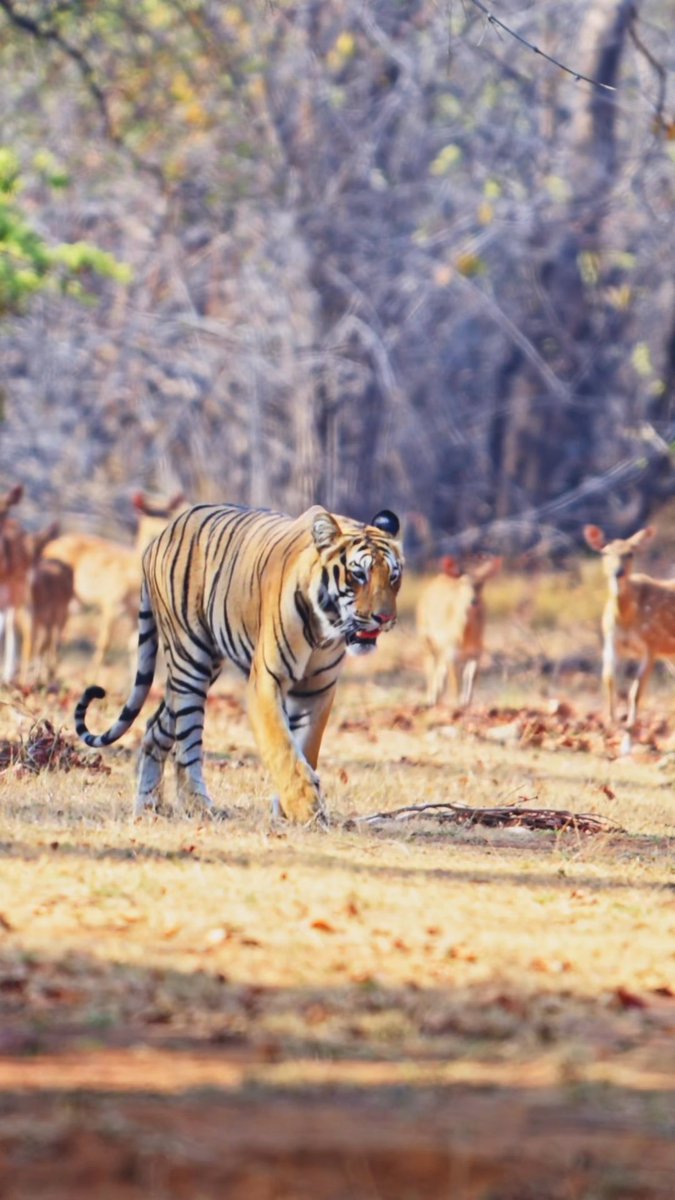
Let me first get this personal (shameful) record off my chest: I have never seen a tiger in the wild, despite having tried to, in many jungle safaris. Our territory has always been the jungle that spans across the three Southern states - Karnataka (Bandipur, Nagarhole), Tamil Nadu (Mudumalai), and Kerala (Wayanad). From Bengaluru, I may have been to one or the other safaris at least once every 2-3 years or so, with the family. But no tiger sighting... ever! Earlier this week, we checked into Serai at Kabini, into a spectacular river-facing cottage. And we did two safaris - a jungle safari in the early morning and a river safari in the evening. But, no tiger sighted, as per our sorry luck. We checked out on Friday morning, as planned, and started our drive back to Bengaluru. After driving for a kilometer, we thought completely at random, 'Why not stay for another night and try to change our terrible luck?'. Yes, it is expensive, but beyond the fact that we can afford it, there was also a thought that we are overindulging in this holiday! But the tiger (or the lack of sighting one) won in the end, and we stopped by the road and started calling the resorts nearby for room availability for that day. Luckily, Kaav Safari Lodge, had a room available and we realized that we were calling them from right outside their resort, literally! We checked in, had lunch and headed for the afternoon safari! And, towards the end, we were rewarded with our first ever tiger sighting! Not just a distant sighting but of a female tiger getting up from a slumber, walking towards our jeep, pissing on a tree (not mere pissing, but marking its territory, as we got to know), walk scarily close to our jeep, and cross the road very calmly! And now I realize what pure magic this magnificent animal is! Thanks to breaking convention, ignoring best laid plans, and doing the unexpected! On that note, considering all these old forest jeeps and canters make such a racket, why don't we have silent, electric vehicles inside the forest yet, to not disturb animals?

Karthik 🇮🇳

192,899 Aufrufe • vor 1 Jahr

Max Fleischer's trippy version of "Snow White" from 1933 remains a fascinating and bizarre piece of animation history. In this short Betty Boop cartoon, Fleischer and his team condensed and twisted the classic Snow White tale, taking viewers on a surreal journey that defies expectations. One of the standout moments in the cartoon is the inclusion of Cab Calloway, a renowned jazz singer of the time. In the middle of the animated film, Calloway appears and performs the hauntingly beautiful "St. James Infirmary Blues." The scene is a rare live-action segment, originally from another cartoon of the era titled "Minnie the Moocher," which was another iconic song associated with Calloway. Interestingly, the footage and music used in the beginning of "Minnie the Moocher" are clearly the same recording as the song "St. James Infirmary Blues" featured in the Betty Boop cartoon. In a clever editing move, the two pieces of audio are seamlessly joined together, creating a seamless transition between the two cartoons. Calloway's appearance in the cartoon is truly mesmerizing. He begins by singing the tune as Koko the Clown, a character created by Fleischer, and then undergoes a transformation into a ghostly figure. The animation beautifully captures Calloway's distinctive enunciation and signature dance moves, accompanied by a barrage of wild and imaginative visuals. In addition to the captivating animation, the cartoon also incorporates scenes from the 1980 film "The Blues Brothers," in which Cab Calloway once again performs "Minnie the Moocher." This inclusion adds an extra layer of intertextuality, as viewers are introduced to Calloway through this iconic performance. "Betty Boop in Snow White" is a testament to Max Fleischer's creativity and willingness to push the boundaries of animation. The cartoon showcases his unique vision and knack for blending different artistic mediums, resulting in a truly trippy and memorable viewing experience. Directed by Dave Fleischer and animated by Roland C. Crandall, the cartoon exemplifies the Fleischer Studio's distinctive style, characterized by fluid animation, vibrant colors, and a surreal atmosphere. Their innovative techniques and bold storytelling continue to inspire animators and artists to this day. Despite being a departure from the traditional Snow White narrative, Max Fleischer's version remains a remarkable piece of animation history. It stands as a testament to the power of imagination and creativity in bringing beloved stories to life in new and unexpected ways.

Historic Vids

21,297,059 Aufrufe • vor 3 Jahren

Burt Lancaster on why Frank Perry was the wrong choice to direct "The Swimmer" (1968) & the directors he felt would have handled it better: "'The Swimmer' (1968) is certainly one of my favorites. It's a John Cheever story and there was the very difficult problem of translating a literary work to the screen. Cheever speaks in the short story of how a man is walking through a lane and he smells a fire, it's an autumn fire; he describes it as the smell of autumn in the air. Well, that kind of thing in writing is lovely, especially in Cheever's phrases, but when you try to get this quality onto film, it requires some kind of approach. I'll say that I don't think Frank Perry was able to do this, and I don't know that any other director would have been. But you certainly need someone like a Fellini or a Truffaut, or someone with that kind of imagination to let the camera also tell your story. Film has its own particular life—regardless of what's actually going on in a film. And it needed some kind of strange, weird approach to capture the audience and make them realize that, in a way, they were not looking at anything real. In talking about the script we would say, "I don't know why two men in white coats don't come take this guy away." It should have been obvious that this man was going through something that was not quite real; it was all part of his imagination. But it was played in a realistic sense—so when you come to the end of that film, instead of being sympathetic and heartbroken for the man, you were surprised and shocked." ("Take 22: Moviemakers on Moviemaking" Judith Crist, 1984)

DepressedBergman

74,700 Aufrufe • vor 3 Monaten