Video wird geladen...

Video konnte nicht geladen werden

Zur Startseite

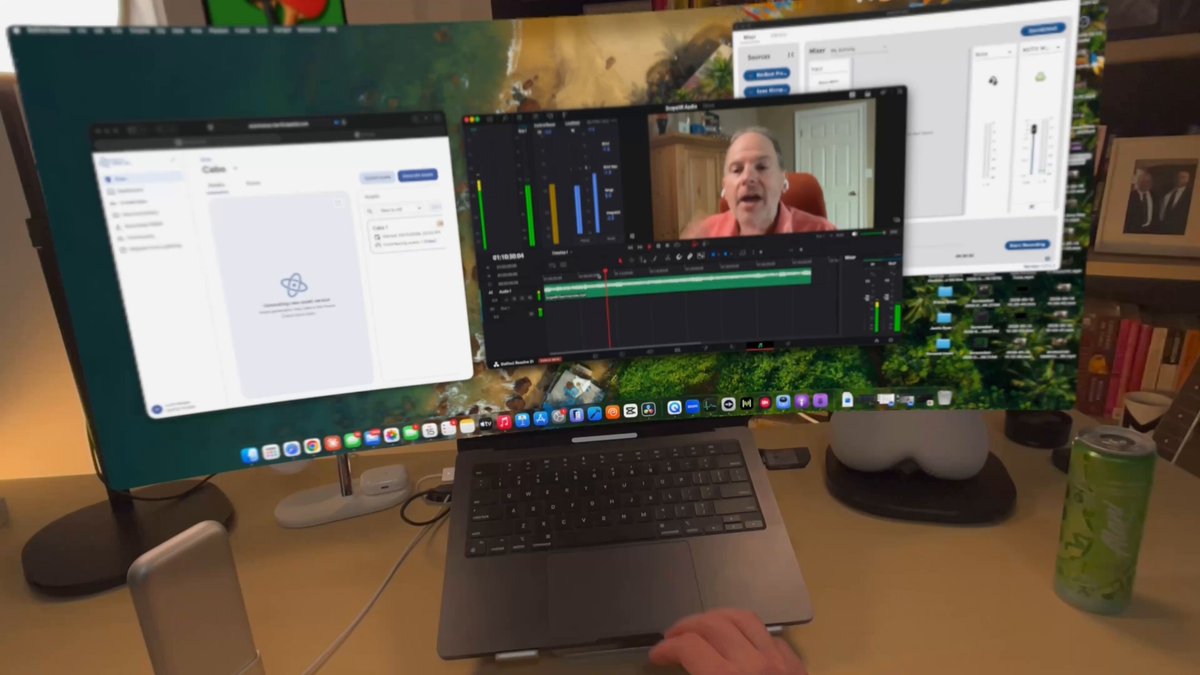
Apple Vision Pro supports Direct touch input across the system 🤩 #AppleVisionPro #visionOS #WWDC23 #SpatialComputing #AR #VR #MR

0 Kommentare

Keine Kommentare verfügbar

Kommentare vom Original-Post werden hier angezeigt

Ähnliche Videos

He's 26. Apple offered him $8.4 million for the tongue-controlled retainer he 3D-prints in a San Diego apartment on a $180 Prusa. He said no The retainer sits inside your mouth like an Invisalign tray. Inside it: a miniature accelerometer array wired to a Bluetooth LE chip, all encapsulated in medical-grade epoxy he sources from a Kearny Mesa dental supply company for $28 a bottle. It reads tongue and bite pressure patterns at 240 samples per second, translates them into cursor movements and click gestures, and streams the output to any device paired over Bluetooth. Total hardware cost per unit: $47. He wears his own retainer eleven hours a day and hasn't touched a mouse in six months He posted a demo video to Reddit r/AssistiveTech in October showing a full 47-minute Cursor coding session controlled entirely with his tongue and bite gestures. The post hit the front page in nine hours. An Apple Accessibility engineer found it through a Hacker News crosspost three days later. Tim Cook quote-tweeted the demo the following Wednesday - called it "the accessibility hardware Vision Pro should have shipped with." Apple's business development team wired an $8.4 million acquisition offer to his lawyer in November for the retainer design, the embedded firmware, and a three-year exclusivity contract that would make Apple the only distributor globally. He declined the offer in December. His public statement was seven words: "This should be open. Everyone needs it." He open-sourced the firmware and STL files on GitHub the same day Apple Vision Pro burned $3.5 billion in R&D on the premise that spatial computing input requires their proprietary hand-tracking silicon and their multi-year hardware roadmap. Neuralink raised at $2 billion on the same premise for neural implants. Tobii runs at $340 million selling eye-tracking hardware to accessibility clinics at $12,000 per unit. He runs a Prusa in a San Diego apartment printing a $47 retainer that a nine-year-old with cerebral palsy in Argentina downloaded and printed at her local library last week

Carat

1,563,960 Aufrufe • vor 24 Tagen

Tesla robotaxi will be banned in New Jersey. Vision-only may work 99.9% of the time. But Robotaxis don't just need to handle 99.9% of scenarios—they need to handle at least 99.9999% of them. That's a 1,000x reduction in failure rate. Imagine a fleet of 1 million Robotaxis making just 40 trips per day each. That's 40 million trips every day. Even a 0.1% (1 in 1,000) long-tail failure scenario would occur 40,000 times per day across the fleet. Can you imagine Elon Musk 's face if Tesla Robotaxis ended up causing 40,000 failures/indidents every day? And the reality is, we still don't know whether Tesla's Robotaxi system can achieve 99.9% safety, let alone the level required for mass-scale autonomous deployment. This is exactly why you don't see unsupervised Tesla robotaxis everywhere today. Scaling too quickly would inevitably expose far more edge cases—and potentially far more accidents. That's also why redundancy matters. Adding LiDAR isn't about replacing cameras—it's about covering their blind spots. Ouster Rev8 LiDAR takes this even further: it delivers true colorized 3D perception, 48 bit color depth, 116dB dynamic range, and operates across lighting conditions from near darkness (1 lux) to direct sunlight(2 million lux). It complements vision rather than competing with it, providing another independent layer of perception when cameras are challenged. At Robotaxi scale, sensor redundancy isn't overengineering—it's engineering. $OUST

ppdd

13,246 Aufrufe • vor 1 Monat