Video yükleniyor...

Video Yüklenemedi

Ana Sayfaya Dön

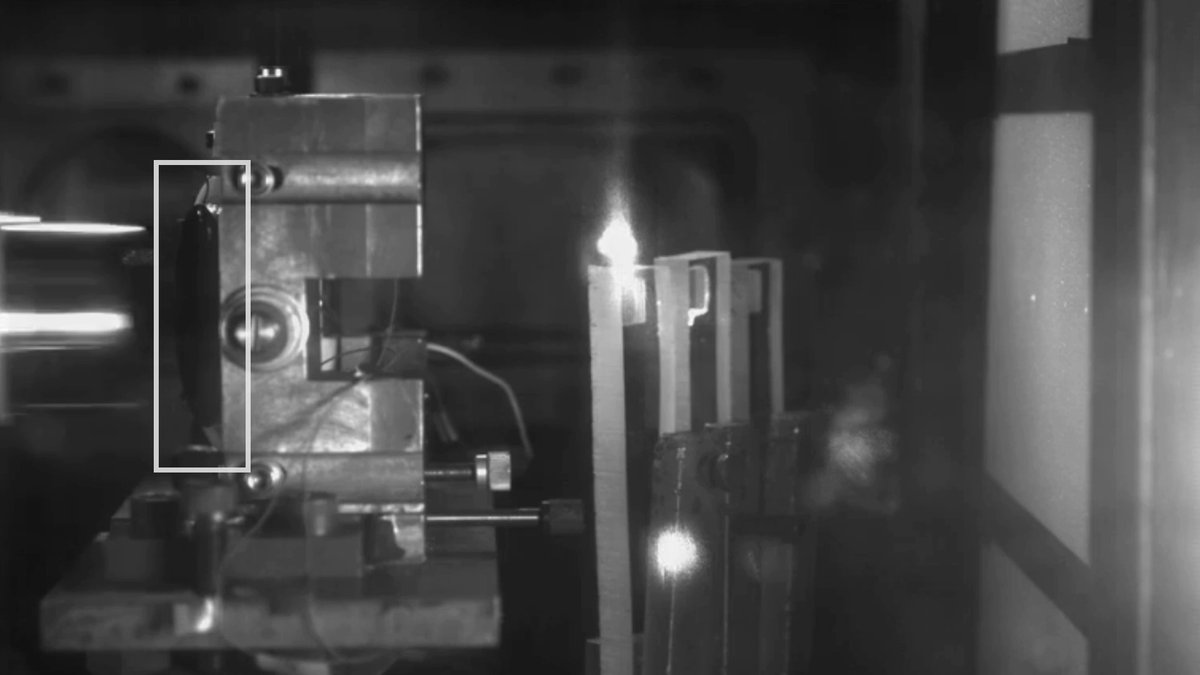
Artificial embryo samples aboard Tiangong Space Station for life science research Space "artificial embryo" samples and other life science experiments delivered by the Tianzhou-10 cargo spacecraft have been installed into experiment modules aboard China's Tiangong space station, the Technology and Engineering Center for Space Utilization under the Chinese Academy...

23,478 görüntüleme • 2 ay önce •via X (Twitter)

0 Yorum

Yorum bulunmuyor

Orijinal gönderinin yorumları burada görünecek

Benzer Videolar

Introducing ASAL: Automating the Search for Artificial Life with Foundation Models Artificial Life (ALife) research holds key insights that can transform and accelerate progress in AI. By speeding up ALife discovery with AI, we accelerate our understanding of emergence, evolution, and intelligence–core principles that can inspire the next generation of AI systems! We proudly collaborated with MIT, OpenAI, Swiss AI Lab IDSIA, and Ken Stanley on this exciting project. Full Paper (Website): Full Paper (arxiv): Code: In this work, we propose a new algorithm called Automated Search for Artificial Life (“ASAL”) to automate the discovery of artificial life using vision-language foundation models. Instead of tediously hand-designing every tiny rule of an Alife simulation, simply describe the space of simulations to search over, and ASAL will automatically discover the most interesting and open-ended artificial lifeforms! Because of the generality of foundation models, ASAL can discover new lifeforms across a diverse range of seminal ALife simulations, including Boids, Particle Life, Game of Life, Lenia, and Neural Cellular Automata. ASAL even discovered novel cellular automata rules that are more open-ended and expressive than the original Conway’s Game of Life. We believe this new paradigm may reignite ALife research by overcoming the bottleneck of manually designed simulations, thus advancing beyond the limits of human ingenuity.

Sakana AI

750,756 görüntüleme • 1 yıl önce

🚨 NASA JUST FOUND THE RAW INGREDIENTS OF DNA INSIDE A ROCK OLDER THAN EARTH ITSELF. Samples returned from the asteroid Bennu contain complex organic molecules including precursors to DNA and RNA, plus many of the amino acids used by all life on Earth. These molecules formed in the early solar system and survived for billions of years inside the asteroid. Earth didn’t have to invent the chemistry of life from nothing. It was delivered ready-made from space. Why this matters: • Bennu is a primitive asteroid that has remained largely unchanged since the birth of the solar system (~4.5 billion years ago) • The samples contain the molecular building blocks of DNA, RNA, and proteins the core components of life as we know it • These organics were preserved through the violent early days of the solar system and could have been delivered to Earth by asteroids and comets • This is some of the strongest direct evidence yet that life’s chemistry has cosmic origins The deeper implication: This doesn’t mean aliens or microbes came from space. It means the raw materials for life were already floating around the solar system long before Earth cooled enough to support life. Our planet likely received these ingredients from above rather than creating them all from scratch. If these building blocks were common in the early solar system, then the starting chemistry for life may have been widespread dramatically raising the chances that similar processes could have happened elsewhere. How does it change your perspective to know that the molecular ingredients for DNA were already present in space billions of years before the first living cell appeared on Earth? Follow for more discoveries about the origins of life and what we’re learning from asteroid samples.

TheNewPhysics

87,603 görüntüleme • 1 ay önce

🚨 BREAKING: Starcloud just turned Starlink’s laser network into the backbone for orbital AI data centers. A company called Starcloud has ordered 50+ Starlink Mini Laser terminals to equip 25+ future satellites. Not ground stations. Not fiber cables. Direct laser-linked computing nodes in orbit plugged straight into SpaceX’s space-based optical mesh. This is the sci-fi future arriving now: Orbital cloud computing AI servers floating in space Powered by 24/7 sunlight Connected globally at light speed via Starlink lasers The insane part: Starcloud says its satellites will eventually handle full AI inference and training workloads directly in orbit. Data won’t always need to come back to Earth to be processed. The advantages are massive: • Unlimited solar energy (no grid limits) • Zero land or water constraints • Passive radiative cooling in vacuum • Instant global relay with zero terrestrial bottlenecks • Near real-time Earth observation analysis Their first major spacecraft (Starcloud-3) is designed for 200 kilowatts in orbit a full-on space-based data center node, not just a satellite. And here’s the bigger picture: SpaceX has filed plans for up to ONE MILLION orbital data centers of its own. Read that again. We may be watching the birth of the first true space-based computing infrastructure layer for civilization. The internet already left the ground. Now AI might be next. What happens when the cloud literally moves into space? Follow for more frontier physics and future technology.

TheNewPhysics

152,463 görüntüleme • 2 ay önce

The Sabotaging Practice of Over Supply and Sameness in the NFT Space. The current zeitgeist of the NFT space is that the same artists are doing the same kind of work five times a year, with project after project leaving a trail of disappointment and discontent among collectors and all of us watching in disbelief as huge resources are extracted from the space over work that feels like it could be left as an "artist study." I understand that you can do what you want with your money as collectors, but we are killing the whole space with this incestuous practice. No artist is that prolific to be able to do 5 collections of 100+ pieces each every year and actually deliver innovation and some kind of creative evolution. Of course, they can pretend play that the work has something new, but there is no precedent nor proof that that has ever happened in the speed that it happens in the NFT space. Again, people are free to through away their resources on whatever they want but with this way of doing things, we more and more are going to start seeing the consequences. Oh! There are consequences? Yes. Maybe unintended, but there are. Let's see. Let's start with the loss of belief in the NFT space as somewhere where emerging artists can come and find support for their experiments. Why even bother to bring experiments, innovation, and new ways to think of art on the blockchain if the same people have all the collectors hypnotized with their magical flutes? Why even try to come to a space where taking risks and challenging the status quo (the mission of art!!!) is overlooked? This makes the NFT space a social club and not a space for art. I guess it is fine, but IMO it is a recipe for disaster. New collectors stay away because the art will slowly but surely become stale and un-challenging. Why even bother to come and see what is happening here if you can't, as a collector, see new weird and up-and-coming artists? The amount of noise emitted by the same artists doing the same art over and over, drowns out any new voices. Again. A recipe for disaster. The NFT space is becoming a space of disappointment and doubt. We think that collections going to zero one after the other, over and over, is not damaging? I feel we are kidding ourselves. Disappointment piles up, and again, the people who will hurt are the emerging artists, the new blood, the ones who are willing to risk the most and, in return, put fire in this cold space of sameness. I love this space—don't get me wrong—it has changed my life, and I believe it has a ton of potential, but things need to change for it to become a beacon of light in art. But we need to support new voices. We need to support new ideas. The challenge is huge. I hope to contribute all I can to this change. I hope more and more see how exciting it is to go out and try to discover what else is out there and move this space forward. But again, I understand the leaps of faith needed, but if there is a space that is based on that, it's the NFT space...so there is hope. We will see. 📺by Boldtron

alejandro cartagena

98,261 görüntüleme • 2 yıl önce

Today is World Science Day! The International Space Station is first and foremost a laboratory, where science is the main focus every day. We work with biology, human physiology, physics, material science and much more through out our missions. The microgravity environment of the Space Station is unique and provides a place to try new technologies and push science forward. Recently I had to perform maintenance on the Oxygen Generation Assembly (OGA) which splits water into hydrogen and oxygen, a vital part of the life support systems on the Space Station. We recycle around 95% of all the water on the ISS, from the sweat and humidity in the air to the urine from our morning coffee. Tomorrow is the planned arrival of a new cargo vehicle, CRS-29, with new experiments and technology demonstrations. One of those experiments coming up is from Danish Aerospace Company, called VR for Exercise, where I will exercise on the new FERGO bike with a virtual reality headset on, allowing me to bike routes on Earth and will investigate if this immersive headset can support our exercise motivation. / Rumstationen er først og fremmest et laboratorium, hvor videnskaben er i fokus hver dag. Vi arbejder med biologi, fysiologi, fysik, materialevidenskab og meget mere i løbet af vores missioner. Rumstationens vægtløse miljø er unikt og giver os mulighed for at afprøve nye teknologier og skubbe videnskaben fremad. For nylig skulle jeg udføre vedligeholdelse på Oxygen Generation Assembly (OGA), som splitter vand til brint og oxygen, en afgørende del af de systemer som holder os i live på Rumstationen. Vi genanvender cirka 95% af alt vandet på ISS, fra sved og fugtighed i luften til urinen fra vores morgenkaffe. I morgen er den planlagte ankomst af et nyt fartøj, CRS-29, med nye eksperimenter. Et af de kommende eksperimenter er fra Danish Aerospace Space og kaldes VR for Exercise, hvor jeg skal træne på den nye FERGO-cykel med et virtual reality-headset på, hvilket giver mig mulighed for at cykle ruter på Jorden. Forsøget skal undersøge, om headsettet kan støtte vores motivation til træning. #Huginn #spacescience #WorldScienceDay #SpaceForEarth

Andreas Mogensen

24,248 görüntüleme • 2 yıl önce

🚨Exciting news for archaeology and for human knowledge in general! It has been a long and tedious process, but the Peruvian Ministry of Culture has finally granted permission to export geological samples that will hopefully enable the age of Sacsayhuaman's construction to be determined! Three types of samples have been collected for analysis using different dating methods, and some of them are already on their way to different labs in the US and in Europe. 1 - Soil samples collected from right beneath the blocks that make up the megalithic walls of Sacsayhuaman for Optically Stimulated Luminescence (OSL) dating – this method is used to determine the time elapsed since minerals like quartz and feldspar were last exposed to sunlight by measuring the light energy (luminescence) released from trapped electrons that accumulated in the mineral crystal lattice due to natural radiation since their last bleaching/reset event (i.e., when the ground was covered by the blocks). 2 - Limestone samples from megalithic blocks, quarry sites and carved bedrock, for Cosmogenic Nuclides dating – this method is used to determine the age of geological surfaces by measuring the accumulation of rare isotopes (mainly ³⁶Cl) produced when the limestone is hit by cosmic rays. 3 - Speleothems samples (calcium carbonate deposits such as stalactite or flowstone) collected on carved surfaces for Uranium-Thorium dating – this method is used to calculate the age of carbonate materials by measuring the buildup of thorium-230 from the slow decay of its uranium-234 parent isotope. This won’t give us the age of the carving of these rocks, but this will give us a minimum age, since the rock was obviously cut before these deposits formed. Additionally, if some organic material is found in the soil or speleothems samples, radiocarbon dating will also be performed, which would give us a fourth means of dating the construction of the site. Whether you believe this megalithic site was built by the Incas or by a much older civilization, science will hopefully put an end to this debate once and for all. And, to top it all off, some limestone samples have also been sent to the Geopolymer Institute of Joseph Davidovits for analysis. This is proof, if any were needed, that not all archaeologists are dogmatic and closed to alternative theories. Now, Let's hope that all these methods will yield results. Whatever these results may be, they will be the subject of a scientific publication, and I will share them here on X, so make sure to follow. This could potentially rewrite history!

Weird Old World

113,042 görüntüleme • 6 ay önce