正在加载视频...

视频加载失败

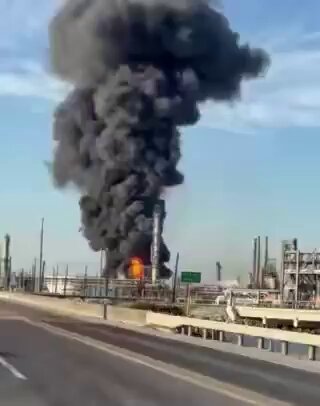
🇷🇺As critical supply chain chokeholds exacerbate operational recovery challenges within the Russian energy sector, eyewitness assessments from industrial specialists underscore that Western technology sanctions are severely crippling long-term repair efforts on heavily damaged refining infrastructure. A Russian man, who previously participated in the construction of an oil refinery, complains...

17,920 次观看 • 1 个月前 •via X (Twitter)

0 条评论

暂无评论

原始帖子的评论将显示在这里

相关视频

❗️❗️🇷🇺🇺🇦Ukrainian President Volodymyr Zelensky has issued a definitive, chilling declaration to the Kremlin, announcing that Ukraine’s long-range arsenal has achieved total reach over Russia’s entire industrial landscape, leaving absolutely no oil refinery safe from devastation. In a landmark address highlighting the roaring success of what Kyiv calls its physical "long-range sanctions," Zelensky confirmed an unprecedented, record-shattering drone strike on the Omsk oil refinery—a critical processing hub located an astonishing 2,530+ kilometers deep inside Russian territory. The operation completely shatters all previous distance records, proving that Ukraine can now project precision kinetic power across the Urals and directly into western Siberia. Zelensky detailed a massive, systematic air campaign that simultaneously set Russia’s strategic rear ablaze. Over the past week, Ukrainian deep-strike assets successfully battered oil refining infrastructure across an immense geographic arc, including Saratov, Rostov, Tver, Stavropol, Krasnodar Krai, Tatarstan, and Bashkortostan. Beyond the energy grid, the relentless aerial offensive liquidated a military airfield in the Voronezh region, neutralized a strategic industrial enterprise in Tver, and struck high-value targets across the Moscow, Leningrad, and Bryansk regions. By erasing the tyranny of distance, Ukraine has fundamentally rewritten the rules of engagement, turning Russia's vast geographic depth from a defensive shield into an unprotected, sprawling target zone.

NSTRIKE

74,782 次观看 • 1 个月前

As of September 28, 38% of Russia's primary oil refining capacity - equivalent to 338,000 tons per day - was out of operation. Drone attacks that have struck more than two dozen major oil refineries in Russia since early August have driven the Russian fuel market into an unprecedented crisis. Russian-occupied Ukrainian territories are affected, as well. The total capacity available for producing gasoline and diesel fell by 6% in August and a further 18% in September. The scale of refinery shutdowns has reached historic levels, surpassing the previous record in August (23%, or 206,000 tons per day), as well as earlier peaks in May 2022 (196,000 tons per day) and May 2020 (164,000 tons per day). Roughly 70% of the outages resulted from drone attacks: by the end of September, they had disabled about one-quarter of Russia's refining capacity, or some 236,000 tons per day. In September, four more Russian refineries halted production following drone strikes. These included Kinef in Leningrad region, the second-largest refinery in Russia, and Rosnef's Ryazan refinery, which ranks among the top five. Kinef shut down on September 14, Ryazan on September 5. In addition, the Novokuibyshevsk refinery suspended operations on September 20, and Gazprom's Astrakhan gas processing plant on September 22. In September, gasoline and diesel output fell short of targets by 10-11% - production was down by 1 million tons, while the domestic market deficit reached 20% of consumption, according to Russian media outlets. To compensate for lost capacity, many scheduled refinery maintenance works were postponed, making a rapid reduction in outages unlikely, as this could increase the risk of accidents at facilities not affected by strikes. Russian oil companies can do little to alleviate the crisis, economist Vladislav Inozemtsev said. Repairs at damaged plants may take months, particularly under sanctions that ban the supply of Western equipment used to modernize refineries in the 2010s - equipment that cannot easily be replaced with Chinese alternatives. Source: 📹: Lines of cars for gasoline in Russian-occupied Crimea

Anton Gerashchenko

52,700 次观看 • 10 个月前