Загрузка видео...

Не удалось загрузить видео

На главную

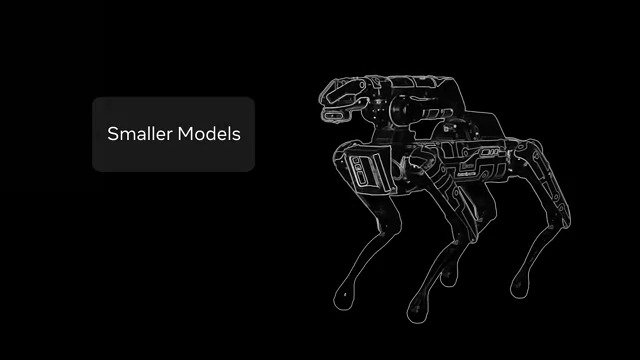
As Larry Ellison explains, there are two types of AI models: real-time models, also called AI on the edge, where you need ultra-low latency decisions (think autonomous driving or robotics), and models that don’t need an immediate response, like ChatGPT, where the system has time to reason. Real-time models...

151,698 просмотров • 7 месяцев назад •via X (Twitter)

Комментарии: 0

Нет доступных комментариев

Здесь появятся комментарии из оригинального поста

Похожие видео

🌟 Another Epic Sneak Peek: OptimAI Core Node’s Edge AI Computing Power! We’re excited to continue unveiling the upcoming OptimAI Core Node features! This time, we’re introducing Edge AI Computing, a game-changing feature that will make your devices even more powerful in contributing to the OptimAI Network. 🔥 What is Edge AI Computing? With the OptimAI Core Node, your device’s idle computing resources (CPU/GPU) and storage will be put to work, powering critical AI computing tasks, including: 🔸Edge Inference: Running real-time AI predictions directly on your device without sending data to centralized servers. 🔸Hot LLM Models: Accelerating large language models for high-speed NLP tasks. 🔸Generative AI Models and More: Contributing to the training and inference of cutting-edge generative AI, like text-to-image models, deep learning, and more. More Contributions, Bigger Rewards Await! This Edge AI Computing feature allows us to leverage the full potential of decentralized computing power, reducing latency, increasing efficiency, and making AI more accessible. The more you contribute, the bigger the rewards!🔥 Stay in the Loop—Start Today with OptimAI Lite Node! While the OptimAI Core Node is still in the works, you don’t have to wait to join the action. The more you contribute, the greater the rewards! Let’s build a stronger, smarter, and more decentralized AI network together. Stay tuned for more exciting updates! 🔸Extension Node: 🔸Telegram Node: 🔸Register at: #DePIN

OptimAI Network

44,310 просмотров • 1 год назад

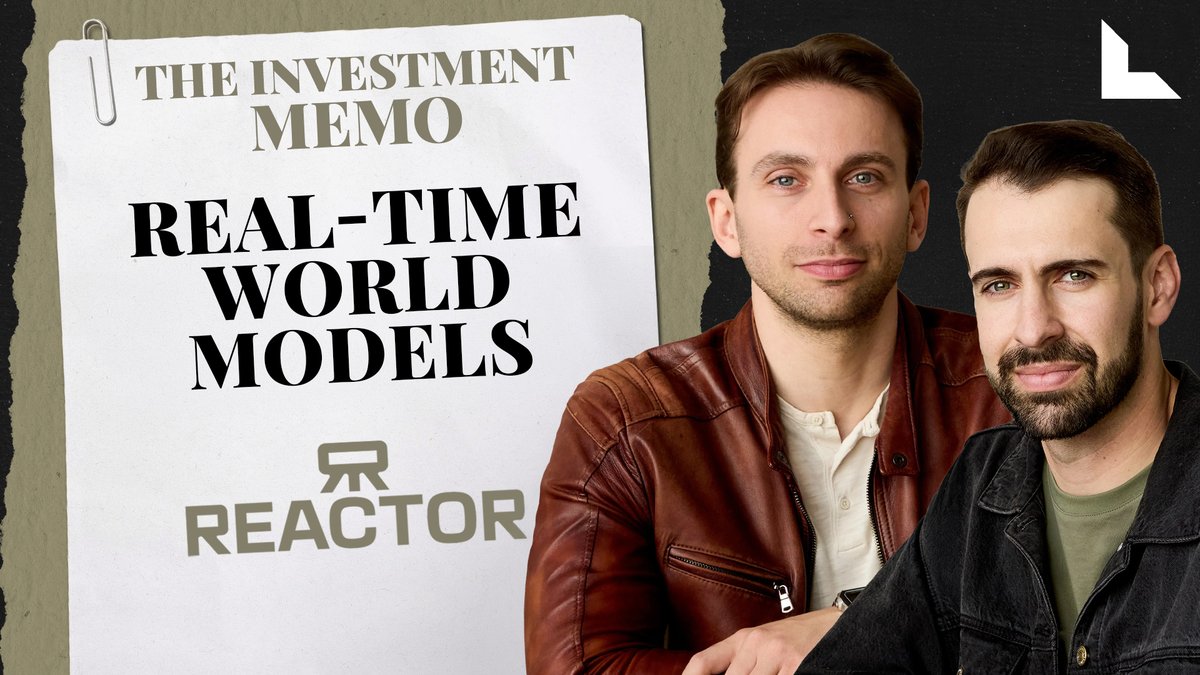
Real-time world models represent a fundamental shift in AI. reactor is building the platform for real-time generative video infrastructure, supporting developers who need the tech for use across entertainment, physical AI, and robotics. Co-founders Alberto and Bryce Schmidtchen joined us last week on The Investment Memo, hosted by Partners Bucky Moore and Amber Yang, to talk about the era of world models. The conversation centered around the infrastructure Reactor is building, why real-time models are the edge right now, and current use cases for the product. Alberto and Bryce agreed that world models are shaping the way simulations are created, and that developers need a streamlined platform that can support their ideas. We believe Reactor is positioned to be at the frontier of research into real-time generative models. We look forward to seeing how these models apply across industries. Chapters 00:00 Introduction & Overview of Reactor 01:08 Meet the Hosts & Founders 02:18 The Origin Story: From 3D Assets to World Models 05:07 Real-Time Video Applications Across Industries 06:55 The Open Source World Model Explosion 07:23 Why Infrastructure Is the Opportunity 08:42 Parallels to Past Technology Waves 09:51 Bridging the Research-to-Production Gap 13:13 What Developers Are Building with World Models 16:41 Lessons from Luma AI 18:23 What Apple Vision Pro Taught Bryce About Real-Time Systems 20:48 Company Values & Team Culture 22:40 Series A: What the Capital Unlocks 24:13 Reactor's Five-Year Vision 26:09 Closing Remarks

Lightspeed

144,942 просмотров • 1 месяц назад

Perplexity CEO Aravind Srinivas on the biggest threat to the data center industry: It's not competition. It's not regulation. It's decentralisation. "The biggest threat to a data center is if the intelligence can be packed locally on a chip that's running on the device and then there's no need to inference all of it on like one centralized data center." He outlines how this could work in practice. Personalisation doesn't necessarily require on-device model training. Retrieval augmented generation, tool calls, and local data can already tailor AI to individual users. But the real unlock? Test time training. Aravind Srinivas describes a future where AI lives on your device, watches how you work and gradually automates your repetitive tasks. "Imagine we crack test time training where the AI watches tasks you repeatedly do on your local system, adapts to you over time and starts automating a lot of the things you do." The key insight: in this model, the intelligence belongs to you. It's your data, your device, your personalised AI brain. And if that future arrives, the economics of centralised infrastructure start to collapse. "That really disrupts the whole data center industry. It doesn't make sense to spend all this money, 500 billion, 5 trillion, whatever on building all the centralized data centers across the world that do a lot of the intelligence workloads for people." The companies spending trillions on centralised infrastructure may want to rethink where intelligence actually needs to live.

Big Brain AI

90,102 просмотров • 5 месяцев назад