Video yükleniyor...

Video Yüklenemedi

Ana Sayfaya Dön

At NIH, we're committed to advancing biomedical research through innovative, human-relevant approaches that can accelerate discovery and improve our understanding of disease. 📅 Join the NIH's National Institute on Aging for the virtual workshop, "Novel Alternative Methods (NAMs) in Basic Mechanisms of Brain Aging and AD/ADRD," on September 10–11,...

16,073 görüntüleme • 18 gün önce •via X (Twitter)

0 Yorum

Yorum bulunmuyor

Orijinal gönderinin yorumları burada görünecek

Benzer Videolar

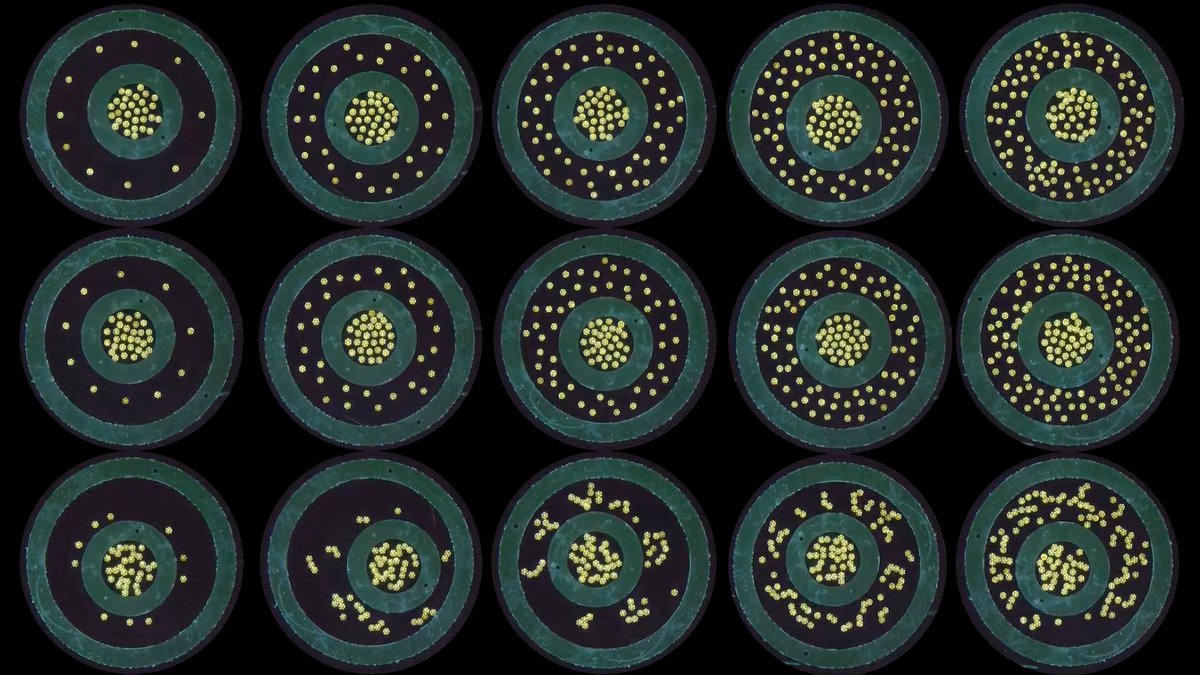
Introducing ASAL: Automating the Search for Artificial Life with Foundation Models Artificial Life (ALife) research holds key insights that can transform and accelerate progress in AI. By speeding up ALife discovery with AI, we accelerate our understanding of emergence, evolution, and intelligence–core principles that can inspire the next generation of AI systems! We proudly collaborated with MIT, OpenAI, Swiss AI Lab IDSIA, and Ken Stanley on this exciting project. Full Paper (Website): Full Paper (arxiv): Code: In this work, we propose a new algorithm called Automated Search for Artificial Life (“ASAL”) to automate the discovery of artificial life using vision-language foundation models. Instead of tediously hand-designing every tiny rule of an Alife simulation, simply describe the space of simulations to search over, and ASAL will automatically discover the most interesting and open-ended artificial lifeforms! Because of the generality of foundation models, ASAL can discover new lifeforms across a diverse range of seminal ALife simulations, including Boids, Particle Life, Game of Life, Lenia, and Neural Cellular Automata. ASAL even discovered novel cellular automata rules that are more open-ended and expressive than the original Conway’s Game of Life. We believe this new paradigm may reignite ALife research by overcoming the bottleneck of manually designed simulations, thus advancing beyond the limits of human ingenuity.

Sakana AI

750,647 görüntüleme • 1 yıl önce

HOLY CRAP! I can't tell you how big this is for the medical community and drug discovery: Google Announces AlphaFold 3 AI. Details: Enhanced Molecular Prediction: AlphaFold 3 predicts the structure and interactions of all life's molecules, including proteins, DNA, RNA, ligands, and more, with unprecedented accuracy. Improved Interaction Accuracy: For protein interactions with other molecule types, AlphaFold 3 offers at least a 50% improvement over existing methods, and doubles the accuracy for some critical interactions. Transformative Potential for Science and Medicine: The model aims to deepen our understanding of biological processes and significantly advance drug discovery efforts. Accessibility for Researchers: AlphaFold 3's capabilities are largely accessible for free via the AlphaFold Server, providing an essential tool for scientific research. Drug Design Innovation: AlphaFold 3 is utilized by Isomorphic Labs in collaboration with pharmaceutical companies to accelerate drug design, potentially leading to new treatments for various diseases. Foundation in AlphaFold 2: Building on the breakthroughs of AlphaFold 2, this version extends its scope beyond proteins to a wide range of biomolecules, enhancing its utility in scientific research and application. Global Accessibility and Educational Support: The AlphaFold Server is a free platform for non-commercial research worldwide, supported by educational resources to foster wider adoption and innovation. Empowering Rapid Scientific Advancements: By making detailed molecular interactions easily accessible, AlphaFold 3 enables faster hypothesis testing and could reduce the time and cost typically associated with experimental protein-structure prediction. Responsible Development and Deployment: DeepMind has engaged with domain experts to assess the impacts and potential risks of AlphaFold, ensuring its responsible use in the scientific community. Broad Implications for Biology:AlphaFold 3 helps reveal complex cellular mechanisms and interactions, offering insights that could lead to improved agricultural crops, enhanced understanding of diseases, and novel therapeutic strategies.

Brian Krassenstein

258,615 görüntüleme • 2 yıl önce

I just built my own wiki generator plugin for my agents. My agents can now generate wikis for anything I ask. One of my favorite wikis is called PaperWiki. This is a great example of what Andrej Karpathy describes. It uses obsidian vaults to organize papers, retrieve LLM-generated summaries, diagrams, and other advanced views for paper exploration. When Obsidian UI is not enough, I use my own artifact generator inside my agent orchestrator (see clip for example). This allows my agents to build any kind of view or exploration feature that I need. The papers are all curated with automations and several rules/patterns I have manually built over the years. On the surface, this looks basic. But behind the scenes, there are advanced search capabilities, connections, metadata, derived data, and other interesting bits of information that are extremely useful for my research agents. This is mostly built for agents. The artifact preview is just a high-level way to validate and quickly assess the quality of the wiki, suggest improvements, and it's also great for research. I use tobi lutke's qmd for all search capabilities. Everything is markdown. The summaries and even the diagrams. The wiki updates on its own based on several automations I have optimized over the past couple of weeks. The wiki grows and self-improves based on several requirements important for my research use cases. This is as personalized as it gets. There is nothing like it out there. And I use my research expertise to continue improving it over time. This is a vanilla wiki. There are so many things I want to build on top of this. Different aggregations, views, artifacts, etc. All to help automate more of my research work and accelerate productivity. I think the biggest leverage here is how powerful this could be for discovery and experimentation. One of my goals is to use it to find deeper connections and insights that would otherwise elude the top human researchers and use those to generate interesting new hypotheses and research experiments. That way, my agents can use autoresearch to explore research ideas at the frontier. Stay tuned for more.

elvis

66,903 görüntüleme • 3 ay önce

Today, at Redeemer’s University Redeemer's University, Ede, Osun State, I was glad to commission the new Institute of Genomics and Global Health, marking a significant evolution from ACEGID’s @acegid status as a center of excellence. This moment is not only a proud achievement for all those involved, but it also stands as a powerful symbol of what African scientific leadership can achieve on the global stage. Under the visionary leadership of Prof Christian Happi Christian T. Happi, the team at ACEGID has made extraordinary strides in genomic research, particularly in addressing some of the most pressing infectious disease challenges of our time. The inauguration of the Institute reminds us that the work being done by the ACEGID team is a global public good, benefiting not only Nigeria and Africa but also contributing to global health security. The partnerships fostered between institutions and scientists from the Global North and South are a testament to our shared commitment to protecting and advancing human health. This collaboration has demonstrated what is possible when we work together to confront challenges that affect us all. Under the visionary leadership of President Bola Ahmed Tinubu, Bola Ahmed Tinubu health security remains a central pillar of our broader strategy to transform Nigeria’s health system, unlock the value chain, and improve population health outcomes. This is why supporting cutting-edge scientific research, like the work at this Institute, is essential. We need to create a health system environment with strong public health capabilities to withstand the potential and evolving threats posed by infectious diseases and the ongoing impacts of climate change. The pace at which new health threats are emerging is accelerating, and with it, the need for robust scientific responses. The innovations in genomics we are witnessing at ACEGID provide a glimmer of hope, offering us the tools we need to be better prepared for what may come. The Federal Government of Nigeria Government of Nigeria is fully committed to supporting these efforts, knowing that science must lead the way in securing a healthier future for all.

Muhammad Ali Pate

11,055 görüntüleme • 1 yıl önce

It has been a privilege to collaborate with Amanda Davies and Ghaleb Krame, Ph.D. on research that explores one of the most significant emerging security challenges of our time. We are honored that our paper, “A Framework for Predicting Adoption of AI-Enabled Autonomous Drone Capabilities by Transnational Organized Crime and Foreign Terrorist Organisations”, has been accepted for presentation at EMCIS 2026, the 23rd European Mediterranean & Middle Eastern Conference on Information Systems, to be held in Paris this August. What makes this particularly meaningful is that the research was completed and submitted well before the issue entered the center of public policy discussions in Washington. Our study examined the pathways through which transnational criminal organizations could evolve from conventional drone operations toward increasingly autonomous and AI-enabled capabilities. Using structured comparative analysis and open-source intelligence, it identified conditions under which such technological adoption could accelerate. Just on June 2, 2026, during testimony before the U.S. Senate Foreign Relations Committee, Secretary Marco Rubio warned that Mexican cartels are already employing drones and that these capabilities could ultimately threaten U.S. interests. While academic research does not seek to predict headlines, its purpose is to identify emerging risks before they become strategic realities. The growing attention from policymakers underscores the importance of rigorous, evidence-based analysis at the intersection of artificial intelligence, autonomous systems, and transnational security. We are grateful to the EMCIS reviewers and organizers for recognizing the contribution of this work and for fostering serious discussion on challenges that will increasingly shape the security landscape of the coming decade. I am proud to serve the interests of the United States through research and analysis focused on the evolving capabilities of Mexican cartels. Working alongside Dr. Ghaleb Krame, Ph.D. , it is a privilege to contribute to a deeper understanding of emerging security threats and to support informed decision-making in an increasingly complex technological and geopolitical environment.

Simón Levy

22,536 görüntüleme • 1 ay önce

#IMPORTANT Why do the 10-point consensus reached during🇨🇳China-🇮🇳#India boundary meeting matter? My summary: 1️⃣Boundary regions peace: Both noted it has remained peaceful & stable since the 23rd round of talks. 2️⃣Friendly consultations: Both emphasized it's the key to resolve relevant issues and promote bilateral ties. 3️⃣Both will seek a fair, reasonable and mutually acceptable framework for resolving the boundary question in accordance with the political guiding principles agreed by the two countries in 2005. ➡️🇨🇳🇮🇳Border management and control: 4️⃣An important step: Both agreed to establish a demarcation expert group under the framework of the Working Mechanism for Consultation and Coordination (WMCC) on🇨🇳China-🇮🇳India Border Affairs to explore the possibility of advancing demarcation negotiations in areas where conditions are ripe. 5️⃣Both agreed to establish a working group under the framework of the WMCC to advance effective border management and control, maintaining peace and stability in boundary areas. 6️⃣More General-level Talks: In addition to the existing general-level talks in the western section of the boundary, both sides agreed to establish a general-level talks mechanism in the eastern and central sections, and to hold a new round of general-level talks in the western section as soon as possible. 7️⃣Both agreed to utilize the border management and control mechanisms through diplomatic and military channels, first reaching consensus on relevant principles and methods to promote de-escalation and management processes. 8️⃣Both exchanged views on cross-boundary river cooperation and agreed to use the expert-level mechanism for cross-boundary rivers to maintain communication on renewing the cross-boundary river flood reporting MoU. 🇨🇳China agreed to share emergency hydrological information on relevant rivers with the Indian side based on humanitarian principles. 9️⃣Both agreed to reopen three traditional boundary trade markets. 🔟Both agreed to hold the 25th round of talks in China in 2026.

Shen Shiwei 沈诗伟

12,761 görüntüleme • 11 ay önce

As a newly appointed 𝗔𝘀𝘀𝗶𝘀𝘁𝗮𝗻𝘁 𝗣𝗿𝗼𝗳𝗲𝘀𝘀𝗼𝗿 at Imperial College London, I'm thrilled to announce the 𝗦𝗮𝗳𝗲 𝗪𝗵𝗼𝗹𝗲-𝗯𝗼𝗱𝘆 𝗜𝗻𝘁𝗲𝗹𝗹𝗶𝗴𝗲𝗻𝘁 𝗥𝗼𝗯𝗼𝘁𝗶𝗰𝘀 𝗟𝗮𝗯 (𝗦𝗪𝗜𝗥𝗟) at 𝗜𝗺𝗽𝗲𝗿𝗶𝗮𝗹 𝗖𝗼𝗹𝗹𝗲𝗴𝗲 𝗟𝗼𝗻𝗱𝗼𝗻. 𝗦𝗮𝗳𝗲 𝗪𝗵𝗼𝗹𝗲-𝗯𝗼𝗱𝘆 𝗜𝗻𝘁𝗲𝗹𝗹𝗶𝗴𝗲𝗻𝘁 𝗥𝗼𝗯𝗼𝘁𝗶𝗰𝘀 𝗟𝗮𝗯 (𝗦𝗪𝗜𝗥𝗟) ( is a new research lab focused on the intersection of safety and intelligence in next-generation robotics. We're hiring exceptional PhD students who are passionate about pushing the boundaries of robot learning. 𝗪𝗵𝗮𝘁 𝗺𝗮𝗸𝗲𝘀 𝗦𝗪𝗜𝗥𝗟 𝘂𝗻𝗶𝗾𝘂𝗲? We operate at the exciting convergence of: • Online & offline reinforcement learning • Imitation learning & human demonstrations • Sample-efficient learning methods • Whole-body and soft robotics systems We're 𝗹𝗼𝗼𝗸𝗶𝗻𝗴 𝗳𝗼𝗿 𝗽𝗿𝗼𝘀𝗽𝗲𝗰𝘁𝗶𝘃𝗲 𝗣𝗵𝗗 𝘀𝘁𝘂𝗱𝗲𝗻𝘁𝘀 interested in: • Developing safe exploration algorithms for robotic systems • Creating sample-efficient learning methods that minimize real-world trials • Building foundation models for robotics with safety guarantees • Advancing soft robotics and compliant human-robot interaction • Bridging theory and practice in embodied AI Why now? As robots become more capable and work closer with humans, we need systems that are both intelligent enough to handle complex tasks 𝗔𝗡𝗗 safe enough for real-world deployment. Traditional approaches treat safety and intelligence as competing priorities, we believe they're synergistic. If you're a motivated researcher who wants to develop the theoretical foundations and practical algorithms for tomorrow's safe, intelligent robots, I'd love to hear from you. Want to join? Apply via

Stephen James

16,552 görüntüleme • 9 ay önce

Building a personal knowledge base for my agents is increasingly where I spend my time these days. Like Andrej Karpathy, I also use Obsidian for my MD vaults. What's different in my approach is that I curate research papers on a daily basis and have actually tuned a Skill for months to find high-signal, relevant papers. I was reviewing and curating papers manually for some time, but now it's all automated as it has gotten so good at capturing what I consider the best of the best. There are so many papers these days, so this is a big deal. You all get to benefit from that with the papers I feature in my timeline and on DAIR.AI. The papers are indexed using tobi lutke qmd cli tool (all of it in markdown files along with useful metadata). So good for semantic search and surfacing insights, unlike anything out there. I am a visual person, so I then started to experiment with how to leverage this personal knowledge base of research papers inside my new interactive artifact generator (mcp tools inside my agent orchestrator system). The result is what you see in the clip. 100s of papers with all sorts of insights visualized. I keep track of research papers daily, so believe me when I tell you that this system is absolutely insane at surfacing insights. This is the result of months of tinkering on how to index research and leverage agent automations for wikification and robust documentation. But this is just the beginning. The visual artifact (which is interactive too) can be changed dynamically as I please. I can prompt my agent to throw any data at it. I can add different views to the data. Different interactions. I feel like this is the most personalized research system I have ever built and used, and it's not even close. The knowledge that the agents are able to surface from this basic setup is already extremely useful as I experiment with new agentic engineering concepts. I feel like this knowledge layer and the higher-level ones I am working on will allow me to maximize other automation tools like autoresearch. The research is only as good as the research questions. And the research questions are only as good as the insights the agents have access to. Where I am spending time now is on how to make this more actionable. I am obsessed about the search problem here. The automations, autoresearch, ralph research loop (I built one months ago) are easier to build but are only as good as what you feed them. Work in progress. More updates soon. Back to building.

elvis

464,399 görüntüleme • 3 ay önce