Loading video...

Video Failed to Load

Go Home

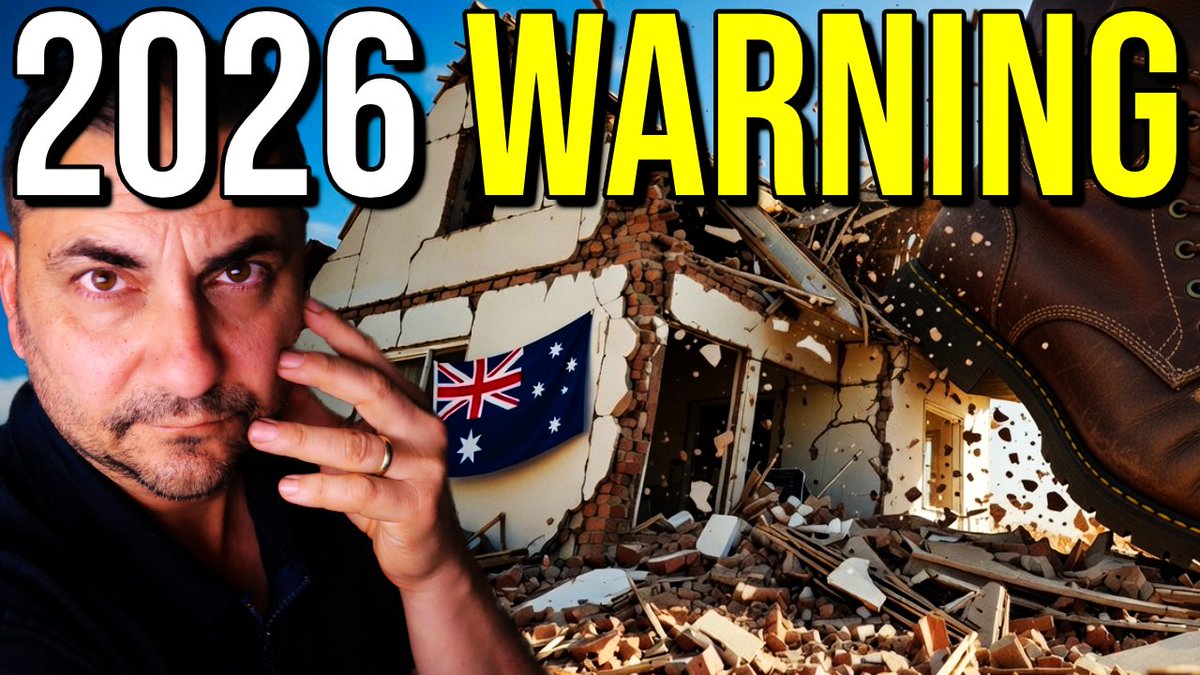
Australia’s Housing Ponzi Cannot Last - Top CEO Issues Dire Warning Australia’s housing market is now being described as a Ponzi scheme, and everyone’s in on it. Investors, banks, politicians and pretty much everyone else. House prices are completely detached from reality, but no one wants to do anything...

14,961 views • 6 months ago •via X (Twitter)

0 Comments

No comments available

Comments from the original post will appear here

Related Videos

🚨 WARNING: THIS IS HOW 2008 CRASH STARTS AGAIN!! The US housing market is now at one of the most UNAFFORDABLE points in history. This is a $47 TRILLION market, and it is now breaking affordability. Real US home prices just hit about 420. The 2006 bubble peak was about 266. And if you think this is just another scary chart YOU ARE COMPLETELY WRONG. From 2000 to 2026, median home prices rose about 217%, while income rose about 153%. And rates are the killer. The 30-year fixed mortgage rate is still about 6.09%. That is HIGH enough to break demand. At 6%, the monthly payment is the real problem. Prices can go sideways and buyers still tap out. And a small move in rates matters way more than people think. Another 0.50% from here is not noise. It is a payment shock. Rates do NOT need to go to 8% to freeze housing. 6% is already enough to cap buyers and kill volume. Builders are saying the same thing. They keep warning that elevated mortgage rates are the biggest problem, and many expect that problem to stay in 2026. Builder confidence is still weak too. THIS IS EXACTLY HOW 2006 STARTS. Payment stress stays HIGH. And it does NOT matter if prices stop going up, because the monthly bill is still heavy enough to push buyers out. So demand does NOT collapse in one headline. It just quietly disappears. Then the sequence always looks the same. - Transactions die first, because people cannot qualify or they do not want to lock in a brutal payment. - Then confidence dies, because everyone sees listings sit longer and concessions start showing up. - Then the real economy feels it, because housing is not just housing, it is moving, renovations, furniture, credit creation, fees, and jobs. That is why 2006 did NOT crash in one day. It froze. Then it cracked. Then it broke. And most people only noticed when the damage was already everywhere. I’ve studied macro for 10 years and I called almost every major market top, including the October BTC ATH. Follow and turn notifications on. I’ll post the warning BEFORE it hits the headlines.

Wimar.X

184,343 views • 4 months ago

The Housing Crash Nobody Wants to Talk About Please ❤️like, bookmark🔖, and 🔁share with fellow investors In this Short video, Melody Wright Melody Wright and Adam Taggart discuss why the U.S. housing market could be headed for a prolonged downturn that may ultimately prove worse than the 2008 housing crash. * The U.S. housing market may look stable on the surface, but the biggest problems are only beginning to emerge. While national home prices have not fallen significantly, Melody believes the market is effectively frozen and could be headed for a correction that ultimately exceeds the Global Financial Crisis in both depth and duration. * The core issue isn't supply—it's demand. There simply aren't enough qualified buyers. The spring selling season, normally the strongest period for home sales, was a major disappointment. Lower mortgage rates early in the year briefly created optimism, but geopolitical uncertainty quickly reversed that momentum. As a result, housing activity remains sluggish. * The buyers who are still transacting fall into two main groups: affluent households purchasing higher-end homes and buyers using government-backed financing programs such as FHA, Fannie Mae, or Freddie Mac. Outside those segments, affordability has become a major obstacle, leaving much of the market without sufficient demand. * The market is also becoming increasingly bifurcated. In parts of the South and West, home sales have picked up compared to last year, but prices are declining as sellers accept lower offers to complete transactions. That's genuine price discovery. Meanwhile, the Northeast and Midwest continue to see weak sales volumes, with June transactions down roughly 7% year over year. Because so few homes are changing hands, median prices have remained relatively stable, masking underlying weakness. * Melody argues that this cycle differs from 2008 in several important ways. One major concern is demographics. Younger generations simply don't have the purchasing power needed to replace aging homeowners at current price levels. Affordability challenges, higher living costs, and slower household formation limit the pool of future buyers. Another difference is the absence of a likely rescue from institutional investors. After the financial crisis, large firms purchased distressed homes and converted them into rental properties, helping stabilize the market. Melody doubts that level of institutional buying will return during this cycle. If private demand remains weak, the government could eventually become the buyer of last resort by purchasing excess housing inventory and converting it into affordable housing programs. * The timeline is another key part of the thesis. The previous housing downturn took roughly four to five years to bottom, but this cycle could last even longer because demographic pressures may persist into the mid-2030s. Instead of a sharp collapse followed by a quick recovery, Melody expects a prolonged period of stagnation and gradual price adjustment. * One event that could dramatically accelerate the process would be a major stock market correction. A significant decline in equities $SPX $QQQ would reduce household wealth, weaken consumer confidence, and further erode purchasing power, potentially causing housing prices to fall much faster than they otherwise would. * So, today's housing market isn't healthy simply because national prices remain elevated. Beneath the surface, demand is weak, affordability remains stretched, regional markets are diverging, and long-term structural forces continue to point toward a prolonged housing downturn that many investors may be underestimating. #housingmarket 💡 Get access to my notes with the key takeaways from this interview with Melody Wright Melody Wright by visiting my Substack (link below) ⬇️

Thoughtful Money®

16,535 views • 1 month ago