Video wird geladen...

Video konnte nicht geladen werden

Zur Startseite

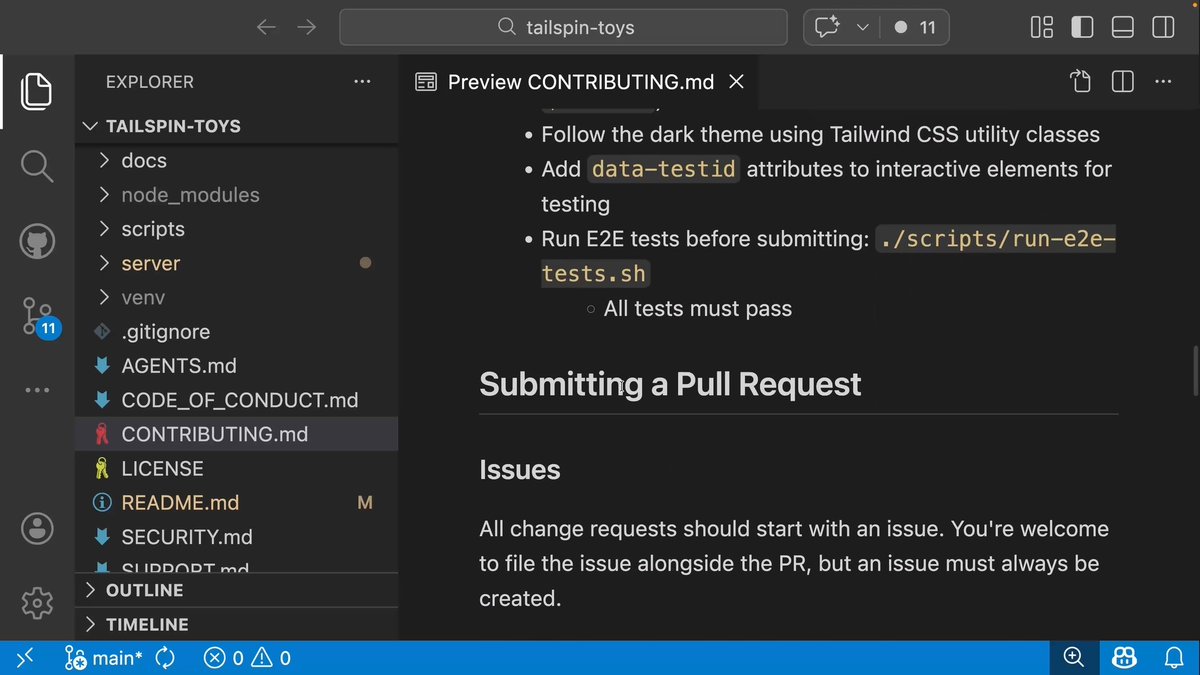
Automatically create Agent Skills from past sessions. Gemini CLI can now comb through past session data and suggest new skills based on past patterns of things you do frequently! Helps the agent self-improve. 🧠 Enable Auto Memory in /settings to try it out.

24,793 Aufrufe • vor 2 Monaten •via X (Twitter)

0 Kommentare

Keine Kommentare verfügbar

Kommentare vom Original-Post werden hier angezeigt

Ähnliche Videos

Start building for an agent-first world. If you have a product, you need to start offering skills for Claude, Codex, Cursor, and any other agents. Your skills should specify: • How to navigate and use your product • Best practices the agent must follow • Detailed instructions on how to accomplish things • Anti-patterns to avoid Redis is one of the most popular in-memory data stores in the world, and they just released their agent skills. It takes one second to install, and it will turn your agent into a Senior Redis Engineer: $ npx skills add redis/agent-skills In the attached video, I show you how to install it as a plugin in Claude Code and some of its benefits. This is the easiest way to "teach" models what they don't know and keep their knowledge up to date. If you ask me, skills is literally one of the most brilliant ideas that Anthropic has put out there. If you use Redis, their skill is a must-have. If you don't, this skill will show you how to build and structure yours. Here is what their skill teaches your agent: 1. Current patterns for common use cases: caching, rate limiting, session management, vector search, semantic caching, pub/sub, streams. 2. Which data structure to use and when: hashes vs. JSON vs. sorted sets vs. vector sets. 3. Anti-patterns to avoid: no KEYS in loops, no unbounded key growth, no large values that amplify every operation. 4. Production-aware defaults: connection pooling, pipelining, cluster compatibility, error handling that doesn't silently swallow failures.

Santiago

37,546 Aufrufe • vor 4 Monaten

Hermes agent just left the terminal. 𝗛𝗲𝗿𝗺𝗲𝘀 𝗗𝗲𝘀𝗸𝘁𝗼𝗽 dropped yesterday. native app for macOS, Windows, and Linux. for months Hermes was the agent that learned your projects, wrote its own skills, and built a model of who you are. all of it buried in terminal logs. now it has a window. the important part is that it's not a wrapper. it runs the same agent core, the same sessions, memory, and skills as the CLI. you can start a task in the terminal and finish it in the app without anything resetting. the state is shared across every interface, not copied between them. what the GUI actually adds: → streaming chat that shows live tool calls and inline reasoning instead of a spinner → a preview rail that renders pages, code, and images right beside the conversation → an artifacts panel that collects every file the agent has ever produced → remote gateway mode, so you can point the app at a VPS and run the heavy work elsewhere → skills, cron, profiles, and gateways managed point-and-click instead of through YAML → voice mode, drag-drop files, and inline image generation remote gateway mode is the one worth slowing down on. the agent runs 24/7 on a $5 server while you control it from your laptop like a local app. other agent UIs are chatboxes with a logo. this one shows the autonomy instead of hiding it, so you watch the skills load, the tools fire, and the artifacts pile up as it works. it was teased in Jensen's GTC keynote. MIT licensed, local-first, no telemetry. if you already run Hermes, download it and everything is already there. your chats, memory, and skills carry straight over. i wrote a full masterclass on Hermes Agent that walks through the SOUL. md identity layer, the three-tier memory system, the self-evolving skills loop, and how to run three specialized agents 24/7. desktop is the interface that finally does all of it justice. the article is quoted below.

Akshay 🚀

51,370 Aufrufe • vor 1 Monat