Загрузка видео...

Не удалось загрузить видео

На главную

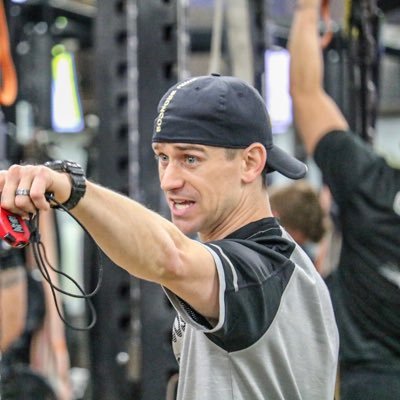
Bar core routine! Challenging core strength and stability work. 90 knee to elbow x10 Straight arm lateral tucks x10e 90 knee to elbow diagonal x5e Straight arm straight leg raise x10 Perform 1-2 sets (50-100 total reps) #EAT #Earned #Core
13,327 просмотров • 1 год назад •via X (Twitter)

Комментарии: 1

Фото профиля Naveen Sankar S
Naveen Sankar S1 год назад

🏃‍♂️ A structured run-walk program may ease chronic lower back pain in adults under 45! 📈A 12-week trial showed a significant 15.3-point reduction in pain levels compared to usual care. 🔗 #BackPain #Fitness #PainRelief

Похожие видео

People with weak cores struggle to stabilize their bodies when they walk. Every step you take sends a little punch up your leg into your hip and lower back. Planks with one or more support points removed to expose this weakness. Use these 12 exercises to strengthen your core: 1 - Bird-Dog (0:06) 3 x 10/side Beginners start with this exercise because removing two support points with your knees on the floor is easier. The goal is to straighten the opposing arm and leg. A client wobbled when she removed her two support points today, which humbled her. 2 - Front Plank with Leg Lift, Elbows (0:15) 3 x 10/side The second plank involves lifting one leg at a time. Being on your elbows is easier than your straightened arms, so I'll first have people familiarize themselves with this position. Lift your leg as high as you can without swinging too much. Hold at the top for a few seconds to increase the burn. 3 - Front Plank with Arm/Leg Lift, Elbows (0:20) 3 x 10 The third plank resembles the Bird Dog, except your knees are off the floor. Straighten the opposite arm and leg at the same time, and hold. You might struggle to reach a full lengthening, so do your best and practice. Removing one hand off the floor also strengthens your shoulder blade muscles. 4 - Front Rotation Plank, Elbows (0:28) 3 x 10/side The fourth plank engages different abdominal muscles with the rotation. Your arms should point toward the ceiling, something beginners might initially struggle with. 5 - Push-Up Plank (0:34) 3 x 10 The fifth plank is excellent for building upper body strength at home. You are bound to break a sweat and work your chest and triceps. I've had many clients struggle to do more than one rep. 6 - Spider Plank, Elbows (1:01) 3 x 10/side The sixth plank improves your hip mobility as well. You want to open the leg and bring your knee to hip level while keeping in the air. 7 - Lateral Raise Plank (1:09) 3 x 10-20/side The seventh plank is done in a push-up position with your arms straight. There is now more weight on your arms, making it harder to stabilize when you remove a support point. My client tried this variation and had to regress to the Bird Dog because she couldn't support herself. Work your way up to 20 reps/side for extra posture gains. 8 - Toe Taps, Straight Arms (1:22) 3 x 10/side The eight plank has you lifting one leg toward one side and touching the floor with your toes. The contact is brief - You're tapping, not resting. 9 - Mountain Climbers with Twist (1:29) 3 x 10/side The ninth plank is a twist on the classic mountain climbers exercise. You lift one leg and bring it toward the opposite elbow, then repeat on the other side. Increase the speed to add a cardio component, but ensure you can first go through the full range of motion. 10 - Arm/Leg Lift Plank, Straight Arms (1:42) 3 x 10 The tenth plank is the final evolution of the Bird Dog in this series. Straighten your opposite arm and leg, and hold for a few seconds to increase the burn. You can also hold the lengthened position for an extended period, like 30 to 60 seconds. 11 - Plank Jacks (1:54) 3 x 30-60s The eleventh plank is a variation of the classic Jumping Jack. This dynamic exercise adds a cardio component to your core workout. Shuffle both feet toward the side, then jump back to the starting position, Ensure you keep your hips aligned with your head and shoulders. You want to avoid your lower back crashing below them and potentially hurting yourself. 12 - Knee to Elbow Plank, Straight Arms (2:01) 3 x 10/side This series's twelfth and final plank requires the most stability and mobility. Most people are unable to reach their knee to the elbow. Enjoy practicing this one; you will feel stronger after three full sets. // Planks with one or more support points removed are excellent for building a more stable posture when you move. They can be done anywhere with enough space. Progress through the twelve variations in this series and watch how your core strength improves. Enjoy!

Alex Bernier

351,097 просмотров • 2 лет назад

HIIT Conditioning Routine Full-body conditioning circuit combining strength, coordination, and core stability. Every movement targets multiple muscle groups while keeping the heart rate elevated. 1. Lunge + Oblique Twist Step forward into a controlled lunge while holding a medicine ball. Rotate your torso toward the lead leg to activate the obliques and core. Return to center and alternate legs. 2. Goblet Squat + Bicep Curl to Alternating Overhead Press Hold a dumbbell at chest level and drop into a squat. As you stand, perform a curl and transition into alternating overhead presses. This sequence activates quads, glutes, biceps, shoulders, and core. 3. Waiter Curls + Frontal Press Hold the dumbbell vertically with both palms supporting the weight. Curl upward toward the chest, then press forward to engage the anterior deltoids and chest while stabilizing through the core. 4. Alternating Lunge + Iso Overhead Press Press one dumbbell overhead and hold it there while performing alternating lunges. This forces the shoulders and core to stabilize while the legs do the work. 5. Lateral Lunge Step wide to the side, sit into the hip, and keep the opposite leg extended. Push back to center. This movement develops glutes, inner thighs, and hip mobility. Protocol 3–4 Rounds 30–45 seconds per movement Minimal rest between exercises Designed to improve conditioning, muscular endurance, and full-body coordination. Train with intention. #HIIT #BodybuildingConditioning #YGFit #Fitness

Y A V

20,765 просмотров • 6 месяцев назад

This home lunge superset isn't for the faint of heart. The burning heat in your legs will beg you to stop, but the strength and growth you'll reap make it all worth it. 4 sets of 12 forward lunges, then 12 Reverse right away. Build a lower body that stands the test of time: Lunge Form Cues Set-Up: Stand tall with feet hip-width apart, hands on hips or at your sides. Alignment: Keep your chest up and shoulders back. Step: Take a big step forward, lowering your hips until both knees are bent at 90 degrees. Brace: Engage your core and maintain balance as your front foot lands to stabilize the movement. Push: Drive through your front heel to return to the starting position. Breathing: Inhale as you lower into the lunge, exhale as you push back up. 5 Lunge mistakes and how to avoid them 1. Taking Too Small a Step - What Happens: A short step limits the range of motion, reducing muscle activation in the glutes and quads. - Fix: Step far enough forward to allow both knees to bend at 90 degrees. 2. Rising Onto the Front Toes - What Happens: Lifting the heel shifts balance and reduces engagement of the glutes and hamstrings. - Fix: Keep your front foot flat, pressing firmly through the heel. 3. Poor Hip Alignment - What Happens: Tilting or rotating the hips reduces balance and proper muscle engagement. - Fix: Keep your hips square and aligned with your torso throughout the movement. 4. Feet Too Narrow or Wide - What Happens: Misaligned foot placement reduces stability and increases the chance of losing balance. - Fix: Keep your feet hip-width apart to maintain balance and proper alignment during the lunge. 5. Not Engaging the Core - What Happens: A weak core reduces balance and stability, increasing the risk of wobbling. - Fix: Brace your core upon landing to absorb the impact and keep your torso steady and aligned. Reverse Lunge Form Cues Set-Up: Stand tall with feet hip-width apart, hands on hips or at your sides. Alignment: Keep your chest lifted, core engaged, and shoulders back. Step: Step one leg back, lowering your hips until both knees are bent at 90 degrees. Land: Land on the top of your back foot with the toes pointed to stretch the ankle and prevent assistance from the toes. Push: Drive through your front heel to return to the starting position. Breathing: Inhale as you lower into the lunge, exhale as you push back up. 5 Reverse Lunge Mistakes and how to avoid them: 1. Using the Toes for Support on the Back Foot - What Happens: Relying on the back toes reduces the stretch in the ankle and shifts focus away from the front leg. - Fix: Land on the top of your back foot with the toes pointed to stretch the ankle and isolate the front leg fully. 2. Leaning Forward - What Happens: Leaning forward places unnecessary strain on the lower back and reduces engagement of the glutes and quads. -Fix: Keep your chest up and shoulders back to maintain an upright posture.Letting the Front Knee 3. Collapse Inward - What Happens: Knee valgus increases stress on the knee joint and reduces stability. - Fix: Ensure the front knee tracks over the middle of your foot throughout the movement. 4. Letting the Front Knee Collapse Inward - What Happens: Knee valgus increases stress on the knee joint and reduces stability. - Fix: Ensure the front knee tracks over the middle of your foot throughout the movement. 5. Pushing Off the Back Foot - What Happens: Using the back foot to assist reduces the workload on the front leg. - Fix: Focus on driving through the heel of the front foot to return to the starting position.

Alex Bernier

14,524 просмотров • 1 год назад

This college senior has an insane transformation🤯⁠ ⁠ Craig Stem breaks down how he did it ⬇️⁠ ⁠ The mechanical breakdown showed a delivery full of compensations that were killing his velocity. Poor first move out of leg lift with almost no drift. Back knee dumping toward third base. Front leg swinging open way too early. Throwing arm getting stuck behind him in a "power T" position. ⁠Landing with his front foot wide open. Upper half having to overcomperate just to get back on line.⁠ ⁠ The fixes started simple during his spring season. Pendulum drill to relax the arm, getting off his quad, more linear direction to home plate. He topped 91 for a new PR in April.⁠ ⁠ May-June: Introduced elbow-driven arm action. Ethan had a hand-driven philosophy that created a long, inefficient path. Cueing elbow flip kept the arm short and captured momentum better.⁠ ⁠ Craig discovered that Ethan avoided external rotation. He wanted his hand on top of the ball. So he kept him in IR as long as possible, got to ER late. Late layback became his power move.⁠ ⁠ October: The lateral tilt piece changed everything. "Dip into the velo bucket" then explode out of it. Shorter arm action + more efficient lower half + ability to rotate fast and pull that arm through.⁠ ⁠ December: Ethan ran it up to 95 MPH multiple times.⁠ ⁠ January at Tread HQ: He came out sitting 96 and topped 98 indoors.⁠ ⁠ Potentially the coolest part? Ethan Hochendoner made 90% of these gains remotely.

Tread Athletics

13,411 просмотров • 7 месяцев назад

Pump circuit *no breaks* 25X curls 35 lbs 10X hammer curls 35 lbs ~8X lateral raises 10 lbs ~8X shoulder press elbow touch 10 lbs ~8X shoulder press grip change 10 lbs ~50X twists 10 lbs Weight hold 10 lbs ~20X twists 10 lbs ~30X curls 25 lbs ~10X twists 25 lbs ~20X triceps pull downs 50 lbs ~10X skull crushers 50 lbs ~10X lateral raises 10 lbs ~10X shoulder press elbow touch ~10X front raises 10 lbs ~10X dumbbell rows 10 lbs ~40X twists 10 lbs ~10X triceps pull downs 50 lbs ~10X skill crushers 50 lbs ~20X curls 25 lbs ~8x hammer curls 25 lbs Hold curls 25 lbs ~5 hammer curls 25 lbs Doing this series of exercises with no breaks creates a demanding, high-rep metabolic resistance training session. Below are the specific benefits you can expect from this routine: 💪 Benefits of No-Break Training Circuit 🏋️‍♂️ 1. Muscle Endurance & Hypertrophy (Pump Effect) •This routine includes high reps, time-under-tension, and progressive muscle overload across arms, shoulders, and core. •Constant curling and pressing keeps muscles engorged with blood (the pump)—stimulating sarcoplasmic hypertrophy. •Your biceps, triceps, and shoulders are especially targeted for endurance and growth. 🔥 2. Cardiovascular & Metabolic Conditioning •With zero rest, your heart rate stays elevated, turning what is traditionally strength work into cardiometabolic training. •This taxes your aerobic and anaerobic systems, building conditioning along with strength. 🧠 3. Mental Fortitude & Focus •You’re doing high volume with minimal rest, requiring concentration, pain tolerance, and mental drive. •Exercises like "hold curls" and burnout sets force you to push through muscular fatigue, enhancing grit. 🧬 4. Hormonal & Caloric Response •This type of high-volume, continuous circuit can elevate growth hormone and testosterone levels transiently. •It also leads to increased calorie burn and a strong EPOC (afterburn) effect. ⚖️ 5. Time Efficiency & Density •You’re packing a high amount of volume into a condensed time, hitting multiple muscle groups with compound and isolation exercises. •This saves time while delivering a full hypertrophy + cardio stimulus. 📈 6. Joint Stability & Core Engagement •Rotational moves like twists plus shoulder/arm holds challenge your stabilizer muscles. •Core is hit repeatedly through twists and dynamic upper-body movement, especially while holding weights. 📍Targeted Muscle Groups •Biceps: Repeated curls, hammer curls, hold curls (lots of volume and variation). •Triceps: Pulldowns, skull crushers. •Deltoids: Lateral raises, front raises, shoulder press variants. •Core/Obliques: High reps of twisting movements. •Back: Dumbbell rows (although less volume here). •Grip/Forearms: From prolonged holding of weights under fatigue. Livestream morning workout daily 83 free workouts all levels:

Matteo Piper Jenks 🧲 🇮🇹

143,729 просмотров • 1 год назад

Tight hips after sitting all day⁉️ Try these 10 exercises 👇 Hip training doesn’t have to be just stretching. Mobility, strength, control, and coordination all contribute to how well your hips move. 1️⃣ Hip CAR Make a large, smooth circle while keeping the pelvis controlled. Adjust your hand support to keep it challenging but smooth. 2️⃣ Straight-Leg Hip Flexion Lift-Over Keep the leg straight and lift with control. Use your hands as needed—the more upright and unsupported you are, the harder it gets. 3️⃣ Seated Hip Internal Rotation Explore a comfortable range slowly. Compare how each side feels rather than forcing more motion. 4️⃣ Banded Hip Abduction Choose enough resistance to challenge the outer hips while allowing a slow, controlled return. 5️⃣ Squat + Resisted Hip Abduction Choose a band that makes the hold challenging within 10–15 sec while maintaining your squat and outward tension. Try 3–4 holds × 2–3 sets. 6️⃣ Dynamic Hip Flexor Stretch Lightly tuck the pelvis and engage the kneeling-side glute, then rock forward without arching the low back. Feel the stretch at the front of the hip/thigh. 7️⃣ Half-Kneeling Adductor Dip Set the outside leg roughly 70–90° out. Keep the knee tracking with the foot as you shift toward that side. 8️⃣ Adductor Squeeze Squeeze the roller hard for ~3 sec, relax, and repeat for ~20 reps. 9️⃣ Loaded Hip Flexion Use a weight you can control through a comfortable range. Return slowly—don’t let the resistance pull the leg back. 🔟 Banded Bridge + March Maintain the bridge while the opposite leg moves, challenging hip strength and control while the legs work independently. HOW TO TRAIN 👇 🔁 10–15 controlled reps 🔄 2–3 sets 📅 2–3x/week Start with a range and resistance you can control. You don’t need all 10—choose what fits your goals and ability, and progress gradually.

Smart Postures

11,471 просмотров • 20 дней назад