正在加载视频...

视频加载失败

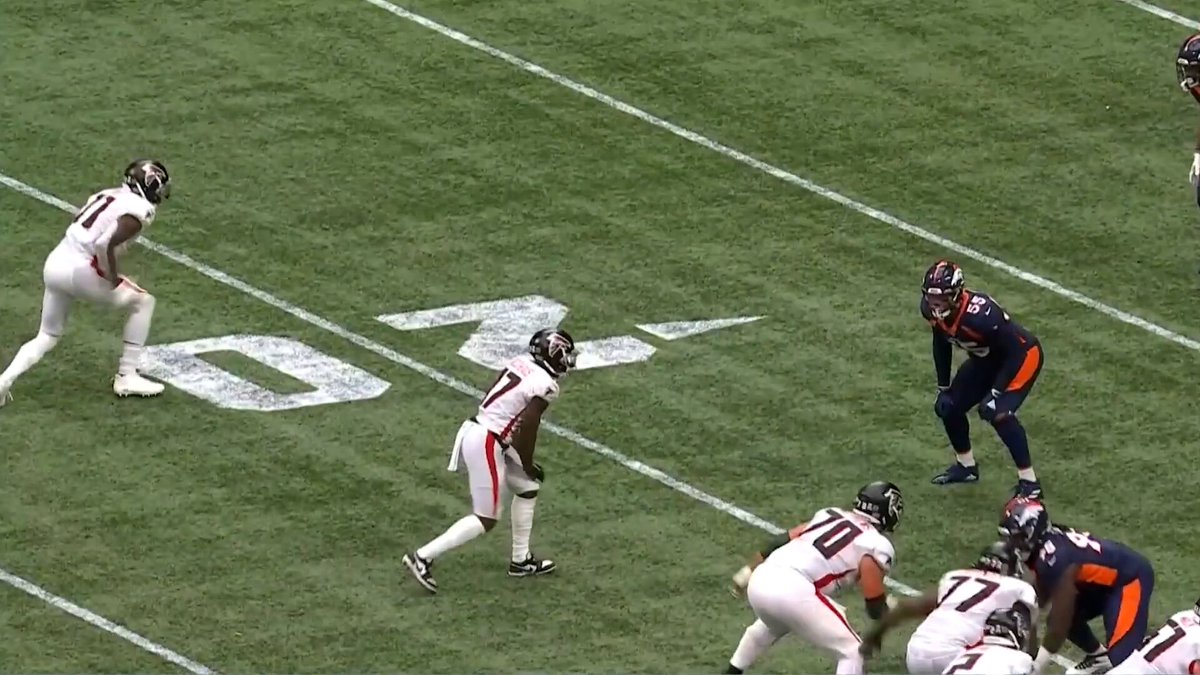
Being talented doesn’t make you a great player. According to Curt Cignetti, the real separator is how a player responds to coaching. That reveals three types of players: 1️⃣ Inconsistent players They take coaching on their own terms: • Accept praise • Resist correction 2️⃣ Good players They take...

68,906 次观看 • 7 个月前 •via X (Twitter)

0 条评论

暂无评论

原始帖子的评论将显示在这里

相关视频

DON’T COACH THE MISTAKE. COACH THE INTENTION. ⚽️ A line to reflect on. Of course not always, but more than not often. There’s a powerful coaching lesson in something Pep Guardiola speaks about. During one difficult period for him the season before last, his approach was to demand more. Demand better. Challenge errors. Hold players accountable. But later, last season, the Pep Guardiola message evolved. As seen in this dressing room footage he told his players: It’s okay to lose the ball. It’s okay to make mistakes. There was just one condition: Make the mistake with conviction. In other words… If you’re going to attempt the pass, commit to it. If you’re going to make the decision, make it with 100% intention. Because there is a huge difference between: ❌ A mistake caused by hesitation, fear or lack of application. and ✅ A mistake that happens while a player is fully committed to doing the right thing. That distinction matters enormously for coaches. Too often we see the outcome: “He gave the ball away.” But before correcting the player, ask: What was the intention? Was the player trying to break a line? Trying to find the free player? Trying to play forward? Trying to exploit the space we’ve coached them to recognize? If the intention was right, the solution might not be changing the decision at all. The decision may be correct. The execution may simply need improving. And those require completely different coaching interventions. If we punish every mistake, eventually players stop taking responsibility. They stop experimenting. They stop seeing possibilities. They start choosing the safest option available, not necessarily the best one. QUOTE THIS FROM KEEPITONTHEDECK..... "Great environments give players freedom to fail with purpose." #pepguardiola #guardiola

Keepitonthedeck

29,256 次观看 • 1 个月前

Hexagons and Octagons Those who follow football and coaching will be well aware that there are trends that emerge and become the great break through in coaching, only to vanish quite quickly. A few stick around and become a staple. Such as the rondo, or the 4v4+4 Guardiola rondo variation. One that did not stick around in the coaching collective consciousness that possible should have was Thomas Tuchel’s use of hexagonal and octagonal playing areas in training sessions. Tuchel explained that cutting off the corners and angling the pitch forced “sharp diagonal” passes that would help break the press. The positioning of players outside the hexagon/octagon or players close to the edges will be manipulated into an open body shape by the angles of the pitch. Players are impacted by environmental constraints and embodied cognition, where the geography of the playing area influences their actions. This influence spreads to the creation of triangles and diamonds within the playing area due to the “funnel” like nature of the playing area. We can use the cut outside angles by placing bounce or target players on the exterior, influencing the movement and organisation internally. The inside players will not have to move wide as those areas are occupied. The internal players will seek to create passing angles using the positioning of the outside players and their internal team mates. The diamonds and triangles will appear. If we leave the spaces on the outside empty players can move to fill the spaces. These act as free spaces to receive from the goalkeeper or open spaces for attackers to overlap into, encouraging attacking combination play and crosses. A different way of using the space is to remove goals and goalkeepers from the ends and place bounce/target players on the outside. Players now can combine with the outside players, when they do so they are then free to finish into the outside goals. The condition can be extended to combining with the target player in the opposite side of the pitch before scoring, adding an element of switching play. The hexagon and octagon are versatile spaces that help to replicate aspects of the game. By funneling the spaces we impact players body shape, ability to play forward quickly, team shape (or small group shapes), players cutting in, defending centrally, the types of combination used and the angles of line breaking pass (diagonals). The angles are hugely significant for teams that value combinations and possession football, Straight passes and receiving angles are much easier to intercept and carry high risks for being counter attacked. Short diagonals can bypass players and attacking shapes, creating angled connections. If an angles pass is given away there is still a risk of being counter attacked but there is more chance of having players around the ball to regain possession. To counter press. The question that emerges is should we then be using hexagons and octagons more? If they are of greater benefit than squares and rectangles, why use them? Should all pitches, including those of a small sided nature be hexagonal? Can the rondo square be replaced by the rondo octagon?

TheBeardedCoach

13,461 次观看 • 7 个月前