Video wird geladen...

Video konnte nicht geladen werden

Zur Startseite

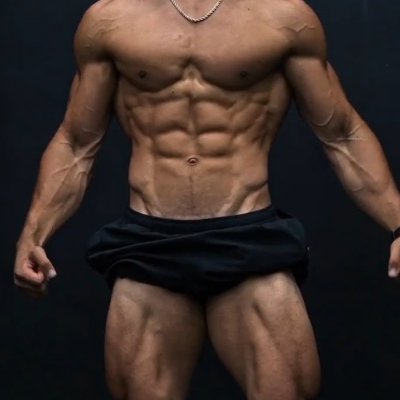
Better Than Running! 🏃♂️ 💨 5-Minute Stationary Foot Stamping Exercise for Quick Results ⏰⏳
16,638 Aufrufe • vor 8 Monaten •via X (Twitter)

0 Kommentare

Keine Kommentare verfügbar

Kommentare vom Original-Post werden hier angezeigt

Ähnliche Videos

🚨 BREAKING… $1.1M in 26 days using OpenClaw on Polymarket This is a REAL framework generating REAL results. He began with a relatively small base, linked OpenClaw for execution, and expanded it to approximately ~$1.1M in returns Simply a developer integrating Moltbot (OpenClaw) directly into Polymarket Profile - Copytrade - After analyzing the setup, I was honestly impressed The entire process runs fully automated Execution follows predefined rules, zero human intervention FULL strategy overview: 1. 5 & 15 minute BTC & ETH micro-arbitrage The system focuses on ultra short-term Bitcoin and Ethereum contracts within 5-minute windows. In these rapid cycles, inefficiencies surface when YES and NO combined fall below $1. With Moltbot (OpenClaw) wired directly into Polymarket, those gaps are captured instantly - no forecasting, no directional bets, no bias 2. Speed instead of hesitation When volatility increases and manual traders freeze, the system acts. Orders are placed automatically, without delay, emotion, or second thoughts. By the time others respond, the opportunity is already gone 3. Automation compounds the advantage Each round captures tight spreads, not massive individual wins. But relentless, high-frequency repetition keeps the engine running nonstop no fatigue, no slowdown - stacking small edges into significant results Scale is the edge 23,784 trades. Small on their own. Together, they accumulated into ~$1.1M in profit

Shelpid.WI3M

187,027 Aufrufe • vor 6 Monaten

Strength work for Leadville 100 💪 Over the years, I have felt judged by the research--my strength routines were limited to a few minutes at a time, while everyone was screaming at me from their Abstracts that I needed to do way more. I noticed two big problems whenever I committed to more resistance training: 1. I'd carry around soreness even after the initial adaptation window, likely corresponding to high CK levels and some background inflammation. Either way, it would reduce running economy on subsequent running training days, and every training day counts. Split squats are the ultimate offender--an exercise that I know I should be doing, but I can't without feeling like Forrest Gump after he was shot in the butt. 2. I just wouldn't do it. Oops. With lots of guessing and testing, I developed this routine, which I'd do after my easy run on Sunday (before a Monday rest day), and sometimes after my workout on Wednesday (if I felt like it): 1. Three Minute Mountain Legs, working up to 100 single-leg step-ups (I think step-ups in particular are a magic exercise for running uphill. But remember, magic is not equal to science): 2. Back squats, 2 sets of 10 (135 pounds for me, which I make look like 800 pounds in this video. The 17-year old me who played football would laugh so hard) 3. Back extensions, 2 sets of 30, engaging glutes and hamstrings 4. Single-leg calf raises, 1 set of 100 on each leg, with a 35 pound dumbbell 5. Every day, I do the 2-minute Core Snack routine 1-3 times. My core strength is one of my best attributes for ultras, and I can do the Core Snack with our toddler Leo. I also do daily band work before running (bandz a make me dance): That's it! I also foam roll and stretch daily (don't tell the researchers, but I am a tight boi and as soon as I stop stretching, I get hurt). The lesson is not to do this particular routine, but that strength training for runners can be based on individual needs. And I personally think that routines should be short and efficient for both performance (limiting breakdown) and adherence (limiting me from being a lazy little punk). Find what works for you, do it 1-2 times per week year round (on top of some daily supportive work), and don't feel the need to pursue progressive overload. It's not about getting stronger and stronger (unless you're into that sort of thing for its own sake, which I think will sacrifice some running growth). It's about supporting performance and health 🧡

David Roche

66,419 Aufrufe • vor 2 Jahren

MLP in PyTorch by hand ✍️ ~ 7 steps walkthrough below Goal: fill in every blank in the PyTorch code to build a multi-layer perceptron. 1. Given Let us start with a code template on the left and the network it is supposed to build on the right. Every blank in the code can be worked out from the picture. 2. Linear layer We count: 3 features in, 4 features out. So the weight matrix is 4 by 3. There is an extra column for the biases, which means bias = T. 3. ReLU Let us apply the activation. ReLU crosses out the negatives, so -1 becomes 0. 4. Linear layer The input size is 4, because that is what the previous layer put out. The output size is 2. A 2 by 4 weight matrix, and this time no extra column, so bias = F. 5. ReLU We cross out the negatives again. 6. Linear layer Two features in, five out. A 5 by 2 weight matrix, with a bias column, so bias = T. 7. Sigmoid Let us finish. Sigmoid squashes the raw scores (3, 0, -2, 5, -5) into probabilities between 0 and 1. You have just implemented a three-layer deep neural network by hand. ✍️ == Story == Three years ago I gave this exercise to my students, to connect the code to the math. They found it odd. Every other AI course they were taking lived inside a Jupyter notebook, and here I was handing out paper. Three years later, my colleagues are the ones rushing to move their materials to paper. The exercise has not changed. Paper still asks the one thing a notebook lets you skip: do you actually understand what the code is doing? If you can tell me why the weight matrix is 4 by 3, and why bias is F on the second layer, you understand nn.Linear better than someone who has been copy-pasting it for a year. 💾 Save this post! #AIbyHand #PyTorch #DeepLearning

Tom Yeh

13,318 Aufrufe • vor 2 Monaten

I think that fast strides are the most powerful training stimulus for runners. For a glimpse at the physiology, I want to talk about my all-time favorite study. If we were playing FMK, I’d F this study, M this study, and K any study that is not this study. Published in 2018 in Physiological Reports, it had 20 trained athletes (14 men and 6 women) complete a 40-day intervention with 10 sessions involving 5-10 x 30 seconds with 3.5 minutes recovery, in conjunction with a 36% reduction in weekly volume. Before and after the intervention, participants did a time-to-exhaustion test, two 10km tests (one with glycogen depletion) preceded by 2 x 6 minute intervals at 60% of VO2 max, and a series of muscle biopsy and blood tests. Running economy during the 10k improved by 2.1% and during the intervals at 60% of VO2 max by 1.7%. In other words, the athletes improved at both hard efforts and easy ones. Meanwhile, there was no running economy change in the glycogen-depletion 10k, leading the authors to theorize that improvements were primarily related to changes in slow-twitch muscle fibers. Expression of protein dystrophin increased, which may enhance the ST-fiber structural integrity via the actin-myosin cross-bridge, improving running economy. In addition, the expression of UCP3 decreased, which may improve mitochondrial efficiency. In fast-twitch fibers, expression of the muscle protein SERCA1 decreased by 22%, which could reduce the energy turnover during exercise. Enzymatic activity and testosterone:cortisol ratio also went up. Don’t be discouraged, I only kinda know what a few of those words mean. The point is that as researchers introduce stride-like speed sessions and measure more variables, they often see major changes that may explain why Olympians are always doing strides. So when we use the term “running economy,” we’re actually incorporating dozens of these physiological variables, some of which we can measure and some of which we can’t, from the cells to the muscles to the circulatory and cardiovascular systems. Put it together, and getting faster is a wonderfully complex algorithm. Strides are one way to help solve it 💪

David Roche

73,626 Aufrufe • vor 2 Jahren