Video wird geladen...

Video konnte nicht geladen werden

Zur Startseite

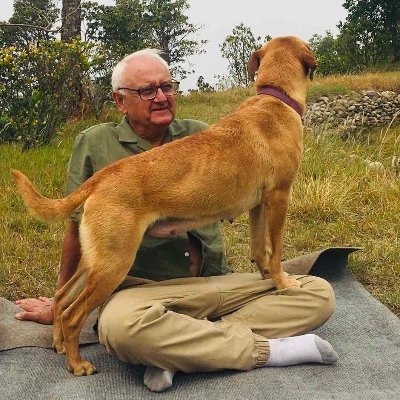
Bhaskar's Tunnel Geotechnical Engineer Bhaskar Thapa designed & led construction of Caldecott Fourth Bore under Berkeley Hills in San Francisco. Driving through today, again reminded of great loss as Nepal enters era of tunnelling. स्व. भास्कर थापाको सुरङ्गमार्ग, क्यालिफोर्निया।
25,147 Aufrufe • vor 2 Jahren •via X (Twitter)

0 Kommentare

Keine Kommentare verfügbar

Kommentare vom Original-Post werden hier angezeigt

Ähnliche Videos

The Vespasianus Titus Tunnel is a 2,000-year-old engineering marvel – a massive tunnel dug through a mountain that was built to divert floodwaters threatening the harbor near the ancient city of Seleuceia Pieria in what is now Türkiye. According to UNESCO; it is one of the most magnificent remains of the Roman period because of its size, well-preserved authenticity, and architectural and engineering features. Titus Tunnel was neither built, nor completed by the Emperor Titus. The construction of this tunnel, began during reign of Vespasianus, the father of Titus, during second half of 1st Century AD. Although work continued during the reign of Titus (79-81 AD), it was only completed during the reign of Antonius Pius in the 2nd Century AD. These dates are known due to several rock-carved inscriptions found in the tunnel. At first tunnel section, the names Vespasianus and Titus can be found. This inscription reads ‘Divus Vespasianus et Divus Titus F.C.’ (‘Divine Vespasianus and Divine Titus caused it to be made’). Thus, it may be possible that the tunnel was jointly built by the two emperors. Another inscription in the downstream channel bears the name Antoninus Pius, indicating that construction was completed during the reign of this emperor. Titus Tunnel is located in modern day Samandag-Cevlik, Turkey. During Roman era, Samandag-Cevlik was known as Seleucia Pieria (Seleucia by the Sea). This ancient city was one of the four cities in the Syrian tetrapolis, the other three being Antioch by the Orontes, Apamea and Laodicea in Syria. Seleucia Pieria was once an important Roman port city, in which exotic goods from the East were exported to Rome. Perhaps the port’s most well-known ‘exports’ were St. Paul and St. Barnabas, as they were recorded to have sailed from this port on their first missionary journeys. This city, however, had a major problem, as it was constantly threatened by floodwater that came from the nearby mountains. As these waters from mountains carried silt and mud as they descended, harbor was inevitably silted up and became inoperative. Although canals were ordered to be built by previous emperors, they were to no avail, as the floods continued. In order to solve this problem once and for all, Vespasian decided to build a tunnel by digging through the mountain to divert the floodwaters. This diversion system was built on the principle of closing the front of the stream bed with a deflection cover and transferring the waters through an artificial canal and tunnel. Titus Tunnel was designed by engineers of Tenth legion Fratensis and built by Roman legionaries, sailors, and prisoners. Flavius Josephus, a Jewish historian, wrote that one of the canals in the region was built by Jewish slaves captured during the Jewish War (66-73 AD). Unsurprisingly, some have identified that canal with the Titus Tunnel. When completed, the Titus Tunnel spanned a distance of 1.4 km (0.86 mi). As the whole tunnel was carved through solid rock, this was a remarkable feat of Roman engineering, especially when one considers the relatively short amount of time required for its completion. Furthermore, this man-made marvel has survived until today without much damage. Moreover, Titus Tunnel is a testimony to Roman ingenuity in solving the challenges faced by its cities and is among the great constructions of the Roman world. In 2014, the Titus Tunnel was submitted to UNESCO, for the Tentative List of its World Heritage Sites. One of the many positive effects of this achievement is that people would be aware that the architectural achievements of ancient Rome are not limited to grand, imposing monuments, such as Colosseum and the triumphal arches of various emperors. Rather, some of the most significant Roman works can be found in its civic engineering, which provided vital infrastructure in the form of tunnels, cisterns, flood control, and road works. 🎥© arkeolojievreni (IG) #archaeohistories

Archaeo - Histories

34,504 Aufrufe • vor 1 Jahr

Phase II/CP30/TU-01/ – TBM Kolli (S 81) Breakthrough at Otteri shaft ​Chennai Metro Rail Limited has commenced the expansion of the Chennai city’s metro rail network as part of Phase II after the successful completion of the Phase I and Phase I Extension. CMRL has ventured into an extensive infrastructure development in the city comprising of three more corridors of metro rail for a total length of 116.1 km. ​Corridor 3 comprising a total alignment length of 45.4 km from MadhavaramMilk colony to Siruseri Sipcot will be spanning across the north to south direction of the Chennai city and has a total of 28 underground stations and 19 elevated stations. ​Corridor 4 is an east west alignment for a length of 26.1 km connecting the beach front from Light House station to the Depot at Poonamallee has 9 underground stations and 18 elevated stations. ​Corridor 5 also begins at Madhavaram Milk colony and connects through Koyambedu, Porur, Alandur and other residential/commercial development of the city to Shollinganallur for a total length of 44.6 km with 6 underground stations and 39 elevated stations. ​The tunnel construction for the first 9 km underground section of Corridor 3 from Madhavaram Milk Colony to Kellys is being executed through M/s Tata Projects limited and mobilized 7 TBMs for the tunnelling works. ​The TBM Kolli (S 81) tunnel drive started on 11.07.2023 from AyanavaramStation to Otteri station (Up line), covered a bored tunnel length of 903 m and break-through done at Otteri shaft on 29.08.2024. This is the 6th TBM breakthrough carried out by M/s Tata Projects Limited under TU-01 contract. As a whole, CMRL has completed 7 TBM breakthroughs in phase-2 project. ​The tunnel section between Ayanavaram and Otteri is the most complex tunnel section under the contract TU-01 with major challenges, such as the TBM S 81 (Kolli) first 500m tunnel drive negotiated with sharp 220m radius curve and the last 200m tunnel drive with 280m radius curves. Also, this tunnel drive completed with major challenges such as passing through densely populated areas and addressing more than 100 No. of bore wells along the alignment by providing alternate sources without any issue to the public. ​The complete tunnel drive was well managed within the allowable minimum settlements and extensive instrumentation and monitoring was ensured throughout the drive. ​Thiru T. Archunan, Director Projects of CMRL, Thiru. Kolli Venkata Ramana, AGM CIVIL UG, Thiru. Alper Vahit Yildiz, Project Manager/Tata Projects, Thiru. Naidu chief resident engineer of GC, other officials of CMRL, General Consultant and Tata Projects were present during the event. #chennaimetro #cmrl #chennai #metrorail #phase2 #otteri #chennaimetrorail

Chennai Metro Rail

29,092 Aufrufe • vor 2 Jahren

Hi friends! I come to you with a heavy heart today ❤️‍🩹. Nepal is grieving right now. As you may have heard, and seen in the footage across your feeds, Nepal is experiencing the worst floods in living memory. They have wreaked havoc across precious river and mountain communities nestled throughout this beautiful Himalayan nation. Firstly, I am so grateful to all of the friends, partners, customers, investors, and well-wishers who have reached out. It is deeply reassuring and reinforces my belief in our ability as humans to come together for each other in times of need. As many of you know, Nepal is a part of the world that means so much to me and to the company we have built together here at SecurityPal AI SecurityPal AI. In fact, alongside our home in San Francisco, our company considers Kathmandu, Nepal our second HQ, and it is home to so many on our team. We of course cannot undo this horrific tragedy. However, we can choose to show up. That's why we're partnering with Nepal's tech community, Silicon Peaks; Rashik Adhikari , the CEO of Renegade Insurance; and Dr. Madan Uprety and his U.S.-based 501(c)(3) nonprofit, Mission Rebuild Nepal, to raise funds for Nepal. We are making it easy for people in the United States 🇺🇸 to give through a local nonprofit governed by U.S. laws and regulations, with U.S. tax advantages for those who are able to contribute. We have made it super easy to give, you can do it in 5 seconds and even use Apple Pay. 100% of what you donate will go to the official Government of Nepal relief effort led by the Right Honorable Prime Minister Balen Shah and Finance Minister Dr. Swarnim Wagle. Any fees associated with the transfer of funds to Nepal's government will be beared personally by me. And to ensure your contributions go even further, SecurityPal AI and my close friend Rashik Adhikari's company, Renegade Insurance, are matching every dollar you give, up to $20,000. Anything you give helps. The link is below. With gratitude and love, thank you and Dhanyabad! 🇳🇵❤️

Pukar C. Hamal 🏔🗽 🌁

68,968 Aufrufe • vor 1 Monat

More than a hundred years ago, San Francisco built a city out of jewels and then tore almost all of it down on purpose. You are looking at the Panama–Pacific International Exposition of 1915. For ten months, on six hundred acres along the city's northern waterfront, San Francisco raised an entire fantasy metropolis of palaces, colonnades, fountains, and towers, and invited the world to walk through it. Nearly nineteen million people did. What makes it almost unbelievable is the timing. Only nine years earlier, in 1906, San Francisco had been flattened by one of the worst earthquakes and fires in American history. Much of the city had burned to the ground. The exposition was the city's answer to the world: not only have we survived, we can build something more beautiful than anything you have ever seen. At its heart stood the Tower of Jewels, 435 feet of triumphal arch and tower rising over the fairgrounds. Its surface was hung with more than 100,000 small cut-glass "jewels," each dangling on a tiny hook so it would tremble in the wind. By day they flashed in the sunlight. At night, more than fifty spotlights were turned on them, and the entire tower shimmered above the bay like something out of a dream. People had never seen anything like it... Around it spread a city of wonders. The Palace of Fine Arts, a vast Roman ruin reflected in its own still lagoon, designed to evoke the beautiful melancholy of a vanished civilization. The Palace of Machinery, so enormous that an airplane was once flown inside it. Grand courts and avenues lined with sculpture, all built in a soft, unified palette of color, glowing under the new technology of indirect electric light. And nearly all of it was designed to disappear. When it closed in December 1915, the dream city was systematically pulled down. Only one structure was saved. The Palace of Fine Arts, the most beloved of them all, was considered too beautiful to lose. Decades later it was rebuilt, and it still stands in San Francisco today, the last survivor of an entire city that existed for less than a year... Perhaps that’s what haunts us most: not that we built temporary palaces, but that we chose not to keep them. We built beauty knowing we would destroy it, as if beauty itself were disposable. Roger Scruton once said: "There is a deep human need for beauty, and if you ignore that need in architecture, your buildings will not last, since people will never feel at home in them." I started this newsletter because the people who came before us were capable of extraordinary things, and almost no one is teaching us about them anymore. Every week I try to. If that is something you would like to be part of, you can join here: I write about beauty in all its forms. If you'd like to support the work, a paid subscription is what makes it possible. Thanks for reading.

James Lucas

51,018 Aufrufe • vor 4 Monaten

I meet you on the first Friday of the year not in Jama Masjid, as the Mirwaiz should, but on social media, as I have once again been put under arrest! As another year begins and we look forward to it, painful memories of 2025 stay with us. It was a year marked by tragedy and uncertainty. The horrific Pahalgam attack shook us deeply. Unequivocally condemned by one and all in the valley, it led to a lot of anxiety among the people as they were targeted and homes demolished. This was followed by another India–Pakistan war, and a stark reminder of how fragile peace in the region continues to be. Despite making unilateral changes in 2019, the reality is that the Kashmir conflict continues to keep the region in an unsettled state that can erupt anytime. That is why wars are paused, not ended, and dialogue finds no takers. The year-end witnessed another tragedy — the massive blast and loss of life in New Delhi. Yet beyond these incidents, in which Kashmiris find themselves at the receiving end of suspicion and attacks in parts of India, not much has changed for them. The trust deficit between them and New Delhi has widened, not shrunk. Enforced silence is projected as acquiescence. Wounds remain open, problems unaddressed, and an elected government of a UT complains of being powerless. A sense of hopelessness prevails, along with an existential crisis of losing one’s identity through demographic change since the state was downgraded to a Union Territory, constitutional guarantees withdrawn, and rules and laws tweaked. The year also witnessed the banning of the Awami Action Committee — a socio-political institution that reached out to people in need, advocating peace, dialogue and resolution — along with Ittihadul Muslimeen, which were part of the Hurriyat Conference. Much of that space has now been extinguished. Today we are operating in an environment where any expression of views contrary to the state, or any disagreement, is increasingly criminalised, branded as “anti-national” and penalised. No public space is available to us, and mediums of communication, including most local media, are not ready to provide any space for voicing expressions of people’s demands or views. I do not have the privilege of addressing press conferences. I cannot move without getting official clearance, and people cannot meet me without seeking permission. My access to the pulpit of Jama Masjid — the spiritual heart of Kashmir — is also curtailed. Even last Friday, I was placed under house arrest, and again this Friday too. In fact, last year I was under house arrest for fourteen Fridays. Arbitrary house arrests have become a recurring feature in my life. All this is deeply suffocating — not only for me, but for an entire society that increasingly feels voiceless. So when pressed to make changes to my social media profile — as Hurriyat constituents are banned under UAPA, displaying the title would be considered illegal and the platforms barred to me — I was left with little choice but to safeguard the minimal channel of communication available to me or face the risk of complete silencing, as even today I am addressing you through this channel when I am again put under house arrest. With Hurriyat constituents banned, all offices sealed and institutions closed, leaders and activists either in jails or under constant surveillance, social media remains the only platform that gives some voice and opportunity to connect with people and the outside world. Let me make it clear, my beliefs and convictions have not changed — not even by a comma. Some have criticised this move as a compromise. To them I say, how and for what? They make a strange argument — for being provided security. But it was provided to me since the day of my father’s martyrdom 35 years ago. If I did not compromise for it since then, why should I compromise now?

Mirwaiz Umar Farooq

32,187 Aufrufe • vor 9 Monaten

Why did the glacial rockslide disaster at the Nepal–China border cause such horrific losses? The images you are seeing capture the moment a torrent of mud and rock collapsed from the peak of Langtang Lirung in the Himalayas. A massive section of ice broke apart, sweeping millions of tons of earth and rock directly into the Kyirong Valley. Within just 30 minutes, a surge of debris reached up to 9 meters high, destroying a chain of 11 hydroelectric projects, washing away numerous bridges, and severing the vital trade corridor between Nepal and China. According to disaster management agencies and international news outlets, the extent of the damage is recorded as follows: Regarding fatalities: The death toll in Nepal alone has risen to between 1,252 and 1,259, while China recorded an additional 21 deaths, bringing the total number of fatalities past 1,270. Regarding missing persons: Approximately 4,800 to 5,080 individuals remain unaccounted for, including nearly 590 foreign tourists and citizens from 39 nations. Regarding rescue operations: More than 11,000 to 12,000 people have been rescued by military personnel and international search teams. However, hopes of finding survivors are dimming as search efforts inside flooded power tunnels and heavy rubble face immense obstacles. Regarding infrastructure: The Gyirong International Port was completely destroyed, and at least 19 vehicular bridges were swept away. Given such devastating losses, a critical question arises: How could a natural ice-rock avalanche lead to a disaster of this scale? Human factors and governance issues International media often point to climate change as the primary driver. However, an analysis published by The Epoch Times suggests that this disaster stems from four key issues in governance and infrastructure: First, blasting for underground construction. The Kyirong Valley sits directly on the active fault zone between the Indian and Eurasian tectonic plates, where millions of tons of glacial ice exist in a delicate geological equilibrium. To support Belt and Road Initiative projects — such as the 120 MW Rasuwa Bhote Koshi Hydropower Project by Shandong Shuifa Group and a 500 kV power grid by State Grid — Chinese authorities deployed years of extensive mountain blasting and tunnel excavation. Continuous high-frequency micro-seismic tremors weakened the natural mechanical support of the glaciers, triggering the massive ice collapse. Second, risks created by power tunnels. Despite warnings that the Himalayas are among the youngest and steepest geological formations in the world, widespread concrete construction left thousands of workers operating deep underground. When the 9-meter mudslide swept through, it sealed the tunnel entrances with debris, trapping workers inside the power complexes. Third, the lack of hydrological data transparency. Situated at the "Water Tower of Asia," China controls real-time automated hydrological monitoring systems. According to The Epoch Times, Chinese authorities withheld real-time data and issued no early warnings to Nepal when the barrier lake breached. This lack of information deprived downstream communities of critical evacuation time, causing heavy damage to riverside villages. Fourth, discrepancies in official reporting. While Nepal publicly updated casualty figures and requested international assistance, The Epoch Times reported that the Chinese government initially stated its casualties as: "Only 3 dead, 558 out of contact" before updating figures later. The Epoch Times noted that restricting access to the scene and initially declining foreign rescue teams in Tibet served to protect sensitive military-civilian infrastructure plans and limit transboundary liability. Development philosophy and lessons for the future Looking deeper into the incident in Nepal, observers are questioning the underlying philosophy of infrastructure deployment in the Himalayan region. In the publication Nine Commentaries on the Communist Party, the authors analyzed the doctrine of "struggling against nature" and the aggressive approach to environmental engineering by Chinese authorities over various eras. Traditional East Asian philosophy emphasizes the principle of harmony between humanity and nature — living in accord with natural limits and respecting geological constraints. Conversely, forced concrete development relies on artificial power to constrain rivers and blast through fragile geology. The precedent of the Three Gorges Dam project on the Yangtze River remains relevant: despite scientific warnings regarding induced seismicity and landslide risks, mega-projects proceeded. Applying this engineering mindset to the Himalayas extends ecological consequences beyond national borders. Nature operates under laws that require human respect. The flash flood along the Nepal–China border serves as a stark example: when concrete structures force river channels and stress fault lines, natural shifts can transform a standard rockfall into a downstream catastrophe. This avalanche is not merely an isolated natural event, but a warning of long-term risks across the Himalayan region. The incident leaves policymakers with a choice: fundamentally reform regional planning to align with ecological boundaries and data transparency, or face larger human and material losses in the future.

🎼🌺Music Love♥️

25,406 Aufrufe • vor 1 Monat

News Release PDP Pays Condolence Visit to Tukur’s Family, Lamido and Governor Earlier today, the leadership of the Peoples Democratic Party paid condolence visits to the family of our late former National Chairman, Alh. (Dr.) Bamanga Tukur, at the Tukur Lodge, Yola; the Lamido of Adamawa, Alhaji Muhammadu Barkindo Aliyu Musdafa, at the Lamido’s Palace; and the Governor of Adamawa State, His Excellency, Ahmadu Fintiri, at the Governor’s Office, Yola. In his message of condolence, the Chairman of the Interim National Working Committee, Kabiru Tanimu Turaki, SAN, said: “According to the Quran, every person who lives will die and go to the great beyond. So, Baba Tukur has gone the way of all mortals. We do not mourn his death because all humans will die, but we are pained by the loss of his presence and the concomitant virtues he graciously exuded all through his life, in both private and public engagements. “Our visit is in recognition of the great legacy he left, not just in Adamawa, old Gongola and Northern Nigeria, but also the impressionable footprints he left on the Nigerian business and political landscape. “As a party, we are deeply pained by his loss, and we are determined, now more than before, to ensure that the PDP, of which the late icon was one of its founding fathers, remains true to its ideals and is not diluted or compromised.” In his response, Hon. Awwal Tukur, son of the late party chairman and the Secretary to the Adamawa State Government, welcomed the party delegation and expressed his appreciation for the visit. He said “I welcome you to our home, and I thank you for taking the trouble to come for this visit. For Chairman Turaki, this is his home, and I have known him as a brother. Apart from being the National Chairman, you have been a son of Baba, which is why I have called you my elder brother for over three decades. “Baba took you as a son, and you took him as a father. Today, he is gone, but his legacy lives on. He elegantly bestrode the professional, social, economic and administrative spaces, leaving a great impact in his wake. “I am happy that, despite all the troubles, the PDP still remains the only legacy party in this country. I say so with pride, knowing the efforts and resources expended, and the risks undertaken, to birth the party. “I had a first-hand experience, since my late father was one of the founding fathers of the party. I am sure that, even in death, Baba will be happy to see that his party came to pay him a visit.” At the Government House, while receiving the party delegation, the Governor of Adamawa State, His Excellency, Ahmadu Fintiri, appreciated the leadership of the party for the visit. He said “Your visit to Adamawa today to offer your condolences is one which I, on behalf of the government and people of Adamawa State, appreciate greatly. We have lost a father and a shining light, but we trust that Allah (SWT) will grant him Aljannah Firdausi and comfort all of us who are grieving.” At the palace of the Lamido, the entourage, led by Turaki, SAN, was received by the Lamido of Adamawa, Alhaji Muhammadu Barkindo Aliyu Musdafa, who welcomed and appreciated the leadership of the party for coming to the palace to pay its condolences. The Lamido described the deceased, Alh. (Dr.) Bamanga Tukur, who held the prestigious traditional title of Tafidan Adamawa, as a very respected son who brought honour, respect and recognition to the kingdom. He said his death was a huge loss, the impact of which would linger for a long time. He prayed for Allah to forgive the sins of the deceased and grant him Aljannah Firdausi.

Official PDP Nigeria

23,757 Aufrufe • vor 29 Tagen

Urban working. Suburban living. Mumbai in Minutes. That is the future unfolding across the Mumbai Metropolitan Region. This isn't just about building infrastructure. It is about transforming the way millions of people live, work and travel. Imagine living in Thane, Vasai, Virar or Navi Mumbai while reaching your workplace in Nariman Point or BKC in a fraction of the time it takes today. That is the transformation being enabled by India's second-largest Metro network, Asia's largest sea bridge, the Mumbai ring roads network, the integrated Paatal Lok Tunnel Network, the Mumbai–Ahmedabad Bullet Train corridor, and a host of next-generation mobility projects. In this special conversation hosted by Columbia Business School, Columbia University, New York, and Brookfield, one of the world's leading investment management firms, Dr. Sanjay Mukherjee, IAS, Metropolitan Commissioner, MMRDA, shares why this vision extends far beyond infrastructure. It is about creating a world-class Mumbai Metropolitan Region, where connectivity expands opportunity, every project improves quality of life, and urban working and suburban living become the defining rhythm of a future-ready metropolis. At the heart of this transformation lies Mumbai 3.0—a fourth-generation, greenfield city designed to attract the industries of tomorrow, from artificial intelligence and data sciences to semiconductors, while placing social infrastructure, sustainability and environmental responsibility at the centre of development from day one. As MMRDA helps reshape the MMR, it is also preparing concrete, science-led initiatives to address climate change and build a greener, more resilient and world-class metropolis for generations to come. The future is Maharashtra. Within Maharashtra, the future is MMR. Watch Part 2 of this conversation and discover how one of the world's fastest-transforming metropolitan regions is preparing for its next great leap. ▶️ Watch the full interview on YouTube via the link below. CMO Maharashtra Devendra Fadnavis Eknath Shinde - एकनाथ शिंदे Brookfield Properties Ministry of Housing and Urban Affairs NITI Aayog FICCI PIB in Maharashtra 🇮🇳 PIBIndia #MMRDA #ReimaginingMMR #DrSanjayMukherjee #MumbaiInMinutes #RebootingMumbai #GlobalMMR #ViksitBharat #InfrastructureIndia

MMRDA

66,426 Aufrufe • vor 3 Monaten

In the 1970s, the U.S. was the world’s second-largest commercial shipbuilder. Today, it accounts for less than 0.1% of global tonnage. This collapse wasn’t an accident of globalization. It was the direct result of a single policy choice: the 1981 decision to end the Construction Differential Subsidy (CDS). Here is how a short-term budget cut reshaped global maritime power, and why it matters today: 1. The Policy Pivot (1981–1982) Under Title V of the Merchant Marine Act of 1936, the CDS bridged the cost gap between U.S. yards and foreign competitors, ensuring an active commercial merchant fleet capable of wartime mobilization. When the Reagan administration zeroed out funding to curb federal deficits and embrace free-market principles, foreign competitors did the opposite, doubling down on state backing and cheap export financing. 2. The Illusion of the "600-Ship Navy" The immediate fallout was masked by a surge in Cold War defense spending. While commercial order books collapsed from 69 ships in 1980 to zero by the late 1980s, yards stayed afloat on lucrative Navy contracts. When the Cold War ended and defense procurement slowed, the floor fell out. 3. The "Monopsony Trap" Without commercial volume, U.S. shipyards became entirely dependent on a single buyer: the U.S. Navy. Overhead Spike: The Navy must now absorb 100% of drydock, tooling, and yard maintenance costs. Supply Chain Atrophy: Tier-2 and Tier-3 suppliers (castings, marine turbines, specialized valves) shuttered, meaning a single component delay can stall a multi-billion-dollar warship. Loss of Scale: U.S. yards missed out on modern commercial innovations like modular block construction. 4. Generational Human Capital Loss Industrial capacity is not a switch you can flip back on. The pivot cost an estimated 70,000 skilled production jobs and halved the number of major active yards. Master welders, pipefitters, and naval architects cannot be trained overnight. The Takeaway for Industrial Strategy: Unilaterally exiting a subsidized global market does not make domestic industry more efficient, it simply cedes the playing field. In an era of renewed great-power competition, shipbuilding proves that commercial capacity and national security resilience are two sides of the same coin. Can the U.S. realistically rebuild commercial shipyard scale through modern subsidies, or has the specialized supply chain atrophied too far to catch up? #IndustrialPolicy #Maritime #NationalSecurity #SupplyChain #Manufacturing #DefenseIndustry

907Honest

28,277 Aufrufe • vor 20 Tagen

Just 10 years ago today Alabama Football finished one of the craziest championship runs in college football history. The next step of the Nick Saban dynasty was the toughest. No blowout. No margin for error. Just resilience, power and nerve as Alabama outlasted Clemson, 45–40, in a College Football Playoff title game that became a classic on Jan. 11, 2016. Derrick Henry, O.J. Howard, and Kenyan Drake delivered the explosive plays. Long touchdowns, relentless pressure and timely answers against a Clemson team led by Deshaun Watson, who matched Alabama blow for blow all night. With the score tied 24–24 and 10:34 left in the fourth quarter, Saban made the boldest call of his career — the now-legendary pop-up onside kick. Adam Griffith executed it perfectly. Marlon Humphrey secured it. Momentum flipped in an instant. “I made the decision to do it because the score was tied and we were tired on defense,” Saban said. “I felt like if we didn’t do something or take a chance to change the momentum of the game, we wouldn’t have a chance to win.” Moments later, Jake Coker found O.J. Howard uncovered once again for a 51-yard touchdown. Clemson responded, but Kenyan Drake answered with a stunning 95-yard kickoff return TD as the fourth quarter turned into a track meet. Watson finished with over 400 passing yards and four touchdowns, but Henry slammed the door late with his third rushing score. After early-season doubts and a September loss to Ole Miss, the Tide stood on top once more — four national championships in seven seasons, Saban’s fifth overall, and Alabama’s first in the playoff era.

The Tide Machine

26,354 Aufrufe • vor 9 Monaten

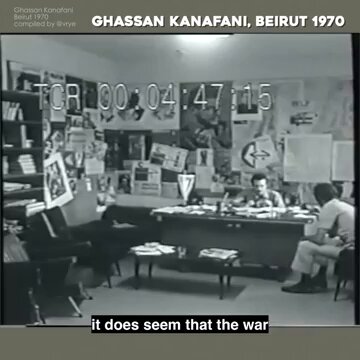
Many Palestinian clans, and families descend from Kurdish settlers who arrived during the Ayyubid period, beginning with Saladin’s wars against the Crusaders and continuing into the Mamluk and Ottoman eras. An approximate 150,000 Palestinians could be stated to be of Kurdish origins, although it’s hard to gauge with precision. These communities are concentrated primarily in Hebron, who form the most important community, but are also found in Acre, Nablus, and Jerusalem. The earliest Ayyubid-era Kurdish migrants are collectively referred to as the “Ayyubid family,” a term that does not include later Kurdish arrivals. Numerous prominent Palestinians are of Kurdish origin, including Ghassan Kanafani (who is playing in the video), one of the leading figures of the Palestinian national movement, as well as Mohammed El-Kurd and his sister Muna El-Kurd who are prominent activists. Although Palestinian Kurds largely integrated into the Arabic-speaking population through intermarriage and the adoption of Arabic as a mother tongue, most retain a distinct micro-identity linked to their Kurdish heritage. Genetic results reflect these roots. Without delving into politics, it is interesting that Kurds have forgotten about some Kurdish remnants in Palestine, while Kurdish Jews have not been forgotten about, despite the fact there is almost nothing Kurdish about Kurdish Jews in roots, history, genetics, language, customs, religion, etc. Kurdish Jews are one of the many major misappellations of ethnic groups that reside in the middle east and central Asia, that are applied and asserted by foreigners due to political agendas, misunderstandings, etc. It should be noted that the Ayyubid confederation in Palestine today does not descend from Saladin himself, but from various Ayyubid affiliates who served under the dynasty. Moreover, the founding Ayyubid clans were not exclusively Kurdish and included close allies who operated within the Ayyubid system. Three clans within this confederation trace descent from major Kurdish figures. The Abū al-Hayjāʾ clan, descended from Abū al-Hayjāʾ himself. The Qaymari clan, descended from Hussam al-Din who was the governor of Palestine under the Mamluk Sultan Baibars. Hussam al-Din was also the son of law of Al-Ashraf Musa ibn Adil, the nephew of Saladin, who ruled over the Jazira and the Levant. The al-Imam clan descended from Badr al-Din al-Hakkari. Across the Levant, claims of direct descent from Saladin are widespread but generally unsupported by historical evidence. In the absence of identifiable modern descendants, confirmation would require testing Saladin’s remains in Damascus, which is not feasible. Via AncestryDNA, one Palestinian Kurd scores 40 percent Iranian ancestry (which is obviously mediated through Kurds), while others show lower but still notable levels, with the remainder largely Levantine. Despite linguistic Arabization after the Islamic period, Palestinians of this region have largely preserved a local genetic profile. The Zalloum clan, numbering approximately 2,000 people, descends from elite Berber soldiers of Saladin who maintained close ties with Ayyubid Kurds after the dynasty’s collapse. Two independent Y-DNA results place the clan within haplogroup E-M81, a major Berber paternal lineage. One Zalloum individual shows 24.1 percent Iranian ancestry on 23andMe, while another shows 15 percent Iranian ancestry on G25. Unfortunately, the remaining samples lack autosomal data. Palestinian Kurds of the Abū al-Hayjāʾ clan, numbering at least 4,000 people, carry the Y-DNA haplogroup Q-YP1228, a lineage of Kurdish origin. They descend from Abū al-Hayjāʾ, one of Saladin’s leading generals and the Ispahsalar of the Mihrāniyya corps. Abu Halawa clan, carries Y-DNA haplogroup R1a-Z93 with an unresolved deep clade, an Indo-Iranian lineage likely transmitted through Kurdish intermediaries. Abu Khalaf belongs to haplogroup T-CTS6280, which probably corresponds to a Zaza individual from Muş under the mutation T-M9513. History There is a substantial historical record regarding the Kurds of Palestine. Within the stronghold of Hebron itself, Kurdish tribes and the Bedouin Arab Tamimi alliance were frequently in conflict. One particularly notable clash culminated in the intervention of Sultan Qaitbay, the eighteenth Mamluk ruler of Egypt, in 878 AH / 1473 CE. This horrific clash resulted in the dispersal of both groups to different parts of Palestine. The Kurds scattered to Nablus, Lod, Jerusalem, and Khan Yunis. Kurdish influence in Hebron weakened in the nineteenth century due to Ibrahim Pasha’s campaign in the Levant in 1830 CE. In Nablus, Kurdish settlement dates back to the period when Sultan Saladin granted the city to his nephew, Hussam al-Din Lajin, after he conquered it and expelled the Crusaders. Nablus became his fiefdom, and after his death it passed to Kurdish princes such as Saif al-Din Ali ibn Ahmad al-Hakkari. The Kurds of Nablus later formed a major component of the Mamluk army, and among them were prominent administrators and rulers. The arrival of Kurdish scholars and religious figures to Palestinian cities continued during the Mamluk era. Sheikh Ibrahim ibn al-Hadma al-Kurdi, known for his holy aura, settled in the village of Sa‘ir, located between Jerusalem and Hebron, and remained there until his death in 730 AH / 1329 CE. Similarly, the scholar Badr al-Din al-Hakkari al-Salti and his sons settled in Jerusalem after arriving from the city of Salt in eastern Jordan. They established the al-Salti Quarter, named after their hometown of Salt, where many Kurdish descendants still reside today. His descendants served as imams of the Al-Aqsa Mosque for many decades and became known as the Imam family, many of whom continue to live in Jerusalem today. The Kurdish population of Jerusalem was substantial, and they formed a distinct quarter known as the Kurdish Quarter, located west of the Mughrabi Quarter and known today as the Sharaf Quarter. Jerusalem also attracted many Kurdish scholars, including Sheikh Ahmad Muhammad al-Kurdi al-Bastami, the sheikh of the Bastamiyya, who taught at the Salahiyya Sufi School until his death in 881 AH / 1400 CE. Other notable figures included Sheikh Yusuf al-Kurdi, a student of the Salahiyya School; Sheikh Jibril al-Kurdi, a companion of Sheikh al-Islam al-Kamali; Sheikh Najm al-Din Dawud al-Kurdi, also trained at the Salahiyya School; and Sheikh Darbas al-Kurdi al-Hakkari, who taught at the Jawliyya School. Within the courtyard of the Noble Sanctuary stands the Qaymariyya Dome, named after Kurdish mujahideen who came from Qaymar Castle in the mountains between Mosul and Khilat. Several Kurdish princes were associated with this group, whose leader was known as Abu al-Fawaris. Buried in the Qaymariyya Dome are Prince Husam al-Din Abu al-Hasan ibn Abi al-Fawaris al-Qaymari and Prince Diya al-Din Musa ibn Abi al-Faris, both of whom died in 648 AH / 1250 CE, as well as Prince Husam al-Din Khidr al-Qaymari and Prince Nasir al-Din Abu al-Hasan al-Qaymari, who died in 665 AH / 1262 CE and 665 AH / 1266 CE respectively. The descendants of these princes, known as the al-Qaymari family, still live in Jerusalem and in the town of Dura in the Hebron region. Some migrated to Amman and Zarqa after the June 1967 war. During the Ottoman period, Kurds also settled in Jerusalem after completing the Hajj pilgrimage, forming a community in the Azbakia neighbourhood. Some served in the army and security forces, including Ahmed Muhammad al-Kurdi and Muhammad Fayrouz al-Kurdi in security roles, and Hassan Qawas al-Barzani al-Kurdi in the army. Ottoman-era records from the Jaffa Sharia Court document Kurdish settlement in the Jaffa district between 1864 and 1914 CE. Many served in the army and security forces and later remained in the area, as shown by inheritance records. Hassan Agha al-Kurdi of the Arshid quarter served in the Ottoman army in Jaffa, Hajj Bakir Agha al-Kurdi was a sergeant in the local troops, and Hajj Ahmad Agha ibn Muhammad al-Qawas al-Kurdi of Ramla held the rank of Yuzbashi Zandirma, serving as a commander in the Benghazi district. Kurdish soldiers also formed their own quarter in Gaza City, the seat of the Ottoman Sanjak of Gaza, as early as the sixteenth century CE. When Evliya Çelebi visited Safed in 1671 CE, he recorded that most of its inhabitants were Kurdish soldiers living in a Kurdish Quarter of around 200 houses. Throughout the Ottoman era, Kurds continued to migrate to Palestinian cities and villages from the Kurdish Quarter of Damascus, as well as from al-Jazira and Diyarbakir, seeking trade, administrative work, employment, or service in the Ottoman army. Prominent Kurdish Clans and Families in Palestine The Great Ayyubid Family Document, published in 1946, records the families descending from the Great Ayyubid Family. These families are Ayyubid Kurds whose origins trace back to the Ayyubid state. They were among those who settled in Palestine following its liberation from Crusader occupation. The majority of these families today reside in Hebron, with others living across various Palestinian cities. The Great Ayyubid Family includes the following Kurdish clans and families: Abu Khalaf, Salah, Hashlamoun, Tablat, Juwailis, al-Bitar, Hammour, Zalloum, Hariz, al-Rabihiya, al-Baradʿi, Ahmarou, al-Jabreeni, Amheisin, Abu Zaʿrour, Arʿar, Sahyoun, al-Hazin, Burqan, Sidr, the Abu Salem / Marqa clan, al-Mahlous, Ruwaished, Abu Halawa, al-Hashim, Mutʿeb, and Qafisha. These families collectively constituted approximately one third to one half of the population of Hebron. Some of their members later settled in Jenin, Nablus, Jerusalem, and Jaffa, as well as in Egypt and Jordan. Major Lineage-Based Families The Imam Family The Imam family resides around the Al-Aminiya School, north of the Al-Aqsa Mosque compound. Their lineage traces back to the scholar Diyaʾ al-Din Muhammad Abu Issa al-Hakkari al-Salti, who arrived in Hebron from the Kurdish Quarter in the city of Salt (Jordan) during the Mamluk era. His descendants served as imams of the Al-Aqsa Mosque for centuries, which led to their adoption of the title Imam, a designation they retain to this day. The Zaarour Family The Zaarour family is among the largest Kurdish families. They trace their origins to the Ayyubids and currently reside in Al-Eizariya, east of Jerusalem, as well as in Hebron. The Mulla Family The Mulla family descends from Mulla, or Mulla Ali, the ruler of Nazareth. They continue to reside in Nazareth and trace their lineage to this Kurdish ruler. The Saif Family The Saif family is said to descend from the Kurdish Saifa family, rulers of Tripoli and Akkar in northern Lebanon during the 16th century. They settled in Palestine following their historical conflict with the Maʿan family of Mount Lebanon. The Musa and Issa Families (Barqawi) The Musa and Issa families are today known as the Barqawi, named after the town of Barqa near Nablus. They descend from the Kurdish Saifa family, rulers of Tripoli and Akkar in northern Lebanon during the 16th century. They currently reside in the villages of Shufa and Kafr al-Labad. The Qaymari Family The Qaymari family descends from Kurdish princes who came to Palestine from the Qaymar region, located in the mountains between Mosul and Khilat in Iraqi Kurdistan. They settled in Hebron during the Ayyubid era as mujahideen in the army of Saladin. Their ancestors are buried within the Al-Aqsa Mosque compound, where the Qaymari Dome (Qubbat al-Qaymariyya) stands. The dome contains the remains of several Qaymari princes who were martyred in those wars. Today, the Qaymari family primarily resides in the town of Dura, near Hebron, with some members having emigrated to Amman, Jordan. Kurdish Families of Jerusalem Other Kurdish families originating from or residing in Jerusalem include: Abu al-Lutf, al-Kurd, al-Kurdi, al-Bastami, Aliko, and Ayyubid families such as al-Sayeh, Abu Ghalyoun, Akka, Qafisha, Gharab, Abu Hamid, al-Ayyubi, al-Hazin, Sidr, Marqa, Alloush, al-Jabrini, al-Baradʿi, Farah, Amhaysin, Mutʿab, Zalloum, Hariz, and Asila. Additional Kurdish Families by Location Additional Kurdish families include: Al-Agha in the city of Safed Al-Kurdi in the village of Deir al-Balah Al-Kurdi and al-Kanafani in the city of Acre Al-Kurdi and Fashri (from the Ayyubid dynasty) in the city of Lod Ayyubid Kurds in the village of al-Rabihiya (Hebron district) Al-Lahham in the town of Surif Al-Kurdi in the city of Tiberias Al-Zaza in the city of Beisan In Tira (Haifa), the families of al-Naji, Bakir, and Alwa are of Kurdish origin. They came from Diyarbakir and descend from three relatives: Bakir, Alwa, and Bakir Ali, as well as Hassouh (Hassan). These families lived in Tira and migrated to Jordan after 1948. There are also the Murad al-Kurdi family, the Agha, Zaza, and Kurdi families in the Gaza Strip; the Kurdi family in Aida Camp near Bethlehem; the Agha family in Khan Yunis; the Kurdi family in Beersheba; the Kurds of al-Baqara and al-Ghannama in the Tiberias district; the Kurdi family in the villages of Hawara and Hawasa; the Kurdi family in Ramla; the Kurdi family in the village of Ein Arik; and Kurdish families in Jerusalem, Hebron, Deir al-Balah, and Beit Tima. Additionally, the Ayyubi and Saadiyya families of Ayyubid origin reside in the city of Jaffa, as does the Abu al-Haija family in the village of Ein Hawd. Gaza City: The al-Zaza Family The al-Zaza family originally lived in the village of al-Kufkha in the Beersheba area until 1948. After the village was demolished and bulldozed, they relocated to Gaza City. According to one member of the family, their origins trace back to the Kurds of Kurdistan. Their grandfather, Hajj Mustafa al-Zaza, came to Gaza during the Ottoman era due to his work. He had two sons, Abdul Hamid and Abd Rabbo. Abd Rabbo and his sons, Abdul Rahman and Deeb, lived in al-Kufkha, where they worked in agriculture and raised sheep and camels. Following the village’s destruction in 1948, the family permanently settled in Gaza City. Tiberias The Kurdi family, belonging to the Kurdish Izoli clan of Syria, resided in Tiberias. During the British Mandate period, the government appointed Muhammad Ayyub Zaza (Abu Ayyub al-Kurdi) as the mukhtar (headman) for Muslims in the city. Other Kurdish families in Tiberias included the Bakdash family, the Khalil al-Kurdi (Jaras) family, the Zaza family (descended from Hajj Darwish Zaza), and the Bakr Agha (Izoli) family, descended from Bakr Sidqi Agha (Izoli). Jaffa Records from the Jaffa Sharia Court indicate the settlement of a number of Kurds in the Jaffa district during the Ottoman era (1864–1914). Many served in the army and security forces both within and outside the district. Some chose to remain after completing their military service, as evidenced by inheritance records. Examples include: Hassan Agha al-Kurdi, residing in the Arshid neighbourhood of Jaffa, who served in the Ottoman army stationed in the district Hajj Bakir Agha al-Kurdi, a sergeant in the Ottoman troops stationed there Hajj Ahmad Agha bin Muhammad al-Qawas al-Kurdi of Ramla, who served as a Yuzbashi Zandirma (commander) in the Benghazi Brigade

Ari

221,174 Aufrufe • vor 9 Monaten

The Coming of the American Wotan: Carl Jung believed that Hitler was possessed by the archetype of Wotan (Odin) the ancient god of the Germans. He used the term "Ergriffenheit — a state of being seized or possessed" — to describe " one who is seized", but, also "one who seizes". "Wotan is an Ergreifer of men, and, unless one wishes to deify Hitler – which has indeed actually happened - he is really the only explanation". Unless we too seek to deify Trump as a literal god Emperor, we must presume Trump (rather our projection of him) to be of a god. The difference between Hitler and Trump is that Hitler was the catalyst of Germany's possession, whereas Trump is merely the object of our projection. The admiration both for and against Trump confirms a psychic phenomenon known as ideological possession, a term coined by psychologist Carl Jung. Jung wrote that: "Among primitives, "possession" implies that a god or demon has taken over a human body". Jung asserts that people can become possessed by archetypes that sleep deep within their collective unconscious. Societal possession will take form in accordance with the cultural myths, ethnic peoples, and values of a civilization. What ideas possesses the American? Trump represents the projected contents of the American collective unconscious. His image informs us what the Americans demand — a god king to rule us. This golden hero, however, he was designed with a clear purpose: Manufacture decline by our own consent through the construction of a false idol. First creation tension. Manufacture decades of rampant f@ggotory, racial division, and forever wars. Next, create release. Lull the people into a fake confidence. Promote making "America Great Again", a return to the glory of the forefathers. Promote a "wall", safety and security by expelling invading parties. Have the people elect the false savior in a spectacle of dazzling magnificence. Get the idol elected with full confidence of the most patriotic folk to prevent the "would be" resistors from revolution. With the people lulled into a false sense of security, now comes the time to pass laws that could have never been authorized under the previous regime. This "sleep" is how we arrived at simple legislation like bump stock bans and more extreme "persuasions" like vaccine promotion. We must never forget Operation Warp Speed in which Trump proclaimed himself the "father of the vaccine." — this was an act of treason. The king poisoned the watering hole. His closest knights drank. Only 10% of the population remains pure-blooded, a number that will only dwindle with time. Practically overnight, all of our people become infected with a bioweapon that shall never dissolve from their veins. We must accept reality: hidden masters control both the opposition and the solution. With Trump fully fallen into the depths of the swamp he so promised to rescue us from, A new king must arise to obliterate illusion through the unification of political extremes. Wotan, so to speak, has not yet manifested in physical form; he yet waits for the proper host to present himself. What god do the Americans seek to summon, exactly? Is it correct to say that we, like the Germans, seek to summon something as ancient as Wotan? Yes. Wotan cometh and he speaks through the blood of the American Founding Stock. Jung defines how Wotan will next take shape within the American psyche by mirroring the German movement, writing: The emphasis on the Germanic race — commonly called “ Aryan” — the Germanic heritage, blood and soil, ... Jesus as a blond and blue-eyed hero, the devil as an international Alberich in Jewish or Masonic guise — all this is the indispensable scenery for the drama that is taking place ... a god has taken possession of the Germans and their house is filled with a “mighty rushing wind". Americans are now firmly pinned between "foreign interests" in the desert, a force of millions of invaders from the border, and, the already degenerated culture of our nation ––these were the exact forces that lead to the birth of Wotan via the idol of Hitler. The strife to come from these conflicts will demand that the American return to his “roots”, purely as a means of survival. Our “race” will no longer be a “diverse melting pot”, but rather the Aryan frontiersman. Wotan will select a new host from the founding stock and he shall be known as the great unifier. He shall order political extremes to join forces and vanquish foreign influence in a vast holy war to reclaim the soul of the American nation — this is our future. Now is the time to once again Manifest Destiny. Wotan cometh.

Rogue | Frontier Philosophy

21,472 Aufrufe • vor 6 Monaten

NAF ALPHA JETS: A COMBAT LEGACY FORGED IN FIRE Inducted into the Nigerian Air Force in the early 1980s, the Alpha Jet did not merely enter service, it announced a new era of fast-jet capability and operational confidence. Conceived as both an advanced trainer and a light-attack aircraft, the Alpha Jet rapidly proved it could fight as fiercely as it could train. Its defining moments were written in West Africa, where NAF Alpha Jets flew decisive combat missions under ECOMOG, striking hostile targets, disrupting enemy logistics, and delivering relentless close air support in Liberia and Sierra Leone. Years later, the aircraft again projected Nigerian resolve beyond its borders during stabilisation manoeuvres in The Gambia in 2017, supporting the enforcement of democratic mandates. At home, the Alpha Jet became synonymous with speed, precision, and authority, shaping generations of pilots, dominating contested airspace, and projecting Nigerian air power with unmistakable presence. Rugged, responsive, and battle-tested, the aircraft earned the fear-tinged nickname “Dudu Birds”, a testament to its dark silhouette, sudden appearance, and decisive impact wherever it was deployed. As Nigeria confronted insurgency, terrorism, and armed criminality, the Alpha Jet once again answered the call. Re-activated, sustained, and driven into high-tempo operations, it delivered punishing effects against hostile elements, escorting strike packages, interdicting enemy movements, and supporting troops in contact with lethal accuracy. The thunder of its engines over hostile territory became a psychological weapon, breaking enemy morale and reinforcing ground forces with visible air dominance. This combat legacy was paid for with courage and sacrifice, and the Nigerian Air Force honours the gallant Alpha Jet aircrew who flew into danger without hesitation, some of whom paid the supreme price in defence of the nation, etching their names permanently into Nigeria’s air power history. Today, that legacy is driving transition, not retirement. The NAF is aggressively modernising its fleet, inducting advanced multi-role and lead-in fighter platforms to assume and expand missions once undertaken by the Alpha Jet, with greater persistence, sensors, and survivability. Through this deliberate evolution, the Alpha Jet’s legacy is not fading, it is being institutionalised, as the Nigerian Air Force advances from a proven combat icon to a new generation of air power, sharper, smarter, and deadlier in defence of the nation. ALPHA JET DISPLAY — RAW POWER, PROVEN IN COMBAT, ETCHED IN NAF HISTORY #AlphaJet #NigerianAirForce #AirPower #CombatProven #NAFLegacy #FleetModernisation #AirDominance #DefendingNigeria

Nigerian Air Force

27,743 Aufrufe • vor 8 Monaten

New product ⚡️✅: We are thrilled to announce the unveiling of an iconic product; our indigenous Night Vision Goggles🔥, developed & built right here in Abakaliki, Ebonyi State, Nigeria, designed & engineered by my humble self, under the umbrella of Zedora Electronics Limited, about a year ago. Due to the prevailing political & security uncertainties at the time, we chose to keep this innovation a secret. Today, we are proud to finally present this sophisticated system to the world, the first Made-in-Nigeria Night Vision Goggles. This product gives a user the ability to see in complete darkness. This is the most sophisticated device I have ever designed and built. It also has a zoom and focus feature up to 100 meters, as well as recording and playback functions within the goggle. To the best of my knowledge, no one has ever built this piece of technology in Nigeria; we are the first to do this. We believe it has the potential to significantly enhance the operational capabilities of our nation's defense and security forces. As a testament to our commitment to national security, we humbly invite the Nigerian Army, Police, Air Force, and Navy to collaborate with us in making this cutting-edge technology mainstream, starting with a live demonstration. Your partnership will not only bolster our security infrastructure, it will also position Nigeria at the forefront of technological advancements in security and defense systems in Africa, showing our international allies that whatever they can create, we can create. We have the brains, we have the manpower, we just need the will to do so. Our night vision goggles are designed to improve night-time visibility, ensuring superior situational awareness and operational effectiveness. Developed and manufactured locally, our design reflects an intimate understanding of our security challenges. We are continuously working on high-end products that are currently in the development phase, promising a steady pipeline of advanced solutions tailored for security applications. We wish to assure you that our night vision system has never been sold to anyone anywhere in the nation or abroad. I am only a citizen passionate about contributing to making our nation great through innovative technology. Currently, we possess only one prototype, underscoring our dedication to ensuring its readiness for national security and defense purposes before any form of distribution. The video below shows a recorded demo done in pitch black darkness with an Infrared beam. We once again humbly invite the Nigerian Army, Police, Air Force, and Navy to collaborate with Zedora Electronics Limited. Your support and partnership are crucial as we strive to enhance our national security capabilities through innovative technology. Nigerian Army Prince Olumuyiwa Adejobi SP Bright Edafe Nigerian Navy #Zedora #madeinEbonyi #madeinNigeria

Ziko Abara

208,306 Aufrufe • vor 2 Jahren

On May 12, 2025, HUMAIN was launched. One year later, I reflect with immense pride on what this team has accomplished in such a short period of time. What many people may not realize is that HUMAIN was never designed to be a single company. From day one, the vision was much bigger. In parallel, we have been establishing five companies simultaneously: • HUMAIN Core • HUMAIN Compute • HUMAIN Intelligence • HUMAIN Shift • HUMAIN Ventures Each with a distinct mandate, but all working together toward one mission: building a national AI champion designed for the age of intelligence. Our foundational year was not defined only by ambition, but by execution across multiple fronts at once. First, Foundation. We built HUMAIN from the ground up, establishing the operational backbone of the company while integrating strategic assets, talent, and investments from both government and private sectors. This created the foundation for a unified AI ecosystem under one organization. Second, Culture & Alignment. We made a deliberate decision to build differently: flat, agile, and execution-driven. We shifted from role-based work to outcome-based ownership. Titles mattered less than builders. Mission mattered more than hierarchy. Third, Product Creation. We made a bold choice early on: we would not buy software, we would build it ourselves. This led to the creation of our AI-native stack, including HUMAIN ONE, HUMAIN Fabric, HUMAIN Chat, HUMAIN Create, HUMAIN Brain, and HUMAIN Horizon Pro. Today, HUMAIN operates increasingly on its own technology stack, transforming from a consumer of technology into a creator and exporter of it. Fourth, Infrastructure Build. AI leadership requires infrastructure at scale. Over the past year, HUMAIN moved aggressively across data centers, compute, and strategic global partnerships to position Saudi Arabia as a global AI infrastructure and inference hub. We are targeting 250 MW of deployed capacity by the end of 2026 and scaling toward multi-gigawatt infrastructure in the years ahead. Fifth, Global Positioning & Capital Strategy. Through strategic partnerships, ecosystem development, and diversified funding approaches, HUMAIN strengthened its position as a company focused on long-term AI leadership, innovation, and intellectual property creation. But beyond all of this, the most important achievement was the people. To every HUMAIN builder who worked day and night to help stand this company on its feet: thank you. Startups are never easy. Building five companies simultaneously is even harder. What this team accomplished in one year would normally take many organizations several years to achieve. I am incredibly proud of what HUMAIN stands for, what we are building, and the mission we are on together. The era of consuming technology is behind us. The era of building and exporting it has begun. And this is only the beginning. #HUMAIN #HUMAINBuilders #AI #TheEndOfLimits

Tareq Amin

12,473 Aufrufe • vor 5 Monaten