Video wird geladen...

Video konnte nicht geladen werden

Zur Startseite

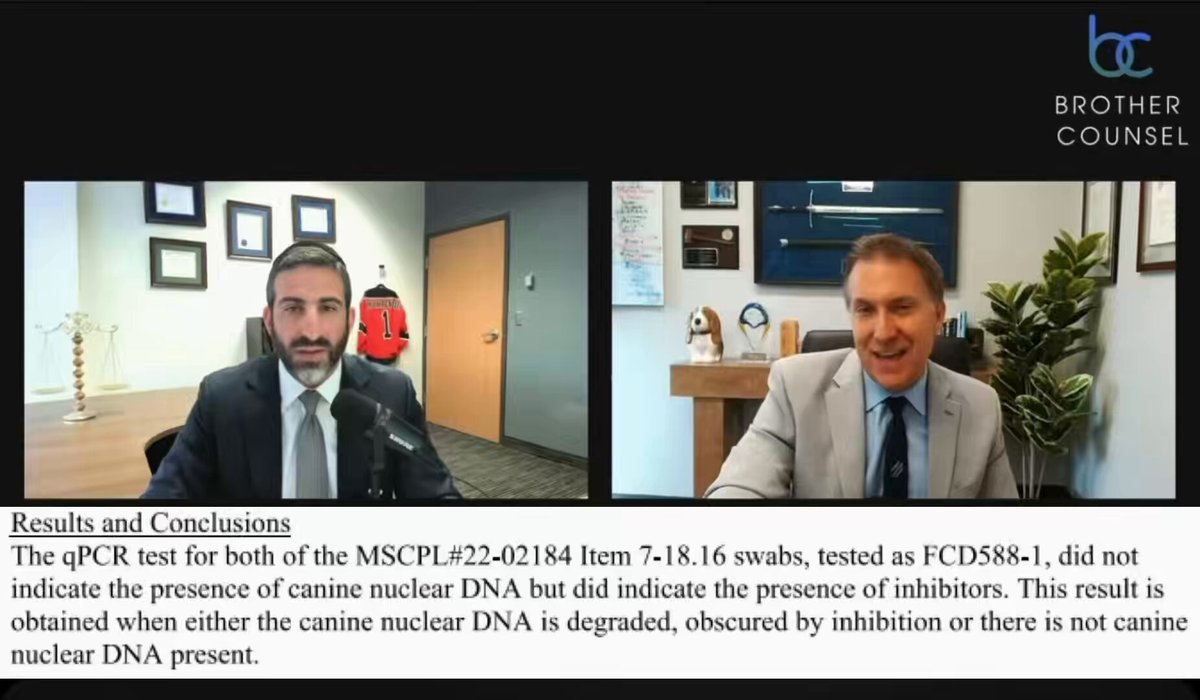
Biased Bev’s explanation for ruling Dr. Laposata’s unqualified to testify about dog bites or portions of her opinions on injuries from a vehicle pedestrian collision makes no sense. 1) Dr. Laposata has been qualified by a federal judge as an expert on dog bites, but I’m sure Bev knows...

112,606 Aufrufe • vor 1 Jahr •via X (Twitter)

11 Kommentare

Profilbild von Linda Kenney Baden (she/her)
Linda Kenney Baden (she/her)vor 1 Jahr

This ruling is dead set wrong. The forensic pathologist is the only person who sees the dead body with injuries. If Cannone were going to do a DAUBERT should have been before trial so to other forensic paths could testify or submit certifications saying her "methodology" based on experience etc is valid! @JusticeServedTV

Profilbild von UserInterface
UserInterfacevor 5 Jahren

Did You Know Dog Insurance Was a Thing? #pets #dogs #petcare

Profilbild von Michelle #AmericaFirst
Michelle #AmericaFirstvor 1 Jahr

@aburkhartlaw So a "dog behaviorist" has more qualification to opine on dog bites than a forensic pathologist who's been an ME in several different states for nearly 5 decades?? Got it.🤦‍♀️

Profilbild von Bill -_-
Bill -_-vor 1 Jahr

@aburkhartlaw Cannone has gone way past being biased into the corrupt zone. No justice is possible in her court.

Profilbild von 𝙴𝚜𝚜𝚘𝚑 #𝕁𝕦𝕡𝕚𝕥𝕖𝕣𝕀𝕍𝔾𝕒𝕟𝕘
𝙴𝚜𝚜𝚘𝚑 #𝕁𝕦𝕡𝕚𝕥𝕖𝕣𝕀𝕍𝔾𝕒𝕟𝕘vor 1 Jahr

@aburkhartlaw Reversible error

Profilbild von SallyCinnamon
SallyCinnamonvor 1 Jahr

@aburkhartlaw I don't think it's going to matter much what Biased Bev thinks or rules about this qualified expert's dog bite testimony. Defense is brilliant! Wait for it!

Profilbild von michelle L
michelle Lvor 1 Jahr

@aburkhartlaw For Hank, the less the jury hears about dog bites (from either side), the better.

Profilbild von Frank Parker, Jr. ESQ, DDH, PDQ, BLT.
Frank Parker, Jr. ESQ, DDH, PDQ, BLT.vor 1 Jahr

@aburkhartlaw Jackson must be laughing internally going over her credentials on direct. Auntie Bev REALLY screwed the pooch on this one. Pun intended.

Profilbild von The Cuban Sandwich Crisis
The Cuban Sandwich Crisisvor 1 Jahr

@aburkhartlaw I love that Alan is usin the rest of the day to run through all of the credentials and ticky-tack details. It may seem like a waste of time, but it will all make sense once Hank starts objecting to every question here very soon.

Profilbild von *~The~Truth~Is~Always~The~Strongest~Argument~*
*~The~Truth~Is~Always~The~Strongest~Argument~*vor 1 Jahr

@aburkhartlaw i mean it kinda does make sense if ya think about it… 🫤

Profilbild von Smathers
Smathersvor 1 Jahr

@aburkhartlaw "the crime scene"

Ähnliche Videos

Remember when Hank Brennan tried to have a “gotcha!” moment with Dr. Marie Russell, acting as if he knows more than her about dog bites, when he claimed that they’re “routinely referred to as an hourglass shape”? Brennan went so far as to represent that “hourglass” is the industry standard term used to describe the shape of dog bites by experts in an attempt to imply that being unfamiliar with this term suggests one isn’t an expert. ———— Brennan asked: “Well in most professional studies by experts, isn’t it routinely referred to as an hourglass shape?” Dr. Russell replied: “I haven’t seen that at all.” Brennan asked: “Well have you read books on dog bites?” Dr. Russell replied: “I’ve read articles on dog bites.” Brennan asked: “Have you read books on dog bites?” Dr. Russell replied: “No. I have read articles on dog bites.” Brennan asked: “Have you ever read this book (Brennan holds up book)? Do you recognize this as an authority?” Dr. Russell replied: “No.” ———— There’s just one problem for Mr. Brennan. This—the term “hourglass” for describing the shape of dog bites—isn’t a standard known or used industry term, in fact, it isn’t even a term used by experts in the field, nor is it a term used in “professional studies” to describe the shape of dog bites. Unable to find any instances where the term “hourglass” is used in any of the literature, “professional studies”, scientific papers or expert testimony, I decided to consult Hank Brennan’s Dog Bible (I mean book) since he specifically cited to it as being a source that substantiates the supposed established & routine use of this terminology by experts in the field. However, in my quest to determine if this was in fact the case, I scanned through the entirety of Brennan’s “Dog Bites: A Multidisciplinary Perspective” book in order to find what he was referring to. Shockingly, for a term like “hourglass” that Brennan portrayed as being industry nomenclature, or specific verbiage used by experts & in books—particularly Brennan’s book—to describe & expertly qualify the distinct shape of dog bites, this book used the word “hourglass” one time across its 450+ pages. In its singular mention of the word “hourglass”, the book states: “The hourglass shape of a generalized dog bite is clearly different from the typical bow shape of a human bite” (pg. 237). Nowhere in this sentence, page or chapter of the book does it indicate that the word “hourglass” is a widely accepted & used term in the field for describing the shape of dog bites. Based on its singular reference & lack of routine use in this entire book about dog bites, I think it’s safe to say that Hank Brennan is not only wrong, but apparently didn’t read his own reference book—other than perhaps the one page mentioning “hourglass”. ———— Final note on Brennan’s apparent lack of discernment on what constitutes an authoritative source in the field, especially in the areas of science & medicine, and particularly as it relates to expert witness testimony: It’d also appear that Brennan is confusing “professional studies” with peer reviewed studies. This seems to be further reinforced by the fact that he leaned on “books” as a default authority source, when in actuality, it is very well understood both in the medical/scientific community, as well as in the legal world of expert witnesses, that the unequivocally reliable authoritative source is the peer-reviewed study—sometimes referred to as “articles” (aka academic research articles). You probably recall hearing Dr. Russell refer to many such “articles” (peer reviewed studies) throughout the hearing. Peer-reviewed studies, unlike “professional studies”, are academic research articles that undergo rigorous scrutiny by experts in the field (peers) before publication. This process ensures the quality, validity & originality of the research—unlike say a book, for instance, which has no barrier to publication. #KarenReadTrial

Olivia

31,675 Aufrufe • vor 1 Jahr

Do you ride a bike? Or an e-scooter? Or walk a dog? If so, please take a second to read this. If you are on a bike or scooter on a shared pathway and approaching someone walking a dog, please be courteous and slow down a little. Especially if coming up from behind. I am a wheelchair user with a dog and we have way too many close calls with fast moving bikes and scooters. People not using a bell and whipping by within inches. If the dog turned it's head or stepped a bit wide, they'd be hit. I'll happily move as far to one side of the path as possible, and if I've got the younger dog who isn't as experienced around fast moving things, I'll stop at the very side and have him sit in front of me to give everyone as much space as possible. If I don't know you're approaching, I can't do that. So please, for the love of dog, use your bell. Don't wait until you're right behind someone with a dog. Use it while you're still at a distance, and if you aren't sure they noticed it, ring it a few more times. Give them as much time as possible to move to the side and prepare the dog. If it's a puppy or a dog that hasn't had much experience with bikes, being able to get them off the path or give them a little extra distance from the fast moving bike helps prevent them from getting scared. The vast majority of cyclists are great and really respectful, but there's always a few that aren't. This year the challenge is kids on e-scooters. They are going fast and having fun. Safety isn't at the forefront of their mind. They often don't use a bell or slow down at blind corners, and many don't think about giving the dog any space. I've been startled a few times by them so I can only imagine how the dog felt. This is one of the reasons why I do a lot of desensitization and counter conditioning. Dog owners-you need to do your part to. If you've got headphones on, make sure you can still hear the bike bell. Make sure to give the cyclist or scooter rider as much space as possible from your dog. And of course, unless you are on a designated off leash trail, keep your dog on a leash. If you have a puppy or a newly adopted dog that might not be comfortable around bikes, take some kibble or treats and go hang out with them near a multi use path. Let them watch. As the bike or scooter approaches, drop a few treats on the ground. For many dogs, this is all it takes, but if your dog is visibly stressed, fixated on the bike, or reacting, try moving a further from the trail and once they're comfortable at a slightly further distance, try closer again. If they are still stressed or fearful even with more distance, don't force the issue. Instead introduce them to a bike that isn't moving, and gradually work them up from there. If they are struggling, talk to a trainer. Regardless of if you are holding a leash, riding a bike or scooter, or enjoying a walk outdoors, just be respectful. And of course, be safe. Thanks, Admin 🎥 Puppy walk for cuteness

Team Servicerottie🇨🇦🐕‍🦺🦽

15,632 Aufrufe • vor 1 Monat