Loading video...

Video Failed to Load

Go Home

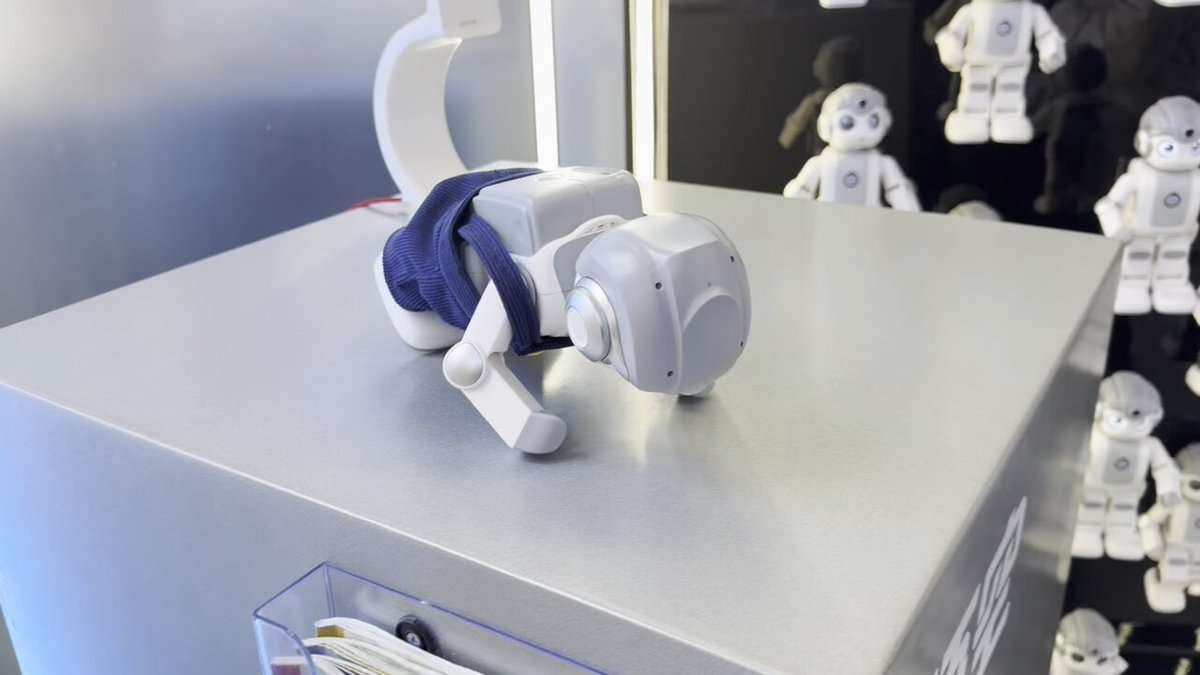
Biggest difference I noticed between many Indian & Chinese factories: CLEANLINESS. Today I visited a small family workshop making electric suitcases. Tiny setup. But spotless floors, organized tools, clear workflow. And this isn’t a special case. I’ve seen even smaller factories here run with discipline. There are 1000s of...

184,214 views • 3 months ago •via X (Twitter)

0 Comments

No comments available

Comments from the original post will appear here

Related Videos

I’m probably one of the only Teslanaires out there, if not one of the very few, still cutting my own hair. I cut my own hair again today, and it reminded me that becoming a multi-millionaire usually isn’t a random coincidence. People see the $ and think it just happened. What they usually don’t see are the small habits behind it. Of course, I could go spend $25–$50 on a haircut that probably looks better than the one I give myself. But that’s not really what matters to me. I don’t care that much about looking perfect. I care about controlling my time. I care about staying grounded. I care about keeping the kind of habits that helped me build wealth in the first place. And honestly, I enjoy doing it. I’ve been cutting my own hair for so many years that I don’t even think about going to the barber anymore. It’s just normal to me now. It saves time, keeps me frugal, and reminds me that wealth is usually built in the small choices nobody claps for. That’s the part people miss. A lot of people see wealth and assume it was luck. But a lot of the time, it’s really the result of small disciplined habits repeated for years. Not wasting $ just bc you can. Not wasting time just bc other people do. And the funny part is, one day my fleet of Tesla Bots will probably be doing it for me anyway. But until then, I’m good doing it myself. Bc to me, being wealthy was never about trying to look rich. It was about building a mindset. A mindset that values time, discipline, and freedom more than appearances. And once you really live that way, it shows up in a lot of things, even something as simple as cutting your own hair.

Teslaconomics

16,514 views • 4 months ago

Charlie Kirk’s death has been celebrated like nothing I’ve ever seen. I’ve always been moderate, and I’ve criticized Charlie Kirk openly in the past. But this isn’t about whether you agreed with him politically. It’s about the sickness in our culture that now treats a horrific tragedy as entertainment. Younger people especially seem disturbingly unempathetic. The sheer volume of videos and posts celebrating his death—with hundreds of thousands of likes—shows how far things have slipped. The left has fostered a culture where open violence isn’t just tolerated, it’s cheered. Ask yourself this: if Obama or Kamala were gunned down, does anyone really believe the right would react the same way? People were celebrating Charlie’s Death in the streets across the country the literal day he died. Republicans aren’t spotless, I realize this. When two Minnesota politicians were executed, there were a handful who celebrated—but they were condemned across the board. That’s the difference. On the left, this kind of behavior is brushed aside, amplified, even mainstreamed. As someone younger, I’ve watched my generation lose its grip on empathy. Older people say, “It’s like they don’t even care about his family or his children.” And they’re right. Universities and our wider culture have taught kids to disregard faith, family, and any higher sense of responsibility. The result is a generation of detached, selfish people who treat death like a meme. I don’t mean to paint with a broad brush, I know young, left-leaning people who are compassionate. But this moment has stripped away the illusion that the problem isn’t real. The cultural rot is staring us in the face. Charlie was a divisive figure and he certainly could be tribal. But he never celebrated violence against those he disagreed with. He never called for blood. There’s no hopeful ending here. I fear for what this country has become, and for the generation of extremists it’s raising.

End Tribalism in Politics

11,437 views • 10 months ago

Why Having a Satellite Network is So Important In 2023, the Russians were about to close a deal with a certain North Korean MLRS, but the deal fell through exactly because the North Koreans, +20 years ago, had revolted against Russian opposition to their nuclear program and switched from GLONASS to BeiDou. Only few years ago, the NK returned to Glonass and started converting their equipment to work with dual GNSS guidance. But why did the deal sour? Because the Chinese did not authorize the use of their satellites in the Ukraine conflict. The same problem occurred with the Belarusian POLONEZ MLRS, which uses missiles based on Chinese technology. Today, Iran has switched from GPS to BeiDou, aiming for greater resistance to jammers and integration with Chinese systems. This shows that a missile program is much more than the missiles themselves. It is necessary to have one's own constellation, even if it is strictly military and regionalized, with resources for monitoring and target acquisition, in addition to the ability to deal with jammers and spoofers. When I mentioned Iran and BeiDou, it is the beginning and serves as a gateway that enables integration with Chinese networks, provided the Chinese decide to allow it. However, it is essentially a massive gateway, with numerous smaller, more specialized sub-channels operating underneath. For targeting moving objects, Iran would need to receive data from the Guowang or Yaogan networks. In the last six months, the Chinese could have provided partial integration. At this stage, since the Iranians are conducting their ISR primarily with drones, I believe the Chinese are not sharing data from the LEO satellites in those networks. Iran also has its own satellites, but the Chinese network is far more mature and likely equipped with a wide array of integration and data-sharing tools. While the Chinese are providing intelligence to Iran, I believe they are prudent in doing so to preserve the relationships they have built with other Arab states. At this moment, I believe that the sharing of intelligence from satellites isn’t in real time. For a country like Iran, it is crucial to have GNSS independence with its own program. The same applies to other medium-sized countries, which need at least an LEO constellation capable of providing the minimum ISR, and this is linked to security, but also a series of other factors. I'll give a practical example here. Drones usually lose link with 50% of their range in the Amazon due to weather conditions. With an LEO constellation, this would not occur. Today, to have independence, a constellation project is necessary.

Patricia Marins

19,508 views • 5 months ago

I spent a month in Shenzhen visiting factories and robotics companies, and the contrast with the U.S. was striking. While Figure and Boston Dynamics hide their humanoids behind closed doors, Chinese companies have massive showrooms open to the public. But what really stood out wasn't just the transparency, it was how good they are at selling. Take UBTech: they've already sold 1,200 humanoid units at $200k each to factories. And here's the kicker, these robots aren't even that useful yet. They can only pick up and drop boxes at 1/10th the speed of a human, and factories still need to hire system integrators to train them for specific tasks. My theory is that these factories are terrified of getting left behind in the robotics/AI wave. They're investing in new tech not because it's ready, but because they can't afford to wait. The second surprise was the breadth of their robotics portfolio. These companies aren't just building humanoids, they're deploying service robots everywhere: restaurants, hotels, apartments. Consumer robots are cleaning houses, pools, pet waste, dishes. They're covering the entire spectrum. But the education piece shocked me most. I picked up what I thought was a high school or college robotics textbook, it was for primary school. The government mandated AI and robotics education starting in elementary school. Almost every single school in China now has AI and robotics curriculum, complete with education robots so kids can learn by building. They're creating a generation that grows up fluent in robotics and AI. China owns the supply chain and the hardware stack. But here's what I think people are missing: the race isn't just about who can build robots faster or cheaper. The U.S. advantage has always been in the layer between hardware and human, the interaction design, the software intelligence, the intuitive interfaces that make complex technology feel natural. China is building the physical infrastructure, but they're also learning fast. Every deployed service robot, every classroom full of kids building with education kits, every factory running humanoids, that's all data collection at scale. The window for the U.S. to establish its wedge is narrowing. It's not enough to be better at AI or software anymore. We need to be building the integration layer, the intelligence that makes physical AI actually useful, not just impressive in a showroom. Because right now, China isn't just manufacturing robots. They're manufacturing a robotics-native culture, and that might be the most defensible moat of all.

Miyu Horiuchi

90,718 views • 5 months ago

China is my 61st country 🇨🇳 I’ve spent 2 days in Shenzhen and here’s what amazed me: - Scale! Everything is huge. The city itself is 2x Hong Kong size or 33% Canada size. It easily takes 30-50 min by car or tube to go from one area to another. - Very high tech. Robot deliveries for in-room dining, drones delivering food in the parks, 10 stories robotics markets. - There are also robocard without drivers in some areas but I didn’t have time to try it. - Extremely green. Shenzhen pioneers the concept of harmony between nature and urban planning. It’s basically a city embedded into mountains, sea and greenery. Parks everywhere. - Immaculately clean everywhere from streets to casual eateries. Very high contrast with Yangshuo where I was before. - High patriotism and love for the country & people in every detail. Looks like a great city to live in. - Though nothing is equipped for handicapped people - in general saw this across China so far - The city is very young - only 49 years old. And looks like the population is very young, too. I’ve seen maybe 5% of people over 50 years old on the streets. the only place in China so far where I was constantly asked for Chinese phone number for payments. Still don’t know why. - Very limited English, despite high tech and education. Hotel / restaurant staff didn’t speak at all. Almost no English explanations in museums even - to me it feels like a statement that West is not needed here - Smoking cult. Everywhere, even the room in my non-smoking hotel smelled of cigarettes - A lot of parks, squares and communal areas where people do sports, dance, sing and socialise - Incredible architecture! There are some pretty unique buildings. Each museum site is a masterpiece.

Kseniia Baziian

164,080 views • 1 month ago

I know I can still make a lot of $ investing in companies led by people like Mark Zuckerberg or Sam Altman, but they are shady and I just can’t trust them. And that’s why the founder matters so much to me when I invest. I’m betting on so much more than just the products, technology, or financials, although important. I’m betting on the person leading the company… their vision, character, ability to execute, willingness to risk everything, and most importantly, their heart. And the heart matters. I genuinely believe Elon has a kind heart and that his intentions are real. He’s shown me time and time again that this is about so much more than just making $ money (despite him NEVER letting investors down for any capital raise for any of his companies in the long run…) You don’t risk everything you have on electric cars, FSD, and reusable rockets bc you’re chasing the easiest $ dollar. In fact, looking back, there were probably a thousand easier ways to make $ money with far less risk, stress, and sacrifice. You dedicate your life to solving some of humanity’s hardest problems bc something deeper than $ money is driving you. Elon could’ve easily taken his $ money, disappeared, and lived one of the easiest lives imaginable. But instead, he kept putting it back on the line to build things people said were impossible and were super important for the future. Making life multiplanetary. Accelerating sustainable energy. Giving people internet anywhere on Earth. Restoring mobility and independence through robotics. Pushing humanity forward with AI. The list goes on and on… You can disagree with Elon. You can hate how he says things. He says crazy things, I know. You can question his decisions. But after following him and investing in his companies for more than a decade, I believe he’s the real deal… the mission is real. I believe I have a pretty keen eye for these things. Great entrepreneurs can copy ideas, improve them, and still make investors a lot of $ money. However, true innovators create the future everyone else eventually follows. That’s the difference. And to me, there’s only one Elon Musk.

Teslaconomics

85,569 views • 5 days ago

•This photo was taken last night directly in front of Burj Khalifa. •The video was taken on Saturday in Abu Dhabi with my friends and children (Europeans and Arabs). This is not a defense of the UAE simply because I live here. Rather, I speak as a Lebanese political activist who was subjected to political detention in Lebanon by a direct decision of Hezbollah. I chose the UAE and the Gulf countries as a place of safety and freedom of speech (that I still deliver it on my social media till today ) for the time being, instead of Europe ( despite receiving offers of political asylum from more than five countries within the European Union and Scandinavia) which I travel only for vacation and despite my deep appreciation for Europe, as well as for the human rights advocates and politicians who supported my case there. However, I will not accept any manipulation of the “image of a country” where I live by my own choice, with my own means and work (especially as an activist who returned from my country, Lebanon, under war conditions less than a week ago) I will not tolerate media distortion when the reality is : security, discipline, and the continuity of peaceful life. Under an air defense umbrella that has intercepted more than 1,000 attacks, every sound in the sky reassures me that I am safe that I, my family, and an entire region stretching across the Gulf, the Levant, and the Eastern Mediterranean, are being protected amid ongoing threats. The Gulf is safe. The UAE is safe. Dubai is safe. I am safe( along with four children, my sisters, and their children who came from Australia) We all chose to spend the Eid holiday in Dubai.

Kinda El-Khatib

61,642 views • 4 months ago

I think I've stumbled onto the future of building startups. It wasn't supposed to happen this way. It's 2 AM. I'm editing a podcast, questioning every life decision that led me here. I've already burned through hundreds of thousands on this thing since 2021. Zero monetization. Just burning cash. My business partner's probably thinking I've lost it. We're juggling 6 businesses, and here I am, playing wannabe Joe Rogan. Then it hit me. Not during the podcast. In the darn comments section. I start sorting comments by "contains question" using this AI creator tool called VidIQ. "How do you validate ideas?" "What tools do you use?" "Can you dive deeper on XYZ topic?" These questions keep popping up. Over and over. That's when the lightbulb went off. What if I could turn this into a lead magnet machine? Find questions. Answer them with free stuff. Rinse. Repeat. I team up with Design Scientist to crank out 2 lead magnets a month. (Tried doing it myself first. But it was hard lol) We start pumping out things like "6 Tools I Use to Find Startup Ideas." Suddenly, I'm drowning in subscribers. 10,000 to 20,000 a month. On autopilot. Now, you're probably thinking, "Cool story, bro. But how's this a big idea?" Clarity of what to build is probably one of the most valuable ways to build products people want. You have to understand a niche's problem better than they even know them. Problem: what's the roadblock keeping founders stuck? Segment: group these founders by their specific obstacles. Product: build the bridge that gets them over their hurdle. I use ConvertKit like a scalpel, dissecting these segments. Not by age or location. By the problems they're desperate to solve. Suddenly, I'm staring at a treasure map of founder pain points. And that's when you can build startups to solve their problems. Instead of being a lead factory, you become a startup factory. You use tools like v0/replit/cursor to prototype like a madman. And it makes your life less stressful as a founder. Because you know people are lined up to buy the products. I'm so convinced this is the future of startup building, I've bet $1M+ of my own cash on it. Building startups to solve people's problems. And cool part is this blueprint can be replicated in any niche. The best SaaS ideas aren't in some Silicon Valley incubator. They're hiding in your "free" content. Think of it like this (Isenberg's formula?): (Engaged Audience) x (Targeted Lead Magnets) x (Problem-Centric Segmentation) = Product-Market Fit on Demand Here's the step-by-step: 1. Use AI/software to categorize every single audience interaction by problem type. Build a heat map of pain points. 2. Create ultra-specific lead magnets for each major problem cluster. Think "5-Step Framework for Validating SaaS Ideas" not "Generic Startup Guide". I also use free communities as lead magnets. 3. Forget demographics. Segment by the problem they're trying to solve. Use ConvertKit to build dynamic segments that would make Zuck jealous. 4. Use AI to build rapid prototypes for top problem clusters. Test with your segmented lists for instant feedback. Your next cash-flowing business is probably stuck in a comment somewhere, just waiting for you to notice it. I accidentally built a startup factory at 2am. Happy I did. Sharing in case this is useful to anyone out there. The future of startups: 1. Be a content factory 2. Be a lead factory 3. Be a startup factory

GREG ISENBERG

128,523 views • 1 year ago

I graduated!!! I earned a Bachelor of Arts in Sociology with a concentration in Psychology, summa cum laude! Five years ago, I started this journey with an eighth-grade education, and even that was from a Scientology school, where critical thinking was discouraged and the quality of instruction was subpar, to say the least. I did not get here alone. Thank you to NYU School of Professional Studies and Angie Kamath. Thank you to everyone who supported me, encouraged me, and believed in me, especially on the days I was not sure I could do this. And there were plenty of those days. To my therapist, who told me not to give up when I was told I likely would not be accepted into a prestigious program. To my tutor, without whom I likely would have given up at the harder points along the way. To all those here who have sent me loving messages on social media. And to everyone else who has cheered me on in person through the ups and the downs of it, it means more than I can put into words. It got me over this finish line of being a student again and graduating. That goal once seemed impossible. To those who have asked me, “Why this? Why now?” I pursued higher education to reclaim a piece of myself. When you come out of a high-control group like Scientology, or even a high-control family, there are parts of you that were never allowed to fully develop. Those parts include your curiosity and your ability and right to question. Education was discouraged because knowledge creates confidence in your ability to trust your own mind and navigate the world. That leads to true independence, and that would never be allowed. I wanted that back. But more than that, I needed to understand. I needed to understand how my mother could have us join Scientology when I was just eight years old, and how my family and I could be part of something like this and stay in it for so long. I needed to understand how these systems work, how they influence people, and how they take hold. Without education, access to real information, and support, people can fall into systems that work against their best interests. Some assume that because they are educated, even highly educated, they would never fall for something like this. But it turns out that is not necessarily true. What many of us are impacted by, but never quite understand, is how high-control groups operate. Many still do not understand how misinformation spreads, and how tribalism and radicalization shape what we think, what we believe, and who and what we trust. Without that awareness, none of us are immune. Today, we are seeing how these forces can influence good people and distort reality. History has shown us that this is not new; it just comes in a different form now. Social media connects us in ways we never imagined, but it also creates echo chambers that reinforce beliefs and justify behavior without question. Real critical thinking is hard when we are fed so much by algorithms designed to appeal to us. In learning and achieving this milestone in my own life, it has helped me take a good, hard look at my own beliefs and ideologies. This journey was about healing for me, but also about figuring out how to help others in whatever way I can in the future. So what is in my future? I am considering continuing my education and possibly pursuing a master’s degree, with the goal of contributing to advocacy and policies that protect people, not systems. For now, I am taking this moment in. I am proud of myself. And I am grateful. Thank you for being on this journey with me.

Leah Remini

749,779 views • 3 months ago

My 2nd trip to Memphis is almost over and I’ve again really enjoyed my time here. So I felt the need to say something, especially after what LeBron said today. This city often gets a very bad rep and I’ve experienced that myself. Players shitting on it, media saying it’s dangerous, people asking me why I’d go here because I wouldn’t be safe, I’ve heard it all. All those people couldn’t be more wrong. This is a city very different from other “typical American cities”. Memphis has it’s own identity, an identity that makes it special. Memphis is a very warm and welcoming city. From the second my first trip started last year I’ve felt welcomed by the people. In the Fedexforum, on the streets, in the airport, in my hotel. My experiences have been nothing but positive. Not once have I felt unsafe or anything remotely close to it, not in my week long stay last year and also not in my almost 2 week long stay this year. Now of course every city has its weaknesses and room for improvement. And that’s where I have to give a lot of credit to the mayor and the people who run this city. Even in the year between my trips there has been clear improvement. The streets are cleaner, there’s roadwork being done and downtown is noticeably more lively compared to last year. Don’t let people who have never been here tell you what and how this city is. Memphis is a unique and beautiful city, Memphis is Memphis. I have truly loved my time here and I can’t wait to keep coming back in the future. But first one more game against Toronto tomorrow.

Tim

74,877 views • 3 months ago

Unpopular opinion about El Salvador. A TON of workers here are lazy as hell and i do hope this message reaches many Salvadoreños in the United States. You leave the job site, little will get done and yes tools and materials will disappear. I said it. If you’re going to build a home, start a business, or just hire a few helping hands for that side project, get ready to fire fast. Put in systems of checks and balances, hire solid management, use cameras, and lock up materials. If you have the time or money you or someone you really trust must manage the project on SITE. I’ve hired thousands of people throughout the last few 6 years while personally living in 9 Latin countries and El Salvador has been one of the hardest to work in. El Salvador also happens to be my favorite country at the moment with my favorite people. It’s beautiful, small, has a Chuck E cheese for my daughter but most important, it’s safe for my family. So why is it so damn hard to work with people here? I think it’s because of the civil war. This is going to sound crazy coming from a president of a non profit but free money destroys people. It enables them. It ruins their will to work ultimately creating a lazy and slothful person Over 2.5 million people from El Salvador live in the United States. MANY of them send money every 2 weeks to their aunts, uncles, brothers and sisters, nieces and nephews to “help” them. This has turned into dependency. It has created a cycle of entitlement rather than self-sufficiency. “Why would I work for 10 hours in the sun when I can tell my aunt that I need money for medicine?” There are kids here with no desire to self educate, no desire to work, because they’re sucking the tit of their families in the United States or Canada. 2 of my hardest workers who show up early, never miss a day are these two men in this video. No arms, and an elderly who just wants to work. Their speed compared to a young healthy man is slow in comparison but their will and desire to work is unwavering. They’re inspiring. They are happy at work. They don’t complain. They’re not rich working for me but they are ok. I believe they are hard workers because they were never a part of a welfare system given to them from family in the states. I also believe that the civil war has created a massive divide between the wealthy and the poor. Maybe this already existed but chatting with enough people you can put 2 and 2 together. The socioeconomic divides between the wealthy and the poor. Certain families growing incredibly rich over the suffering of the lower class. People have lost trust, they’ve lost hope. Their views on money and rich people are shaped by past experiences of being taken advantage of. People are sick and tired of making $75 per pay period in the farms of El Salvador. I know that’s a whole other discussion. How do we fix this? I don’t know but I know my mission with casa conejo is to inspire others to work their asses off and to get paid by the sweat of their brows. I want to create a micro economy that allows the poor of the poor to grow! To break the cycle of poverty. To shatter the idea of “we can’t make it in El Salvador” We can and we will by working our asses off and getting paid what we deserve. Once we’re open a percentage of profits will go towards these workers. The rest back into our projects of building schools, running our women’s shelters, feeding the elderly. Let’s do this

MURPHSLIFE

195,895 views • 1 year ago

The ATG School One-Pager I’m not trying to reinvent schooling. There are just a handful of things I believe in which I haven’t seen in any school I’ve been around as a student or parent. Policy #1: Each student gets to be responsible for growing some of their own food, no matter how small, and THROUGHOUT schooling (not just a quickie project here or there). Policy #2: Minimum 1:1 ratio of time NOT SITTING IN THE CLASSROOM. What you do with this is up to you. There are so many real world skills, sports, gardening, music, etc. The strict ratio in the school day is the key for me. Common sense and personal interests can take it from there. Policy #3: Daily time to read whatever you want to read about. The biggest barrier for my reading was INTEREST. Be there to ensure the book is at their level, and to help them if they don’t understand something. Other than that, LET THEM ENJOY READING, ALL THE WAY THROUGH SCHOOL, not just in early years. Policy #4: (This is the most unusual yet the biggest reason I’m in education.) High school is a 50/50 bridge to winning in real life. Mornings are for actual work, making and SAVING UP MONEY. Afternoons are for learning finances and professional skills of YOUR INTEREST. With average work, you’ll finish school with $50,000-$100,000 in the bank, more skills than the norm, and a greater chance of creating your life and work from there on out, rather than conforming to make a paycheck. Policy #5: As part of the high school 50/50 system, ensure each student learns the adult financial red tape in your state/country before you’ve got bills, kids, etc.

KneeOverToesGuy

31,525 views • 3 months ago

Making OpenCode as lean as Pi agent? Just trimmed 25k out of OpenCode's system prompt (from 30k to 4-5k tokens) How? Just disable skills and get rid of massive skill definition bloat. Who needs skills anyway? Just kidding, this is the not the way. It makes the agent lame and defeats the point of using one. But it sets a precedent: Find a way to use skills without their definitions pre-loaded into the system prompt every single turn. Another interesting stuff: Upon testing this temporary "no skill setup" with two of hottest OpenCode Zen free models, Mimo V2.5 vs DeepSeek V4 Flash: One thinks more and talks less One thinks less and talks more Check the video to see which is which If you made it here, I'm finding a way to leanest OpenCode setup that I can get I simply don't believe that OpenCode can't be as lean as Pi Upon tinkering, I made a plugin that temporarily extracts the system prompt while I test, and noticed the hundreds of definitions in it from my .agents/skills directory which is shared across all my coding agents (Cursor, Antigravity, Claude, etc.) Of course disabling skills is not the answer, but it just proved that there is a way to strip the system prompt of these massive skill defs Aside from the system prompt hierarchy that injects confusion imo if you have a conflicting and redundant AGENTS.md which I discovered upon digging into OpenCode's source code Apparently it has prompt.ts/system.ts/instruction.ts/llm.ts and loads base .txt prompts based on model family (claude/gpt-o/gpt-5/codex/gemini/others) that all work together to make OpenCode aware of who it was and how it should use tools and become a "coding agent" Gotta find the most minimal mix that fits right into my workflow Make OpenCode as lean as Pi? We'll see. All in

raymel 👋

37,196 views • 1 month ago