Loading video...

Video Failed to Load

Go Home

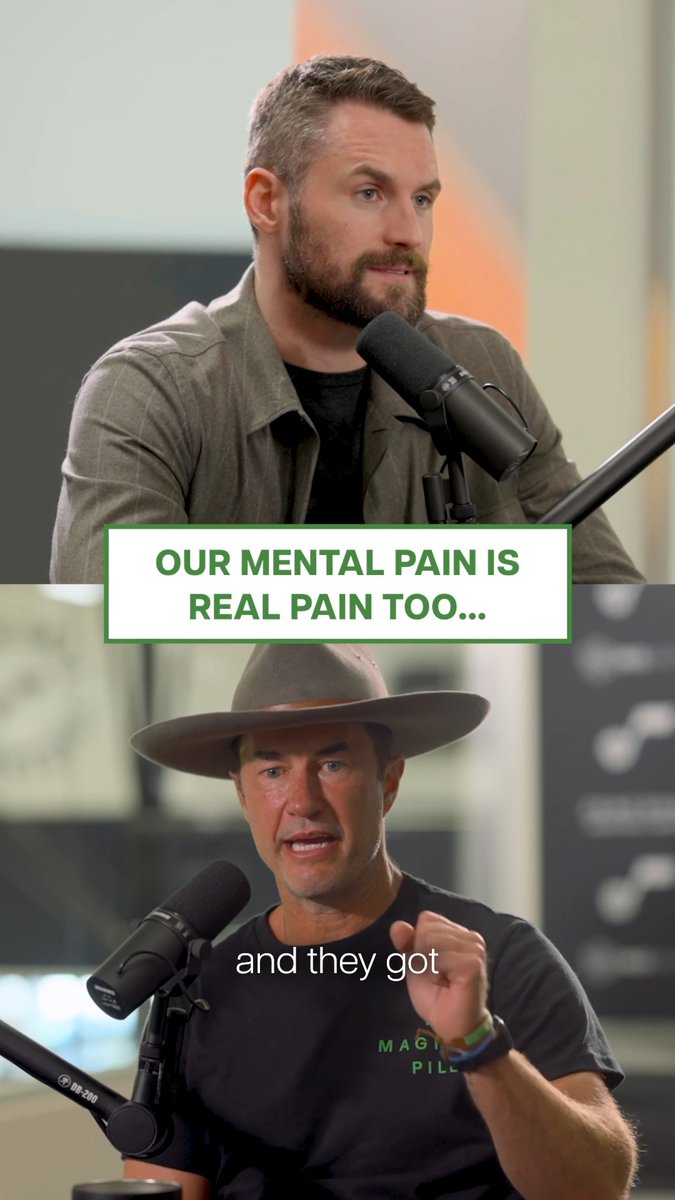
Bill Chen, the mathematician who proved randomness itself could be turned into a repeatable, provable edge: "There's one specific skill that got me hired at one of the biggest quant trading firms in the world, and once you actually learn to see it, you'll start noticing it in almost...

22,947 views • 17 days ago •via X (Twitter)

0 Comments

No comments available

Comments from the original post will appear here

Related Videos

Everyone keeps talking about the possibilities of making money with Openclaw, but nobody actually shows you how So, I made a skill for your Openclaw that transforms it into a one-man AI real estate marketing machine. This skill took me 2 weeks, 50+ hours and ~$800 in API credits to make With this skill, your Openclaw will autonomously make videos like the one below by simply scraping images from listings No approval gate. Fully autonomous. Output decided by your CRONs cadence. It's exactly what mine does, and that's exactly what you should be doing with yours. Run the CRON once a day; if you sell at least one video, you should make $300-$800 each. Also: total cost per video: ~$5.00 I truly believe this skill is one of the most practical ways you can actually make money with Openclaw in the lowest effort way possible. Most people will read this, maybe bookmark the tweet, and never take action. All I hope is that one of you guys actually takes action and makes money with this. Because of how long this skill took me to make, I'm only giving the entire thing away to my paid Subscribers on Twitter. You'll also have direct access to me for any troubleshooting + any other Skills I make like this in the future (one more dropping this week)! You just have to feed it to your Openclaw and link a few API keys. This will be the first of many Openclaw skills/overpowered AI that I only offer to my Subs! Full Skill + a lot more is waiting for you here for $25/m:

ashen

22,822 views • 4 months ago

this video is the CLEAREST explanation of how claude skills + AI agents work and how to use them most people set up an AI agent and wonder why it keeps disappointing them. the context window is everything context is what the model assembles before it takes any action. think of it like everything the agent needs to read before it does anything. the quality of what goes in determines the quality of what comes out. the models are genuinely really good right now. claude and gpt are exceptional. the variable is almost always the context you give them. 1. agent.md files are mostly unnecessary every single line you put in an agent.md file gets added to every single conversation you have with your agent. a 1000 line file is around 7000 tokens burning on every run. the model already knows to use react. it can read your codebase. save the agent.md for proprietary information specific to your company that the model genuinely cannot know on its own. 2. skills are the actual unlock a skill.md file works differently. what loads into context is only the name and description, around 50 tokens. the full instructions only appear when the agent recognizes it needs that skill. so instead of 7000 tokens on every run you have 50. and the agent stays sharp because the context window stays lean. the closer you get to filling the context window the worse the agent performs, same way you perform worse when someone dumps 10 things on you at once. 3. here is how to actually build a skill the right way most people identify a workflow and immediately try to write the skill. what you want to do instead is run the workflow by hand with the agent first. walk it through every single step. tell it what to check, what good looks like, what bad looks like. correct it in real time. once you have had a full successful run from start to finish, tell the agent to review everything it just did and write the skill itself. it writes a better skill than you will because it has the full context of what actually worked in practice not in theory. 4. recursively building skills is how you go from frustrated to reliable when the skill breaks, and it will break, ask the agent exactly why it failed. it will tell you specifically what went wrong. fix it together in that same conversation. then tell it to update the skill file so that failure mode never happens again. ross mike did this five times with his youtube report generator. it now pulls from eight different data sources and runs flawlessly every single time without him touching it. 5. sub agents are something you earn not something you set up on day one start with one agent. build one workflow. turn it into one skill. once that works add another. ross mike has five sub agents now covering marketing, business, personal and more. it took months to get there and every single one exists because a workflow proved it deserved to exist. the people who set up 15 sub agents on day one and wonder why nothing works skipped all the steps that make the thing actually run. 6. your workflow is the thing the model cannot get anywhere else the model has been trained on everything. it knows more than you about most things. what it does not have is your specific process, your taste, your way of doing things. that is what skills capture. that is what makes your agent actually useful versus a generic one. downloading someone else's skill means downloading their context onto your setup and it will not work the way you want it to because it was never built around how you work. this is the clearest explanation of how agents actually work i have heard. Micky runs this stuff every single day and the results show it. full episode is now live on The Startup Ideas Podcast (SIP) 🧃 where you get your pods people charge for this sorta stuff i give away the sauce for free i just want you to win watch

GREG ISENBERG

193,592 views • 4 months ago

Nick Saban was asked a question after practice once. His response was 70 seconds of gold on what it takes to be successful in life. Here’s Saban on the Illusion of Choice: “These guys, they all think they have this illusion of choice. Like I can do whatever I want to do. “You have a younger generation now that doesn’t always get told no. They don’t get told this is exactly how you need to do it. So they have this illusion that they have all these choices. “But the fact of the matter is, if you want to be good you don’t really have a lot of choices. It takes what it takes. You have to do what you have to do to be successful. “You have to make the choices and decisions to have the discipline and the focus to the process of what you need to do to accomplish your goals. “All these guys that think they have a lot of choices are sadly mistaken. As we all have done with our own children, they learn these lessons of life as they get older. “Sometimes the best way to learn is from the mistakes you make, even though we all hate to see them have to make them, and we don’t condone it when they do.” – I’ve studied Saban for 12+ years, and the Illusion of Choice is one of the most powerful concepts I’ve come across. Some key takeaways: 1. Excellence has a price. We can complain about that, but it’s a fact of life. 2. Most people don’t want to pay that price. They just haven’t admitted it to themselves. 3. Saying you want to be excellent is easy. Becoming excellent is hard. 4. There may not be one way to become great, but there are very few. And they all have discipline and consistency in common. 5. Every action we take is a choice. We’re choosing to make progress, or we’re not. 6. The formula for becoming successful: Your Daily Choices x Time. It’s simple, but we make it complicated. 7. Sometimes we learn more by making the wrong choices. Reflect on them, pull out the lessons and move on. 8. You have to choose what you do every day. Don’t follow your feelings. Choose to do what will make you better. 9. There are no long-term hacks. It takes what it takes. ||| Hope this is helpful. Follow me Teddy Mitrosilis for more writing. I also write a weekly newsletter on the process of improvement →

Teddy Mitrosilis

4,059,076 views • 2 years ago

how to use Google's NEW open source Design.md + AI Skills to make your startup look like a $100 million company in 1 hour: 1. Design.md is an open source file from Google that captures the soul of a design. Typography, colors, spacing, all in one markdown file. You attach it to your prompt and your agent builds beautiful things every time. 2. Think of it this way. The HTML is the finished dish. The design.md is the recipe. The skills are the ingredients. Put them together and everything you build looks consistent and professional. 3. Don't create a design system from scratch. Find a brand you love. Linear, Stripe, Vercel, whatever resonates. Study it. Use ChatGPT or Claude to help you extract the design language into your own design.md file. 4. Build skills on top of your design.md. A landing page skill. A mobile app skill. A motion design skill. A slide deck skill. Each one references the same design.md so everything looks like it came from the same designer. 5. The biggest mistake people make: they nail one screen and then everything else looks generic. Design.md solves this. One file keeps every page, every format, every medium consistent. 6. Use it across everything. Your landing page. Your app. Your pitch deck. Your promo videos. Same DNA. Same taste. Same system. That's what separates a startup that looks real from one that looks vibe-coded. 7. Build a second brain for design inspiration. When you see something beautiful in the real world or online, capture it. Save it. When you're building something new, reference it. Taste is developed, not downloaded. 8. It's obvious but the difference between a product people trust and a product people bounce from is how it looks and feels. Design.md gives you that edge. you can watch below shoutout to Meng To for coming on The Startup Ideas Podcast (SIP) 🧃 and walking through his full workflow. if you want to use AI to actually build gorgeous designs, you'll want to use see this. watch

GREG ISENBERG

508,512 views • 3 months ago

A mental model everyone should know: The Regret Minimization Framework. This is how Jeff Bezos used this model to decide to start Amazon: I went to my boss and told him, "I'm going to go do this crazy thing — I'm going to start this company selling books online." This is something I had already been talking to him about in a more general context, and he said, "Let's go on a walk." So we went on a 2-hour walk in Central Park in New York City. The conclusion of that was, he said, "This actually sounds like a really good idea to me, but it sounds like it would be a better idea for somebody who didn't already have a good job!" He convinced me to think about it for 48 hours before making a final decision. So I went away and was trying to find the right framework to make that kind of big decision. I had already talked to my wife about this, and she was 100 percent supportive, saying, "You can count me in – whatever you want to do." It's true, she had married this guy with a stable career and path, but she was 100 percent supportive. So it was really a decision I had to make for myself. The framework I found, which made the decision incredibly easy, was what I called — only a nerd would call — a regret minimization framework. I wanted to project myself forward to age 80 and say, "I'm looking back on my life, I want to have minimized the number of regrets I have." I knew that when I was 80, I was not going to regret having tried this. I was not going to regret participating in this thing called the Internet that I thought was going to be a really big deal. I knew that if I failed, I wouldn't regret that. But I knew the one thing I might regret is not having ever tried. And I knew that would haunt me every day. When I thought about it that way, it was an incredibly easy decision. If you can project yourself to age 80 and think, "What will I think at that time?" it gets you away from some of the daily pieces of confusion. I left this Wall Street firm in the middle of the year, and when you do that, you walk away from your annual bonus. That's the kind of thing that in the short-term can confuse you, but when you think about the long-term, you can really make good life decisions that you won't regret later. *** Summary Ask yourself: in X years, will I regret not doing this? • If Yes → DO IT! • If No → Don't bother. This can apply to any decision: • Should I switch jobs? • Should I start my dream business? • And more... *** Takeaway: Optimize for Asymmetric Upside • Record content (podcast, video) • Write content (book, blog) • Go to a cocktail party • Move to a big city • Invest in startups • Go on first dates • Build in public • Start a biz • Tweet Shoot. Your. Shot. Life is too short not to do so. *** That's a wrap and I hope you found this helpful. If you found value in this post: 1. Follow me Arjun Mahadevan (Mr. LLC 🇺🇸) for more. 2. Re-post this, if you can, to share this mental model with a friend and to remind them to: Shoot. Your. Shot. Life is too short not to do so.

Arjun Mahadevan (Mr. LLC 🇺🇸)

25,594 views • 3 years ago

Jordan Peterson says the ability to think and speak clearly is a superpower. It's the one skill that makes every other skill usable, and hardly anyone builds it on purpose: 1. There is nothing more powerful than someone who is articulate and can think and speak. Peterson means power in the best sense: authority, influence, respectability, competence. All of it flows from a single capacity, the ability to formulate what you actually mean. Master that and you have leverage over almost everything else in your life. 2. Your highest skill is found in articulated speech. That is the thing worth crafting. Not a credential, not a résumé line, not a job title. The capacity to think clearly and say what you think, precisely, sits above every other skill because it makes every other skill usable. 3. If you master formulating your arguments, you win everything. And here's the part that surprises people. It isn't a zero-sum win. When you win that way, everyone around you wins too, because a person who can articulate reality clearly shines a light on the whole world. 4. The way you build it is simple to describe. Learn to think, learn to speak, learn to read. Peterson says the obviousness of it is what baffles him. People hear it and say, really, I could do that? And the answer is yes, really. It is not complicated, it is just rarely done deliberately. 5. You do it by surrounding yourself with people who were articulate beyond comprehension. Every serious thinker who ever lived left their best work sitting on a shelf, available to you, for almost nothing. That access is the entire opportunity, and most people walk straight past it their whole lives. 6. Chasing a job, or a raise, or a credential is a pathetically small target. Peterson is blunt about it. Those are the reasons everyone gives for getting educated, and they miss the actual point entirely. They aren't wrong so much as they are far too small for what's actually on offer. 7. If you're ever handed a window of freedom, it is the rarest thing you'll get, so use it. A stretch of time where you have both a respectable identity and real freedom at once is genuinely rare and almost impossible to reconstruct later. Most people get one and squander it. Whenever you get it, that is when you build the skill. 8. Understand what was required to make this possible for you. The books, the institutions, thousands of years of accumulated knowledge, all of it exists so that you can walk in and manifest what you're actually capable of. Peterson's framing is that everyone is quietly hoping you'll use it rather than waste it. 9. Transform yourself into something articulate, grounded in history, knowledgeable, and wise, and you can do anything you want. And if you have any sense, what you'll want to do is good, because there is nothing more compelling, more meaningful, or more useful against the tragedy of life than to struggle with everything you have on behalf of the good.

Jaynit

30,634 views • 1 month ago

At the BNB Chain hackathon, CZ 🔶 BNB made several very important points about AI trading (Everything in parentheses is my own view and judgment.) He first said that AI will be involved in trading everywhere. Trading itself is already a huge market: there are 300 million users on Binance alone, and if you add the decentralized ecosystems, that number is not small either. In such a mass-market environment, many different trading strategies can work, with countless different coins, different projects, and different ways to play. But there is a big problem here: building commercial AI trading platforms for retail users is actually very hard. If a trading strategy works very well for one person, once a billion people start using the same strategy, that strategy “might still work, or might stop working.” Take copy trading / follow trading as an example: if you buy first and everyone follows you, the first buyer will perform very well, but the last person to follow may not end up with good results. So, with the exact same strategy and the exact same copy logic, the outcomes can be completely different for different people. (On top of that, every strategy also has its own capital capacity limits.) Teams that can really build strong AI are, with high probability, going to trade with their own money. In today’s world, money itself is already somewhat like a “commodity”; many people have a lot of capital, and it’s actually not that hard to raise funds. If you truly have an algorithm that can make a lot of money, it’s not hard to get money and run your own book. There is really only one situation where you would sell this algorithm to mass-market users: for example, if you charge a $10 monthly subscription and can sell it to one million users, then your $10 million monthly subscription revenue is higher than the profit you could make by trading the strategy yourself. (Here this touches one of our earlier theses: as training AI models becomes relatively easier and the supply of models increases, model companies have more incentive to open-source. By analogy, as the production process of trading strategies is increasingly simplified by AI and the supply of strategies explodes, traders will have stronger incentives to monetize by expanding their influence in other words, by “open-sourcing” their strategies.) Of course, CZ did not say that this model can never work. Another path is to build an AI trading platform that lets users tune different AI algorithms, or very easily assemble their own structures and strategies, so that what each person ends up running is different and better tailored to themselves. Some people will make money, some people will lose money, but the platform still has value because it’s very hard for most people to build an AI trading algorithm from scratch. So there are a lot of trade-offs here; it’s not as simple as saying “once AI shows up, everything automatically gets better.” (This is exactly what we presented at the hackathon: you describe your own strategy in natural language, and the AI automatically generates a workflow. The parameters in that workflow, the models used, the logical structure, the APIs it calls, and even the algorithms it invokes are all customizable. The reasons we think workflows are a good way to do this include: controllable execution paths, Lego-like modular nodes, and better visualization that makes it easier for users to build and adjust their workflows.) Finally, his conclusion was very clear: it’s not that AI will definitely make trading better, and it’s not that AI will definitely make things worse. Rather, no matter what, in the future a huge number of people will use AI to trade. This will be a very large field, and whoever can build the best algorithms will make a lot of money.

Tykoo

25,535 views • 8 months ago

Your faith was forged in people who would rather be exterminated than assimilated. A soft version of it, eager to be liked and desperate to fit in, is not the thing they died to hand you. So stop striving to be liked. Stop angling to be loved by a world that drove your fathers into the snow. That world would think no better of the gospel today than it did in 1838. Stop trying to file down every peculiar and glorious edge of the Restoration until the world finally finds you acceptable. It never will. And the wanting of its approval is the slow death of everything your people bled to preserve. I am thinking of the proclamation on the family, and of how many have quietly gone looking for a way around it. Some say it aloud now. Some march under the world's Pride banners and tell themselves it is only love. They have done the quiet arithmetic and concluded that if they give the world this one doctrine, the world will finally stop hating them, finally let them belong, finally call them good. It does not work that way. It has never once worked that way. Understand what the world actually hates, because it is not a single teaching about marriage that it cannot abide. It is the claim. It is the unbearable, scandalous claim that the keys of the priesthood were restored to the earth, that there is a prophet who speaks for God, that this and no other is the authorized house of the Lord. That is the offense. That is what it cannot forgive. You could surrender every doctrine the world finds distasteful, one after another, and you would not buy a single hour of peace, because the thing it objects to is not your position on this or that. It is that you claim to hold the authority of heaven, and it intends to see that claim humbled. The doctrine is only the doorway it is pushing on. The house is what it wants. Embrace the truth. Embrace the battle that has always come with it, because there has always been a battle, and there is one now. It is the oldest war there is, good against evil, light against the dark, and you were born onto its field whether you wished to be or not. You did not inherit a museum. You inherited a war, and a banner, and a people who never once surrendered it. You are a Mormon. The blood of the persecuted is in you, and the truth they died for is in your hands. You are not tourists. You are not spectators. You are the heirs of warriors, and the line they held is now yours to hold. So plant your feet on the ground they bled for. Lift the banner they would not drop.

Kirk Rollins

30,483 views • 1 month ago

One of the largest trading firms in the world teaches new hires poker before it lets them near a book. A newspaper brought a camera to the table and sat down to play. The men across the felt are working Wall Street traders. The firm is Susquehanna, which built poker into its training programme decades ago and still runs it that way, on the argument that the card room teaches something no finance degree does. Gunjan Banerji from the Wall Street Journal plays the hands herself rather than interviewing them about it. A green table, a dealer, chips, 4 people who do this for a living. No lecture hall, no slides. The teaching happens between deals, while money is actually at stake. They break it into parts on camera. Risk management first. Then bet sizing. Then patience, which sounds like the soft one and is not. Then reading the person opposite when the only data available is how they behave with money on the table. The section on patience is the one most people skip. Folding is the correct action in the overwhelming majority of hands, and almost nobody can do it for hours without inventing a reason to play. The same failure shows up in a trading account as overtrading, and it kills more people than bad analysis. Then bet sizing, which is where the video earns the watch. Being right about the odds is the easy half. How much you put behind a correct read is the part that ends careers, and they work through it hand by hand instead of describing it in the abstract. The turn is what the traders admit about being wrong. A good decision loses regularly, a bad decision wins regularly, and the only way to last is to grade the process instead of the result. Everything else in the video sits downstream of that. It matters more now than when the firm started running these tables. Every model prices probability in a second and hands it to you for free. Nothing on the screen tells you how much of your account to put behind the number, or what to do after the number was right and you lost anyway. Free on YouTube, produced by a newspaper, filmed at a real table with real hands. The maths is public. The sizing is the job. 1 table. 4 traders. It is in the video.

the lich

61,629 views • 9 days ago