正在加载视频...

视频加载失败

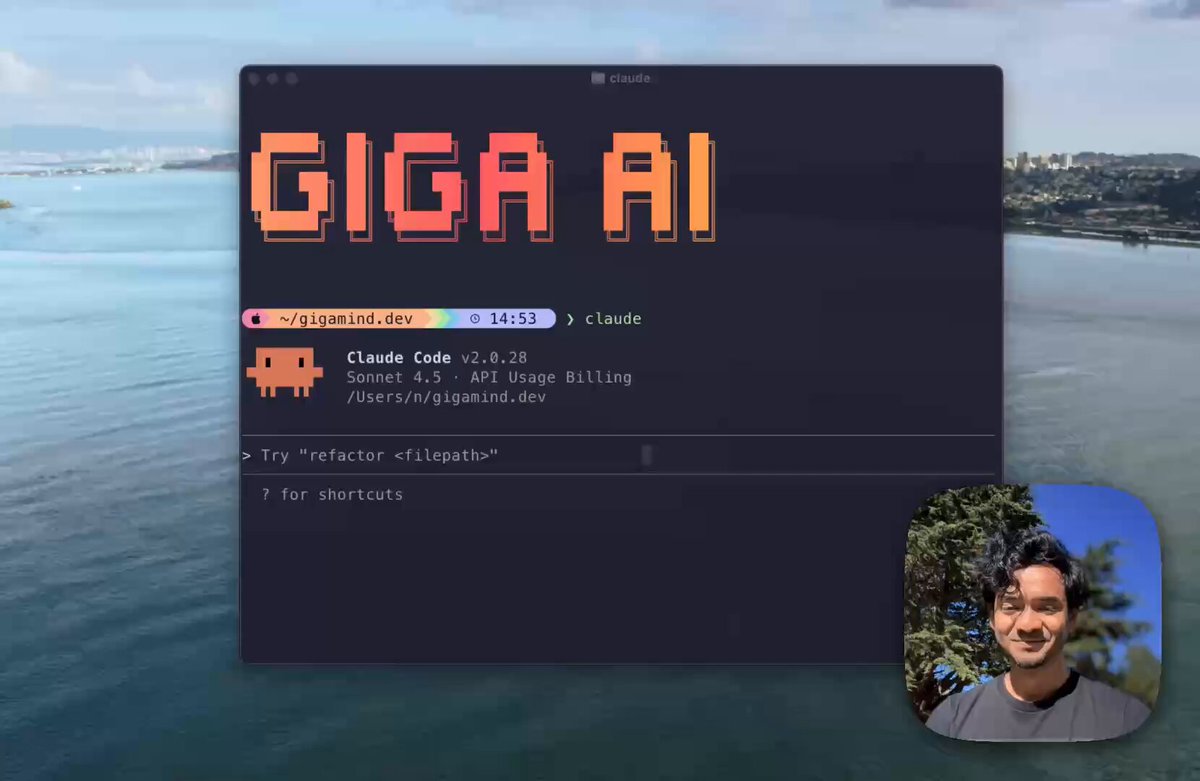
🚨BREAKING: ANTHROPIC WILL PAY YOU $85K TO WORK WITH AI. NO DEGREE NEEDED. APPLICATIONS CLOSE IN 48 HOURS. 1000 fellows will spend 12 months inside nonprofits building AI tools and automations using Claude, including intake systems, databases, and workflows. After the year ends, the fellow leaves but the tools...

30,764 次观看 • 2 个月前 •via X (Twitter)

36 条评论

Vikash Kumar Yadav 的头像
Vikash Kumar Yadav2 个月前

👍

CryptoKite 的头像
CryptoKite2 个月前

Interesting opportunity. @Grok can you verify these details? 👀

Rohit 的头像
Rohit2 个月前

Wow, that's amazing! What a cool opportunity for people to get into AI and do some good.

Genius💡💹🧲 🤖 的头像
Genius💡💹🧲 🤖2 个月前

Building real AI tools beats collecting paper qualifications every time

cryptojoe☯️ 的头像
cryptojoe☯️2 个月前

Thanks for sharing Evan

CRYPTOS CIPHER 的头像
CRYPTOS CIPHER2 个月前

Thanks for sharing

Crypto_Rexy🧘‍♂️ 的头像
Crypto_Rexy🧘‍♂️2 个月前

Thanks for sharing this man

E R V A 的头像
E R V A2 个月前

Interesting opportunity for anyone already building with AI.

Y Δ M ! X 的头像
Y Δ M ! X2 个月前

sick way for devs to get hands on experience while helping out communities

Pentosh 的头像
Pentosh2 个月前

Definitely worth applying if you're eligible

Mahfuz Allum 的头像
Mahfuz Allum2 个月前

idk man, $85k sounds tempting but what's the catch? like what do they actually expect from you?

JailBreak AI 的头像
JailBreak AI2 个月前

Try with us

KRYPTOSCRIPTX 的头像
KRYPTOSCRIPTX2 个月前

Really impressive offer! 🔥

RYZE -`𖹭´- 的头像
RYZE -`𖹭´-2 个月前

Low chances for real impact

Kryptojaguarx 的头像
Kryptojaguarx2 个月前

Excellent offer! 🔥

K I Z A N 的头像
K I Z A N2 个月前

crafty strategy to bake their ecosystem into every small org while paying for the privilege

THE ANGEL 的头像
THE ANGEL2 个月前

@grok is this actually true?

DeLord 💎 𝙃𝙏𝙓 𝙎𝙢𝙖𝙧𝙩𝙀𝙖𝙧𝙣 13% 𝘼𝙋𝙔 的头像
DeLord 💎 𝙃𝙏𝙓 𝙎𝙢𝙖𝙧𝙩𝙀𝙖𝙧𝙣 13% 𝘼𝙋𝙔2 个月前

$85K to build real-world AI systems while gaining hands-on experience?

Crypto Nation 的头像
Crypto Nation2 个月前

that a unique opportunity for those looking to break into AI! wonder how many will apply 👀

Crypto Rose Calls 的头像
Crypto Rose Calls2 个月前

This feels like a great way to actually use AI for good. @grok, worth applying?

Mahfuz Allum 的头像
Mahfuz Allum2 个月前

That’s a lot of money for just a year, but I wonder how they’ll keep those tools running after the fellows leave?

Abrar The Crypto 的头像
Abrar The Crypto2 个月前

This a way for Anthropic to lock in their tools long-term, interesting strategy honestly

安叫兽|Bird🕊️ 🔶 BNB 的头像
安叫兽|Bird🕊️ 🔶 BNB2 个月前

听起来像给非营利补一轮自动化外包

Yoqwel 🐈‍⬛ 的头像
Yoqwel 🐈‍⬛2 个月前

only 48 hours is crazy tight for such a huge opportunity but guess they want speed

Mahfuz Allum 的头像
Mahfuz Allum2 个月前

That $150M investment for a year with no degree needed they’re betting on AI familiarity more than actual skill.

Evan Jawad 的头像
Evan Jawad2 个月前

This seems like a low-effort gig

Crypto_kknight 的头像
Crypto_kknight2 个月前

That’s a Wonderful opportunity

Block Voyager 的头像
Block Voyager2 个月前

This could be a great opportunity for someone starting out

buzzi 的头像
buzzi2 个月前

How do I satrt

Evan Luthra 的头像
Evan Luthra2 个月前

read the full post

DICTATOR I ALPHA 的头像
DICTATOR I ALPHA2 个月前

Please verify this @grok

OLIVELINE 🤍 的头像
OLIVELINE 🤍2 个月前

The opportunity is real, but so is the strategy behind it.

BRAD_NFT™️ 的头像
BRAD_NFT™️2 个月前

Smart move by Anthropic. Train people, support nonprofits, and grow adoption.

Alexander 的头像
Alexander2 个月前

is this true? @grok

Zane 的头像
Zane2 个月前

Interesting opportunity, worth considering.

Emma Warry 的头像
Emma Warry2 个月前

This sounds promising but a bit risky. Just hope the nonprofits are ready to adopt and maintain the tech afterward. Long-term impact matters...

相关视频

Claude Tag has completely changed the way I do work for the last 4 months. Except… it's not Claude Tag. Anthropic only announced that a few hours ago, and I don't even have access yet. But I did build a version of it for myself which I've been using for months now. Here's how. 4 months ago, inspired by the success of OpenClaw, I wondered what would happen if I let Claude Code on its own computer 24x7. So I built a simple harness that allowed me to turn any Mac into an AI employee with Claude Code headless mode (-p). Today, I manage 3 such AI employees. It started with Luo Ji — my and my brother Piyush Agarwal's AI co-founder, running in our personal Slack. Luo does real work for us. We've been writing a 100% of the code for 3 products on Slack with Luo now. It manages our emails and gives us a little brief each day with things we need to take action on. And so much more. And it's not just the two of us. On the consulting team at Every 🪨, we run Claudie and for the editorial team, Andy. Same architecture, same Slack, months of real work. They help the teams with work related to project management, chief-of-staff work, data hygiene, building decks, writing first drafts, even browsing X on their own account for AI updates. So it's mindblowing to see that Anthropic landed on the exact same architecture I did. Claude Tag is an AI employee that lives in your Slack workspace and does work autonomously. Anthropic says they've been running it internally for the better part of this year — opening PRs, doing real work. And so have I. So has my whole team. The architectural decisions Anthropic baked into Claude Tag are the ones we arrived at too: - Built on Claude Code - Uses its own accounts - A separate employee per team - Slack as the interface This is the future of work, and I've been living it for months. I've shifted all of my workflows — code, PRs, even the non-technical stuff — out of Claude Code and the Claude app and into Slack. I've had entire weeks where I never opened Claude Code on my laptop. Here's a video walkthrough of how I've been using this in real life.

Nityesh

36,790 次观看 • 3 个月前

Claude Code cracked something open for us Every 🧱. Now I ship to codebases I barely know, every feature we ship makes the next one easier, and non-technical members of the team use the terminal. I’m genuinely grateful. So I brought its creators, Cat Wu (cat) and Boris Cherny (Boris Cherny) from Anthropic, on AI & I to say thank you—and to talk about everything they’ve learned from building Claude Code. We get into: • The workflows Anthropic’s smartest engineers use to push Claude Code to its limits. Why they pit subagents against each other to get cleaner results, how they turn past code into leverage, and the slash commands and MCPs they rely on most. • The product lessons behind one of the most loved AI agents in the world. How the team balances simplicity and power—building a tool that anyone can use, but that experts can bend to their will—and their philosophy of “unshipping,” or cutting back whenever there’s a simpler, more intuitive path to user intent. • A peek into the future of coding with AI. The new form factors they’re experimenting with to make Claude Code more autonomous, more reliable, and more accessible to non-technical users This is a must-watch for anyone—both technical and non-technical—who wants to learn how to use Claude Code like the people who built it. Watch below! Timestamps: Introduction: 00:01:26 Claude Code’s origin story: 00:02:25 How Anthropic dogfoods Claude Code: 00:07:03 Boris and Cat’s favorite slash commands: 00:14:06 How Boris uses Claude Code to plan feature development: 00:15:49 Everything Anthropic has learned about using sub-agents well: 00:21:53 Use Claude Code to turn past code into leverage: 00:26:16 The product decisions for building an agent that’s simple and powerful: 00:33:14 Making Claude Code accessible to the non-technical user: 00:36:38 The next form factor for coding with AI: 00:45:12

Dan Shipper 📧

57,619 次观看 • 11 个月前

-> If you’re looking for a job -> right now, there are three -> Claude certifications that -> you should do this week -> and then put them on your -> LinkedIn, they are all -> completely free, and they -> come from Anthropic, -> which is the company -> that's behind Claude. -> And jobs that need AI skills -> pay 56% more than jobs -> that don’t, So, I think -> spending a few hours this -> week to knock out these -> three courses and then -> add them to your LinkedIn -> will really go a long way -> The first one is called -> Claude 101, and this -> essentially just goes over -> what Claude is and when -> you should use chat versus -> co-work versus code, how -> projects and skills work, -> and how to connect all -> of your tools and apps -> like Gmail, Notion, Slack, -> and other tools that you use -> And the second course -> is called AI Fluency -> Framework and Foundations -> Inside this one, there are -> 13 lessons on how to -> actually work with AI. -> It goes over things like -> effective prompting, critical -> thinking on the outputs, -> and it has a vocabulary -> sheet that you’ll want -> to read and save for later. -> And the third one is -> Intro to Claude Cowork -> Claude Cowork is where -> you can actually get stuff -> done with Claude. -> So, this course covers -> projects, skills, plug-ins, -> scheduling tasks, handling -> files, and then also how -> to pick the right model -> for the job, and then when -> you finish these courses, -> just go to your LinkedIn -> and go to your profile -> Click "Add section," and -> then go to "Licenses -> and certifications" and -> add all three of these. -> And then when you land -> the interview, you should -> talk about your AI fluency -> often as you possibly can -> I feel pretty confident that -> you’ll truly be able to -> differentiate yourself -> from other candidates -> if you do this

BeingInvested

13,130 次观看 • 3 个月前

SOMEONE FROM THE ANTHROPIC TEAM LEAKED THEIR OBSIDIAN SETUP. 8 MILLION PEOPLE SAW HOW HE ACTUALLY USES CLAUDE the funniest part? all of this information was sitting in claude's documentation from day one. nobody read it one guy did, packed it into a 9-step guide and posted it. and it broke the internet. 4,100 likes, 800 retweets, then china picked it up and 8 million views want to know what's in it? one file. called CLAUDE.md. it holds everything about you: how you think, what you're working on, where you get stuck, even how you want the ai to talk to you. claude reads it first every single session one file changed everything. because now ai doesn't open with "how can i help?" it already knows. it remembers your projects, sees your goals, catches moments where you're contradicting yourself people spent years searching for the perfect prompt. the right temperature. the magic formula. and the answer turned out to be not how you ask ai. but what ai knows about you before you even open your mouth then the guy went deeper. taught claude to work on a schedule. every morning at 7am the ai walks through all notes on its own, finds new stuff, links it, cleans what's stale. no command. no reminder and all of this runs on obsidian. free app. text files on your drive. no cloud, no lock-in. switch models tomorrow and the folder keeps working the most liked comment under the original post: "this is the difference between using ai and building a system. most people won't realize it until they waste hundreds of hours repeating themselves" hundreds of hours. you've already spent some of them full guide in the video. i break down finds like this every day - follow so you don't miss the next one

kai

174,650 次观看 • 2 个月前

anthropic's head of product just revealed how they're able to ship faster than any other AI company. their secret: "side quest maxxing." here's how it works: instead of long-term roadmaps, anthropic runs on unplanned afternoon experiments. anyone on the team gets full freedom to spend an afternoon prototyping an idea and show it to the team. you get to skip the approval process entirely. then, employees at anthropic try it. if they keep using it the next day and the day after that, it gets polished into a real feature. if nobody touches it again, it dies. that's the whole process. claude code on desktop started as one engineer's afternoon project. he wanted it to work on desktop so he built a prototype. people on the team started using it immediately. so they shipped it. the todo list feature started the same way. someone built it, the team adopted it internally, and it became one of the most-used parts of the product. plugins started when one engineer shared a spec with claude code and the prototype that came back was close to production-ready. went from idea to working feature in a single session. they also killed standup meetings. instead of telling people what you're working on, you just show a working demo. all walk no talk basically the team structure makes this possible. > designers ship code. > engineers make product decisions. > product managers build prototypes. everyone can take an idea from concept to working demo without waiting on anyone else. the biggest features at a $380b company came from afternoon experiments that nobody asked for. honestly this matches my own experience cooking with ai. some of the best workflows i use every day came from just fucking around. opening a session with zero intention and asking claude what it can do, or jamming on a random idea to see where it goes. if you're only using ai for tasks you already have in mind, you're missing the best part. open a session with no agenda. ask it to surprise you. try building something stupid. half the time it goes nowhere. the other half it becomes the thing you use most. you need to be sidequestmaxxing.

Ole Lehmann

106,072 次观看 • 5 个月前

In the future, you’ll be able to accomplish a goal by just giving Claude an outcome and a budget. That’s the direction Anthropic is building in with its new Managed Agents features, announced at this week’s Code with Claude developer event. The basic idea: Claude, wrapped in a computer in the cloud, that you can spin up, scale, and manage as needed. Anthropic is taking on the infrastructure that kills most agent products, and making sure that it scales to meet the needs of agents running 24/7. On this week’s AI & I from Every 📧, I talk with Angela Jiang (Angela Jiang), head of product for the Claude platform, and Katelyn Lesse (Katelyn Lesse), head of engineering for the Claude platform, about what Anthropic is building and what it takes to make agents reliable in production. We get into: - Why the "build a generic harness, hot-swap any model behind it" playbook is already outdated. Angela points to eval data on Memory where the same task across different harnesses performed drastically differently. - The infrastructure wall every team hits in production—and why Katelyn thinks “my sandbox died and took the agent with it” is the real reason internal agents don't ship. - Why Anthropic is so bullish on using file systems and skills within Claude, including Angela's argument that those early design choices can compound for years. This is a must-watch for anyone trying to take an agent past the demo and into production. Watch below! Timestamps: How the Claude platform evolved from API to agents: 00:01:48 The primitives that make up Claude Managed Agents: 00:04:09 Why the harness and the model are becoming a single unit: 00:10:37 The infrastructure wall that kills most agent projects in production: 00:18:49 Why team agents need a different shape than individual productivity tools: 00:24:49 How Anthropic's legal team uses an agent to review marketing copy: 00:26:36 Using multi-agent orchestration for advisor strategies, adversarial pairs, and swarms: 00:34:24 How to measure agent success with outcome and budget as the end state: 00:35:50 What the platform looks like a year from now, when Claude writes its own harness: 00:39:11

Dan Shipper

66,871 次观看 • 4 个月前