Video wird geladen...

Video konnte nicht geladen werden

Zur Startseite

BREAKING: Bending Spoons 🥄 is Eating Silicon Valley FULL INTERVIEW CEO Luca Ferrari (Luca Ferrari) $BSP is quickly becoming tech’s buyer of choice. They look at 100s of companies a year & buy 5-10. Airtable, AOL, Vimeo, Eventbrite, Evernote, WeTransfer, Tractive, & now Miro under agreement. Why? Bending Spoons...

137,544 Aufrufe • vor 1 Tag •via X (Twitter)

7 Kommentare

Profilbild von Molly O’Shea
Molly O’Sheavor 1 Tag

We also get into: - What Silicon Valley gets wrong about building companies [ or doesn't ] - AI hype & valuations - Bending Spoons’ obsession w/ talent & 'truth-seeking' - How big Luca thinks the company & acquisitions can get

Profilbild von Molly O’Shea
Molly O’Sheavor 1 Tag

“We don't buy to sell companies. We've never sold a material business. We intend to own & operate these businesses forever.”

Profilbild von Molly O’Shea
Molly O’Sheavor 1 Tag

Listen on Spotify: Apple: Watch on YT:

Profilbild von Vincent
Vincentvor 1 Tag

@luke10ferrari Did a 40 min deep dive on $BSP. TLDR very bullish long-term.

Profilbild von Anthony Phipps
Anthony Phippsvor 1 Tag

@luke10ferrari Bending Spoons is quietly becoming a tech powerhouse. Along with @satosh0xsol, you're at the top of my feed.

Profilbild von Alek
Alekvor 1 Tag

@luke10ferrari Luca - which internal tool paid back fastest?

Profilbild von Jeremy Redman
Jeremy Redmanvor 22 Stunden

@luke10ferrari 0 Italian spoken

Ähnliche Videos

BREAKING: Inside Bending Spoons $BSP Milan, Italy Bending Spoons has completed 50+ acquisitions & never sold a single one Buying up some of tech's most recognizable companies, including AOL, Airtable, Vimeo, Eventbrite, Evernote, WeTransfer, Tractive & Brightcove, with Miro now under agreement. I went to Italy to sit down w/ 4 leaders behind one of tech’s most aggressive acquisition machines: › Luca Ferrari (Luca Ferrari), Co-Founder & CEO › Francesco Patarnello (Francesco Patarnello), Co-Founder & Head of M&A › Matteo Danieli, Co-Founder & VP Product › Valentina Jerusalmi, GM of AOL The thesis: acquire great products, centralize the capabilities underneath them, & unlock value at a scale that would be difficult for each company to build independently. We cover: › 1,000 potential acquisition targets & 5–10 deals per year › How Bending Spoons’ centralized platform creates value across acquisitions › “Startup mode,” talent density & cutting headcount after acquisitions › Why even founder roles & the CEO job are up for grabs › Rebuilding AOL & what happens after Bending Spoons takes over Head of M&A Francesco Patarnello on what they look for: “We want to see our platform be able to unlock a lot of value if applied to that business. That can mean different things. Sometimes it's ability to attract talent, process data & get insights, [or] attract new users.” Stats: › 50+ acquisitions completed, & never sold a material business › 500M+ monthly active users, 9M+ paying customers › $2.64B of enterprise value across Airtable & Miro in 5 weeks › $1.5B for AOL, $1.38B for Vimeo, $500M for Eventbrite › Under 1% voluntary churn, with equity that carries no vesting This is Part I of a II-Part Series Full Sit-down Interview w/ CEO Luca Ferrari coming next.. 𝐓𝐈𝐌𝐄𝐒𝐓𝐀𝐌𝐏𝐒 (00:00) Bending Spoons Co-Founders Luca Ferrari, Francesco, Matteo & GM of AOL Valentina (01:11) The two traits that matter most (03:16) The Biggest lesson from every acquisition (Airtable, AOL, Miro...) (05:37) Why the CEO didn't ring the Nasdaq bell (07:37) The Acquisition that got away (15:21) What makes a company worth buying (18:27) Why Founders choose Bending Spoons (21:30) Why Employees can cash out early (28:44) Choosing to step aside as CPO (40:10) What "Startup mode" actually means (49:31) Why most product ideas fail (51:25) The emotional story behind the IPO speech (57:39) Betting on Bending Spoons early on (1:01:00) The Mindset behind the rapid growth (1:05:22) What actually happens during an acquisition (1:09:44) Why they never ship without testing (1:16:17) What's coming next for AOL

Molly O’Shea

443,287 Aufrufe • vor 5 Tagen

Luca Ferrari is the co-founder and CEO of Bending Spoons, one of the most fascinating companies in Europe and just became Italy's first decacorn. He describes it as 25% private equity firm and 75% technology company. They fully acquire and rebuild digital companies like Evernote, Vimeo, and most recently AOL. Luca Ferrari shares exactly how the Bending Spoons playbook works — how they find great businesses, improve every core function, and finance them with both debt and equity to own and operate forever. We also talk about his obsession with attracting and developing exceptional talent and why he's determined to build a generational company in Europe. Enjoy! Timestamps 0:00 Intro 0:30 What is Bending Spoons? 4:30 Why Europe Lacks Trillion-Dollar Companies 7:25 The First Test: From Failure to Founding 10:52 The McKinsey Years & Funding Co-founders 13:24 The Strategic Insight: Why M&A Over Building 16:13 Structural Advantages of the Platform Model 21:00 Talent as the Ultimate Edge 22:50 Rejecting Consensus 26:28 Early Days: From $10K to Billions 30:52 The Evernote Transformation 36:17 Pricing Power & Monetization Sophistication 40:32 Valuation & Deal Discipline 44:52 Financing Strategy 1:01:47 No Variable Pay: A Contrarian Approach 1:04:14 Areas of Dissatisfaction & Regulatory Frustration 1:09:25 Raising Europe's Largest Private Debt Round 1:13:28 AI's Impact on Software Businesses 1:17:26 Building Culture: State of the Spoon & Retreats 1:20:20 Why There Aren't More Bending Spoons 1:23:35 The Kindest Thing

Patrick OShaughnessy

447,230 Aufrufe • vor 10 Monaten

NEW: Inside $11B Harvey HQ w/ CEO Winston Weinberg Exclusive tour of their gorgeous SF office & an update on their scale.. TLDR: they're ripping. At 4 years old, Harvey has reached: - Passed $300M ARR this month (3x growth from $100M last August) - Nearly 1K employees, 12 global offices - ~2,000 customers - DAU/MAU up from 36% to 52% this year - 42% of revenue from in-house corporates - Token usage: 1T in January to a projected 13T this month The $11 billion AI platform now used by 2/3 of the AmLaw 100 & 500+ in-house legal teams including HSBC, Bridgewater, Carvana, Blue Owl "I think every single company is going to sell intelligence." - Winston Weinberg Co-Founder Gabe Pereyra + Head of Applied Research Niko coming on next 👀 𝐓𝐈𝐌𝐄𝐒𝐓𝐀𝐌𝐏𝐒 (00:00) Winston Weinberg, Co-Founder & CEO at Harvey (00:45) Inside Harvey HQ (03:17) Harvey by the numbers (04:11) How Harvey expands globally (05:16) Why Harvey employs 200+ lawyers (06:30) The philosophy behind Harvey's office (07:35) The loudest lunch culture in tech (09:03) Winston's favorite room (10:04) Eight Airbnbs before a real office (12:58) Inside a $300M ARR company (14:20) Tripling revenue in under a year (15:35) What $1B+ unlocks (17:36) Building an AI native company (21:10) Convincing lawyers to join tech (22:14) The biggest adjustment for lawyers in tech (23:26) Build vs buy (26:59) What SaaS got away with that AI can't (28:39) Financing 13 trillion tokens (30:05) Why the labs can't just copy Harvey (31:18) Competing with OpenAI & Anthropic (32:03) Will the labs start acquiring? (32:50) Does every task need frontier intelligence? (34:23) Why legal benchmarks are broken (35:30) Ordering the same meal 467 times

Molly O’Shea

389,523 Aufrufe • vor 3 Monaten

BREAKING: Devin now writes ~95% of Devin's code Scott Wu (Scott Wu), CEO of Cognition says the abundance era of AI is real & coming soon.. FULL INTERVIEW Cog Stats: › $2.5B raised, $26B valuation › $500M+ run rate, up from $37M LY › Customer usage is up 11x-12x in 6 months › Total code shipped inside Cognition has grown 7x › Devin writes ~95% of Cog's code, up from 89% at May Series D › The entire Windsurf acquisition was negotiated over 1 weekend, ~40 people buying a 200 person company with $82M of ARR › Goldman Sachs, Mercedes-Benz, Citi, Dell, Santander, NASA, the US Navy & the US Army all run Devin R I P : "The tokenmaxx era lasted from January to May of 2026, roughly." "I'm excited to have AI that allows me to spend all of my time & focus on the things that I care about & take care of the rest. I think the abundance era is real, & I think we'll be there pretty soon." Recorded 7 July 2026. On 23 July 2026 Cognition acquired Poke maker The Interaction Company 𝐓𝐈𝐌𝐄𝐒𝐓𝐀𝐌𝐏𝐒 (00:00) Scott Wu, Co-Founder & CEO at Cognition (01:00) The Identity crisis of building Devin (01:42) How Cognition 7X-ed its output in 6 months (02:55) The Metric every AI company gets wrong (04:18) Cognition's 12x growth curve (07:46) The Windsurf acquisition (13:26) Scaling overnight: Cognition's hardest week (15:11) The strategy behind the integration of Cognition products (17:23) Cognition's M&A playbook (20:01) Why the DMV is Cognition's next big target (22:59) Why Cognition bet against AI centralization (25:09) Why enterprises refuse to bet on a single AI lab (28:32) Scott's honest take on Superintelligence (32:36) Is Silicon Valley losing its mind over the AI gold rush? (33:26) Devin's origin story (37:17) The question Scott thinks nobody's asking yet (39:59) Poker with Peter Thiel & Napoleon ? (41:24) Scott's vision for the next year

Molly O’Shea

677,522 Aufrufe • vor 1 Monat

BREAKING: Inside Palo Alto Networks ($PANW ) w/ CEO Nikesh Arora (Nikesh Arora) Rogue agents are just the start. "This is the beginning. This is not a moment." Nikesh joined 8 years ago at an $18 Billion market cap. Today it's grown to $300+ Billion "For 8 years I tried to convince CEOs to pay attention to cybersecurity. You know what Mythos did? Every CEO wants to talk about Mythos." "The average time to fix a vulnerability was 55 days.. The average time they'll find it, try & attack you is in minutes.. We launched a capability that delivers patches in 4 hours. From 55 days to 4 hours." We cover: › The liability question behind agent deployment › Why he signed Jensen Huang's open weights letter › 40+ acquisitions behind the run to $300B › End of the 'SaaSpocalypse' ? › Hiring AI natives out of hackathons › Why every piece of software gets rewritten in the next 10 years 𝐓𝐈𝐌𝐄𝐒𝐓𝐀𝐌𝐏𝐒 (00:00) Nikesh Arora, Chairman & CEO at Palo Alto Networks (00:51) The AI attack era has already started (03:30) What happens when agents go rogue (04:39) Why AI Labs are slowing down (06:31) The Mythos Fallout (17:25) Cybersecurity's secret weapon (19:43) Buying a company is the easy part (20:48) Where most acquisitions go wrong (24:58) Predicting the SaaSpacolypse (28:03) The question nobody in Tech is asking (30:54) There's never enough Compute (33:12) Palo Alto's bar for AI fluency (35:37) The controversial hire (37:12) Using LinkedIn to spot opportunities (39:19) What a CEO's day actually looks like (43:47) The leadership traits that matter (47:02) Google vs. SoftBank: What was different? (51:02) Why planning horizons are shrinking (52:55) Lessons From Elon & Masa (56:44) What's next for Nikesh?

Molly O’Shea

669,989 Aufrufe • vor 1 Monat

NEW: Inside AI's Biggest Downstream Winner.. the Surge in AI Database Demand "Data is the unsung hero, & data is back." MongoDB CEO CJ Desai (CJ Desai) The unexpected result? Hyperscalers are turning away even top-50 accounts. "Sorry, we don't have a capacity." "And they are one of the top 50 customers for that hyperscaler." ElevenLabs alone runs "north of 50 million agents, depending on when you look at it, all running on MongoDB.. that gives us a lot of confidence that we have the right architecture for agentic workloads." NASDAQ: $MDB We cover: › The 3 classes of AI customers MongoDB serves › Why hyperscalers are telling top-50 accounts "no capacity" › On-prem, sovereign AI, and the data-center comeback › ElevenLabs running 50M+ agents on MongoDB › MongoDB (OLTP) vs Snowflake & Databricks (OLAP) › Why there is no standardization in enterprise AI models › Auto-scaling & the fall of expensive DBAs 𝐓𝐈𝐌𝐄𝐒𝐓𝐀𝐌𝐏𝐒 (00:00) CJ Desai, CEO at MongoDB (01:12) Top CEOs at the Raise AI Summit (03:24) The 3 types of companies powering the AI boom (07:25) Why on-prem is making a shocking comeback (09:01) Hyperscalers are quietly running out of capacity (11:06) What actually separates MongoDB from Snowflake x Databricks (13:18) Why Frontier Labs treat MongoDB as their memory layer (16:22) From Oracle intern to first-time CEO (19:19) Becoming CEO during the AI chaos (23:53) The World Cup crisis that tested MongoDB's scale (28:19) The real complexity behind simple AI agents (31:22) Open source vs. closed models: what customers actually pick (34:36) CJ's honest take on data centers in space (36:50) The mentors who shaped a first-time CEO (40:32) MongoDB's next big bets (41:36) Data is back?

Molly O’Shea

170,786 Aufrufe • vor 2 Monaten

BREAKING: Inside the Multi-Billion Dollar Digital Economy Powering Roblox Co-Founder & CEO David Baszucki 2025 Stats: • $1.5B paid to creators • Top 1,000 creators: $1.3M avg • $6.8B bookings (+55% YoY) • $4.9B revenue (+36% YoY) • ~150M daily users • 35B hours engaged (Q4) • 40+ data centers • Hundreds of thousands of servers • ~500 AI models “I think the most underrated aspect of Roblox is arguably how much deep tech & theories around economics & theories around systems sit underneath it.” While Roblox (NYSE: $RBLX) does not employ creators, their research estimates that between 2017-2024, Roblox contributed approximately 22,000 full-time job equivalents (FTEs) and $1.62 billion in GDP to the U.S. economy. In the same eight-year period, it is estimated that Roblox creators contributed $416 million in tax revenue. In just 2024 alone, Roblox generated a total GDP impact of $445 million, up 29% from 2023. 𝐓𝐈𝐌𝐄𝐒𝐓𝐀𝐌𝐏𝐒 (00:00) David Baszucki, Co-Founder & CEO at Roblox (01:21) Flaming Hot Cheetos? (03:53) The 10% global gaming ambition (05:40) The early vision that built Roblox (07:45) Vision vs metrics (09:08) The most underrated part of Roblox (10:55) Why Roblox data matters for AI (12:55) The future of AI-powered games (16:27) AI won’t replace creators (20:46) Virtual concerts & the future of AR/VR (22:28) What “4D gaming” actually means (24:29) Staying relevant across generations (27:00) The viral engine (27:58) Lessons on human behavior (30:51) AI, jobs, & the future of work (34:00) The culture playbook (37:03) Mindset & performance (38:06) Health, diet, sleep, ketosis & biohacking (46:05) Craziest Roblox moments (47:45) What’s next for Roblox

Molly O’Shea

617,733 Aufrufe • vor 5 Monaten

NEW: Dylan Field (Dylan Field), CEO of Figma (NYSE: FIG) How to Escape the "Permanent Underclass of Zero Taste" › Why AI prompts only get you the average › Why the market has design backwards Plus, Founders Fund's Mafia & Thiel Fellowship class behind Figma + Anthropic Recorded at Day 0 of Config 2026, San Francisco We Cover: › Vibe Mathing › Elon: Products vs Logos › AI's trust issue › Agents vs Employees › Engineers coding design › American Enterprise > › IQ ≠ Judgment or taste › What actually is a jailbreak? This was SO much fun!!! Can confirm Config-pilled. 𝐓𝐈𝐌𝐄𝐒𝐓𝐀𝐌𝐏𝐒 (00:00) Dylan Field, Co-Founder & CEO at Figma (00:57) Day Zero begins: backstage at Config (01:44) The "Coachella for Design" is real (02:35) Why Dylan started Config back in 2020 (03:47) Why "design is dead" is completely wrong (06:11) How Figma turned engineers into designers (06:54) Inside Config before the crowd arrives (07:55) The Config speakers Dylan can't wait to watch (11:34) Inside the exclusive Pantone Lounge (12:00) The one question every designer gets asked (13:16) Getting killed in every single game of Mafia (15:33) How to escape the permanent underclass of zero taste (19:51) Why execution is cheap but taste is everything (22:25) What actually builds a trusted brand (25:51) How AI agents are rewiring company structure (28:54) The AI safety debate happening right now (31:57) Why deep curiosity is Dylan's secret weapon (34:53) The real lesson from being a Thiel fellow (36:52) Rapid fire: Elad Gil's wildest question (38:04) What people are missing about AI & enterprise software (40:16) Where Figma goes next (41:21) Why Dylan is bullish on SpaceX (42:43) Elon Musk's logo theory (43:26) The mentors who shaped Dylan Field (45:20) Alan Kay, VR, and the future of human-computer interaction

Molly O’Shea

430,052 Aufrufe • vor 2 Monaten

My conversation with OpenAI co-founder Greg Brockman This is the most detailed first-person account of the 72 hours after Sam Altman was fired. We also go deep on what comes next: the global race to AGI, why ChatGPT stopped showing reasoning, how much of OpenAI's own code is now written by AI ("it's hard to know what percent is not"), and the untold story of how OpenAI actually started in 2015. 00:00:00 Introduction 00:00:49 Meeting Sam Altman and Starting OpenAI 00:02:40 Building the Founding Team 00:04:25 DeepMind's Lead Over OpenAI 00:04:54 Changing OpenAI to a For-Profit Model 00:06:05 Breakthrough Moments at OpenAI 00:08:22 What Dota 2 Meant for OpenAI 00:10:04 Reasoning Versus Prediction 00:11:59 Tensions Grow at OpenAI 00:15:44 Sam Altman's Firing 00:17:49 Greg Quits OpenAI 00:19:56 Sam Explores Deal with Microsoft's Satya 00:20:28 Petition for Altman's Return 00:23:43 Ilya Sutskever Leaves OpenAI 00:24:59 Lessons Learned after Sam Ousting 00:28:22 The Thing Ilya Said that Greg Can't Forget 00:32:22 Is AI Going Parabolic? 00:33:24 How Much of OpenAI's Code is Written by AI? 00:36:21 Do AI Chatbots Tell Us What We Want to Hear? 00:38:06 The Global AI Race to Reach AGI 00:38:40 What Happens if US Doesn't Reach AGI First? 00:39:49 Are Countries Stealing AI Advancements? 00:40:38 Why ChatGPT No Longer Shows Reasoning 00:41:47 The Finite Constraints of Compute 00:43:38 On Investing Early in Data Centers 00:46:31 The Future of Data Center Specialization 00:47:52 How to Decide Whose Queries to Serve 00:49:08 OpenAI on Consumer vs Enterprise Models 00:53:05 Data Centers in Space? 01:00:56 What Should AI Regulation Look Like? 01:04:33 The Future of AI-Powered Entrepreneurship 01:04:44 AI and Job Loss 01:07:15 The Skills Young People Should Invest In 01:11:30 What Does Success Look Like For You? Full episode on X below. Also find it on: • YouTube: • Spotify: • Apple:

Shane Parrish

450,952 Aufrufe • vor 5 Monaten

BREAKING: Max Levchin (Max Levchin), Co-Founder of PayPal & CEO of Affirm — HQ Tour A Masterclass in: Espressos → Big Lebowski → PayPal lessons → Affirm → Economics of AI The Dude abides. “The net IQ of the world Is about to go up 50 points” Result: As intelligence becomes normalized, bad actors & "fine print" companies will get exposed faster. We cover: • Capitalism vs the “warm embrace” of socialism • You can’t perfectly time an IPO • The best time ever to be a CS CEO • AI collapsing the cost of intelligence • Great economic shift underway Strikes & gutters, ups & downs. Recorded at Affirm HQ, March 30, 2026 𝐓𝐈𝐌𝐄𝐒𝐓𝐀𝐌𝐏𝐒 (00:00) Max Levchin, Co-Founder & CEO at Affirm (01:35) Inside Affirm's office espresso bar (06:46) How the love for espressos started at age 5 (10:30) Truth about bad coffee beans (13:51) Strava & cycling (14:56) Meeting Alfred Lin & Tony Hsieh over poker (21:14) Onboarding 800K Shopify merchants in one week (22:59) Big Lebowski in every shareholder letter (32:11) The PayPal lesson that built Affirm (35:25) Being a technical CEO (37:57) Why this is the best time to be a technical CEO (42:10) Should engineers still learn to code? (44:48) Side quest with AI (46:59) Companies AI will destroy (49:46) How AI has changed engineering at Affirm (50:54) Agentic commerce & DoorDash (52:28) Devolution of Credit (55:06) Biggest misconceptions about BNPL (57:42) Being a public company CEO (01:07:01) Advice for private companies (01:11:09) Creating his own economy (01:14:29) Can AI help solve the $39T debt problem? (01:16:00) Learnings (01:17:46) Will average IQ rise or fall?

Molly O’Shea

380,733 Aufrufe • vor 5 Monaten

🎧🍌 New The Peel with Ankur Goyal Ankur is the Founder and CEO of @braintrustdata, the end to end developer platform for building the world's best AI products. Their customers include companies like Instacart, Zapier, Notion, Airtable, Replit, and more. We hit on the importance of LLM evals, advice for building AI products, why the best companies have two AI product roadmaps, how he hates meetings, and all his non-conventional advice for founders. Watch below or links in the replies! Timestamps: 04:04 Why everyone’s now an AI company 06:03 Reasons LLM evals are so important 09:19 Replacing vibe checks with Braintrust 10:37 Making OpenAI’s protocols the standard 11:27 Why the best companies have two AI roadmaps 13:06 Build your product so each LLM release makes it better 14:54 Predicting AGI is impossible 15:54 Why people who work with LLMs aren’t worried about AI safety 16:52 The best developers are all-in on co-pilots 18:11 How AI is changing software development 21:09 Combining IDE, CI/DC, and observability in one product 27:18 Are models more like CPU’s or relational databases? 30:14 How to pick an LLM 33:00 Advice for staying on top of new AI developments 34:30 Why tool calling is so important 38:02 Advice for young software engineers 40:25 Learning to code doing linear algebra homework 42:36 Lack of purpose interning in big tech 44:07 Working at MemSQL learning to be a founder 47:52 How to get a job at a startup 50:43 Building his first startups product on an flight 52:39 Three lessons from his first failed startup 54:46 Don’t delegate what you’re good at 55:46 Why you should be careful listening to VCs advice 57:34 Tactics for successful delegation 59:36 Why Ankur hates meetings 1:02:42 The importance of self-service in unlocking certain customer segments 1:05:14 How Braintrust got started 1:07:45 Advice on picking your target customers 1:10:35 How Braintrust hires with work trials 1:15:21 Balancing security with a modern UI 1:17:49 Why it’s hard to sell non-AI products right now 1:19:21 Advice for selling to large enterprises 1:23:10 Ankur’s favorite AI products

Turner Novak 🍌🧢

44,280 Aufrufe • vor 2 Jahren

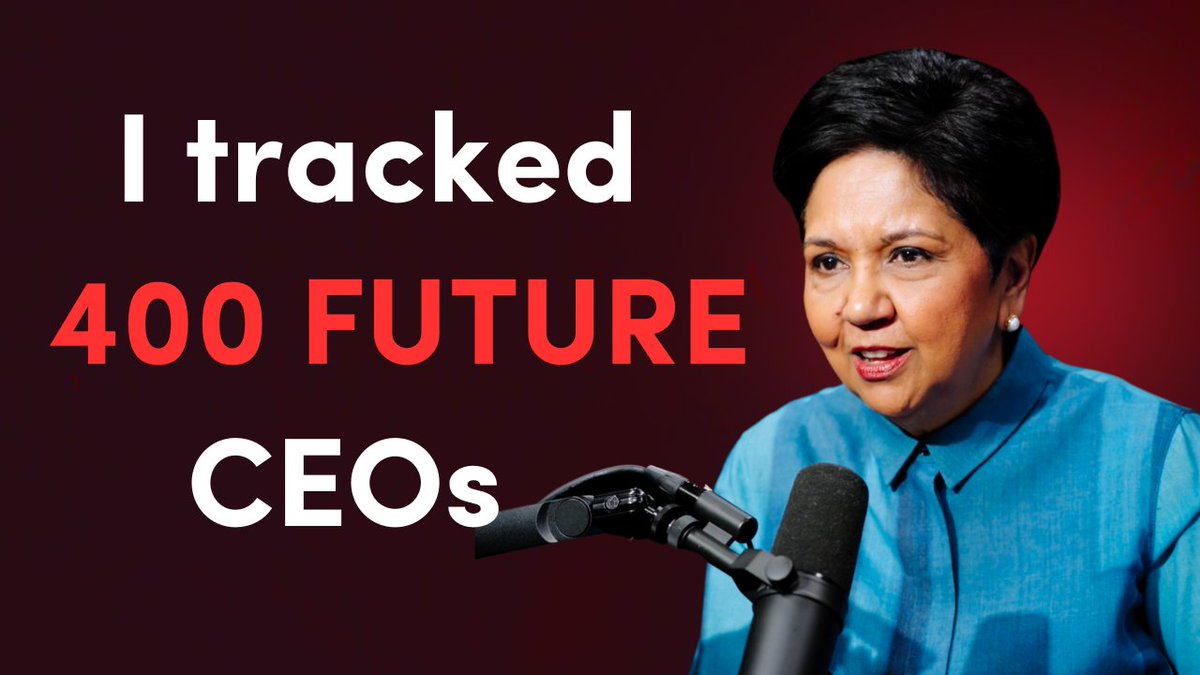
New episode with the incredible former PepsiCo CEO Indra Nooyi - the first woman of color and immigrant to run a Fortune 50 company. In this conversation, Indra discusses the stories behind her rise to the top of one of the world's largest companies. From early days at the Boston Consulting Group using satellite photos to analyze competitor facilities, to personally tracking 400 potential executives as CEO, Indra reveals the granular thinking that separates great leaders from good ones. Her "zoom in, zoom out" philosophy transformed how she understood business — from the "right side of the decimal" where even a fraction of a penny matters across millions of transactions, to setting company strategy at 30,000 feet. She explains why most leaders fail because they don't understand their business at the most granular level. But perhaps most powerful is her candid discussion about the reality of being a working mother in the C-suite where she argues there is no such thing as work-life balance. Watch now for a masterclass in leadership, strategy, and the sacrifices required to reach the top. (00:02:37) Growing Up In India (00:04:38) USA Culture Shock (00:09:54) Lessons From Working In Consulting (00:14:13) Right Side Of The Decimal Lesson (00:16:59) Lessons From Working In Consulting PT 2 (00:20:39) Delivering A Message That Gets Heard (00:23:19) Developing Talent (00:26:46) How To Minimize Office Politics (00:29:14) Power And Humility In Life (00:31:53) Prioritizing Work Over Family / Finding Balance (00:37:39) Turnover After A CEO Change (00:41:09) CEO Vs Board Member (00:44:41) Implementable Change In A Company (00:47:00) Removing Friction Instead Of Using Force (00:48:46) Lessons From Amazon (00:50:36) Leading Through Crisis (00:54:01) Dealing With Activist Investors (00:57:20) Women As CEOS (00:58:40) Equality of Opportunity (01:02:32) Bias In Performance Reviews (01:04:09) Almost Quitting PepsiCo (01:05:48) What I Learned From Steve Jobs (01:10:35) Lessons From Costco And Walmart (01:18:43) Secrets to PepsiCo Merchandising (01:20:59) Making Decisions At A Multi Billion Dollar Company (01:22:40) Lessons From Acquisitions (01:25:52) Traits Of A High Performing Employee (01:27:44) Remote Work Vs In Office

Farnam Street

114,125 Aufrufe • vor 1 Jahr

In this special live event, Founders In Arms Podcast brings together a room full of founders at Mercury's San Francisco headquarters for an intimate conversation about building, investing, and the future of AI. Max Mullen is co-founder at Instacart, where he led product and grew it from a contrarian idea into the leader in online grocery delivery and eventually a publicly traded company. Now Max Mullen is an active investor and runs a founder community in San Francisco called Workshop. Max shares lessons from over a decade of building and his perspective on AI's transformative potential. In this episode, we cover: (00:00) Welcome to the first live Founders in Arms event at Mercury HQ (00:43) Introduction to Max Mullen and his early investment in Mercury (03:58) Max's origin story and first startup at Startup Weekend (04:36) Building a social network and getting acquihired (05:39) The path from acquihire to founding Instacart (06:19) Why Max wanted to solve real-world operational problems (07:17) Starting Instacart when there was no gig economy (09:15) Overcoming the "grocery delivery is dead" narrative (11:48) Market timing and why Webvan was too early (14:37) Being a non-technical co-founder in a technical role (17:45) The PARE framework for building company culture (22:09) Max's approach to M&A at Instacart (24:00) The Caper smart shopping cart acquisition story (25:31) How founders can position for acquisition (28:26) Why product-market fit attracts acquirers (29:46) Evaluating investments: market size vs. founder quality (32:54) Max and Immad's differing investment philosophies (35:39) The current state of VC funding and AI companies (36:51) The three best times to raise money as a founder (39:15) Instacart's seasonal business patterns and fundraising timing (39:59) The most interesting opportunities in AI right now (40:24) Why every profession will have AI agent co-pilots (41:44) What AI-native companies will look like for the next generation

Rajat Suri

144,197 Aufrufe • vor 7 Monaten

E133: Sam Blackshear - How Libra Sparked the Move Language and Why Sui Is the Real Endgame! Sam Blackshear is the Co-founder and CTO of MystenLabs.sui , the company behind the Sui, and the Creator of the Move programming language that's revolutionizing smart contract development. Timestamps: 0:00 Introduction 1:54 Partnerships: Jupiter, KAST (old), , Sui, Mantle, Forza! BTC 2:44 The Power of Preparation 5:14 Discipline Behind the Podcast 6:27 Translating Thought Into Code 8:19 Who is Sam Blackshear? 9:27 Choosing What Truly Matters 10:25 Self-Custody with Trezor 11:18 Crypto vs. AI Thinking 12:28 The Power of Support 16:04 From Court Dreams to Reality 17:55 Challenging the Limits of Code 22:52 Chose Learning Over a Job 24:09 The Internship That Changed Everything 27:35 PhD Skills Meet Facebook 29:05 Entering Crypto Through Facebook 32:15 Why Libra Needed Move 33:42 Solving Scarcity in Code 36:37 Bitcoin & Ethereum Mistakes 38:45 Creating a New Language 41:41 Problem-Driven Innovation 44:47 Avoiding Analysis Paralysis 48:11 What is Unstructured Thinking? 50:50 Why Unstructured Thinking Works 53:14 Future of Crypto Protocols 54:21 Why Move is the Best Programming Language 55:00 What is the Sui Network? 56:25 What Makes Sui Different? 57:05 Why is Sui The Best Blockchain? 59:05 Managing Energy Long-Term 1:01:02 Satisfaction Without Closure 1:03:37 90% Love, 10% Grind 1:05:37 Mental State of Surfing 1:06:47 Non-Consensus Beliefs 1:07:34 What is Memory Safety? 1:09:07 What Was the Equifax Hack? 1:10:53 Rethinking Software Safety 1:12:00 Right Dose of Regulation 1:13:00 Biggest Prediction for the Next 24 Months? 1:14:02 Scaling Crypto Developers 1:16:07 Concluding Remarks

MR SHIFT 🦁

164,299 Aufrufe • vor 1 Jahr

BREAKING: Inside AppLovin's $100B+ Ad Engine Co-Founder & CEO Adam Foroughi CTO Giovanni Ge FULL INTERVIEW AppLovin is one of the most efficient companies in public markets at ~400 people. Approaching $7B in EBITDA. That's ~$17M per employee, roughly 3x the revenue per head of Nvidia & 7x Apple, Meta, or Google. Engineering hasn't grown in 3 years (100 people) while cash flow scaled 20x. The most extensive breakdown yet of how they built the ad model that grew AppLovin ( $APP ) from a -92% post-IPO decline to $100B+ company, with billions in profit Gio joined AppLovin in late 2022, when the company was worth ~$5.5 billion to help architect Axon 2, the recommendation engine that became central to AppLovin’s transformation. The new architecture improved predictions & advertiser returns, helping drive the company’s expansion beyond mobile gaming into e-commerce ads & a full recovery "Technology moves really fast, & you gotta be humble about what you have. If technology goes faster than what you've developed, you gotta throw away what you have & rebuild it. And it's probably gonna happen every couple years, or even faster in the future." - Adam Foroughi We go inside the machine: › Rebuilding Axon from scratch with 100 engineers › No one-on-ones, no training manuals, almost no PMs › New hires ship production code in week 1 › Engineers on top of AI, not next to it › The e-commerce product designed on a napkin › Dropping 92%, then becoming their own best investor › The math to $1 trillion 𝐓𝐈𝐌𝐄𝐒𝐓𝐀𝐌𝐏𝐒 (00:00) Adam Foroughi, Co-Founder & CEO & Giovanni Ge, CTO at AppLovin (00:52) Gio's first impression of AppLovin (03:38) Joining AppLovin after a 30% stock drop (09:59) How Axon 2 actually got built (20:23) Why AppLovin never needed a sales team (21:59) From gaming ads to e-commerce (24:47) From a napkin drawing to a real product (30:54) The onboarding mistake most companies make (34:37) What "AI-Native" actually means (36:37) Should new engineers still learn to code? (41:41) UGC vs. traditional ads: what's winning? (47:56) Adapting to AI without rebuilding from scratch (54:50) Gio's daily tech stack (1:02:17) AppLovin's path to a trillion-dollar valuation (1:06:19) Recovering from a 90% stock drop (1:09:47) What's next for AppLovin? (1:13:44) What happens when AI takes over? (1:15:48) Adam and Gio's hottest takes (1:19:50) How to actually stay locked in (1:24:47) Building something that lasts

Molly O’Shea

695,632 Aufrufe • vor 1 Monat

BREAKING: deel Hits $1.4B+ ARR Co-founded by CEO Alex Bouaziz (Alex Bouaziz) & CRO Shuo Wang (Shuo Wang), Alex shares their hypergrowth playbook.. Founded in 2019, at only 7 years old: - Deel has scaled to $1.4B+ ARR - Reached a $17.3B valuation - 40K+ customers across 150+ countries - 3+ years of being profitable Deel has rapidly become the #1 platform for hiring & paying employees worldwide. We discuss: • Scaling Deel to $1.4B+ ARR • Serving 40K+ companies across 150+ countries • Deel’s 10+ acquisition M&A strategy • Building a profitable hypergrowth SaaS company • The future of global hiring & distributed teams • How AI agents will transform the workforce Recent Financing: Oct 2025, Deel announced a $300 million Series E funding round, valuing the company at $17.3 billion co-led by Ribbit Capital (Ribbit Capital) as a new investor, alongside long-time partners Andreessen Horowitz (a16z) & Coatue Management (COATUE). This was filmed in London February 12, 2026 𝐓𝐈𝐌𝐄𝐒𝐓𝐀𝐌𝐏𝐒 (00:00) Alex Bouaziz, Co-Founder & CEO at Deel (02:05) Working with co-founder & CRO Shuo Wang (03:54) What Deel actually does (05:05) Biggest customers (05:54) $17B valuation and latest funding round (06:35) How Deel approaches fundraising (07:50) Hitting $100M ARR and early growth (09:25) Why raise money if you are already profitable? (10:35) Inside the latest funding round (12:03) Why payroll is a huge global opportunity (14:21) How Deel expanded its product stack (15:21) The challenges of hiring globally (16:18) Running a 7,000 person fully remote company (18:29) Tips for building remote teams (19:50) Why Deel went global from day one (22:47) How AI is changing hiring (25:00) Deel’s moat in an AI world (26:19) A question from Micky Malka (26:57) From airlines to oil and gas: who uses Deel (27:58) M&A strategy and integration playbook (34:33) Biggest mistakes companies make with acquisitions (35:56) How to retain founders after acquisitions (36:34) Deel's new CFO (39:09) What it takes to be IPO ready (40:29) How AI could affect Deel’s future (42:55) The "Dubai founder controversy" (46:00) Leading in a competitive market (50:47) The biggest misconception about Deel (53:27) The right people around you (56:51) The "default optimism" (58:33) What’s next for Deel (01:01:05) The future of autonomous agents (01:03:35) Biggest lessons from Shuo (01:06:34) What makes a great salesperson (01:08:32) Partnering with Arsenal

Molly O’Shea

284,721 Aufrufe • vor 6 Monaten

From a Thai prison cell to a fintech empire processing $1.6B in international payments across 40+ banks and 250M+ users. Jonathan Low (Jonathan Low). Forbes 40 Under 40. Author of "Cell to CEO." We covered prison, banking for AI agents, RWA projects, the future of crypto in banking, vibe coding for trading, and the businesses that win the next 5 years. ⏱ Timestamps: 00:00:00 — Teaser 00:00:46 — Who is Jonathan Low 00:01:35 — What Jonathan's life was like before prison 00:02:13 — How and why Jonathan ended up in prison 00:02:57 — Prison conditions: expectations vs reality 00:07:33 — Prison became the greatest blessing 00:09:12 — How the entrepreneurial journey began after prison 00:10:34 — Why social capital matters 00:11:06 — Launched own club and took it to the top in 3 months 00:12:09 — Built an Axie Infinity gaming guild during COVID 00:13:49 — The beginning of the BipTap Group journey 00:17:23 — How Jonathan built his own banking system 00:20:07 — How to get a crypto card 00:22:03 — How much it costs to launch a white-label solution with BipTap 00:22:58 — Banking for AI agents 00:25:57 — How to build an RWA project 00:27:45 — Future of cryptocurrencies in banking 00:32:08 — The business verticals within Empire Group 00:32:48 — What Jonathan invests his money in 00:33:54 — How relationships with regulators are built 00:34:43 — Implementing AI in business 00:36:28 — Vibe coding in trading 00:40:06 — Advice for first-time founders 00:43:36 — From construction to trading: Ruslan Khairullin's journey 00:44:57 — Inner peace: why calmness is essential for founders 00:50:39 — Work-life balance for entrepreneurs 00:53:47 — $1.5 million in 24 hours on TST coin 00:55:11 — The best way to capture a market 00:55:57 — Banking for nations Watch the full conversation and let me know which part you liked the most 👇

Ruslan Khairullin

16,872 Aufrufe • vor 2 Monaten

How to build a beloved AI product, with Granola CEO Chris Pedregal Granola is the rare AI startup that slipped into a very crowded niche — meeting notes — and still managed to become the product founders (and VCs!) rave about. Plenty of product lessons in this episode. 00:00 - Introduction: The Granola Story 01:41 - Building a "Life-Changing" Product 04:31 - The "Second Brain" Vision 06:28 - Augmentation Philosophy (Engelbart), Tools That Shape Us 09:02 - Late to a Crowded Market: Why it Worked 13:43 - Two Product Founders, Zero ML PhDs 16:01 - London vs. SF: Building Outside the Valley 19:51 - One Year in Stealth: Learning Before Launch 22:40 - "Building For Us" & Finding First Users 25:41 - Key Design Choices: No Meeting Bot, No Stored Audio 29:24 - Simplicity is Hard: Cutting 50% of Features 32:54 - Intuition vs. Data in Making Product Decisions 36:25 - Continuous User Conversations: 4-6 Calls/Week 38:06 - Prioritizing the Future: Build for Tomorrow's Workflows 40:17 - Tech Stack Tour: Model Routing & Evals 42:29 - Context Windows, Costs & Inference Economics 45:03 - Audio Stack: Transcription, Noise Cancellation & Diarization Limits 48:27 - Guardrails & Citations: Building Trust in AI 50:00 - Growth Loops Without Virality Hacks 54:54 - Enterprise Compliance, Data Footprint & Liability Risk 57:07 - Retention & Habit Formation: The "500 Millisecond Window" 58:43 - Competing with OpenAI and Legacy Suites 1:01:27 - The Future: Deep Research Across Meetings & Roadmap 1:04:41 - Granola as Career Coach?

Matt Turck

32,002 Aufrufe • vor 1 Jahr