正在加载视频...

视频加载失败

BREAKING: Inside AppLovin's $100B+ Ad Engine Co-Founder & CEO Adam Foroughi CTO Giovanni Ge FULL INTERVIEW AppLovin is one of the most efficient companies in public markets at ~400 people. Approaching $7B in EBITDA. That's ~$17M per employee, roughly 3x the revenue per head of Nvidia & 7x Apple,...

695,423 次观看 • 23 天前 •via X (Twitter)

0 条评论

暂无评论

原始帖子的评论将显示在这里

相关视频

AppLovin CEO is trying to counter Anthropic’s CEO claims that SaaS is DEAD and never coming back. $APP is not an ad network. It is not a gaming company. It is an arbitrage engine with 400 engineers, $1.3 billion in cash flow per quarter, and a capital allocation track record that belongs in a business school curriculum. Start with the gaming studios. From 2018 to 2023, AppLovin acquired over 15 mobile gaming studios and 1,500 people. Nobody understood why. The answer was data. Third party advertisers would not share their conversion and ROAS data with AppLovin's model. So AppLovin became a first party advertiser — running its own games, generating its own behavioral data, feeding that data into Axon, its deep learning ad model. The studios were not a business. They were a training set. The moment Axon 2.0 launched in April 2023 and proved so effective that the entire gaming industry had to plug in and share their data to access the returns, the studios had served their purpose. AppLovin sold the entire portfolio to Tripledot and moved on. They used the asset to build the moat and immediately dumped the asset. That is not a pivot. That is a premeditated extraction. The 2022 buyback is the capital allocation move that defined the company's trajectory. The market had pushed AppLovin's market cap to $3.8 billion. The business was printing over $1 billion in EBITDA. Instead of open market repurchases, management identified that private equity backers and early insiders controlled nearly 50% of the float and needed liquidity. They bypassed the public market entirely, negotiated directly with those institutional holders, and executed a $6 billion leveraged buyback at the floor. Foroughi estimates that single decision generated $50 to $60 billion in retained value for remaining shareholders as the stock recovered. One negotiation. One decision. $50 billion created. The operating model is the part that should make every other tech CEO uncomfortable. AppLovin fired 40% of its workforce while growing revenue nearly 100% year over year. The C suite is four people—CEO, CFO, CTO, General Counsel. No CRO. No COO. No salesforce. Over 80% of the codebase is now written by AI, multiplying the output of their best engineers by up to 100x. The product does not need to be sold. Advertisers plug in, set a performance goal, and if the ROAS is positive they scale spend infinitely. The platform turns advertisers into blind arbitrageurs — they do not need to understand how it works, they just need to see the return. The TAM expansion is the next leg. Axon perfected gaming monetization. It is now being pointed at ecommerce and local SMBs — markets orders of magnitude larger than mobile gaming. The model does not need a sales team to penetrate them. It needs inventory and intent signals. It is acquiring both. The company has internal compensation triggers tied to a $1 trillion market cap. They went from $3.8 billion in 2022 to $154 billion today. The people running this business have done everything they said they would do, faster than anyone expected, with fewer people than anyone thought possible. That track record is the most important input in any forward model. Betting against a team that turned a $3.8 billion floor into $154 billion in three years, with 400 people, no salesforce, and an AI model that the entire industry has to use — requires a very specific and defensible thesis. Most of the people making that bet do not have one…stock is still being beaten to death…still not compelled. AI companies are just too good and getting better but interesting to see him come publicly to try to pump his stock

Nicholas Mugalli

100,854 次观看 • 4 个月前

The recent 20VC interview with Adam Foroughi is an incredible example of capital allocation and lean operations. $APP is operating in a league of its own right now. We are talking about a business that generated $5.48B in 2025 revenue and is currently doing roughly $10 M in EBITDA per employee. They operate with a total headcount of around 895 people, but the core advertising unit that prints the cash is only about ~400 people. You never see software companies at a $150 B market cap running this lean. The 84% EBITDA margin profile is completely disconnected from traditional enterprise SaaS norms. The competitive moat is their recommendation engine, AXON 2.0. The advertising environment is brutal. $META and TikTok have elite targeting engines. TikTok’s algorithm is famous for engagement without a social graph. But AppLovin has built an engine that processes over 2M ad auctions per second, optimizing heavily for performance and incrementality. When the stock completely collapsed by 92% in 2022 management did not panic. Instead, they ruthlessly threw out their old ML infrastructure and rebuilt AXON from the ground up. They ignored the noise, shut down investor relations temporarily to focus internally, and executed one of the highest ROI buybacks in modern corporate history. They targeted private market VC sellers who were desperate for liquidity. That specific buyback maneuver alone accounts for roughly $50 BILLION of the company's current market value. Their internal culture is intensely anti-bloat. They have zero traditional management layers. There is no CRO, no COO, no CMO, and no Chief Human Resources Officer. Foroughi cut HR from roughly 80 people down to 15. The product team does not exist. Engineers are required to act as product managers. If an engineer cannot understand the business KPIs that drive revenue, they do not belong there. AI enables them to eliminate process-heavy roles. They demand that only their top 10% to 15% of employees take equity risk, while everyone else gets cash compensation. This keeps their SBC tightly capped at around $300 M annually. For a company valued at over $150 B, that dilution rate is almost a rounding error. Foroughi values the business strictly on cash flow minus SBC. It is the absolute cleanest metric. The bearish narrative assumes AI makes game and app creation easier, which somehow dilutes the value of AppLovin's ecosystem. Foroughi counters that cheaper content creation actually explodes the volume of content, making discovery engines like AXON infinitely more valuable. If they expand this performance-based advertising model into connected TV and the broader $170 B e-commerce sector via their Axon Ads Manager, the path to a trillion-dollar valuation becomes very achievable without even needing to build a native social network. Great interview! Really appreciate hearing Adam.

CapexAndChill

10,744 次观看 • 4 个月前

New The Peel with Michael Tannenbaum Employee #1 at Brex. Founder of the modern billboard ad. We talk joining Brex when they were in a kitchen, almost walking away right before the launch, scaling to $300M+ revenue, the time Masa offered him a billion dollars, why you should take the hardest job available, and how he’s learned to think like a founder at Sofi, Brex, and taking Figure public as CEO. Timestamps: 0:00 From Brex employee #1 to public-company CEO 1:28 Operating vs managing a career 3:23 Why he took the worst business at SoFi 7:34 The Big Rock framework 11:01 How to get real customer feedback 14:56 The best nose for value in fintech 17:46 Why banking the affluent beats down-market 21:11 What Figure is, and $1,000 vs $12,000 25:41 How blockchain kills double-sold-loan fraud 26:59 Do you actually need to use blockchain? 28:06 Why memecoins took over crypto 30:46 Masa's billion-dollar offer 36:29 Leaving SoFi for two kids in a kitchen 38:25 Look for a hair-on-fire problem 41:20 Six months from quitting to a unicorn 44:10 The finance guy who ran Brex's marketing 46:20 Inside Brex during the SVB collapse 51:16 The two SoFi insights behind Figure 54:46 From direct-to-consumer to marketplace 56:41 AI can’t get you better credit ratings 58:56 Figure is a modern Fannie Mae 1:00:26 Not everyone wants tokenization 1:01:31 Buyers who commit before the loan exists 1:04:06 Following customers into first-lien mortgages 1:06:41 Buying Kiavi, the fix-and-flip leader 1:12:26 Why more fintechs don't become marketplaces 1:14:46 The AI risk in outsourcing customer acquisition 1:18:26 What going public actually takes 1:20:16 Life as a public-company CEO 1:22:51 Getting shorted 1:24:11 The gas station test 1:25:46 The reverse pyramid of big corporates

Turner Novak 🍌🧢

32,336 次观看 • 13 天前

There is a massive misunderstanding about what $APP actually is, and the recent Adam Foroughi interview just handed investors as a class in capital allocation, efficiency, and strategic vertical integration. At its core, AppLovin isn’t solely an ad-network or a gaming business but an arbitrage engine. APP is essentially run by a skeleton crew of about ~400 core engineers and product builders generating $1.3B in cash flow a quarter. The gaming studio acquisitions were purely strategic. From roughly 2018 to 2023, APP bought up mobile gaming studios. It was accumulating over 15 studios and 1,500 headcount. This was not because they wanted to be a gaming company, but strictly to harvest first-party conversion data. They needed proprietary behavioral and return on ad spend data to train their Axon deep learning models because third-party advertisers wouldn't share it. Once the Axon 2.0 model launched in April 2023, it became so hyper-effective that the entire gaming industry had no choice but to plug in and share their data to access the platform's unparalleled returns. Having served its purpose, APP then shed the distraction, selling off the gaming portfolio to Tripledot Studios. This was pure strategic rent extraction. They used the asset to train the AI, built the moat, and immediately dumped the asset. Then there is the capital allocation execution. Back in 2022, when the broader market abandoned the stock and pushed APP's market cap to a floor of $3.8B, the business was still printing over $1 B in EBITDA. Instead of executing standard open-market share repurchases, management identified that their private equity backers and early insiders held nearly 50% of the float and eventually wanted liquidity. Management bypassed the public market entirely. They negotiated directly with those institutional holders to execute a massive $6 billion leveraged buyback. They effectively retired a huge portion of the company at rock-bottom valuations. Foroughi noted this singular move generated $50 to $60 B in retained value for remaining shareholders as the stock rebounded. While the rest of big tech hoards headcount, APP actively fired 40% of its workforce in recent years while growing revenue by nearly 100% YoY. The C-suite consists only of the CEO, CFO, CTO, and General Counsel. There is no CRO, no COO, and virtually no salesforce. They replaced standard enterprise bloat with LLMs. Over 80% of their codebase is now written by AI, multiplying the output of their highest-tier engineers up to 100x. The product nearly sells itself. Advertisers plug in, set a performance goal, and if the ROAS is positive, they scale spend infinitely. It turns advertisers into blind arbitrageurs. The TAM expansion is also clear. Now that the model has perfected gaming monetization, APP is unleashing Axon onto e-commerce and local SMBs. They don't need a massive sales team to do this. The AI matches the right intent with the right ad, pushing conversion rates up. The company literally has internal compensation triggers tied to a $1 T market cap. Given they have grown from under $4 B in 2022 to roughly ~$154 B in market cap today, betting against this lean, hyper-competent team does not make much sense.

CapexAndChill

24,419 次观看 • 4 个月前

Confluent just sold for $11 billion. Jay Kreps built it by learning a distinction that sits at the center of every hard company decision. There are two questions you can ask about anything hard: what can we do? And what do we have to do? The first is answered by your team. The second is imposed by the world. When Confluent needed a cloud product, most of the company thought it was a terrible idea. The on-prem business was working. The economics were better. Investors thought they were making a mistake. As Jay put it: if there were two standalone companies, we'd invest in this one and definitely not that one. Jay's answer: we have to do this. There's no question that a huge portion of the market is going to be in the cloud. So we have to serve that part of the market. The fact that it's very hard is not relevant. Once you know you have to do something, you find a way to do it. We cover this insight amongst dozens of others in my most recent "In Depth" conversation. Timestamps: 01:18 Making the leap from engineer to CEO 03:33 The 80% rule: what a CEO actually needs to know 04:54 Scaling different business disciplines 09:31 How Confluent’s story began in LinkedIn 12:13 The growing need for scalable data tech 13:37 What the early Kafka product looked like 16:38 Kafka’s underwhelming open-source launch 18:38 The blog post that accelerated Kafka’s adoption 20:16 Why so many marketing messages fail 28:08 The decision to build Confluent 34:24 Planning to fundraise before building the product 39:19 Confluent’s early years: Tough product decisions 47:07 The underrated growth lever question for companies 55:46 Why founder optimism is an overrated trait 1:00:29 What should founders give up as they scale? 1:02:47 Why people become trapped in a failure mindset 1:08:33 The Chipotle problem: Losing excellence at scale

Brett Berson

19,608 次观看 • 5 个月前

My first interview with Scott Nolan, Co-Founder and CEO of General Matter. 0:48 What if Russia stopped selling uranium to the US 4:47 The history of uranium enrichment 10:44 What if he was given $25 billion to turn on reactors as fast as possible 13:37 The US doesn’t have the capability to make fuel for Small Modular Reactors today 14:43 How Founders Fund decides to start companies 19:28 Why you shouldn’t start a company 26:02 Working at SpaceX in 2003 28:10 How Elon drove urgency in the early days of SpaceX 30:28 How it felt when the first three Falcon launches failed 32:41 Figuring out what to work on after leaving SpaceX 34:26 How Peter Thiel convinced him to join Founders Fund 38:53 The most unintuitive thing he learned from Peter Thiel 44:03 Lowering the cost of uranium enrichment 47:32 The idiot index for enrichment 50:18 Vertically integrating vs using existing supply chains 53:44 The idiot index for timelines 59:13 Taking risk to pull in schedule: current burn vs future revenue 1:02:44 Choosing where to put their first enrichment facility 1:05:42 Maintaining maniacal urgency with multi-decade timelines 1:09:10 How a war with China will impact our ability to produce energy 1:14:06 What conventional wisdom gets wrong about building this type of company 1:17:48 The AI data center boom requires nuclear 1:21:02 Why SpaceX switched from an ablative engine to a regeneratively cooled all metal engine 1:25:08 How Elon makes nonobvious decisions 1:29:59 Don’t focus on problems that are already getting solved

Ti Morse

28,058 次观看 • 6 个月前

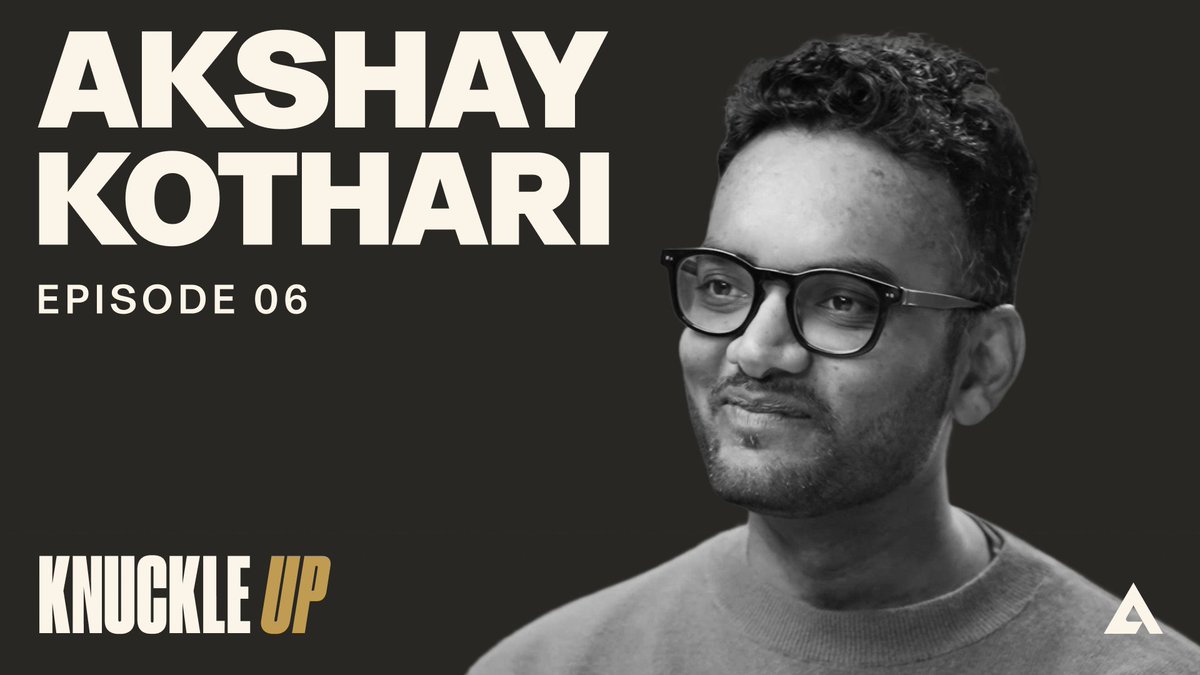
"We were go-karting and doing quite well. Now we've moved to Formula 1, and we're in the middle of the pack. We have a shot at the podium but we have to rewire for the race we're in." Akshay Kothari (Akshay Kothari). Cofounder and COO of Notion. Three years from now, most pre-AI companies will be gone. Notion will be one of the few standing stronger than before. This episode is a field study in how they're pulling it off. Knuckle Up ↓ 00:00 Intro 01:27 What were Notion's core founding principles? 06:20 Which early cultural principles scaled, and which broke? 08:22 How did Notion hire its first employees, and where did they come from? 11:48 How does hiring work now that the founders can't meet everyone? 14:35 Why does Akshay, as COO, prefer to have zero direct reports? 19:05 How do Ivan, Simon, and Akshay divide the work? 21:07 Does Notion's intentionality ever conflict with speed? 25:25 What should other founders steal from Notion's culture? 28:11 When did AI become a reason to rethink the whole product? 30:44 Why were the early AI years a "swamp of despair"? 36:05 How do you push AI across a huge product without losing the user? 39:25 Does Notion buy its AI DNA or build it? 40:44 Should Notion be afraid of OpenAI, Anthropic, and fast copycats? 46:58 What's hardest about the reinvention, and what does "meet the LLM" mean? 52:42 Is Notion AI-native in every function yet? 54:36 Are Notion's engineers still writing code, and how has engineering changed? 1:01:07 Once building is cheap, what's the new bottleneck? 1:02:39 How is AI reshaping sales, marketing, and support? 1:09:07 How many agents run inside Notion, and who builds them? 1:11:28 How has recruiting changed for the AI era? 1:13:48 What still worries Akshay about Notion's future? 1:15:22 Quickfire: admired founders, books, overrated AI advice, and Akshay’s superpower 1:19:42 What should a $50M pre-AI company do in the next 90 days?

Nakul Mandan

205,031 次观看 • 3 个月前

I asked a top 0.1% YouTube Strategist (Vexian - Algorithm Alchemist) to take me from 0 to 10m subscribers. This is every level of YouTube growth. 0:00 Education vs Entertainment 1:51 The Biggest Mistake New Creators Make 2:45 You Don't Need Gear You Need Reps 3:53 The One Thing That Guarantees 1K Subs 4:58 What Is the Impression Snowball 5:54 Consistency as Compound Interest 6:57 How to Come Up With Content Ideas 7:28 Track the Top 20% in Your Niche 8:18 Reverse Engineering Titles That Work 9:06 How to Remix Without Copying 10:00 Why People Actually Watch 11:30 90 Ideas in 30 Minutes 17:29 Level 2 (1K to 10K Subscribers) 21:00 How to Hook in 3 Seconds 24:40 YouTube Is a Zero Sum Game 25:11 Collabs and the Anchor Effect 26:48 Using Bigger Creators to Grow 28:21 What Separates Creators After 100K Videos 29:41 Consistency in Amount Type and Focus 30:05 How to Know When to Quit Your Niche 31:37 What Gaming YouTube Teaches Everyone 33:31 Storytelling From Minecraft YouTubers 34:22 Mini Stories and Escalating Stakes 37:47 Level 3 (10K to 100K Subscribers) 42:00 Package Your Video Like a Movie Poster 44:00 The Pre-Post Checklist 49:00 Seven Levels of Rapper and Viral Permutations 51:05 CTAs Where to Put Them and Where Not To 53:26 Subscribers Are a Vanity Metric 55:46 Replace Ad Reads With Your Own Content 58:49 Level 4 (100K to 1M Subscribers) 59:08 What Is Impact 1:00:01 Pattern Breaking and Absurdism 1:01:15 How to Title a Podcast for Absurdism 1:02:27 Melding Interest Topics Together 1:04:36 Parasocial Reciprocity 1:05:57 The Third Thing Nobody Talks About 1:06:05 What Is Sauce 1:08:20 How Long Does 100K Actually Take 1:09:31 When to Start Outsourcing 1:12:00 Your Niche Has a Ceiling 1:21:42 The Invisible Katana and 25M Views 1:23:27 One Word Across 5 Niches and 13 Years 1:25:38 What Channels Will Hit 1M 1:29:00 Level 5 (1M to 10M Subscribers) 1:29:34 Outlier vs Presence of Mind Ideation 1:30:50 Oppenheimer Barbie and the Minecraft Movie 1:38:00 Why the Best Channels Stop Growing 1:44:41 What Happens When You Beat YouTube 1:46:18 When You Become an Idea Not a Person 1:49:48 The Two Things That Actually Matter

Grant

19,207 次观看 • 4 个月前

My first interview with Eric Jorgenson 📚 ☀️, Author of The Book of Elon. 0:12 Why Elon outcompetes everyone 1:53 Not wanting to be CEO 6:15 Why there was a 1 in 100 chance of Tesla and SpaceX both succeeding 10:03 Thinking in lost future revenue 11:58 Living with a gun next to his bed 15:02 How Elon starts companies 19:23 Giving Larry Page an early demo of the Roadster 21:27 Why Elon calls people into the factory at 2am 25:01 The 20 people who execute Elon’s will autonomously - MrBeast clones 28:52 Working with Elon is doing a tour of duty 31:18 Creating a grand vision that people can believe in 36:42 How to thrive under Elon 37:30 The Algorithm - question every requirement, delete part or process, simplify and optimize, accelerate, automate 41:38 Setting up a tent factory in the Tesla Fremont parking lot 43:28 How Elon would play the game if he was born 300 years ago 45:10 Empathy for the individual vs empathy for the mission 46:57 Being feared vs being loved 48:38 The endless churn at Elon companies 50:49 Ruthlessness and having a willingness to be disliked 56:08 Creating enemies and chaos 58:37 Shifting SpaceX’s focus from Mars to building a base on the Moon 1:00:07 Justifying Tesla’s valuation by reseting the vision 1:02:21 The S-Curve of ambition - colonizing planets, Starlink, Terafab 1:04:44 Throwing billions of dollars behind new companies 1:06:22 A great team is just the sum of the individual vectors 1:11:09 The idiot index at an industry-scale 1:13:53 Why it’s critical for space companies to control launch 1:15:44 Thinking in limits 1:18:47 Expanding the vision until no one can measure it 1:23:41 Internalizing pain and dealing with setbacks 1:26:03 The evolution of Elon’s operating philosophy over the last 30 years 1:27:37 Effectiveness

Ti Morse

126,252 次观看 • 4 个月前

🎧🍌 New The Peel with Ankur Goyal Ankur is the Founder and CEO of @braintrustdata, the end to end developer platform for building the world's best AI products. Their customers include companies like Instacart, Zapier, Notion, Airtable, Replit, and more. We hit on the importance of LLM evals, advice for building AI products, why the best companies have two AI product roadmaps, how he hates meetings, and all his non-conventional advice for founders. Watch below or links in the replies! Timestamps: 04:04 Why everyone’s now an AI company 06:03 Reasons LLM evals are so important 09:19 Replacing vibe checks with Braintrust 10:37 Making OpenAI’s protocols the standard 11:27 Why the best companies have two AI roadmaps 13:06 Build your product so each LLM release makes it better 14:54 Predicting AGI is impossible 15:54 Why people who work with LLMs aren’t worried about AI safety 16:52 The best developers are all-in on co-pilots 18:11 How AI is changing software development 21:09 Combining IDE, CI/DC, and observability in one product 27:18 Are models more like CPU’s or relational databases? 30:14 How to pick an LLM 33:00 Advice for staying on top of new AI developments 34:30 Why tool calling is so important 38:02 Advice for young software engineers 40:25 Learning to code doing linear algebra homework 42:36 Lack of purpose interning in big tech 44:07 Working at MemSQL learning to be a founder 47:52 How to get a job at a startup 50:43 Building his first startups product on an flight 52:39 Three lessons from his first failed startup 54:46 Don’t delegate what you’re good at 55:46 Why you should be careful listening to VCs advice 57:34 Tactics for successful delegation 59:36 Why Ankur hates meetings 1:02:42 The importance of self-service in unlocking certain customer segments 1:05:14 How Braintrust got started 1:07:45 Advice on picking your target customers 1:10:35 How Braintrust hires with work trials 1:15:21 Balancing security with a modern UI 1:17:49 Why it’s hard to sell non-AI products right now 1:19:21 Advice for selling to large enterprises 1:23:10 Ankur’s favorite AI products

Turner Novak 🍌🧢

44,280 次观看 • 2 年前

Episode #92: How AI Changes Governments & Business Models Mike Vichich is the Co-founder and CEO of Pursuit, which helps companies drive more revenue from the public sector. We talk about how AI is changing Helmer’s 7 Powers, how it’s impacting the government, if DOGE is actually working, building a startup in the Midwest (specifically Ann Arbor, MI), and how to disagree with your team. We also get into Mike’s prior company Wisely, and how they went from $11 in the bank account and unable to run payroll for six months, to over $10 million ARR and a $187 million exit to public company Olo a few years later. Thanks to Jack Altman and Blake Robbins for their help brainstorming good topics for Mike! Full episode here on X, or grab a link in the replies. Timestamps: 3:21 How AI changes Helmer’s 7 Powers 17:06 What becomes important in AI-first economy 21:02 How AI interfaces with the government 24:02 “The rules intended to save taxpayer money ironically cause taxpayer money to be wasted” 29:34 How change orders impact public sector costs 33:20 Why DOGE has not impacted US government spending yet 38:15 Three pieces of wisdom from 2nd-time founders 41:44 Starting Pursuit to make selling to the public sector as easy as the private sector 45:35 Why cities grow expenses 5x faster than tax revenue 51:42 Pros + Cons of building startups in Ann Arbor, MI 57:43 Hiring talent density in the Midwest 59:30 Starting his first company to fix consumer credit cards 1:08:50 Pivoting Wisely to restaurant loyalty 1:12:49 $11 in the bank, missing payroll for six months 1:15:21 Embarrassing demo at an Ann Arbor tech meetup 1:18:18 Why CEOs don’t always have to be right 1:20:54 How to disagree 1:25:48 Hiring at Pursuit 1:28:30 “A bad day with customers is better than the best day in the office” 1:31:33 Crashing their first customer’s PoS on Labor Day Weekend 1:35:55 Using “The Cadence” to hit $10M ARR 1:41:55 Selling Wisely to Olo for $187M

The Peel

27,474 次观看 • 1 年前