Loading video...

Video Failed to Load

Go Home

BREAKING | 🇨🇿🇺🇸🇷🇺‼️‼️ Czech Prime Minister Andrej Babiš has reportedly met with representatives of the CIA and Czech intelligence services for a high-level briefing on potential threats posed by Russia to Europe. Among the scenarios presented was a possible limited Russian incursion into the Baltic states, potentially conducted under...

24,707 views • 4 days ago •via X (Twitter)

4 Comments

Nigel-James Durant's profile picture
Nigel-James Durant4 days ago

Take 1 step over the border and the Ests, Lats, Lits and Poles will not fuck around...it will be straight flash to bang. Then NATO piles in with the control of all air space. Bye bye Kaliningrad, St P and Moscow. Bye Bye Russia.

Surtur's profile picture
Surtur4 days ago

The “little green men” template from 2014 can not work again. RUS should be held fully accountable for the actions of all RUS affiliated groups.

Petr Ptacek🇨🇿's profile picture
Petr Ptacek🇨🇿4 days ago

Gliwice 2.0...👎

Davlad's profile picture
Davlad4 days ago

Feck Russia 🖕

Related Videos

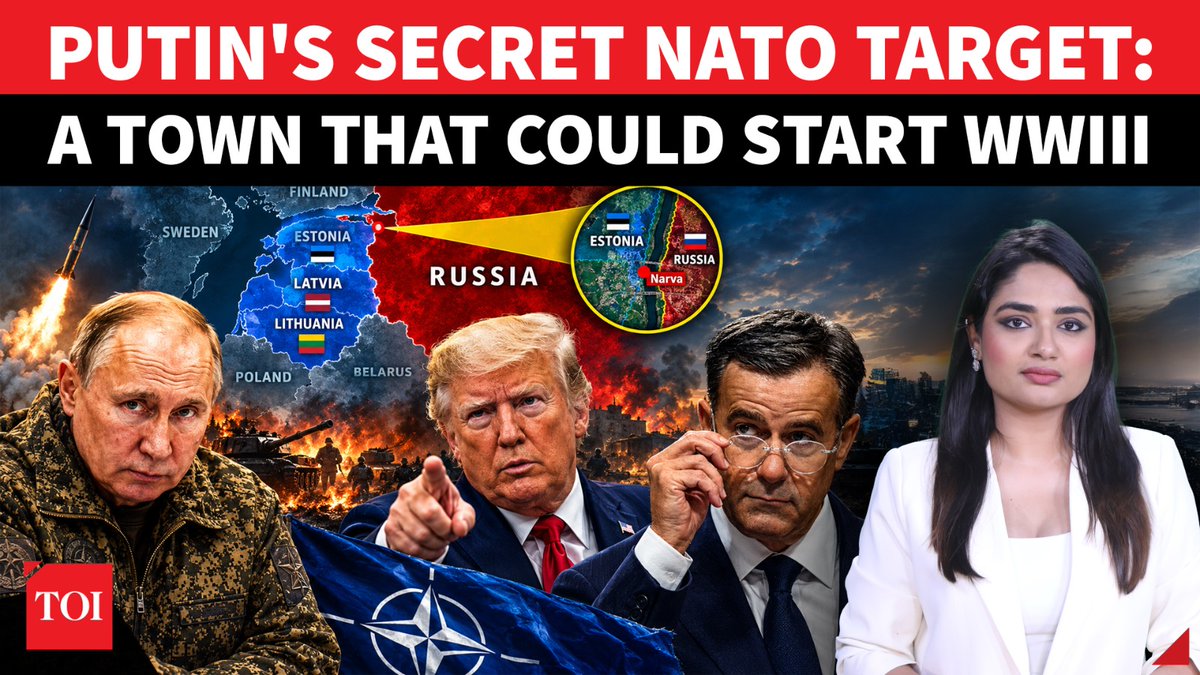
🚨🇩🇪🇪🇪🇱🇻🇱🇹 Bild has outlined several possible scenarios for a future Russian attack against NATO’s Baltic flank, ranging from covert sabotage and deniable hybrid operations to a direct attempt to sever the Baltic states from the rest of the Alliance. According to Bild, one scenario involves underwater attacks against critical seabed infrastructure such as data cables, power links, pipelines and maritime industrial facilities, where attribution could initially remain unclear. Another is the so-called “Narva trap,” in which armed groups suddenly appear inside Estonia while Moscow denies involvement. Other scenarios include a Russian attempt to seize or neutralize Gotland to threaten NATO movement across the Baltic Sea, provoking a crisis around Norway’s Svalbard archipelago under the pretext of protecting Russian citizens, and the most dangerous option: Russian forces advancing from Belarus toward Kaliningrad through the Suwałki corridor, potentially cutting Estonia, Latvia and Lithuania off by land before major NATO reinforcements can arrive. The common logic behind these scenarios is speed, ambiguity and pressure on NATO decision-making. Moscow would gain the greatest advantage by creating a crisis faster than the Alliance can politically and militarily respond, which is why reinforcement routes, undersea infrastructure protection and forward defense around the Suwałki corridor remain among NATO’s most strategically sensitive priorities. See the latest updates with us: NSTRIKE

NSTRIKE

19,406 views • 1 month ago

‼️‼️🇷🇺🇩🇪🇪🇪 BREAKING - A well-known German military analyst is predicting a possible Russian attack on Estonia by 2028 — Carlo Masala outlines how Russian aggression could escalate into a collapse of NATO. 📌 As global tensions continue to rise, Russia is steadily increasing the level of pressure and hostility toward its neighbors. 📌 In this context, German experts have expressed concern about Moscow’s plans, particularly regarding NATO’s collective defense obligations in Europe. German military analyst Carlo Masala noted that the Kremlin may attempt to exploit divisions within the Alliance to test NATO’s resolve. 📌 Masala suggests that Russia could launch an incursion into Estonia by 2028, using potential disagreements among NATO member states over the activation of Article 5. This article stipulates that “an attack on one NATO member state is considered an attack on all.” 📌 “The Russians are becoming increasingly brazen in the ways they test NATO’s deterrence measures and the ability of specific countries to respond,” Masala told Newsweek. “Their goal is to deepen fractures between European nations and NATO itself — we have already seen such provocations for two years now, but in recent months, Russia has clearly intensified its game. Nineteen drones entered Polish territory, and three fighter jets flew into Estonian airspace. They are taking far greater risks with their provocations.” 📌 The German expert argues that some countries may hesitate to engage in direct confrontation with Russia. Such hesitation, he warns, could embolden Putin to act aggressively without fearing consequences. Masala’s assessment corresponds with recent provocations, including the appearance of Russian troops near Estonia’s border and incursions into Estonian airspace — incidents that have heightened tensions and tested NATO’s unity. 📌 “If you believe in deterrence and in the idea that violations will be punished, you don’t send three fighter jets into Estonian airspace for twelve minutes just to test the reaction. You could do this with one aircraft — but not three,” he said. 📌 “In my view, this was a Russian PR stunt. If Moscow genuinely intended to create a real threat to Estonia, it wouldn’t parade seven soldiers carelessly through the streets like exposed targets. That is not preparation for an operation. It was a demonstration meant to convey: ‘We can do these things without fear of consequences.’” Masala concluded. See the latest updates with us: Visioner

Visioner

373,475 views • 10 months ago

‼️🇷🇺🎯🇪🇺🇺🇸 BREAKING | NATO could face a dangerous shortage of Patriot interceptors if Russia launches a sustained ballistic-missile campaign against Europe, with U.S. missile stocks on the continent reportedly already below critical levels following the war with Iran. According to the Associated Press, a U.S. defense official stationed in Europe and a NATO representative warned that available Patriot interceptor stocks are insufficient to sustain defense against a prolonged Russian ballistic-missile campaign. One U.S. official described a potential scenario in which Russia repeatedly targets military bases, power plants or other critical infrastructure, forcing NATO into a situation resembling Ukraine’s current air-defense struggle, effectively having to absorb some strikes because there simply would not be enough interceptors for every incoming missile. The problem is particularly serious because Patriot remains one of NATO’s most important defenses against ballistic threats. The warning exposes a potentially critical vulnerability at precisely the moment Western intelligence is increasingly focused on the risk of Russia testing NATO’s eastern flank. Europe may possess overwhelming conventional power on paper, but a prolonged missile campaign would turn interceptor inventories into a brutal arithmetic problem: launchers are of limited value when their magazines begin running dry. The shortage therefore makes rapidly expanding Patriot interceptor production, strengthening European alternatives and hardening military and energy infrastructure increasingly urgent if NATO wants a credible defense against a sustained Russian missile campaign. See the latest updates with us: Visioner

Visioner

25,292 views • 1 month ago

🇷🇺🇪🇺‼️ NATO has reportedly developed a detailed battle plan for stopping a potential Russian invasion of the Baltic states, built around overwhelming long-range firepower, autonomous systems and systematic destruction of Russia’s ability to sustain an offensive. According to BILD, the objective would not be to occupy Russian territory, but to halt Moscow’s advance and weaken its forces as severely as possible. The opening phase would focus on suppressing Russian missile and drone attacks with NATO aircraft, missiles and unmanned systems, while simultaneously striking military infrastructure in Kaliningrad. NATO would then establish an “autonomous zone” along the borders with Russia and Belarus, where Russian advances would be stopped largely by aerial and ground robotic systems rather than a permanent physical presence of allied troops. Subsequent operations would expand against the infrastructure supporting Russia’s war effort, including military bases, airfields, bridges, railways and defense-industrial facilities. The plan reflects how dramatically NATO’s doctrine has evolved since Russia’s invasion of Ukraine. The alliance is preparing not simply to defend every kilometer of territory with soldiers, but to destroy the logistics, infrastructure and combat systems required for Russia to sustain an invasion. With NATO already implementing its largest eastern-flank defense plans since the Cold War and maintaining substantially more forces at high readiness, Moscow would face a fundamentally different military environment from the one it encountered in Ukraine. See the latest updates with us: Visioner

Visioner

54,690 views • 1 month ago