Загрузка видео...

Не удалось загрузить видео

На главную

BREAKING: Inside $12 Billion Colossal Biosciences® Biosciences + Colossal Spinout 'Astromech' Announces $20M Raise at $3.8 Billion Woolly Mice, Dire Wolves, & AI-Driven Biotech "We are one of the most undervalued companies in the world." "[AI x Biotech] is truly exploding. You're gonna see this Precambrian explosion of new...

209,306 просмотров • 5 дней назад •via X (Twitter)

Комментарии: 0

Нет доступных комментариев

Здесь появятся комментарии из оригинального поста

Похожие видео

In this special live event, Founders In Arms Podcast brings together a room full of founders at Mercury's San Francisco headquarters for an intimate conversation about building, investing, and the future of AI. Max Mullen is co-founder at Instacart, where he led product and grew it from a contrarian idea into the leader in online grocery delivery and eventually a publicly traded company. Now Max Mullen is an active investor and runs a founder community in San Francisco called Workshop. Max shares lessons from over a decade of building and his perspective on AI's transformative potential. In this episode, we cover: (00:00) Welcome to the first live Founders in Arms event at Mercury HQ (00:43) Introduction to Max Mullen and his early investment in Mercury (03:58) Max's origin story and first startup at Startup Weekend (04:36) Building a social network and getting acquihired (05:39) The path from acquihire to founding Instacart (06:19) Why Max wanted to solve real-world operational problems (07:17) Starting Instacart when there was no gig economy (09:15) Overcoming the "grocery delivery is dead" narrative (11:48) Market timing and why Webvan was too early (14:37) Being a non-technical co-founder in a technical role (17:45) The PARE framework for building company culture (22:09) Max's approach to M&A at Instacart (24:00) The Caper smart shopping cart acquisition story (25:31) How founders can position for acquisition (28:26) Why product-market fit attracts acquirers (29:46) Evaluating investments: market size vs. founder quality (32:54) Max and Immad's differing investment philosophies (35:39) The current state of VC funding and AI companies (36:51) The three best times to raise money as a founder (39:15) Instacart's seasonal business patterns and fundraising timing (39:59) The most interesting opportunities in AI right now (40:24) Why every profession will have AI agent co-pilots (41:44) What AI-native companies will look like for the next generation

Rajat Suri

144,095 просмотров • 6 месяцев назад

This Google insider just revealed what AI is actually being used for behind closed doors. It has nothing to do with chatbots. Mo Gawdat was a senior executive at Google for over a decade. He watched AI get built from the inside. He was in the rooms, in the labs, in the government meetings in China that almost no Western executive was allowed into. And he just went on Diary of a CEO and said things that no active tech executive would ever be allowed to say publicly: "What the general public sees about AI is overhyped but ineffective. What the real geeks see inside the lab is genuinely world-changing." The public gets chatbots and AI-generated videos while the labs are building autonomous weapons systems, military targeting technology, real-time surveillance infrastructure, and self-improving code that rewrites itself every microsecond without human oversight. As Mo put it: "As we speak, we are living in two major wars where AI is doing most of the killing." He talked about Palantir's CEO Alex Karp openly celebrating how his targeting technology identifies and eliminates people. He talked about the next generation of autonomous weapons costing $20,000 each, meaning any government with a $50 billion defense budget can literally rain drones on every corner of the planet. And as you remember, Anthropic was offered a $500 million military contract to allow their AI to be used for human targeting and surveillance. They refused and walked away from the money. OpenAI took the contract the following week. Mo's response: "You have to start observing who is actually behaving in a way that makes AI work for humanity, and who is behaving in a way that makes AI work for their share price." Now this is where it gets really interesting... In Mo's documentary Chasing Utopia, Altman literally says directly on camera: "I suspect that AI is likely going to end humanity, but we're going to create a lot of interesting companies in the process." That is the CEO of the most powerful AI company on Earth saying that he suspects his OWN technology will end the human race and then shrugging it off because the business opportunity is too good to pass up. Mo's prediction for the next decade: War, economic collapse, mass unemployment, surveillance expansion, and an absolute concentration of power at the top unlike anything in modern history. His prediction after that is if humanity survives the next 10 years, AI will eventually create a world of abundance where intelligence solves every problem we currently face. But the path between here and there is what terrifies him. And the men building the technology know exactly what they're doing. Do you think he's just exaggerating for attention, or is there truth in this?

Ricardo

197,967 просмотров • 2 месяцев назад

🚨EXCLUSIVE INTERVIEW – OPENAI’S 1ST INVESTOR: AI WILL SAVE US—OR DESTROY US Vinod Khosla was the first major investor in OpenAI. Now, he says AI will replace all human jobs, upend geopolitics, and redefine the meaning of life. Vinod breaks down the race for AI dominance—and the two futures ahead: one utopian, one dystopian. He warns China could weaponize “persuasive AI” to spread ideology, buy influence, and take over the world—not through kinetic war, but a war of the minds. He argues most of today’s jobs are “human servitude”—and that AI could finally free humanity from the burden of survival. And he believes robotics and AI will merge with our species, triggering the biggest transformation in human purpose since the dawn of civilization. This is a conversation you don’t want to miss. 02:42 – “People who don’t adopt AI will be obsoleted by those who do.” 04:29 – Productivity will explode. So will income inequality. 05:39 – Elections could soon be decided by AI’s impact on jobs. 09:21 – What if AI becomes a superintelligence with its own goals? 12:35 – “The biggest risk is AI in China’s hands.” 15:26 – Could giving AI full control make the world better? 20:16 – “The most fearsome threat is persuasive AI.” 22:12 – AI agents will protect us from other AIs. 23:33 – AI could replace 80% of jobs within 2–3 years of capability. 28:14 – We will no longer be driven by survival—but by passion. 29:58 – “Most jobs today are servitude.” 34:53 – Humans will no longer be the most intelligent species on Earth. 38:15 – Will AI merge with humans? 42:24 – “Survival will no longer drive us. That’s a first in history.” 44:39 – Could AI destroy us by simply pursuing its goals too well? 47:33 – Can AI be trained to care for us? 52:25 – Humanity never worked as one. But AI might force that reckoning. 56:52 – Should AI be allowed to make military decisions? 59:15 – “We need AI deterrence. Like nuclear deterrence.” 01:03:15 – Will humans fall in love with AI? It’s already happening. 01:07:21 – By 2040: 1 billion robots will do more labor than all humans. 01:13:01 – “AI is already better than most humans at most jobs.” 01:14:29 – “AI will free humanity to be what it wants to be.”

Mario Nawfal

2,901,662 просмотров • 1 год назад

"AI agents will hold more crypto than humans within a decade." Charles Hoskinson (Charles Hoskinson) studied math, dropped out, built one of the only blockchains designed by peer-reviewed research. He co-founded Ethereum, walked away over how it was run, and built Cardano to do it differently. The man who has argued with everyone in this industry now thinks the biggest user of crypto won't be people at all. "Humans are a rounding error in the system we're building. AI agents don't sleep, don't panic-sell, and don't care about price. They transact in tokens because that's the only thing they can actually use." We cover: - Why AI agents (not humans) become the dominant on-chain actors, and what that does to every token model - The infrastructure that has to exist before agents can transact safely at scale - Why most current blockchains can't handle machine-speed transactions - Where Cardano's research-first approach fits in a world of autonomous agents - The identity problem: how do you tell a human from an agent on-chain, and why it matters - Why he's bullish on the technology but blunt about the timeline - What he thinks the rest of the industry is getting wrong about AI + crypto - The one thing that has to happen for any of this to be real Thanks to Charles for coming on New Era Finance Podcast. TIMESTAMPS: 00:00 - Intro 01:30 - Why AI Agents Change Everything 06:30 - Humans as a Rounding Error 12:00 - The Infrastructure Gap 18:30 - Identity: Human vs Agent On-Chain 24:30 - Where Cardano Fits 30:00 - What The Industry Gets Wrong 34:00 - The Timeline Nobody Wants To Hear

Michaël van de Poppe

293,389 просмотров • 2 месяцев назад

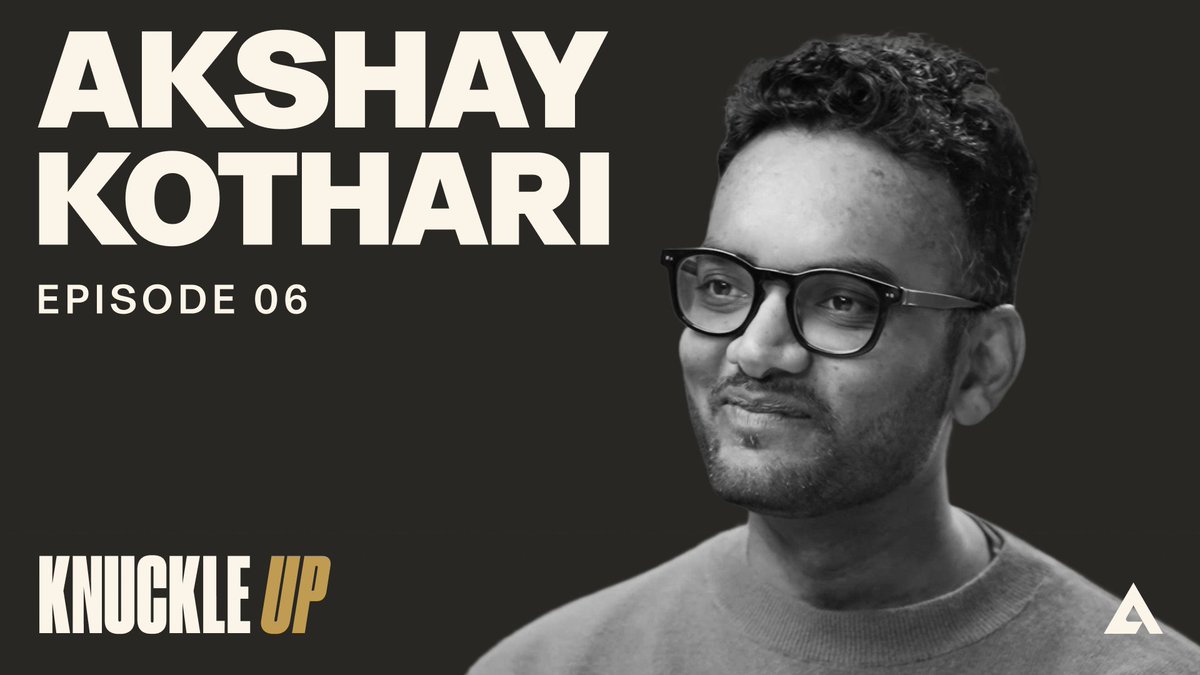
"We were go-karting and doing quite well. Now we've moved to Formula 1, and we're in the middle of the pack. We have a shot at the podium but we have to rewire for the race we're in." Akshay Kothari (Akshay Kothari). Cofounder and COO of Notion. Three years from now, most pre-AI companies will be gone. Notion will be one of the few standing stronger than before. This episode is a field study in how they're pulling it off. Knuckle Up ↓ 00:00 Intro 01:27 What were Notion's core founding principles? 06:20 Which early cultural principles scaled, and which broke? 08:22 How did Notion hire its first employees, and where did they come from? 11:48 How does hiring work now that the founders can't meet everyone? 14:35 Why does Akshay, as COO, prefer to have zero direct reports? 19:05 How do Ivan, Simon, and Akshay divide the work? 21:07 Does Notion's intentionality ever conflict with speed? 25:25 What should other founders steal from Notion's culture? 28:11 When did AI become a reason to rethink the whole product? 30:44 Why were the early AI years a "swamp of despair"? 36:05 How do you push AI across a huge product without losing the user? 39:25 Does Notion buy its AI DNA or build it? 40:44 Should Notion be afraid of OpenAI, Anthropic, and fast copycats? 46:58 What's hardest about the reinvention, and what does "meet the LLM" mean? 52:42 Is Notion AI-native in every function yet? 54:36 Are Notion's engineers still writing code, and how has engineering changed? 1:01:07 Once building is cheap, what's the new bottleneck? 1:02:39 How is AI reshaping sales, marketing, and support? 1:09:07 How many agents run inside Notion, and who builds them? 1:11:28 How has recruiting changed for the AI era? 1:13:48 What still worries Akshay about Notion's future? 1:15:22 Quickfire: admired founders, books, overrated AI advice, and Akshay’s superpower 1:19:42 What should a $50M pre-AI company do in the next 90 days?

Nakul Mandan

205,031 просмотров • 3 месяцев назад

tylercowen is bullish on AI education — here's why. 00:00 -- Preview 00:24 -- President Carlos Carvalho's AI-generated intro 03:21 -- Cowen reacts to UATX's campus 04:38 -- The AI revolution is here. Who will lose the most? 06:05 -- AI lawyers 07:17 -- Don't underestimate this 10:41 -- Changes to the "upper upper middle class" 12:38 -- How to be successful 13:43 -- The rise of managerial empires 14:02 -- When will we have the first billion dollar company with one employee? 16:05 -- 10-20 year forecast 16:19 -- Why education is so behind 17:01 -- Should you be bullish on UATX? 18:36 -- Should you still read Homer? 21:50 -- Write to think 25:01 -- Meet more people 25:42 -- How to get hired 26:54 -- Is AI your best mentor? 38:17 -- How to curb cheating 39:02 -- The new life of the mind 42:34 -- Q&A: Will there be more status associated with real education or AI education? 45:50 -- Q&A: Why do tech-savvy students need to practice using AI? 47:56 -- Q&A: Do LLMs atrophy your mind? 49:29 -- Q&A: How do you avoid AI-dependency? 51:05 -- Q&A: Isn't this vision lonely and isolating? 53:06 -- Q&A: Do students need teachers? 55:36 -- Q&A: What are the four most important courses for undergrads? 57:49 -- Q&A: Which AI company will win the AI race in the next five years and why? 59:22 -- Q&A: Can AI teach religion? 01:01:32 -- Q&A: Will AI narrow or widen our world? 01:04:37 -- Q&A: What makes us human? 01:05:42 -- Q&A: What is art? 01:08:33 -- Q&A: It's easy to catch cheaters

University of Austin (UATX)

27,770 просмотров • 7 месяцев назад

NEW: Cerebras $CBRS CEO Andrew Feldman (Andrew Feldman) "When the chip on your shoulder is the largest chip the world has ever seen." "The demand for AI has outpaced everybody's expectation & everybody's forecast. & so everybody's chasing. They're chasing chips, memory, or data centers." We get into the chip 58x larger than any other, $20B OpenAI deal signed in 4.5 weeks, & what's actually going on with the 'big AI deals' Recorded 2 months after Cerebras' $5.5B IPO at a $56B valuation, where a first-day pop briefly hit ~$95B before settling toward ~$60B. We cover: › A "Cambrian explosion" of new chip architectures › $20B+ OpenAI deal: 750MW of inference compute over 3 years › Why inference, not training, is where the value is now › "We are behind" on the data center build-out › Free tokens & circular deals: "These are drug pushers" › Creating 1,000 millionaires › Nvidia's balance sheet & market strength › Sovereign AI & owning the stack › Co-design & data centers in space › A real 25-year path to ending cancer Cerebras builds AI infrastructure for training & inference. It went public in May 2026, & its products include inference, Wafer Scale Engine, AI supercomputers, AI model services, cloud, systems, & processors. Filmed at the Raise Summit in Paris. Thank you to Brex, MongoDB & AssemblyAI for helping make this trip & content series happen. 𝐓𝐈𝐌𝐄𝐒𝐓𝐀𝐌𝐏𝐒 (00:00) Andrew Feldman, Co-Founder & CEO at Cerebras Systems (00:49) Why hardware suddenly became the coolest industry in tech (01:51) What changed at Raise AI Summit (03:01) Inside the $20 billion Cerebras - OpenAI deal (05:50) What actually changes two months after an IPO (06:32) Turning 1,000 employees into millionaires (07:52) Staying sane during an AI gold rush (10:44) Life after the IPO plateau (11:45) The truth about the global data center shortage (12:56) Why data centers are borrowing jet engines for power (14:44) Are data centers really headed to space? (15:37) The shift to designing chips & software together (17:39) The biggest misconception about co-designing chips & software (18:31) Inside SpaceX's multi-billion dollar AI deals (20:06) NVIDIA's playbook for locking out competitors (20:54) The hidden cost behind free tokens (22:52) Andrew's response to Karp's sovereign AI thesis (24:18) AI's biggest win might be curing cancer (26:50) Peptides & biohacking (28:00) How AI could finally fix the broken education problem (29:46) The mentors who shaped Andrew Feldman's career

Molly O’Shea

494,613 просмотров • 1 месяц назад

NEW: Inside $11B Harvey HQ w/ CEO Winston Weinberg Exclusive tour of their gorgeous SF office & an update on their scale.. TLDR: they're ripping. At 4 years old, Harvey has reached: - Passed $300M ARR this month (3x growth from $100M last August) - Nearly 1K employees, 12 global offices - ~2,000 customers - DAU/MAU up from 36% to 52% this year - 42% of revenue from in-house corporates - Token usage: 1T in January to a projected 13T this month The $11 billion AI platform now used by 2/3 of the AmLaw 100 & 500+ in-house legal teams including HSBC, Bridgewater, Carvana, Blue Owl "I think every single company is going to sell intelligence." - Winston Weinberg Co-Founder Gabe Pereyra + Head of Applied Research Niko coming on next 👀 𝐓𝐈𝐌𝐄𝐒𝐓𝐀𝐌𝐏𝐒 (00:00) Winston Weinberg, Co-Founder & CEO at Harvey (00:45) Inside Harvey HQ (03:17) Harvey by the numbers (04:11) How Harvey expands globally (05:16) Why Harvey employs 200+ lawyers (06:30) The philosophy behind Harvey's office (07:35) The loudest lunch culture in tech (09:03) Winston's favorite room (10:04) Eight Airbnbs before a real office (12:58) Inside a $300M ARR company (14:20) Tripling revenue in under a year (15:35) What $1B+ unlocks (17:36) Building an AI native company (21:10) Convincing lawyers to join tech (22:14) The biggest adjustment for lawyers in tech (23:26) Build vs buy (26:59) What SaaS got away with that AI can't (28:39) Financing 13 trillion tokens (30:05) Why the labs can't just copy Harvey (31:18) Competing with OpenAI & Anthropic (32:03) Will the labs start acquiring? (32:50) Does every task need frontier intelligence? (34:23) Why legal benchmarks are broken (35:30) Ordering the same meal 467 times

Molly O’Shea

389,404 просмотров • 2 месяцев назад

We’re thrilled to share that Outset has raised $17M in Series A funding, led by 8VC to help companies better understand their customers. When michael hess and I founded Outset, we set out to solve a critical problem: truly understanding your customer is painfully slow, expensive, and at times, impossible. It shouldn’t be. We believed AI could change this by focusing on the human side of AI. So we built the world’s first AI-interviewer. An AI agent that asked questions, listened, and learned from real humans. By removing the barriers of traditional research and allowing companies to have deeper conversations with more customers more quickly, we could help teams infuse their products with genuine human understanding at a speed and scale previously impossible. So what was the moment we knew we were onto something? When WeightWatchers ran that first pilot back in early 2023. Participants shared incredible amounts of depth, all with the world’s first AI-interviewer. We got a call the next day from their head of research: "You built a thing. We want that thing. How do I pay you for it?" That validation has turned into explosive growth. We've doubled our revenue in just the last 4 months alone, with >50 enterprise customers like Nestlé, Microsoft, and WeightWatchers trusting us to unlock deeper customer insights. All of this built on the backs of a truly special early team with 0 employee turnover. This funding round was led by 8VC, with participation from an incredible group, including: Future Back Ventures by Bain & Company, Y Combinator / Garry Tan, Adverb Ventures /April Underwood / Jessica Verrilli ), Alt Capital / Jack Altman , Rebel Fund, Genius Ventures, Ritual Capital, and many more. So what's next? We're scaling our engineering and go-to-market teams to build the world's most powerful agentic customer research platform. All focused on one mission: helping companies better understand humans. To our customers, investors, and team - thank you for believing in this vision. Now check out the video to see Outset in action, testing the video itself with real people!

Aaron Cannon

34,386 просмотров • 1 год назад

NEW: Inside AI's Biggest Downstream Winner.. the Surge in AI Database Demand "Data is the unsung hero, & data is back." MongoDB CEO CJ Desai (CJ Desai) The unexpected result? Hyperscalers are turning away even top-50 accounts. "Sorry, we don't have a capacity." "And they are one of the top 50 customers for that hyperscaler." ElevenLabs alone runs "north of 50 million agents, depending on when you look at it, all running on MongoDB.. that gives us a lot of confidence that we have the right architecture for agentic workloads." NASDAQ: $MDB We cover: › The 3 classes of AI customers MongoDB serves › Why hyperscalers are telling top-50 accounts "no capacity" › On-prem, sovereign AI, and the data-center comeback › ElevenLabs running 50M+ agents on MongoDB › MongoDB (OLTP) vs Snowflake & Databricks (OLAP) › Why there is no standardization in enterprise AI models › Auto-scaling & the fall of expensive DBAs 𝐓𝐈𝐌𝐄𝐒𝐓𝐀𝐌𝐏𝐒 (00:00) CJ Desai, CEO at MongoDB (01:12) Top CEOs at the Raise AI Summit (03:24) The 3 types of companies powering the AI boom (07:25) Why on-prem is making a shocking comeback (09:01) Hyperscalers are quietly running out of capacity (11:06) What actually separates MongoDB from Snowflake x Databricks (13:18) Why Frontier Labs treat MongoDB as their memory layer (16:22) From Oracle intern to first-time CEO (19:19) Becoming CEO during the AI chaos (23:53) The World Cup crisis that tested MongoDB's scale (28:19) The real complexity behind simple AI agents (31:22) Open source vs. closed models: what customers actually pick (34:36) CJ's honest take on data centers in space (36:50) The mentors who shaped a first-time CEO (40:32) MongoDB's next big bets (41:36) Data is back?

Molly O’Shea

170,522 просмотров • 1 месяц назад

⚫️ UNCANNY VALLEY: THE AI CLASSROOM REVOLUTION: ARE TEACHERS READY? What if AI isn’t just disrupting education… but detonating it? Ethan Mollick, Professor at The Wharton School, joins Dr Danish for one of the most explosive Uncanny Valley episodes, lifting the lid on how classrooms are collapsing, colleges are scrambling, and apprenticeships are vanishing in real time. From AI tutors replacing professors to the rise of one-person unicorns, this isn’t just a change in learning…it’s a reset of work, meaning, and what it even takes to succeed. This episode doesn’t ask whether AI will change education. It shows you how it already has. Fridays at 4:20PM ET. Only on 𝕏. 00:18 – Is AI destroying school, or forcing us to teach better? 01:13 – “100% they’re cheating.” The honesty about academic dishonesty. 02:41 – Why good pedagogy still matters—even with AI tutors. 03:51 – Elon Musk says college is obsolete. Is he right — or just early? 05:01 – “AI gives you the answer—but you don’t learn.” The Turkey study. 06:31 – From calculators to GPT: How cheating evolves—and what to do. 08:24 – What the flipped AI-powered classroom of the future looks like. 09:23 – Inside Ethan’s Wharton classes: Simulations, games, and AI everywhere. 10:09 – “AI is an always-on tutor.” What humans still do better. 11:08 – Can AI actually launch a company? Where Ethan draws the line. 12:44 – “AI cofounder” is real, but jagged edges still slow it down. 14:07 – Why bad ideas fail faster when filtered through AI. 15:45 – Confidence vs. capability: the psychology of starting up. 16:51 – The average founder is 42. What that really means for AI. 18:04 – Will a flood of new entrepreneurs fix—or break—the market? 19:50 – AI as advisor: How a chatbot could help your catering business. 21:37 – Why most Americans are founders-in-waiting—and AI unlocks them. 22:30 – Prototyping is cracked. Scaling? Not yet. 24:33 – Youth unemployment and the collapse of on-the-job learning. 25:51 – “The apprenticeship model is broken.” And how to fix it. 27:06 – Losing the talent pipeline — and why companies must step up. 28:22 – Why the youth don’t want factory jobs—and shouldn’t. 29:26 – Is AGI inevitable—or just imagined? 31:07 – What should we teach our kids? The answer might scare you. 32:27 – Bundled jobs, fragmented futures: how humans stay relevant. 33:59 – The real singularity? When we can’t predict what happens next. 35:25 – The AI assumption no one wants to question. 36:55 – What are agents, really? Why no one agrees on the definition. 37:55 – Co-intelligence vs. substitution: what agents skip over. 38:50 – Plain-English goals, rogue pricing, and collusion-by-default. 40:02 – Nested agents are here, and Wharton’s building them. 40:58 – Management > Coding: What great prompters actually do. 41:12 – Product managers might be more vital than ever.

Mario Nawfal

1,613,286 просмотров • 1 год назад

Jensen Huang is a titan and a teacher. He recently sat down with me to explain his vision of the future of technology and humanity. He’s calm, clear, and very funny. We touched on many topics, ranging from the $20T or more AI economy in five layers to changes in labor for the AI age. Here are some of my main takeaways: 1) The world is moving from retrieval to generation 2) Generation offers intelligence customized to the individual 3) Nvidia is making the "generators" of intelligence 4) We've seen this kind of revolution at least three times before with energy (Generators), Telecommunications (vacuum tubes / transistors?), and now intelligence (GPUs) 5) There is a five-layer cake of participation in this many-many trillion dollar revolution: Energy, Chips, Infra, Models, and Applications. 6) There are many ways to participate in this revolution, and everyone has a role 7) We'll be pushed to dream up new problems to solve with this unprecedented intelligence 8) In this new future, it's not just having the answer, it's having the right questions 8) The right questions will drive us toward our individual and collective human purpose 9) We move from the carpenters to the architects I believe this is the realistic future. Thanks to Jensen and the entire NVIDIA team for the conversation and for letting us share! 00:00 Introduction 00:42 From Chatbots to Generative AI 03:35 Agentic AI That Does Work 05:26 Downstream Industry Impact 06:25 Computing Shifts From Retrieval to Generation 11:26 A Planet Cocooned by Intelligence 14:27 Inside the NVIDIA AI Factory 20:48 AI Five Layer Cake 21:58 Beyond Chatbots to Biology 23:54 Tokens and World Models 24:53 Trillions in Applications 27:13 Ditch the AI Doom 31:32 Jobs Tasks vs Purpose 38:40 Closing the Tech Divide

Konstantine Buhler

188,256 просмотров • 2 месяцев назад

🚨 Anthropic CEO says in 2-3 years, humans will no longer be the most intelligent species on the planet Now, the founders of OpenAI, Google DeepMind AND Anthropic have all admitted this "What I’ve seen inside Anthropic over the last few months led me to believe that AI will surpass almost all humans at almost all tasks in 2-3 years." "I am more confident than I have ever been at any previous time." "There have been 5 or 6 times in 10 years we thought we were hitting a wall, and something slightly different was invented that let us get around it. The scaling of AI feels like a river - every once in a while it runs into a stone but it always finds a way to go around." "Throughout the 10 years I've been working in this field I've always said 'I don't know for sure...' I still think there's uncertainty, but over the last 6 months that uncertainty for me has decreased a great deal." (quotes from separate CNBC interview from Davos) Sam Altman in 2015: "Evolution will continue forward, and if humans are no longer the most-fit species, we may go away." "Development of superhuman machine intelligence is probably the greatest threat to the continued existence of humanity." "Regulation is definitely a good thing when the survival of humanity is in question" (note how now he pushes against regulation) Google DeepMind founder/Microsoft AI CEO: "AI is a new digital species." "To avoid existential risk, we should avoid: 1) Autonomy 2) Recursive self-improvement 3) Self-replication"

AI Notkilleveryoneism Memes ⏸️

63,733 просмотров • 1 год назад

Nicholas Thorne (Nicholas Thorne) is building Squarespace for the AI age. It’s called Audos, and it’s an AI chatbot to help any entrepreneur go from idea to: - Pitch deck - Working website - Custom GPT - User interviews with real customers All in just a few minutes. And he did it using @ChatGPTapp. It’s AI all the way down—and it’s one of the most impressive early AI businesses I’ve ever seen. Nicholas is a good friend of mine and a general partner at Prehype, an incubator that launched BarkBox and Ro. It’s also where I started Every 🧱, so it was great to come full circle. Nicholas’s job at Prehype is to launch new companies. He’s taken everything he’s learned running an incubator and is using it to help entrepreneurs start businesses at scale—with AI. Nicholas tells me that he used @ChatGPTapp to prototype most of Audos’s features—despite being non-technical himself. He shares exactly how he did this by showing me how he’s using AI to create a new feature for the product. We get into: - Ways AI can make you a more effective founder - How to use ChatGPT to build your prototype - Strategies to refine problem statements with AI - Using GPTs to gather and synthesize customer feedback This episode is a must-watch for anyone who has ever toyed with the idea of starting a business—and wants to do it with AI. Watch! ___ Timestamps: Introduction: 00:48 How AI can make you a more effective founder: 12:10 Live demo of Audos! 17:03 Why Nicholas built an AI tool to enable entrepreneurs: 24:07 How Audos puts you in “edit mode” instead of “create mode”: 25:35 Tools to gather customer feedback, generated by Audos: 28:12 How Audos actually works: 32:58 Nicholas uses ChatGPT to prototype a new feature: 35:07 How to establish checks and balances while using ChatGPT: 42:37 AI as a force for pushing entrepreneurship to new heights: 57:20

Dan Shipper 📧

36,351 просмотров • 2 лет назад

NEW: Dylan Field (Dylan Field), CEO of Figma (NYSE: FIG) How to Escape the "Permanent Underclass of Zero Taste" › Why AI prompts only get you the average › Why the market has design backwards Plus, Founders Fund's Mafia & Thiel Fellowship class behind Figma + Anthropic Recorded at Day 0 of Config 2026, San Francisco We Cover: › Vibe Mathing › Elon: Products vs Logos › AI's trust issue › Agents vs Employees › Engineers coding design › American Enterprise > › IQ ≠ Judgment or taste › What actually is a jailbreak? This was SO much fun!!! Can confirm Config-pilled. 𝐓𝐈𝐌𝐄𝐒𝐓𝐀𝐌𝐏𝐒 (00:00) Dylan Field, Co-Founder & CEO at Figma (00:57) Day Zero begins: backstage at Config (01:44) The "Coachella for Design" is real (02:35) Why Dylan started Config back in 2020 (03:47) Why "design is dead" is completely wrong (06:11) How Figma turned engineers into designers (06:54) Inside Config before the crowd arrives (07:55) The Config speakers Dylan can't wait to watch (11:34) Inside the exclusive Pantone Lounge (12:00) The one question every designer gets asked (13:16) Getting killed in every single game of Mafia (15:33) How to escape the permanent underclass of zero taste (19:51) Why execution is cheap but taste is everything (22:25) What actually builds a trusted brand (25:51) How AI agents are rewiring company structure (28:54) The AI safety debate happening right now (31:57) Why deep curiosity is Dylan's secret weapon (34:53) The real lesson from being a Thiel fellow (36:52) Rapid fire: Elad Gil's wildest question (38:04) What people are missing about AI & enterprise software (40:16) Where Figma goes next (41:21) Why Dylan is bullish on SpaceX (42:43) Elon Musk's logo theory (43:26) The mentors who shaped Dylan Field (45:20) Alan Kay, VR, and the future of human-computer interaction

Molly O’Shea

428,378 просмотров • 1 месяц назад